
Wristwatches · Wristwatch
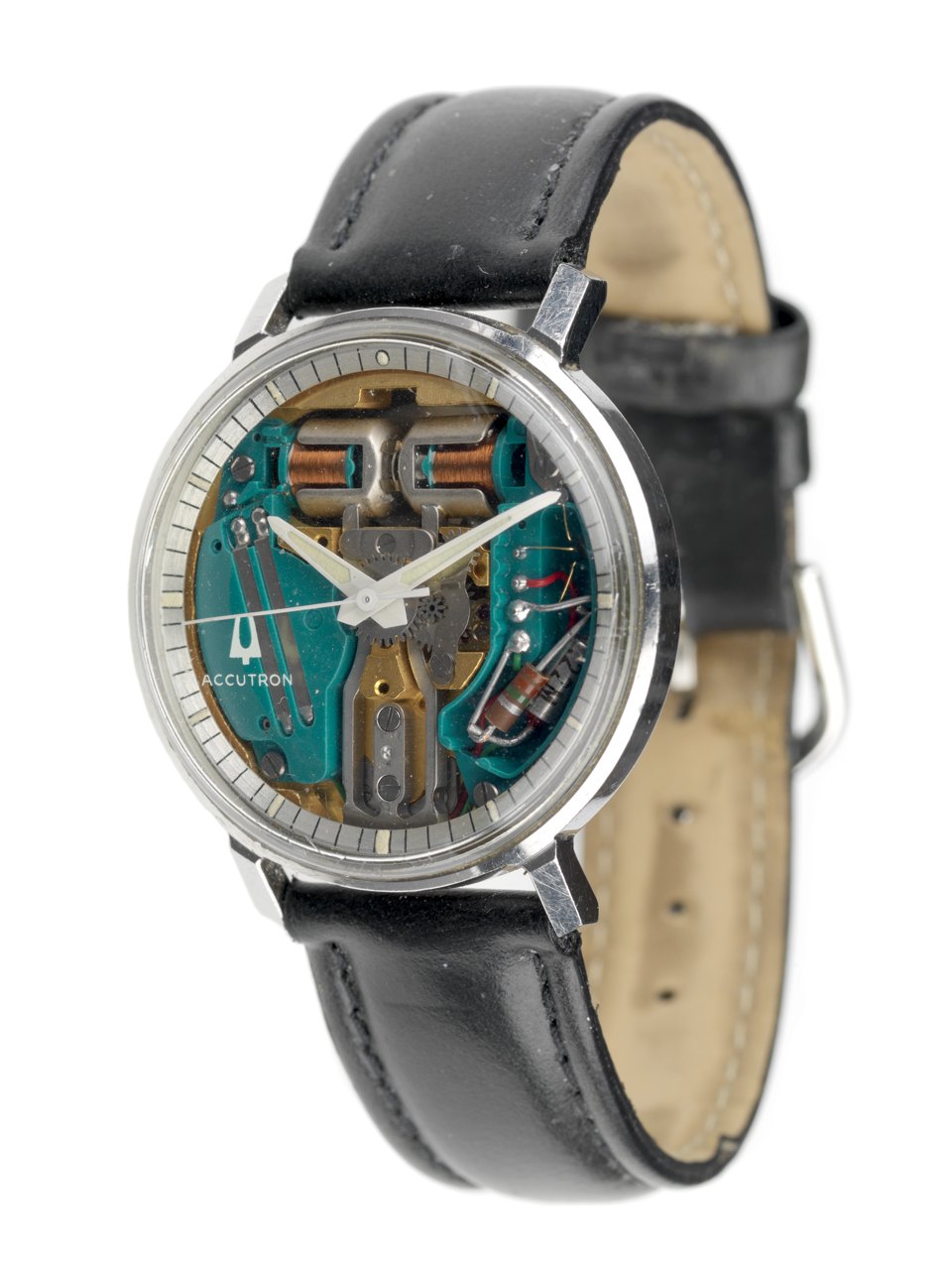
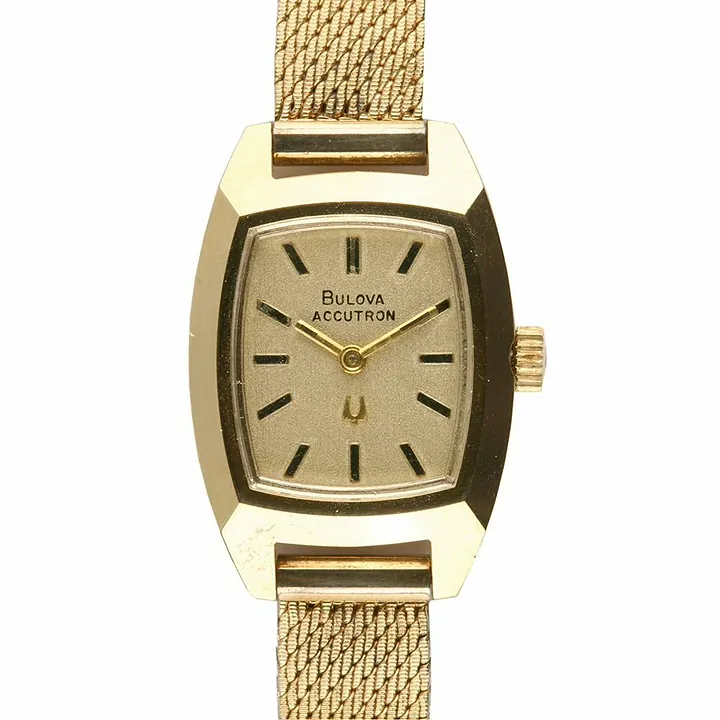
Bulova 'Accutron' tuning-fork wristwatch by Bulova
- Maker / attribution
- Bulova (maker)
- Date
- c. 1969
- Historical period
- Quartz Revolution (1969 – 1990)
- Country of origin
- United States
- Object type
- Wristwatch
- Materials / technique
- metal; plastics
- Holding institution
- Royal Museums Greenwich
- Accession / object no.
- ZBA4265
- Credit line
- National Maritime Museum, Greenwich, London
- Catalogue title (original)
- Bulova 'Accutron' tuning-fork wristwatch (English)
View the source record ↗ (opens another website in a new tab)Suggest a correction
Record summary
Held and catalogued by Royal Museums Greenwich (object number ZBA4265), this is a wristwatch by Bulova, made in United States, dated c. 1969. The Atlas places it in the Quartz Revolution period (1969 – 1990) of its Wristwatches collection. Materials and techniques recorded by the source: metal; plastics. The record is illustrated with 1 photograph.
Assembled from the source record's structured fields. Dates and attributions are given as the source states them; where a field is missing the Atlas leaves it blank rather than estimating.
Catalogue description
Catalogue description — Royal Museums Greenwich
Bulova 'Accutron' tuning-fork wristwatch with 'Spaceview' transparent dial. The Bulova 'Accutron' was the first electronic watch ever made (and the first watch not to use a balance as the timing element). It is controlled by a tiny tuning-fork vibrating 360 times per second, maintained by a transistorised electronic circuit and a battery lasting about a year. In 1964 the Accutron was chosen to be buried in a 5000-year time capsule on the grounds of the New York World's Fair as an example of one of the most innovative objects invented in the preceding 25 years. The 'Spaceview' versions, so named because the movement is visible through a transparent dial, were originally a marketing device to demonstrate the watch to customers, later becoming so popular Bulova manufactured them for sale. This watch was kindly donated to the National Maritime Museum in 2005 by Mr H. R. Munden.
Historical context
Quartz Revolution (1969 – 1990)
Seiko's Astron begins mass quartz timekeeping; traditional industries contract sharply.
Quartz and digital watches transformed the market after 1969. Swiss employment collapsed, Japanese and Hong Kong production soared, and the Swatch (1983) helped the Swiss industry recover; mechanical watches survived as luxury goods.
Read the period in the timelineMore wristwatches from this periodEarlier: Modern Mechanical Horology
Atlas type guide
Quartz, digital and electronic watches
Electronic watches arrived in three steps. The Hamilton Electric 500 (1957) was the first battery-powered wristwatch, still with a balance; Bulova's Accutron (1960) used a tuning fork. On 25 December 1969 Seiko released the Astron 35SQ, the first quartz wristwatch, closely followed by the Swiss Beta 21 group. In 1972 Hamilton's Pulsar introduced the LED digital watch, and LCD displays soon made digital watches cheap.
The 'Quartz Crisis' that followed devastated the Swiss mechanical industry, which lost two-thirds of its workforce between 1970 and 1984 before recovering with the Swatch (1983) and the luxury mechanical revival. Solar, radio-controlled, kinetic and connected smartwatches continue the electronic line.
What to look for
- Battery hatch in the case back and calibre markings with 'Quartz' or a crystal frequency.
- Display technology: LED (red, push-button) versus LCD (always-on).
- Tuning-fork hum and a smoothly sweeping seconds hand on Accutrons.
- Model and reference numbers, often printed on the back.
Dating clues
- Electric balance watches: from 1957.
- Tuning-fork watches: 1960–c. 1977.
- Quartz analogue: from December 1969; LED digital: 1972–c. 1978; LCD from 1973.
General guidance written by the Atlas editors about this kind of object. It is not a statement about this particular piece; for that, rely on the source record above and on physical examination.
Read next:Seiko calibre 35A (Astron)
Related records
Wristwatches · c. 1965
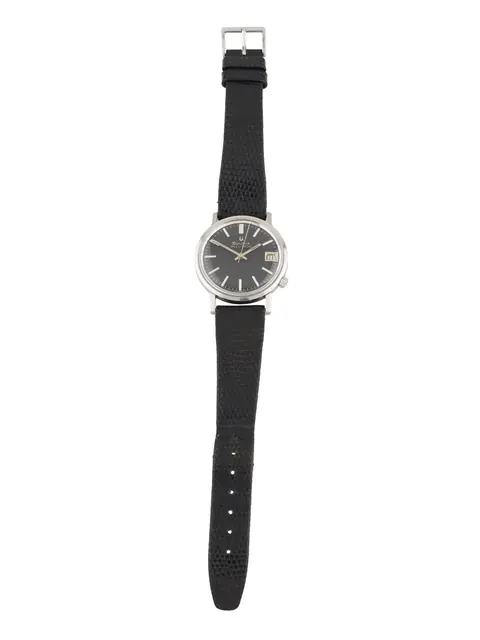
Wristwatch Accutron by Knud Geelmuyden Bull
Royal Museums Greenwich
Clocks · c. 1960s
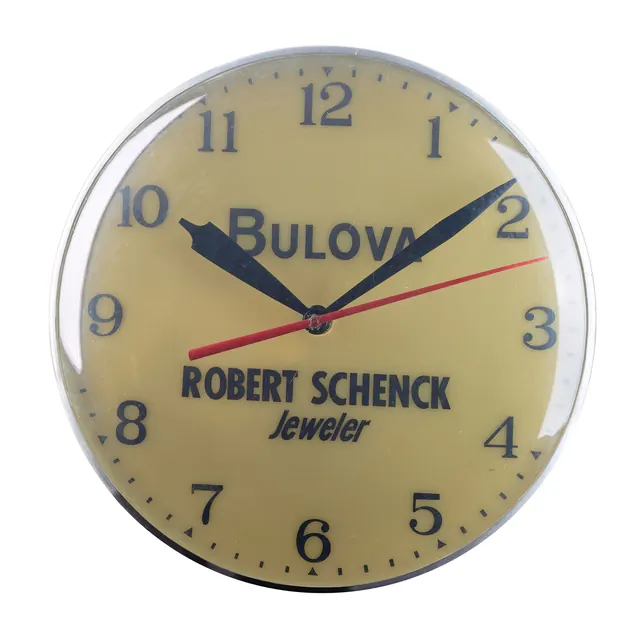
Bulova wall clock, Lighted Advertising Wall Clock for Robert Schenck Jeweler, circa 1960s
Antiquorum auction archive, Geneva
Wristwatches · 1963
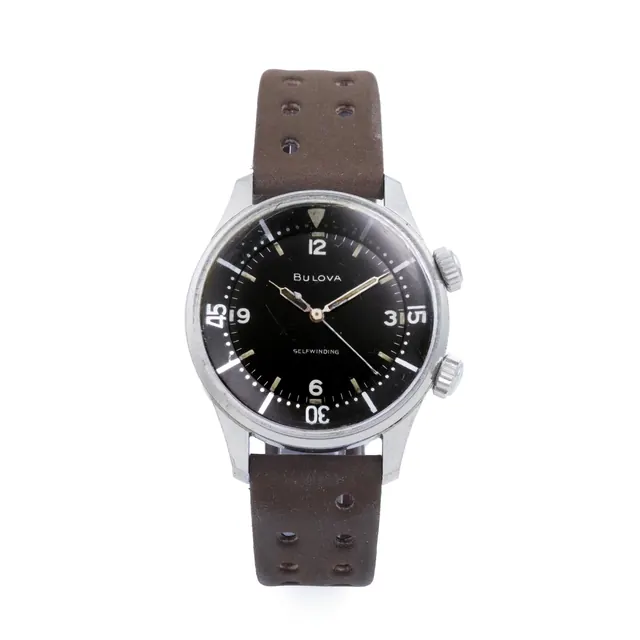
Bulova wristwatch, ref. 314, Diver Super Compressor, 1963
Antiquorum auction archive, Geneva
Wristwatches · 2010s
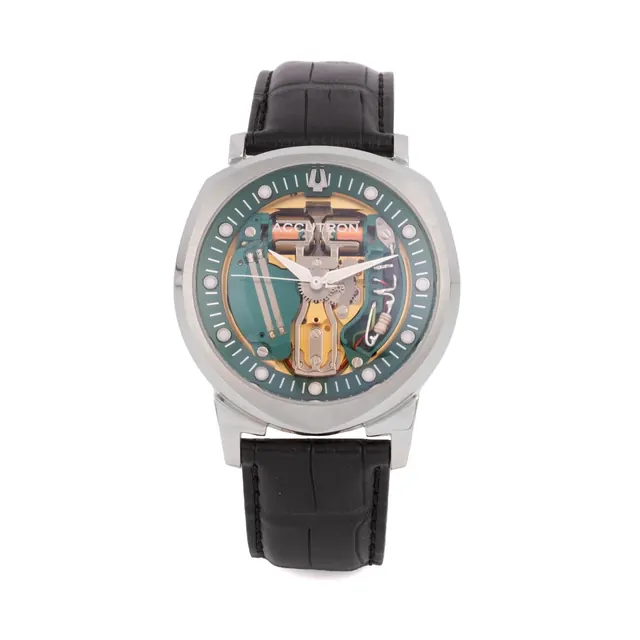
Bulova wristwatch, ACCUTRON 50th Anniversary Limited Edition, 2010s
Antiquorum auction archive, Geneva
Wristwatches · 1949–1992
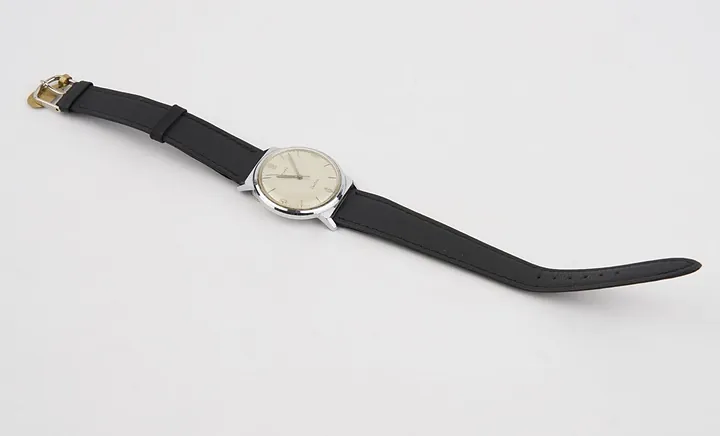
Timex `Electric' wristwatch, with electrically operated balance wheel mechanism, United States, 1949–1992
Science Museum Group, London
Wristwatches · 1972
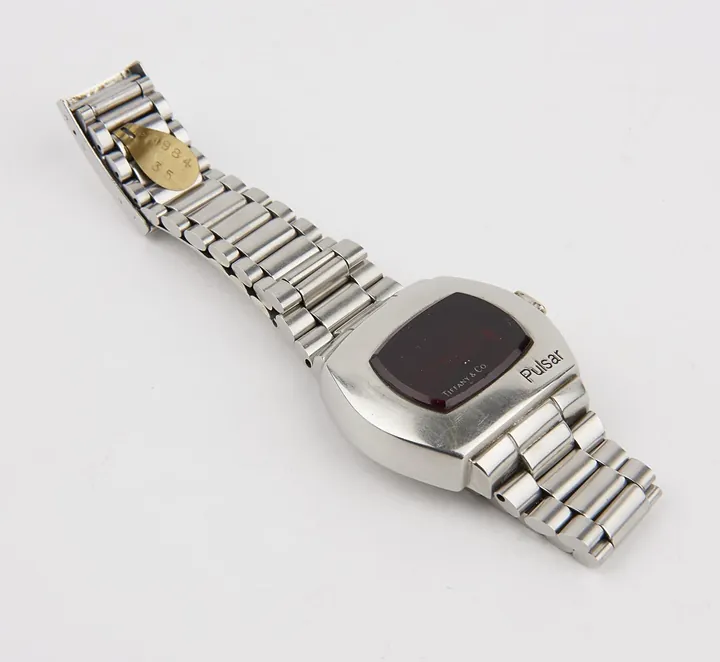
Wristwatch by Hamilton Watch Company and Electro-Data Inc, United States, 1972
Science Museum Group, London
Wristwatches · 1973–1974
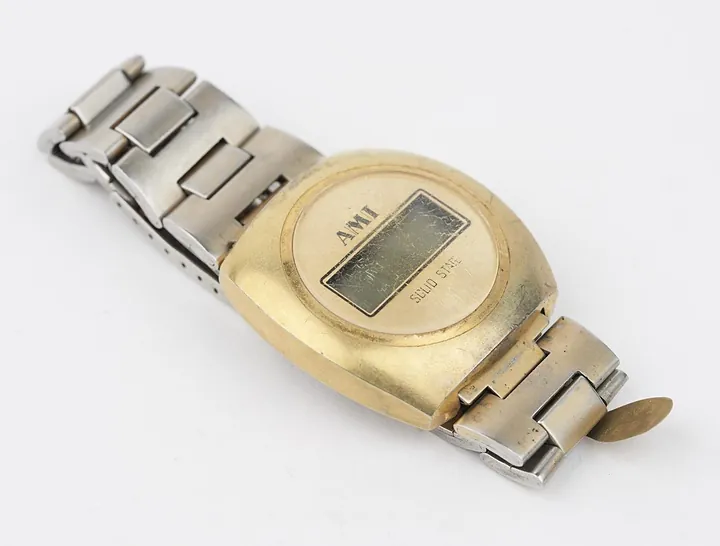
Quartz watch with liquid crystal digital display, made by American Microsystems Inc. (AMI) . 1973/74
Science Museum Group, London
Wristwatches · c. 1973
Wristwatch by Josef Bulova, United States, c. 1973
German Clock Museum