
Clocks · Clock
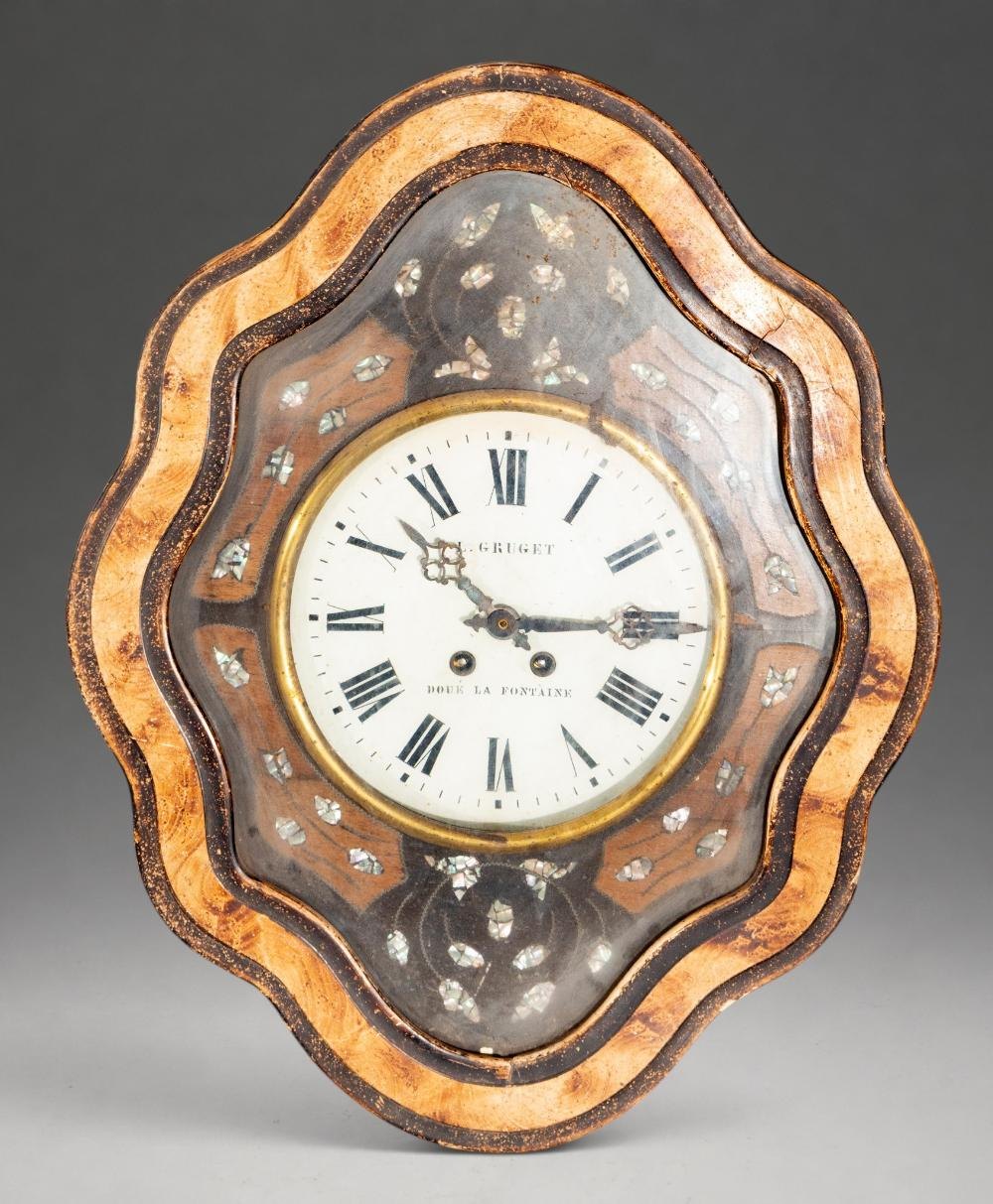
Bullseye clock with mother-of-pearl inlay – 19th century
- Maker / attribution
- Unrecorded in source
- Date
- 19th century
- Historical period
- Precision & Scientific Horology (1750 – 1850)
- Country of origin
- Unrecorded in source
- Object type
- Clock
- Materials / technique
- mother-of-pearl
- Auction house
- Invaluable auction listings
- Lot
- Lot F08A60F9E8
- Credit line
- Auction lot record: lot 1305, Grand November Auction · Old Masters & Contemporary Art, Templum Fine Art Auctions (2026), via Invaluable
- Catalogue title (original)
- Bullseye clock with mother-of-pearl inlay – 19th century (English)
View the source record (auction lot) ↗ (opens another website in a new tab)Suggest a correction
Record summary
Catalogued by Invaluable auction listings (lot Lot F08A60F9E8), this is a clock, dated 19th century. The Atlas places it in the Precision & Scientific Horology period (1750 – 1850) of its Clocks collection. Materials and techniques recorded by the source: mother-of-pearl. The record is illustrated with 3 photographs.
Assembled from the source record's structured fields. Dates and attributions are given as the source states them; where a field is missing the Atlas leaves it blank rather than estimating.
Catalogue description
Lot description — Templum Fine Art Auctions
Bullseye style wall clock. Dimensions: 61 × 48 × 14 cm. Wavy profile case with a combination of light and dark woods and mother-of-pearl inlays with plant motifs. Enameled dial with Roman numerals and double keyhole, surrounded by a metal bezel. Shows wear and minor decorative losses. Due to its age and history of use, this lot may show signs of wear and previous interventions. Unless explicitly stated otherwise, no specialized technical testing has been performed. The absence of any mention of restorations does not guarantee that none exist. You may request additional information before placing a bid. This does not affect the buyer's statutory rights.
Historical context
Precision & Scientific Horology (1750 – 1850)
Harrison solves longitude; Mudge invents the lever; Breguet's Paris workshop defines the modern watch.
The age of the deadbeat escapement, compensated pendulums and observatory regulators. Domestic clocks spread through the middle classes: English longcase and bracket clocks, French gilt-bronze mantel clocks, Viennese Biedermeier wall clocks, Black Forest painted-shield clocks, and the first American shelf clocks.
Read the period in the timelineMore clocks from this periodEarlier: Early Modern Horology
Atlas type guide
Domestic clocks
A clock combines four systems: a source of power (falling weight, coiled spring, or later electricity), a gear train that divides time, an escapement and oscillator that regulate it (foliot, pendulum or balance), and an indicating system of dial and hands or a bell. Its history runs from the large iron weight-driven clocks of the late thirteenth century to Renaissance spring-driven table clocks, the pendulum revolution of 1656, the factory clocks of the nineteenth century and electric and quartz clocks of the twentieth.
Domestic clocks also reflect regional furniture and decorative traditions — English longcase and bracket clocks, French pendules, Viennese regulators, Black Forest and American shelf clocks — and therefore record changing tastes as much as technical progress.
What to look for
- How the clock is powered: weights, spring barrel, fusee, electric coil.
- The oscillator: foliot, short pendulum, long seconds pendulum or balance.
- Whether it strikes: hour only (count wheel) or hours and quarters (rack striking).
- The maker or retailer's name on dial and movement, and any factory trademarks.
- Signs of alteration — replaced dials, converted escapements, 'married' cases.
Dating clues
- Before 1656 clocks used foliots or balances; after, most domestic clocks have pendulums.
- Anchor escapements spread after c. 1670; minute hands became common at the same time.
- Factory production in America and Germany transformed prices after c. 1840.
General guidance written by the Atlas editors about this kind of object. It is not a statement about this particular piece; for that, rely on the source record above and on physical examination.
Related records
Clocks · c. 1780
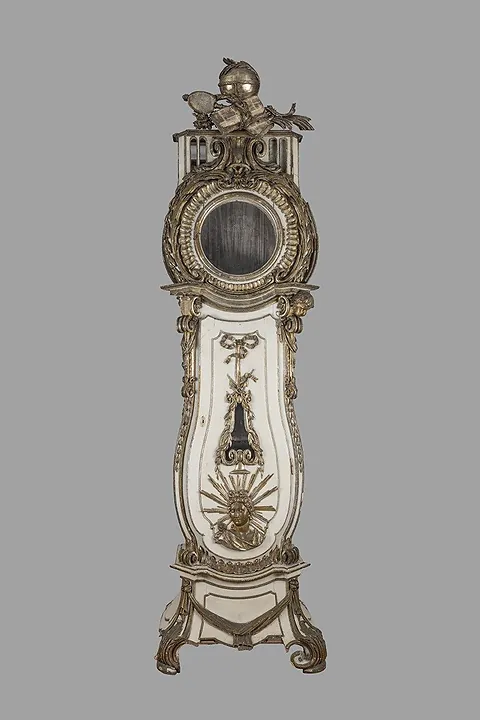
Longcase clock by Louis George, Eberswalde, c. 1780
Museum Eberswalde
Clocks · 1780s (inferred: the museum dates the style to the 1780s and the music includes Gluck's Iphigénie en Tauride of 1779)
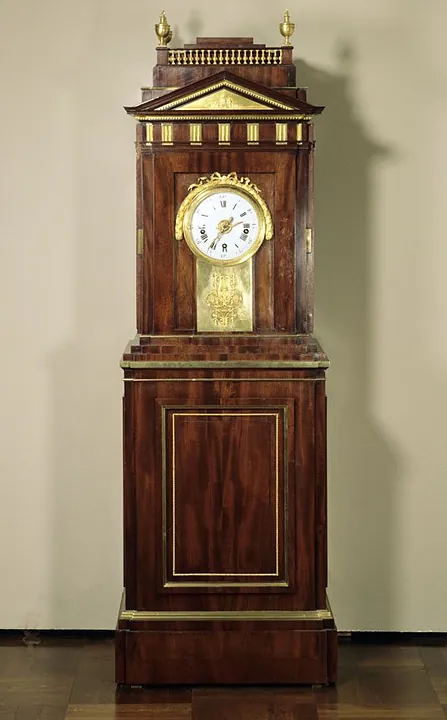
Musical longcase clock, Roentgen workshop, Neuwied, 1780s
Badisches Landesmuseum Karlsruhe
Clocks · 1740–1760
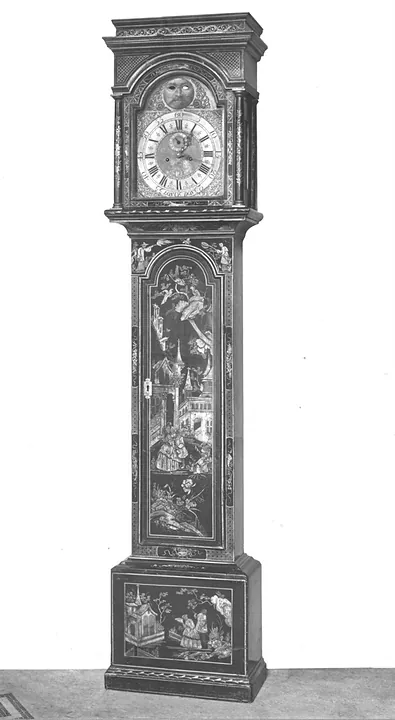
Longcase clock, English, 1740–1760, japanned wood, John Ellicott
Victoria and Albert Museum, London
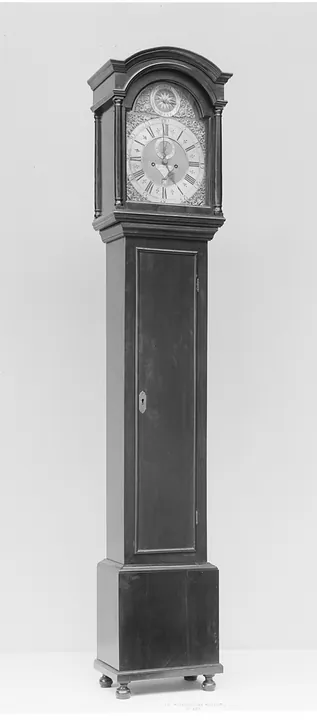
Clocks · 1740–60
Tall clock by Samuel Bagnall, United States, 1740–60
The Metropolitan Museum of Art, New York
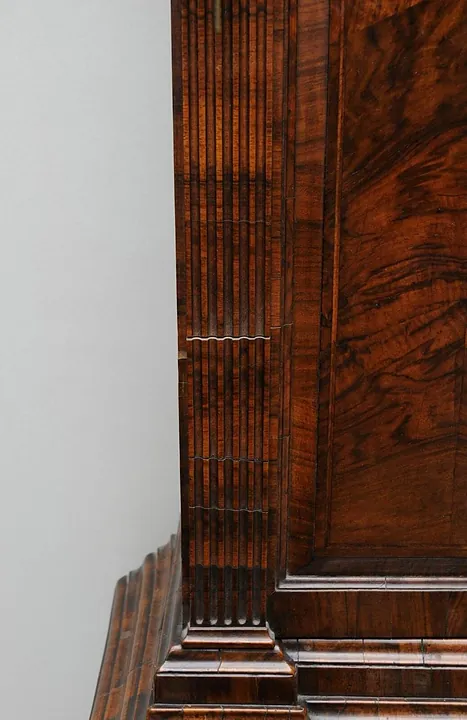
Clocks · c.1750
Long-case clock, English, ca. 1750, by Richard Peyton of Gloucester
Victoria and Albert Museum, London
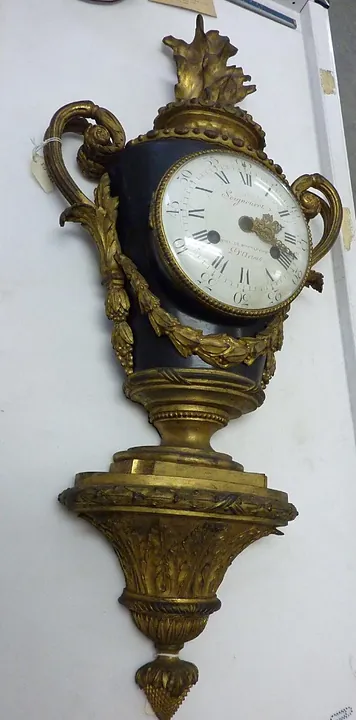
Clocks · 1750–1800
Bracket clock in metal case with scroll handles and flamed-shaped top signed by Pierre Seignoret, Clockmaket to the the Comte d'Artois
Victoria and Albert Museum, London
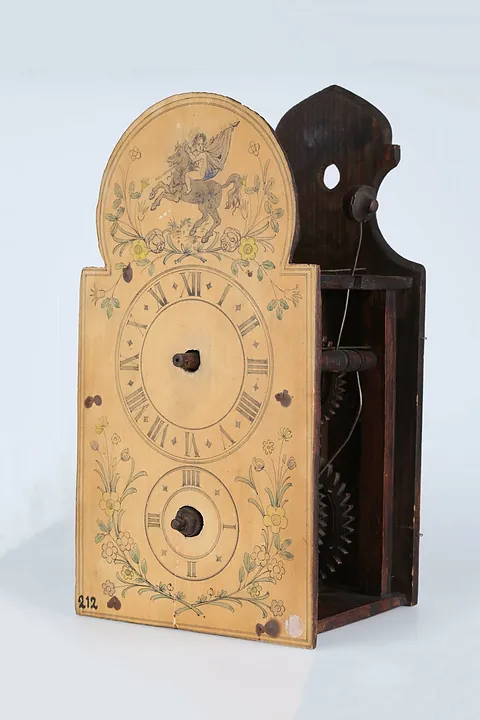
Clocks · c. 1750
Clock by Georg Gfell, Germany, c. 1750
German Clock Museum
Clocks · 1750–1799
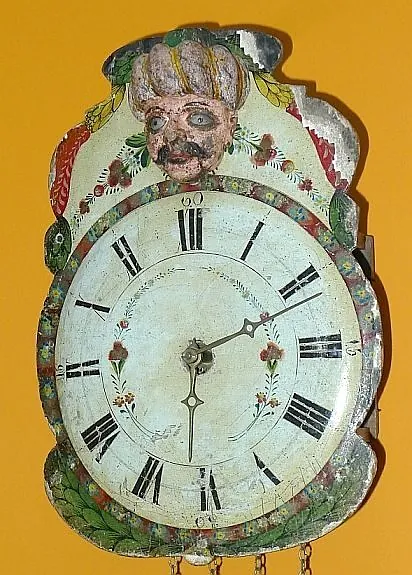
Cuckoo / black forest clock, Germany, 1750–1799
Badisches Landesmuseum Karlsruhe