
Clocks · Bracket clock
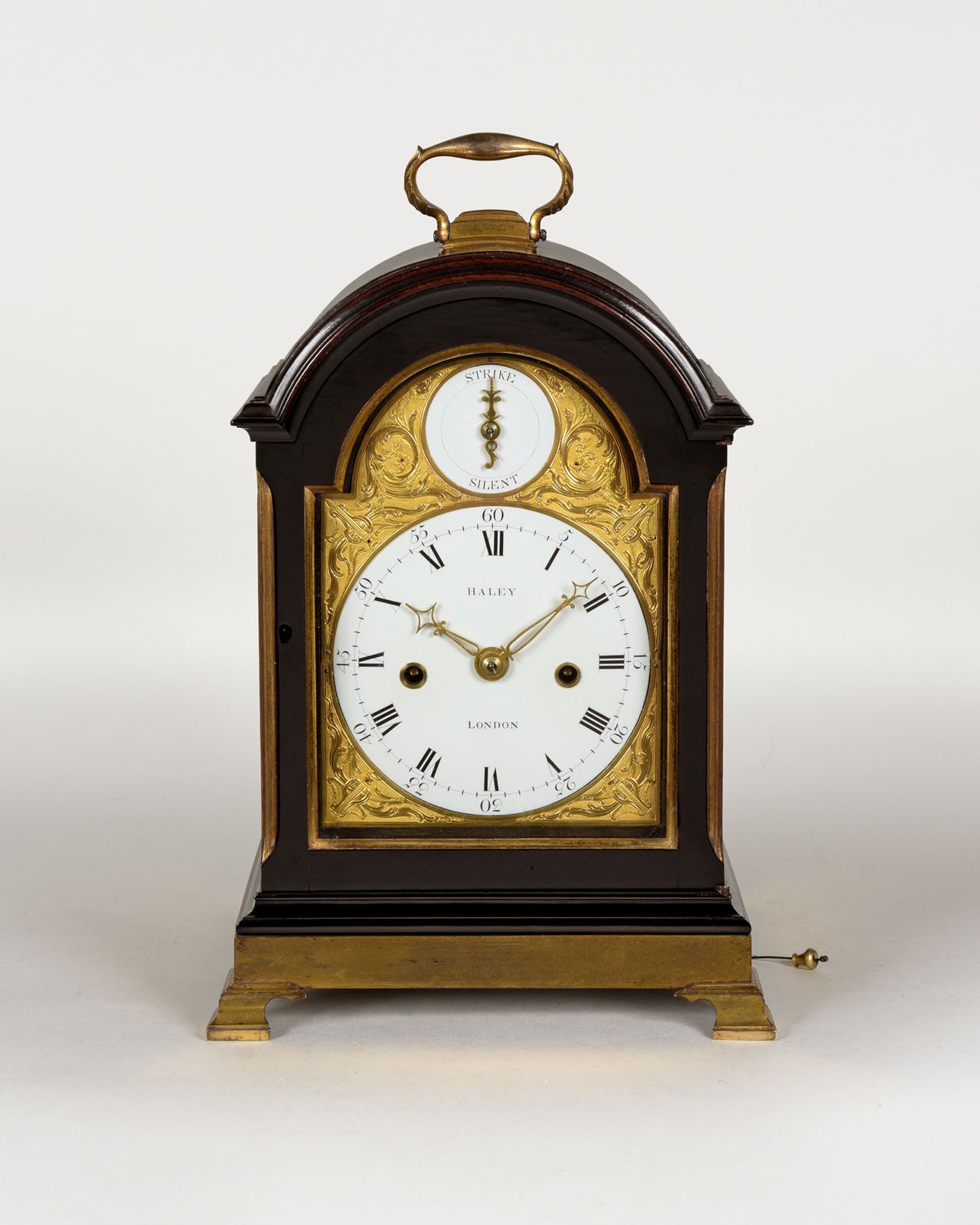
Bracket clock by Haley, Wigmore Street, London, c. 1780–1785
- Maker / attribution
- Haley (maker)
- Date
- c. 1780–1785
- Historical period
- Precision & Scientific Horology (1750 – 1850)
- Country of origin
- England
- Place
- Wigmore Street, London
- Object type
- Bracket clock
- Materials / technique
- enamel, ebonised
- Dimensions
- Height 28 cm
- Stock no.
- Product 4971
- Credit line
- Dealer listing, Howard Walwyn (product 4971)
- Catalogue title (original)
- HALEY. A small George III period ebonised pearwood bracket clock with enamel dial. (English)
View the source record (dealer listing) ↗ (opens another website in a new tab)Suggest a correction
Record summary
Catalogued by Howard Walwyn Fine Antique Clocks (dealer), London (stock number Product 4971), this is a bracket clock by Haley, made in Wigmore Street, London, England, dated c. 1780–1785. The Atlas places it in the Precision & Scientific Horology period (1750 – 1850) of its Clocks collection. Materials and techniques recorded by the source: enamel, ebonised. Recorded dimensions: Height 28 cm. The record is illustrated with 4 photographs.
Assembled from the source record's structured fields. Dates and attributions are given as the source states them; where a field is missing the Atlas leaves it blank rather than estimating.
Catalogue description
Dealer description — Howard Walwyn
A fine George III period ebonised pearwood bracket clock with enamel dial and hour strike of small proportions by this well-known London maker. The case has a break-arch top with a brass carrying handle above a moulded arch and a glazed front door. The sides have arched sound frets backed with red silk, and the front angles are set with contrasting lighter inset panels. The base has successive mouldings and stands on four brass bracket feet. The dark surface of the case is relieved by the gilt-metal mounts and the lighter colour to the edges of the mouldings. The break-arch dial is signed HALEY , LONDON and has a white enamel chapter ring which has Roman hour numerals and an outer minute circle. It is framed by a gilt brass repoussé mask with rococo scrollwork, and in the arch there is a subsidiary strike/silent dial. The clock retains its finely pierced gilt brass hands. The twin-fusee 8-day movement strikes the hours on a bell and is governed by the strike/silent selection in the arch. The backplate is signed by the maker Haley and is engraved with scrolling foliate ornament centred by a basket of flowers, while the pendulum holdfast and bob are also engraved. The movement is secured to the case by brackets to either side, and the bell is mounted above within the arch of the case. Date : circa 1780 – 1785 Height : 11 in (28 cm) *Charles Haley of Wigmore Street was a late Georgian London clock and watchmaker. The British Museum records him with life dates of 1762–1823, at Wigmore Street, London, and notes him as a member of the Clockmakers’ Company from 1781 to 1823, with a patent for a marine chronometer in 1797. A curatorial note in the British Museum’s catalogue of a Haley pocket chronometer adds that Charles Haley of 7 Wigmore Street was made a Freeman of the Clockmakers’ Company in 1781, that he was a pioneer chronometer maker, that he was granted patent no. 2132 in 1796 for a constant-force escapement, and that he was appointed by the Select Committee of the House of Commons to report on Mudge’s timekeepers and application for a reward. The Survey of London records that the corner house later numbered 24 Wigmore Street, then 7, was occupied from 1784 until its rebuilding in 1893 by successive makers of clocks and watches, beginning with Charles Haley, described there as a patentee of chronometers and regulators. Surviving work by Haley includes high-grade marine chronometers and watches, and the National Trust preserves a watch described as by “Chas. Haley, 7 Wigmore Street, London, No. 1813.” HW6712
Historical context
Precision & Scientific Horology (1750 – 1850)
Harrison solves longitude; Mudge invents the lever; Breguet's Paris workshop defines the modern watch.
The age of the deadbeat escapement, compensated pendulums and observatory regulators. Domestic clocks spread through the middle classes: English longcase and bracket clocks, French gilt-bronze mantel clocks, Viennese Biedermeier wall clocks, Black Forest painted-shield clocks, and the first American shelf clocks.
Read the period in the timelineMore clocks from this periodEarlier: Early Modern Horology
Atlas type guide
Bracket, table and spring-driven clocks
Spring-driven clocks freed timekeeping from the hanging weight. The coiled mainspring, documented from the fifteenth century, made portable table clocks possible; to even out its declining force, makers used the fusee, a conical pulley connected to the barrel by a gut line or chain. Renaissance table clocks from Augsburg and Nuremberg — drum-shaped, square or tower-shaped in gilt brass — were luxury scientific objects, often with astronomical dials and alarms.
After the pendulum, English makers developed the bracket clock: a wooden case with a carrying handle, a short pendulum with a verge escapement, and often repeating work to sound the hours on demand at night. Later examples use the anchor escapement. In the nineteenth century, 'table clock' became a broad term for spring clocks of every nationality.
What to look for
- A fusee in the movement (cone-shaped pulley) and the type of line — gut or chain.
- Verge escapement with a short bob pendulum, often with a decoratively engraved backplate.
- Repeat cords or buttons that make the clock strike again on demand.
- Gilt-brass engraved cases and horizontal dials on Renaissance pieces.
- Case shapes: inverted bell, bell top, break-arch, lancet or balloon.
Dating clues
- Drum and tower table clocks: c. 1520–1650.
- Ebony veneered English bracket clocks with verge escapements: c. 1670–1800.
- Engraved backplates were usual on English clocks until c. 1800, then generally plain.
General guidance written by the Atlas editors about this kind of object. It is not a statement about this particular piece; for that, rely on the source record above and on physical examination.
Related records
Clocks · c. 1810–1820
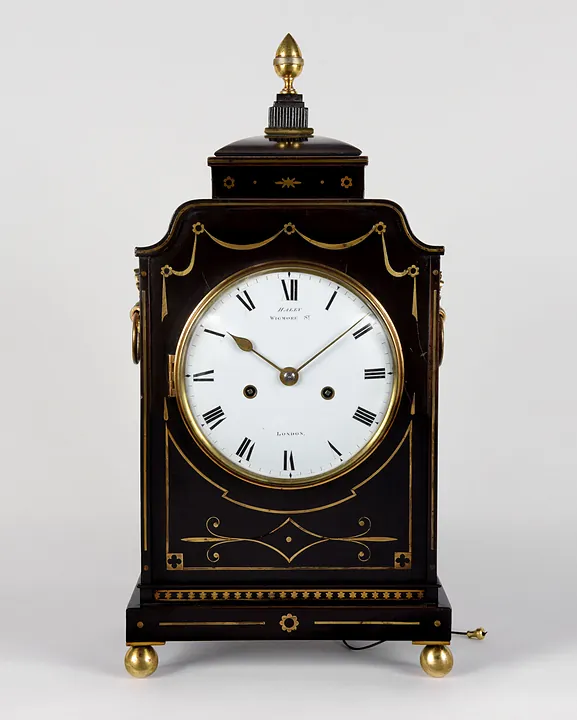
Bracket clock by Haley, London, c. 1810–1820
Howard Walwyn Fine Antique Clocks (dealer), London
Clocks · 1740–1760
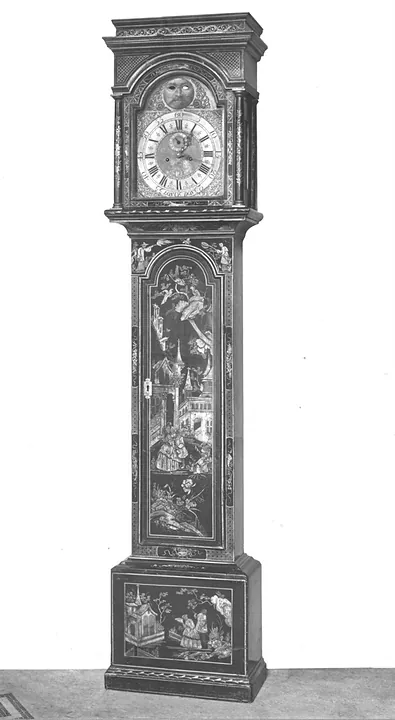
Longcase clock, English, 1740–1760, japanned wood, John Ellicott
Victoria and Albert Museum, London
Clocks · c.1750
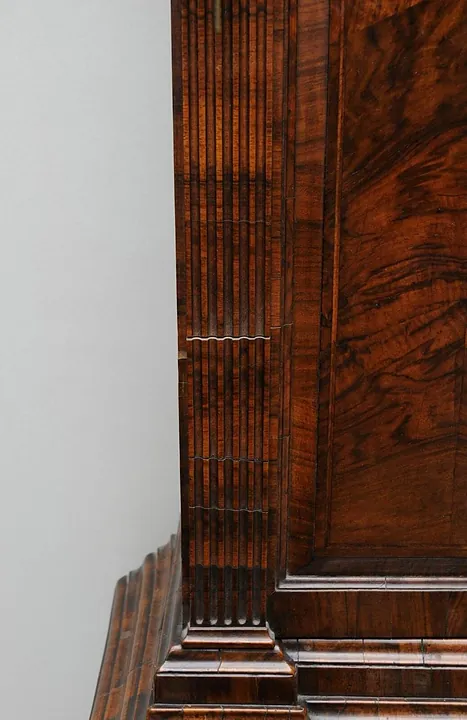
Long-case clock, English, ca. 1750, by Richard Peyton of Gloucester
Victoria and Albert Museum, London
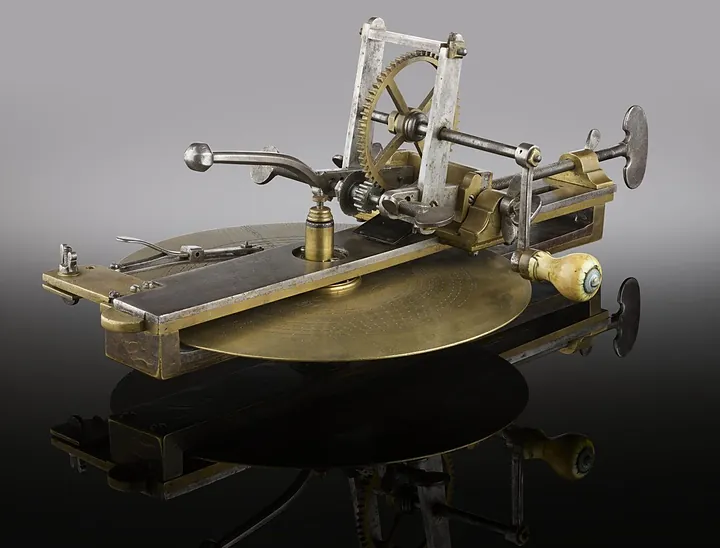
Clocks · 1751
Large wheel engine, signed and dated "John Tipping, Whildon Green, 1751".
Science Museum Group, London
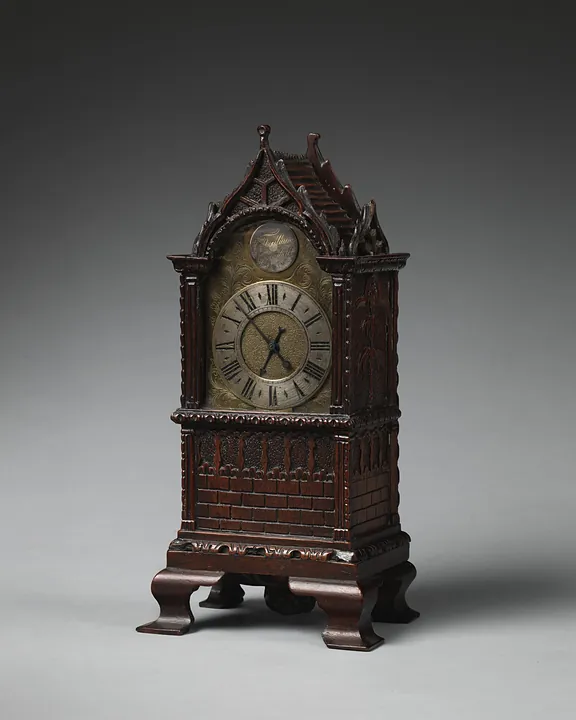
Clocks · 1755
Bracket clock by John Fordham, England, 1755
The Metropolitan Museum of Art, New York
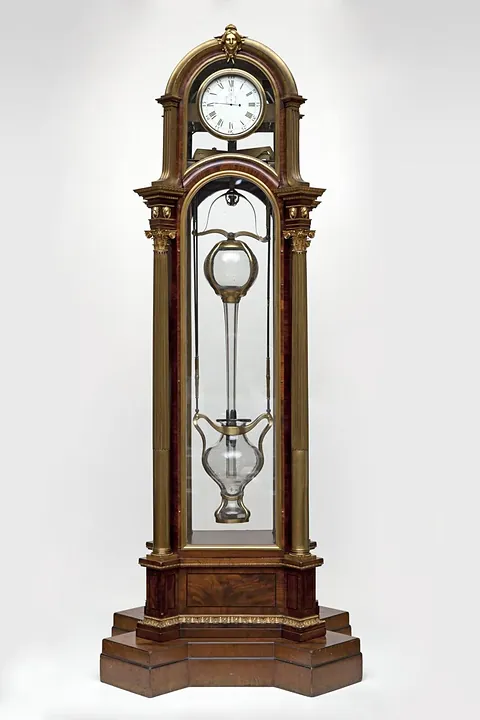
Clocks · c. 1760
Longcase clock by James Cox, England, c. 1760
Victoria and Albert Museum, London
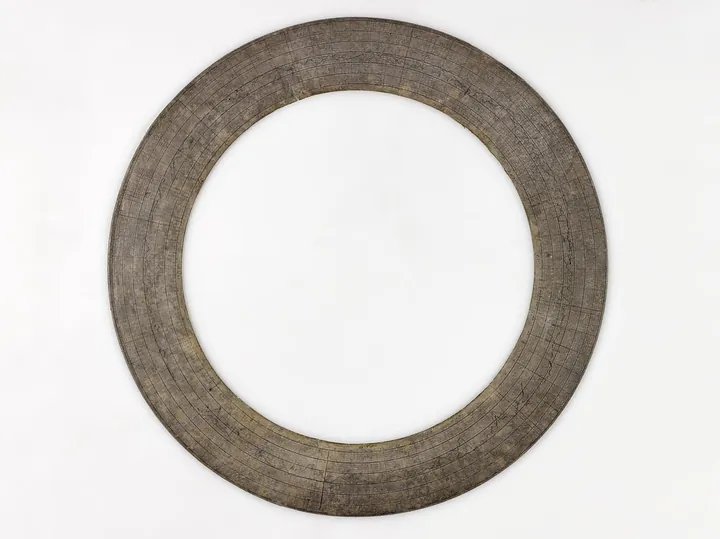
Clocks · 1766
Clock by Alexander Cumming, England, 1766
Science Museum Group, London
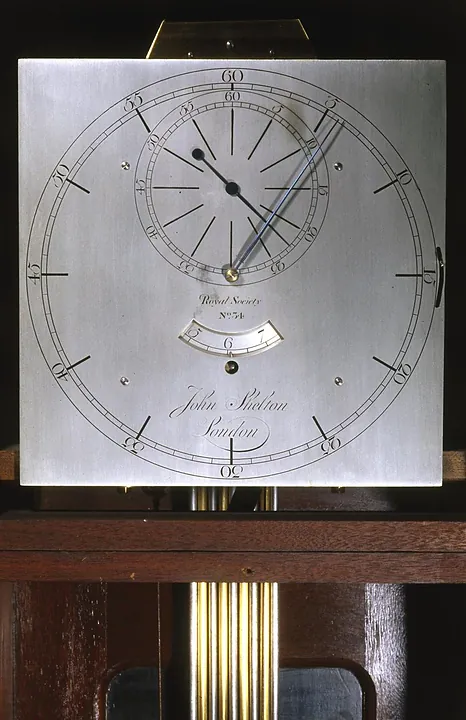
Clocks · 1768–1769
Regulator clock by John Shelton, England, 1768–1769
Science Museum Group, London