
Clocks · Astronomical regulator
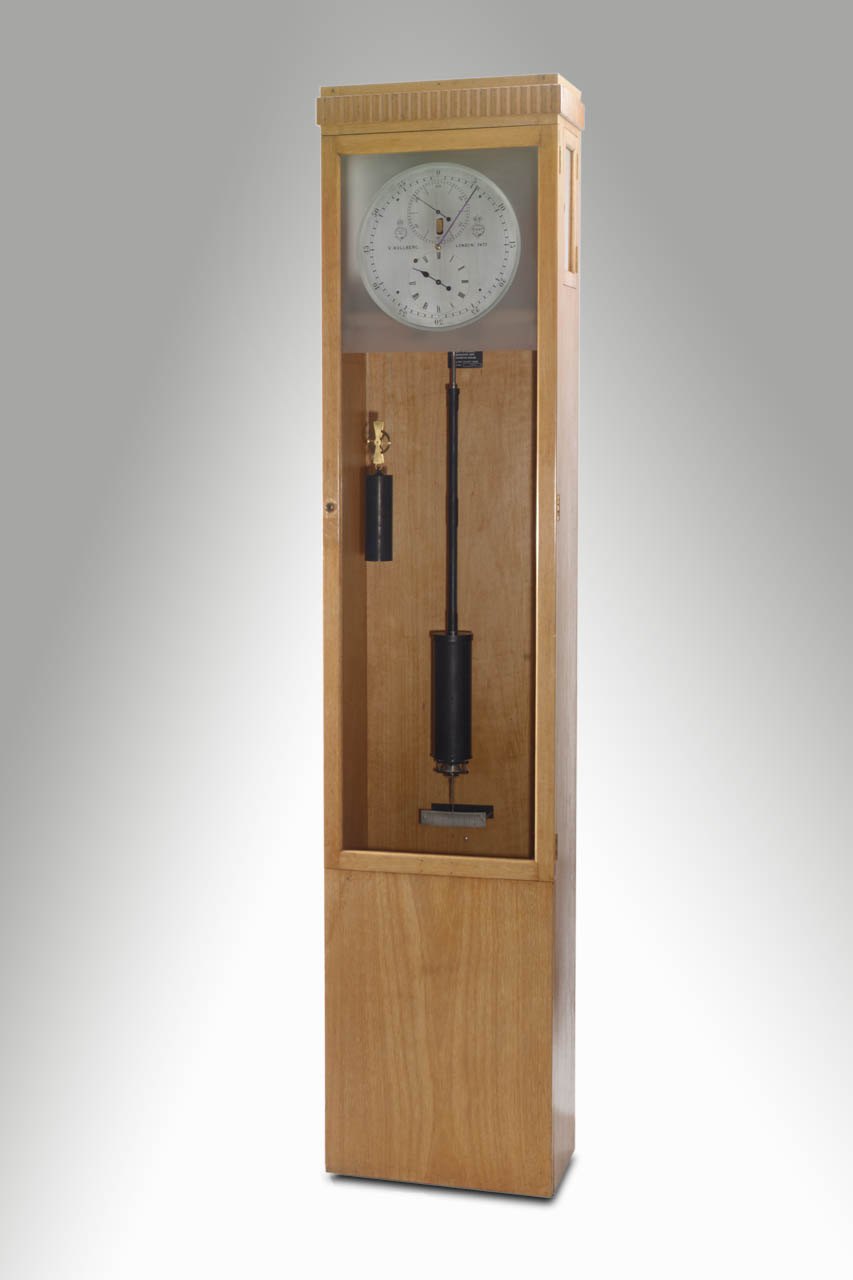
Astronomical regulator no. 7473 by Victor Kullberg
- Maker / attribution
- Victor Kullberg (maker)
- Date
- 1905
- Historical period
- Golden Age of Mechanical Watchmaking (1900 – 1945)
- Country of origin
- England
- Object type
- Astronomical regulator
- Materials / technique
- metal; wood; glass
- Dimensions
- Overall: 2150 x 470 x 295 mm
- Holding institution
- Royal Museums Greenwich
- Accession / object no.
- ZBA7931
- Credit line
- National Maritime Museum, Greenwich, London
- Catalogue title (original)
- 7473 (English)
View the source record ↗ (opens another website in a new tab)Suggest a correction
Record summary
Held and catalogued by Royal Museums Greenwich (object number ZBA7931), this is an astronomical regulator by Victor Kullberg, made in England, dated 1905. The Atlas places it in the Golden Age of Mechanical Watchmaking period (1900 – 1945) of its Clocks collection. Materials and techniques recorded by the source: metal; wood; glass. Recorded dimensions: Overall: 2150 x 470 x 295 mm. The record is illustrated with 6 photographs.
Assembled from the source record's structured fields. Dates and attributions are given as the source states them; where a field is missing the Atlas leaves it blank rather than estimating.
Catalogue description
Catalogue description — Royal Museums Greenwich
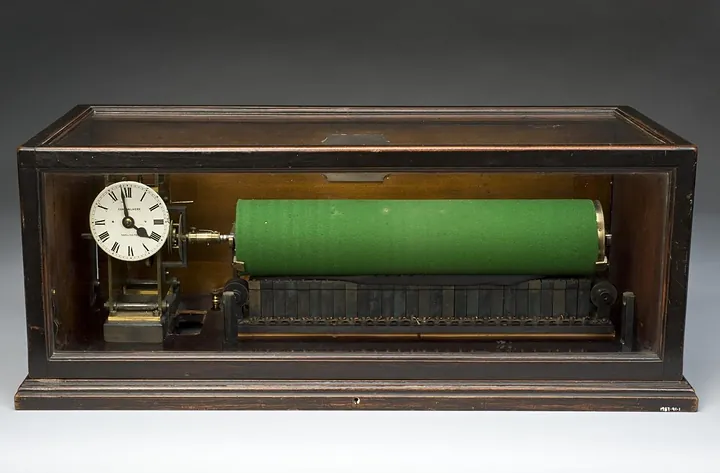
This weight-driven clock employs a dead-beat escapement with jewelled pallets and the escape wheel runs in jewelled bearings. The pendulum is compensated for temperature changes using the zinc and steel method. The clock is fitted with three sets of electrical contacts capable of giving out signals at intervals of one minute, one hour and 12 hours. For many years this clock was the time standard at the Chart Depot at Singapore. After the Japanese occupation the clock mechanism and pendulum were shipped back to the UK but the original case was lost. After the Second World War, the clock returned to Singapore where the present case was manufactured. When the Singapore base finally closed, the clock returned to the Hydrographic Office, UK in 1979 for safe keeping. Victor Kullberg (1824–1890) was born in Visby on the Island of Gotland, Sweden. He was trained by the Swedish chronometer maker Victor Soderburg in Stockholm in 1840 and emigrated to London in 1851. He had moved to a permanent address at 105 Liverpool Road, N1 by 1870. During his lifetime Kullberg gained many medals and awards for his work and enjoyed a truly international reputation. As well as supplying many foreign governments, he regularly submitted chronometers for the Annual Trials at Greenwich Observatory, gaining first place in 1864 with a chronometer fitted with his newly invented ‘flat rim’ balance. His inventions included several designs of compensation balance and improvements to keyless winding for pocket watches. He also designed the automatic gas-governor for controlling the temperature of the chronometer testing ovens at the Observatory. More than 500 chronometers by Kullberg were supplied to the Royal Navy alone and he can be said to have been one of the 19th century’s finest chronometer makers. On Kullberg’s death in 1890 the firm was taken over by George and Peter Wennerstrom. They were succeeded by Sanfrid Lundquist who had joined the firm in 1894 and who moved the firm to Cranford in Middlesex in 1938, trading under the name of Victor Kullberg until his death in 1947.
Historical context
Golden Age of Mechanical Watchmaking (1900 – 1945)
The wristwatch displaces the pocket watch; waterproof cases, self-winding and grand complications.
Between 1900 and 1945 clocks were electrified: master-clock systems ran factories and offices, synchronous mains clocks entered homes, and the Shortt free-pendulum clock set new standards of accuracy before the first quartz clocks (1927). Art Deco design reshaped mantel and table clocks.
Read the period in the timelineMore clocks from this periodEarlier: Industrial Revolution
Atlas type guide
Regulators, wall and Vienna clocks
A regulator is a precision pendulum clock used as a time standard in observatories, workshops and railway offices. Typical features are a deadbeat or Graham escapement, a temperature-compensated pendulum (mercury jar, gridiron or later invar), maintaining power and a regulator dial that separates hours, minutes and seconds. George Graham's deadbeat escapement (c. 1715) and his mercury pendulum, together with Harrison's gridiron, set the pattern for two centuries.
Wall clocks span a much wider range: the elegant Viennese Laterndluhr and Dachluhr of the Biedermeier period, the Dutch stoelklok and staartklok, English 'dial' clocks used in schools, offices and railway stations, and mass-produced spring and weight wall clocks from Germany (Gustav Becker, Junghans, Kienzle) and America.
What to look for
- Deadbeat escapement and compensated pendulum (gridiron rods, mercury jar or wood rod).
- A regulator dial with a large central minute hand and separate hour and seconds dials.
- Vienna regulators: glazed cases, slender pendulum, small weights, enamel two-piece dials.
- German factory trademarks stamped on the backplate (e.g. Gustav Becker anchor and crown, Junghans star).
Dating clues
- Graham-type deadbeat regulators: from c. 1720.
- Viennese Laterndluhr: c. 1800–1850.
- German factory 'Vienna-style' regulators: c. 1870–1930; Gustav Becker serial numbers allow close dating.
General guidance written by the Atlas editors about this kind of object. It is not a statement about this particular piece; for that, rely on the source record above and on physical examination.
Related records
Instruments · 1870–1877
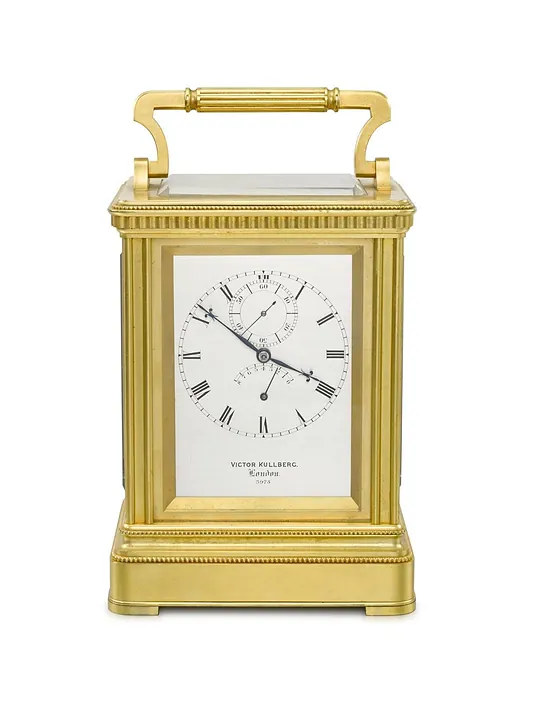
Chronometer by Victor Kullberg, England, 1870–1877
Science Museum Group, London
Movements & Components · 1860–1880
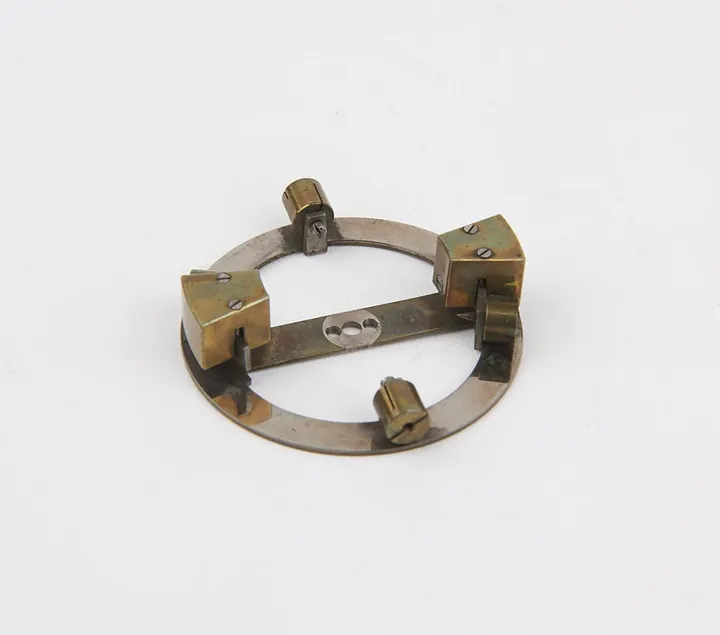
Compensation balance by Victor Kullberg, London, England, 1860–1880.
Science Museum Group, London
Pocket Watches · c. 1890
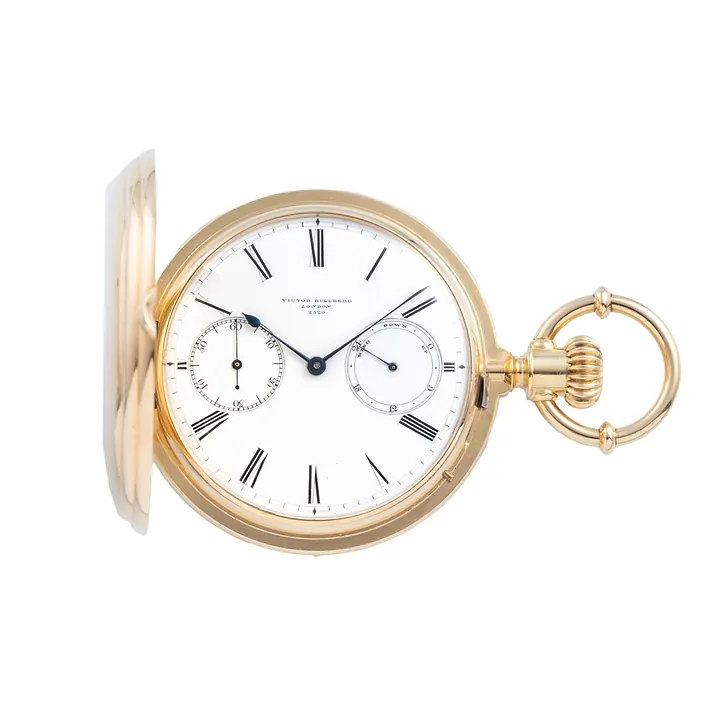
Victor Kullberg Chronometer, c. 1890
Antiquorum auction archive, Geneva
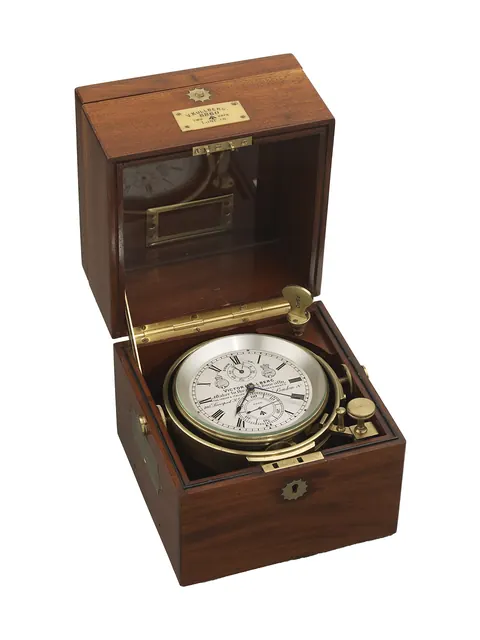
Instruments · c. 1915
Marine chronometer no. 8860 by Victor Kullberg
Royal Museums Greenwich
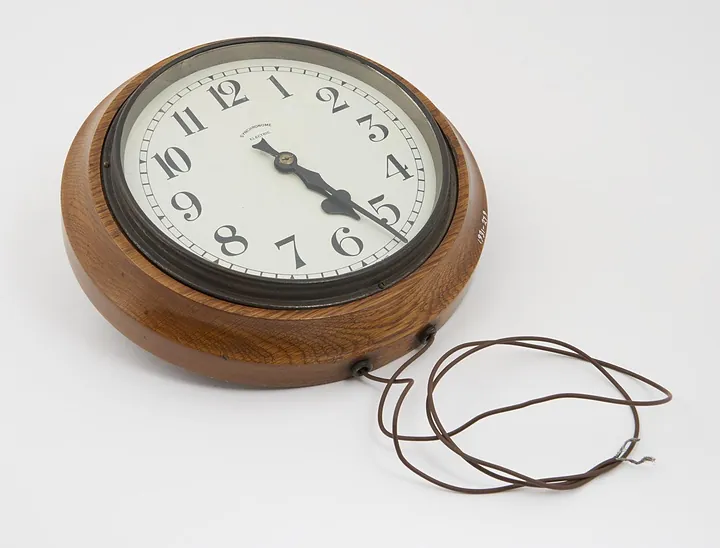
Clocks · 1890–1930
Clock with 8-inch impulse dial, by the Synchronome Company Limited, England, 1890–1930.
Science Museum Group, London
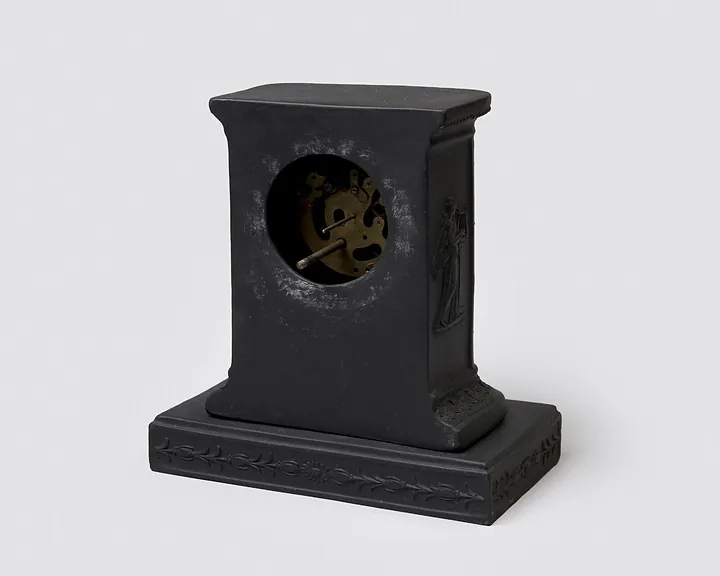
Clocks · c. 1900
Clock, black basalt, brass, Josiah Wedgwood and Sons, Etruria, c. 1900
Victoria and Albert Museum, London
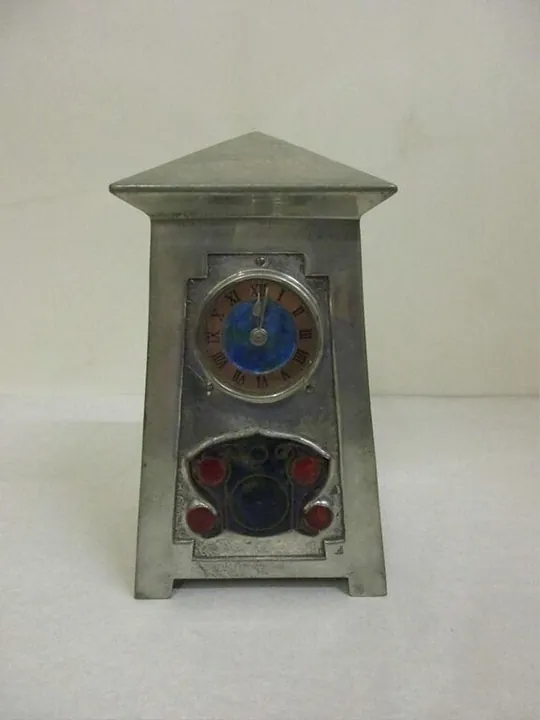
Clocks · c.1903-1904
Clock, pewter, made for Liberty& Co., England. 1903-4.
Victoria and Albert Museum, London
Clocks · 1900–1939
Clock by Cox-Walkers of Darlington, England, 1900–1939
Science Museum Group, London