
Wristwatches · Wristwatch
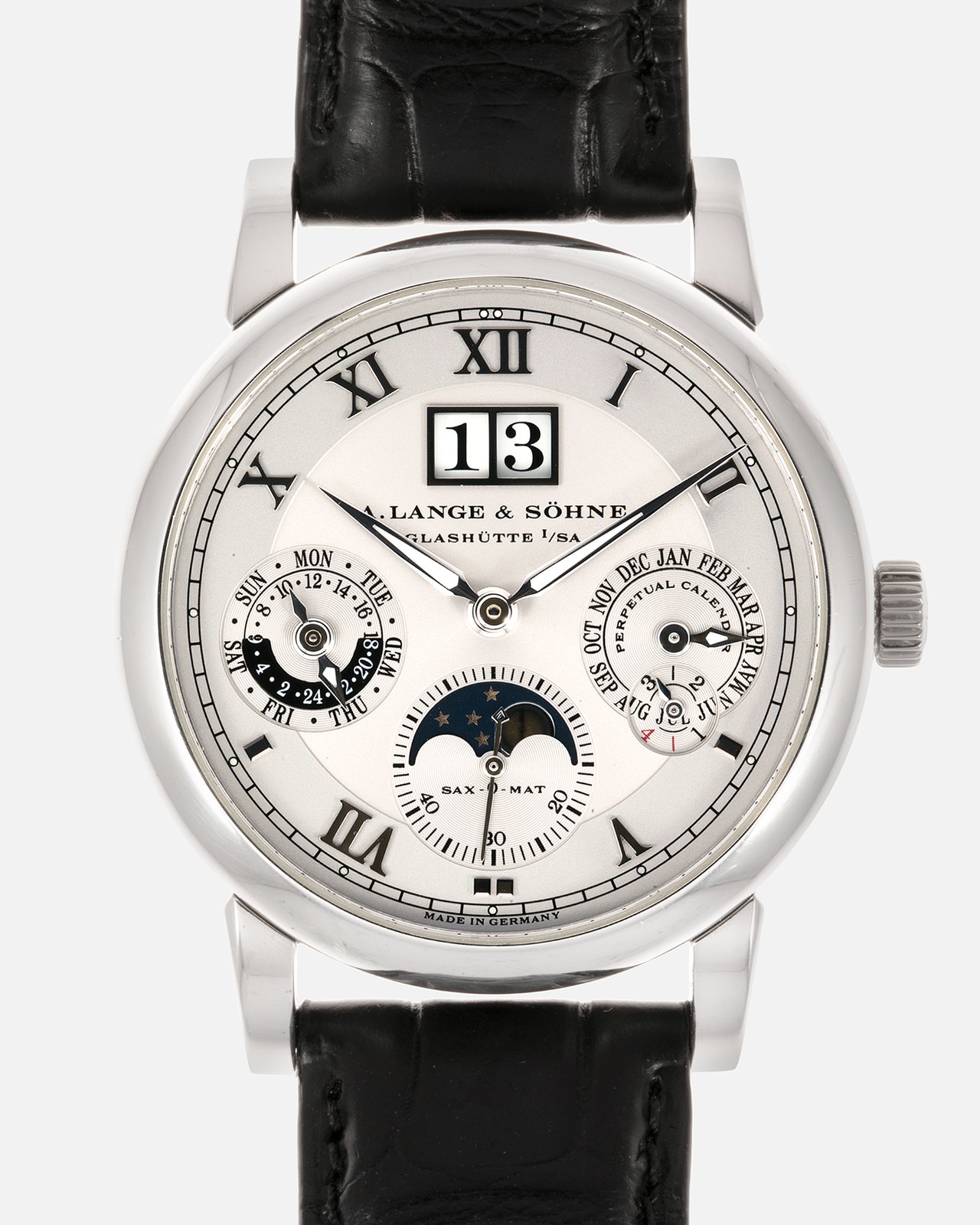
A. Lange & Sohne Langematik Perpetual 310.025 PT, 2000s
- Maker / attribution
- A. Lange & Sohne (maker)
- Date
- 2000s
- Historical period
- Mechanical Renaissance (1990 – 2010)
- Country of origin
- Germany
- Object type
- Wristwatch
- Dimensions
- Case 38.5 mm
- Stock no.
- Product 6887152025687
- Credit line
- Dealer listing, S.Song Watches (product 6887152025687)
- Catalogue title (original)
- A. Lange & Sohne Langematik Perpetual 310.025 PT (English)
View the source record (dealer listing) ↗ (opens another website in a new tab)Suggest a correction
Record summary
Catalogued by S.Song Watches (dealer), Seattle (stock number Product 6887152025687), this is a wristwatch by A. Lange & Sohne, made in Germany, dated 2000s. The Atlas places it in the Mechanical Renaissance period (1990 – 2010) of its Wristwatches collection. Recorded dimensions: Case 38.5 mm. The record is illustrated with 6 photographs.
Assembled from the source record's structured fields. Dates and attributions are given as the source states them; where a field is missing the Atlas leaves it blank rather than estimating.
Catalogue description
Dealer description — S.Song Watches
When considering the leading players in the world of high-end watchmaking, only a handful of prestigious brands come to mind: Patek Philippe, Vacheron Constantin, Audemars Piguet, and, of course, the neighbouring German brand from Glashütte, A. Lange & Söhne. While Swiss watches are often regarded as the epitome of watchmaking, A. Lange & Söhne stands as a testament to the fact that this perception is not universally true. In fact, it can be argued that in certain aspects, A. Lange & Söhne surpasses its Swiss counterparts, establishing itself as a superior contender. The A. Lange & Söhne Langematik Perpetual made its debut during a period of notable success for A. Lange & Söhne, thanks to the popularity of the Datograph introduced in 1999. Recognizing the absence of a calendar timepiece in its lineup, A. Lange & Söhne decided to introduce a perpetual calendar — a widely considered must-have grand complication in the catalogues of many prestigious watch brands. The Langematik Perpetual was then released in 2001 in two exquisite precious metal variations: one in yellow gold (Ref. 310.021) and the other in platinum (Ref. 310.025), which is also the example we have on offer today. Beginning with its delicately crafted 38.5mm x 10.2 platinum case, it is meticulously constructed with three distinct sections, each with its own unique finish. The mid-case showcases a satin brushed texture, while the bezel and caseback are polished to achieve a mirror-like finish. The lugs here are also screwed into the platinum case and feature a slight downturn at the edges, gradually tapering down to the strap. Another notable feature of the case is the presence of corrector pushers on each side, allowing for convenience and ease for adjustments. The dial of the Langematik Perpetual possesses a remarkable combination of subtlety and striking allure. To me, what truly stands out here is the unapologetically German design language used in the stereotypically efficient and uncluttered display of information. Despite it being a perpetual calendar, which often results in awfully crowded dials, the information on this dial is organized and displayed in a thoughtful hierarchy that ensures a visually satisfying and easily comprehensible layout. At the 12 o ‘clock position, the prominent big date captures the user’s attention, while the day and day / night indicators find their place at 9 o ‘clock. The month and leap year indicators gracefully occupy the 3 o ‘clock position while the running small seconds and moonphase sub-dials reside at 6 o'clock. Collectively, the dial delivers information in a clear and concise manner, allowing for the user to effortlessly read them all at a glance. Powering the Langematik Perpetual from within is A. Lange & Söhne’s in-house, 43-jewelled, self-winding Sax-0-Mat Cal. L922.1, with an integrated perpetual calendar module. It boasts a power reserve of 46-hours and utilizes an exceptional blend of historic movement aesthetics and modern technicalities. I have said this many times and I will say it again: one of the best things about owning an A. Lange & Söhne is the opportunity to just turn the watch on its back and admire its movement. What else can I say? The Cal. L922.1 is absolutely sensational from top to bottom - from the movement architecture, harmonious visual blend of colours, and the intricate details such as the iconic engraved balance cock as well as the engraved 22-carat gold rotor which bears a platinum mass beneath it. Overall, the A. Lange & Söhne Langematik Perpetual is, at its very core, an exceptional work of German horological art that eloquently illustrates A. Lange & Söhne’s no-compromise approach to watch design and construction.
Historical context
Mechanical Renaissance (1990 – 2010)
Mechanical watches return as cultural objects; independent watchmaking flourishes.
Mechanical watches returned as cultural and luxury objects. Complications, tourbillons and new materials proliferated; independent watchmakers such as George Daniels, F.P. Journe and Philippe Dufour revived artisanal watchmaking; collecting vintage watches became a major field.
Read the period in the timelineMore wristwatches from this periodEarlier: Quartz Revolution
Atlas type guide
Calendar, moon-phase and perpetual calendar watches
Calendar complications range from a simple date to the perpetual calendar, which automatically allows for months of different lengths and leap years until 2100. Pocket watches with perpetual calendars were made in the eighteenth and nineteenth centuries; Patek Philippe made the first perpetual calendar wristwatch in 1925, and series production followed in 1941. The annual calendar (Patek Philippe, 1996) needs correction only once a year.
Moon-phase displays use a disc with two moons and 59 teeth advanced daily, approximating the 29.5-day lunation; more precise trains reduce the error to one day in over a century.
What to look for
- Apertures or subsidiary dials for day, date, month and leap year.
- Moon disc under a 'bosom' shaped aperture.
- Recessed correctors on the case band for setting the calendar.
Dating clues
- Triple-date wristwatches: popular c. 1940–1955.
- Perpetual calendar wristwatches: from 1925 (unique) and 1941 (series).
General guidance written by the Atlas editors about this kind of object. It is not a statement about this particular piece; for that, rely on the source record above and on physical examination.
Related records
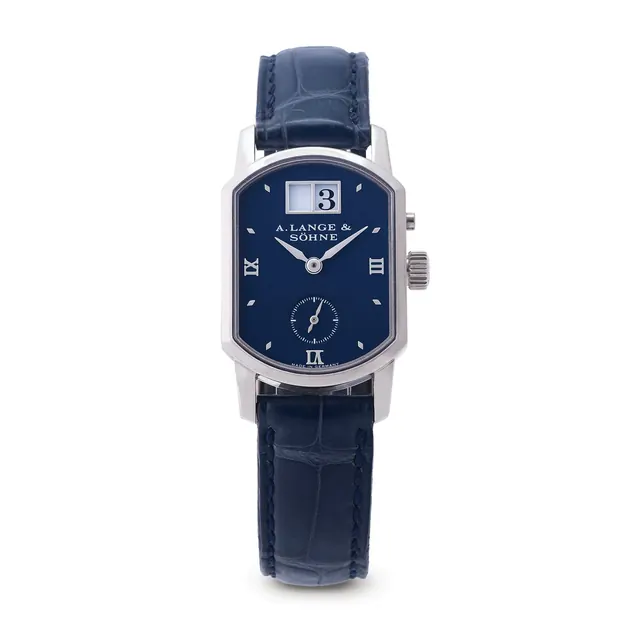
Wristwatches · originally sold on 16 December 2001 (per the lot record)
A. Lange & Sohne wristwatch, ref. 103.027, Arkade, originally sold on 16 December 2001
Antiquorum auction archive, Geneva
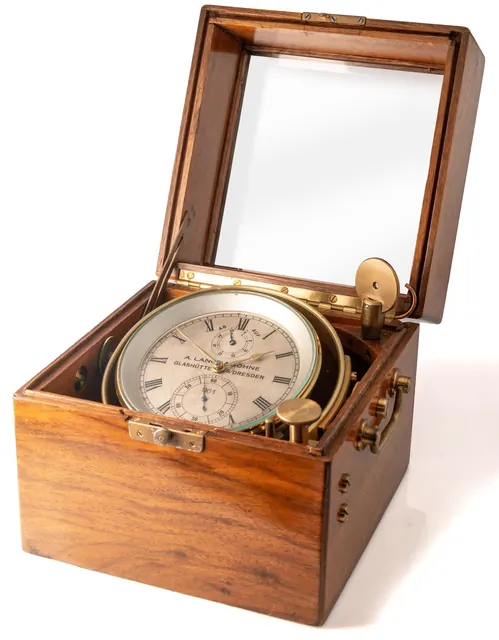
Instruments · c. 1942
A. Lange & Sohne marine chronometer, Germany Wood, circa 1942
Antiquorum auction archive, Geneva
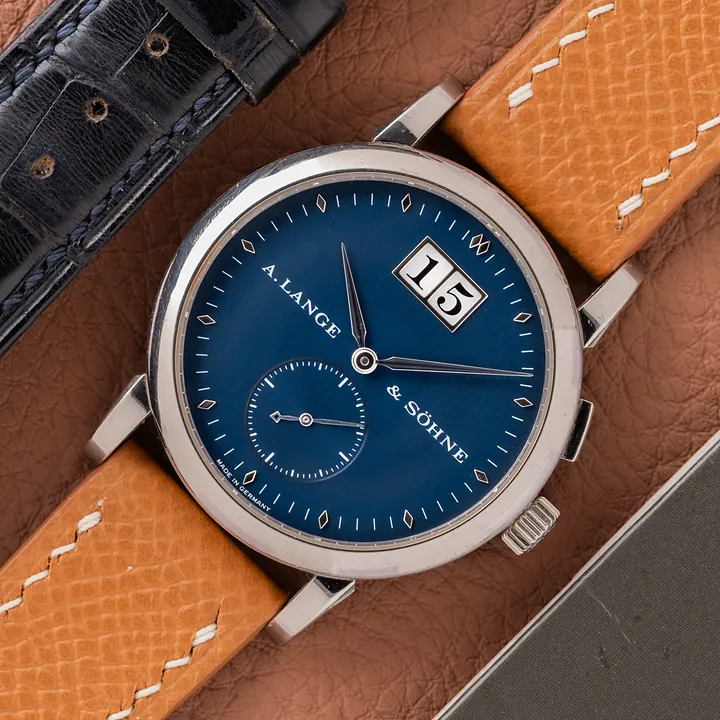
Wristwatches · 2004
A. Lange & Söhne Saxonia Oversized Date Blue (Ref. 105.027), 2004
Huntington Company (dealer)
Wristwatches · 2000s
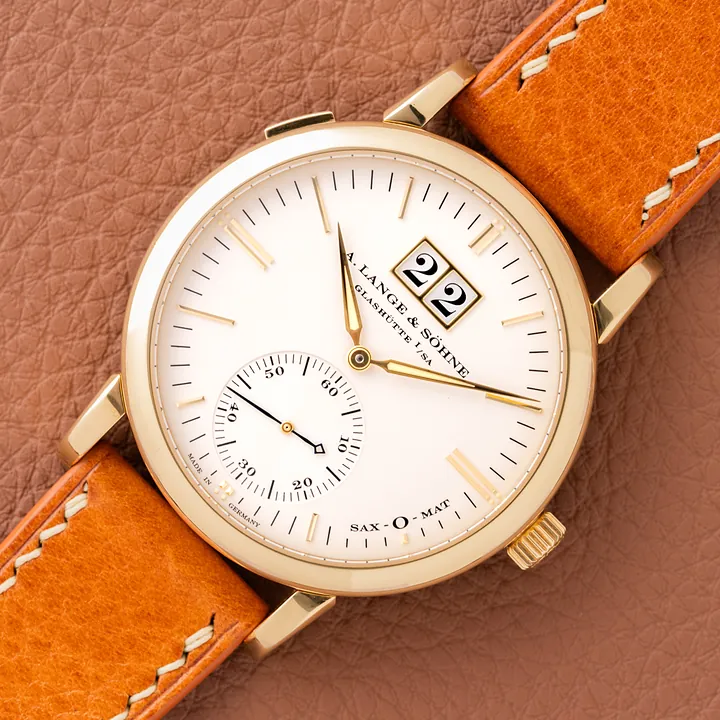
A. Lange & Söhne Langematik Oversized Date (Ref. 308.021), 2000s
Huntington Company (dealer)
Wristwatches · c. 1990
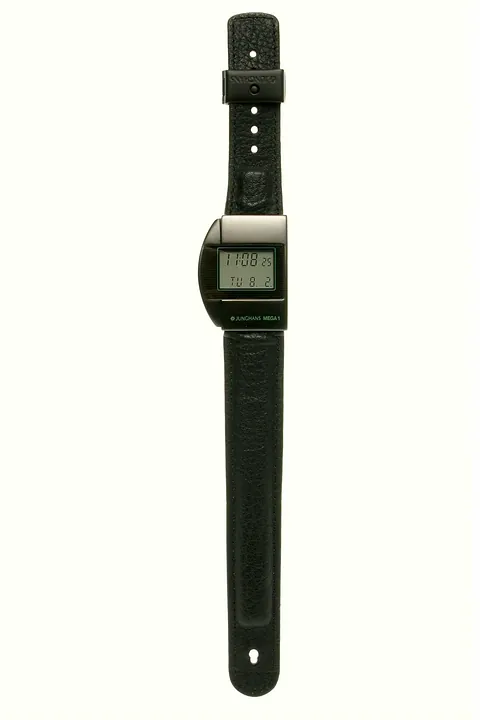
Wristwatch, Germany, c. 1990 (no. 29875)
German Clock Museum
Wristwatches · 1990
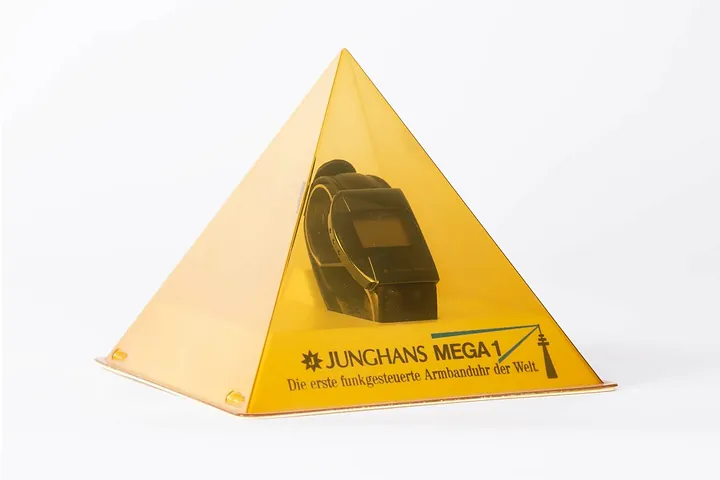
Wristwatch, Germany, 1990 (no. 59620)
German Clock Museum
Wristwatches · c. 1991
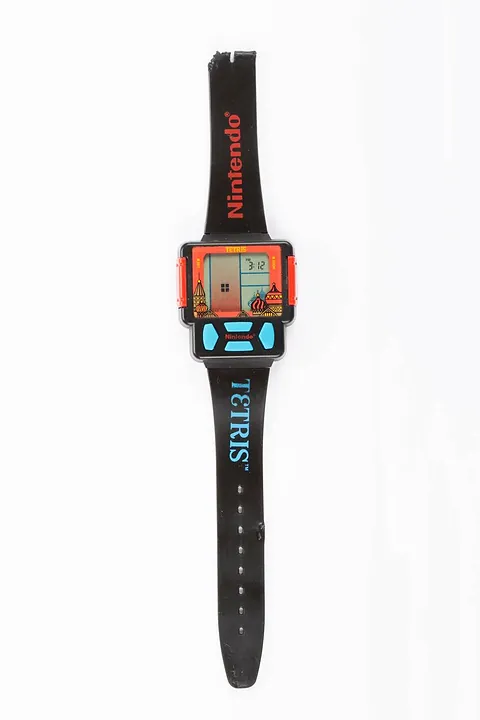
Wristwatch by EM-Entertainment München, Merchandising, Film und Fernseh GmbH, Germany, c. 1991
German Clock Museum
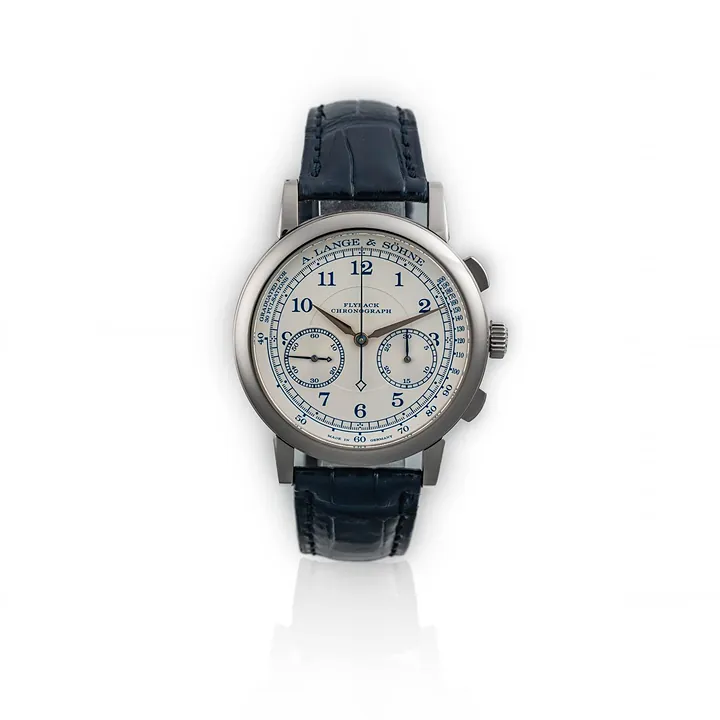
Wristwatches · c. 2000
A.Lange & Söhne 1815 Chronograph, ref. 414.026, c. 2000
Antiquorum auction archive, Geneva