
Wristwatches · Wristwatch
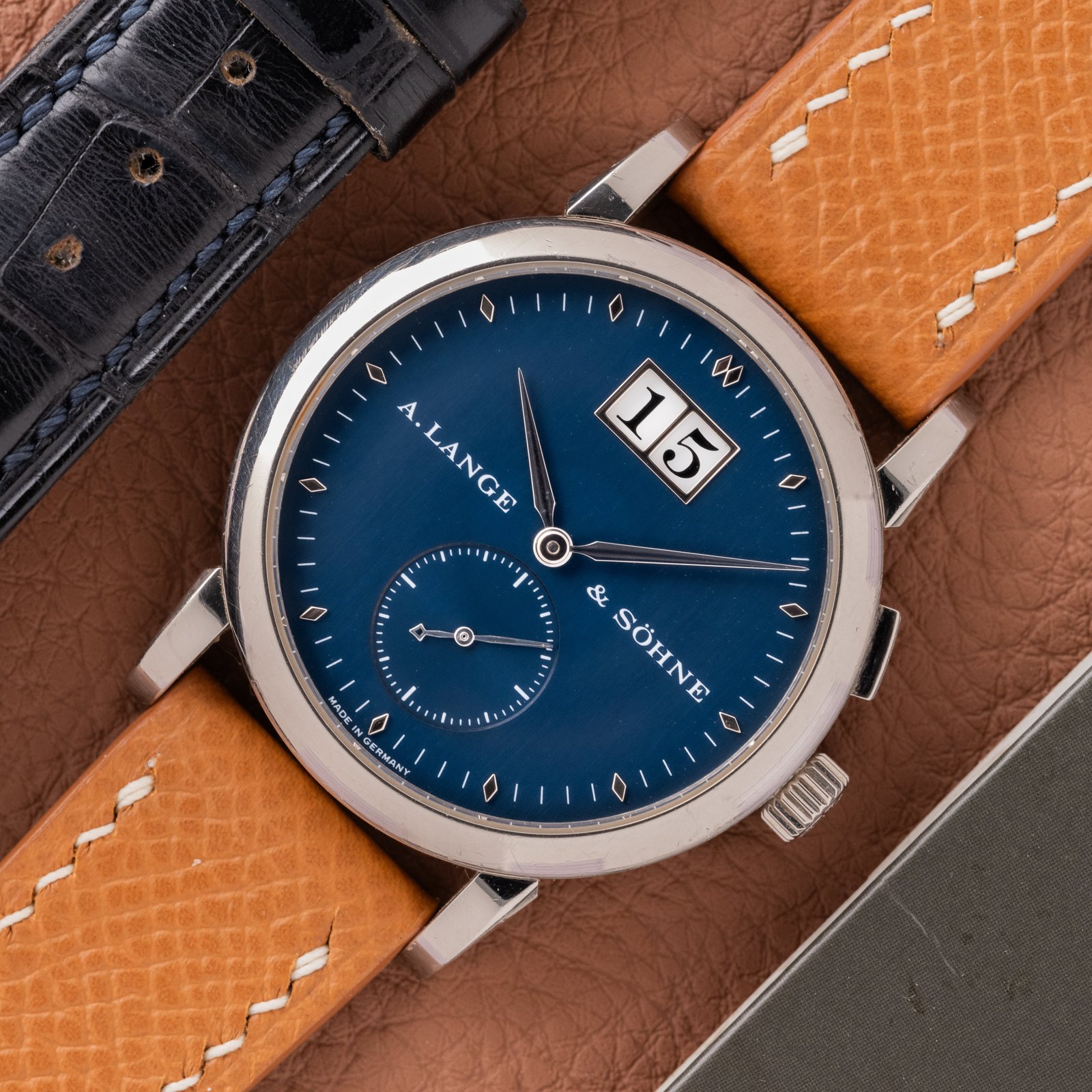
A. Lange & Söhne Saxonia Oversized Date Blue (Ref. 105.027), 2004
- Maker / attribution
- A. Lange & Sohne (maker)
- Date
- 2004
- Historical period
- Mechanical Renaissance (1990 – 2010)
- Country of origin
- Germany
- Object type
- Wristwatch
- Dimensions
- Case 34 mm
- Stock no.
- Product 8792012718263
- Credit line
- Dealer listing, Huntington Company (product 8792012718263)
- Catalogue title (original)
- 2004 A. Lange & Söhne Saxonia Oversized Date Blue - Box and Papers (Ref. 105.027) (English)
View the source record (dealer listing) ↗ (opens another website in a new tab)Suggest a correction
Record summary
Catalogued by Huntington Company (dealer) (stock number Product 8792012718263), this is a wristwatch by A. Lange & Sohne, made in Germany, dated 2004. The Atlas places it in the Mechanical Renaissance period (1990 – 2010) of its Wristwatches collection. Recorded dimensions: Case 34 mm. The record is illustrated with 6 photographs.
Assembled from the source record's structured fields. Dates and attributions are given as the source states them; where a field is missing the Atlas leaves it blank rather than estimating.
Catalogue description
Dealer description — Huntington Company
History and Significance The Saxonia is one of the clearest expressions of what A. Lange & Söhne was trying to accomplish after the manufacture returned in the 1990s. The early catalog did not need dozens of collections to establish an identity. Instead, watches like the Lange 1, Arkade, Tourbillon Pour le Mérite, and Saxonia introduced a very specific kind of German watchmaking, one rooted in traditional Glashütte construction but presented as something genuinely contemporary. The reference 105.027 belongs to that formative generation. The oversized date is an important part of modern Lange history. Inspired by the five-minute digital clock at Dresden's Semper Opera House, the display uses two separate apertures to create numerals dramatically larger than a conventional date wheel could accommodate. It became one of the defining signatures of the revived manufacture almost immediately. On the Saxonia, the complication feels particularly striking because the rest of the dial remains so restrained. The blue dial is where the reference 105.027 becomes considerably more distinctive. Early Lange is often imagined through silver dials and precious-metal cases, so the deep blue changes the personality without disrupting the restraint of the Saxonia design. Paired with white gold, the combination feels cool and almost severe at first. Then the applied markers and subsidiary seconds begin to catch the light, and the simplicity becomes much more expressive. Turn the watch over and the other half of the Saxonia story appears. Lange was instrumental in making the movement something owners were expected to admire, even on a simple time-only watch. Traditional Glashütte architecture, elaborate finishing, and the visual depth of a manually wound caliber turn the caseback into something every bit as considered as the dial. The movement is not hidden technical machinery. It is fundamental to the identity of the watch. That is a large part of why early A. Lange & Söhne has developed such a devoted following. These watches come from the period when the modern language of the manufacture was still being established, and the Saxonia shows just how complete that language already was. The reference 105.027 does not need one of Lange's famous complications to make the point. It is a simple watch executed with an almost unreasonable amount of care. Writer's Thoughts This is the kind of Lange that makes early examples so addictive. The blue dial, white gold case, and oversized date provide plenty of personality, but nothing feels excessive. At 34mm, the 105.027 allows the dial architecture to do the talking rather than relying on physical size for presence. The result feels elegant, slightly unusual, and unmistakably A. Lange & Söhne. The oversized date is the detail that really makes the watch. It should almost feel too large for such a restrained design, yet somehow it becomes the element that holds everything together. Pairing that display with the blue dial makes an already interesting Saxonia much harder to ignore. This is Lange at its best: serious watchmaking with just enough eccentricity to keep things interesting. Our Promise Every watch is thoroughly vetted, carefully described with complete transparency, and guaranteed authentic. Each piece is offered in honest condition, ensuring collectors receive a timepiece that reflects both originality and integrity. Specifications Brand: A. Lange & Söhne Model: Saxonia Reference: 105.027 Year: 2004 Case Material: 18k white gold Case Size: 34mm Dial: Blue dial with subsidiary seconds Movement: Manual wind Strap/Buckle: New H.C. leather strap; original A. Lange & Söhne strap included Buckle/Clasp: Original A. Lange & Söhne buckle Contents: Complete set with original strap and buckle Condition Case: Presents attractively with signs of wear consistent with age and use. Dial: Blue dial presents beautifully with a clean, rich finish. The white specks in the photos are dust on top of the crystal. Hands: Present well with a clean appearance throughout. Crystal: Presents well overall with no notable wear. Strap/Buckle: Fitted to a new H.C. leather strap, with the original A. Lange & Söhne strap included. Buckle/Clasp: Original A. Lange & Söhne buckle remains with the watch.
Historical context
Mechanical Renaissance (1990 – 2010)
Mechanical watches return as cultural objects; independent watchmaking flourishes.
Mechanical watches returned as cultural and luxury objects. Complications, tourbillons and new materials proliferated; independent watchmakers such as George Daniels, F.P. Journe and Philippe Dufour revived artisanal watchmaking; collecting vintage watches became a major field.
Read the period in the timelineMore wristwatches from this periodEarlier: Quartz Revolution
Atlas type guide
Wristwatches
Bracelet watches were worn by women from the early nineteenth century — Breguet made one for Caroline Murat, Queen of Naples, in 1810–12 — but the wristwatch only became a man's instrument with military use and aviation in the early twentieth century. Between the World Wars it overtook the pocket watch; the 1920s and 1930s brought rectangular Art Deco cases, water-resistant cases and the first automatic winding systems.
After 1945 the wristwatch became a carrier of identity — dress watches, sports and dive watches, chronographs, calendars — produced by Swiss, American, Japanese, German, Soviet and Chinese industries. The quartz revolution after 1969 and the mechanical renaissance since the 1990s, including the rise of independent watchmakers, complete the story.
What to look for
- The reference number (between the lugs or inside the case back) and serial number, the starting point for dating.
- The calibre: its maker and number are often stamped under the dial or on the bridge.
- Originality of dial, hands and crown — refinished ('redial') dials are common.
- Case material marks: 18K/750, 14K/585, stainless steel, gold-filled, plated.
Dating clues
- Wire-lug cases: before c. 1925.
- Water-resistant screw-down cases: from 1926.
- Quartz movements: from 1969; sapphire crystals widespread after c. 1980.
General guidance written by the Atlas editors about this kind of object. It is not a statement about this particular piece; for that, rely on the source record above and on physical examination.
Related records
Wristwatches · originally sold on 16 December 2001 (per the lot record)
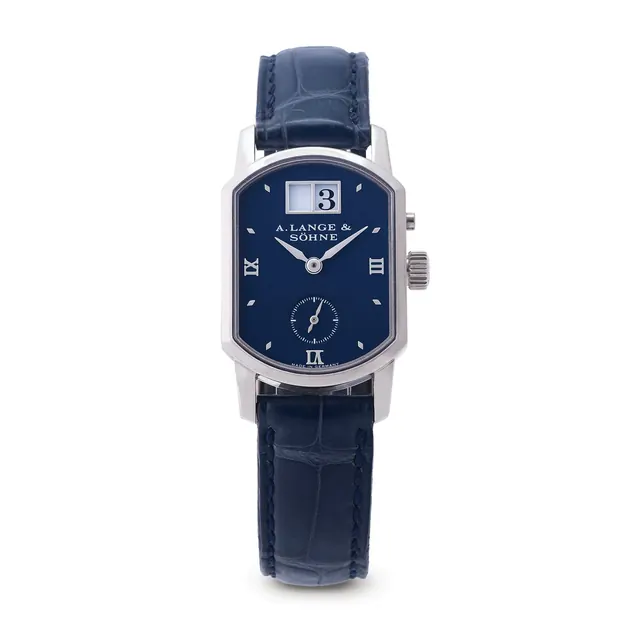
A. Lange & Sohne wristwatch, ref. 103.027, Arkade, originally sold on 16 December 2001
Antiquorum auction archive, Geneva
Instruments · c. 1942
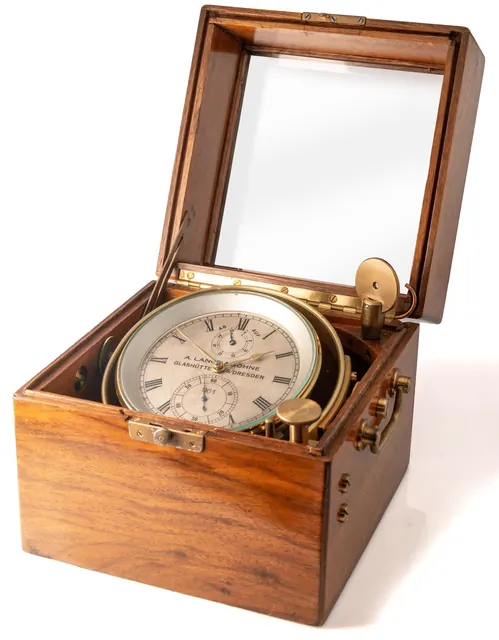
A. Lange & Sohne marine chronometer, Germany Wood, circa 1942
Antiquorum auction archive, Geneva
Wristwatches · 2000s
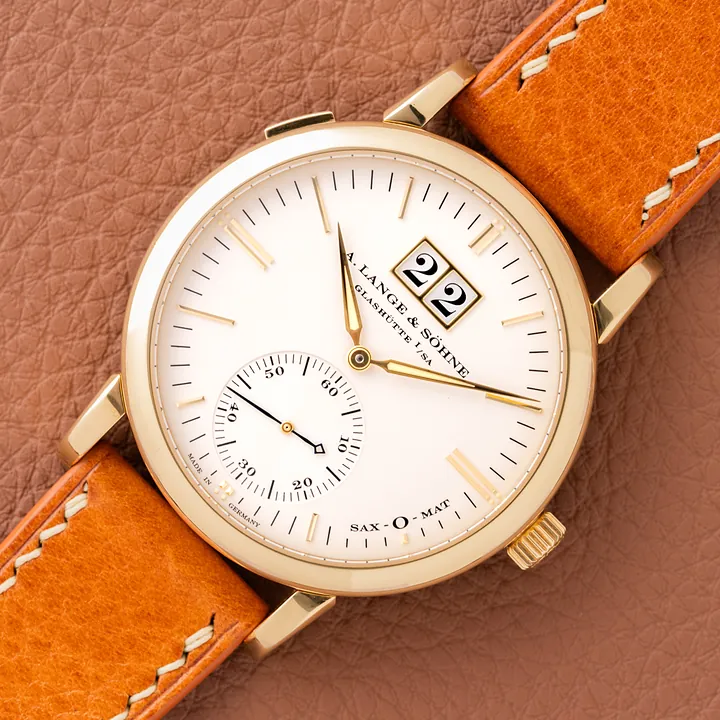
A. Lange & Söhne Langematik Oversized Date (Ref. 308.021), 2000s
Huntington Company (dealer)
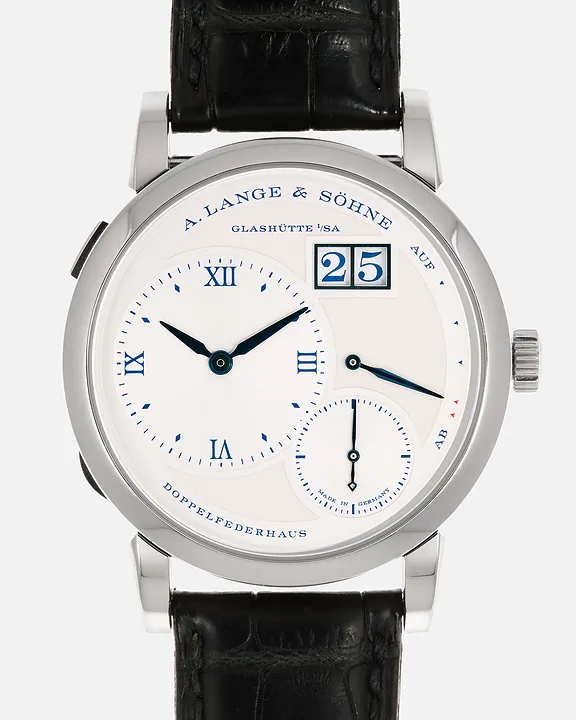
Wristwatches · 2019
A. Lange & Sohne Lange 1 25th Anniversary 191.066, 2019
S.Song Watches (dealer), Seattle
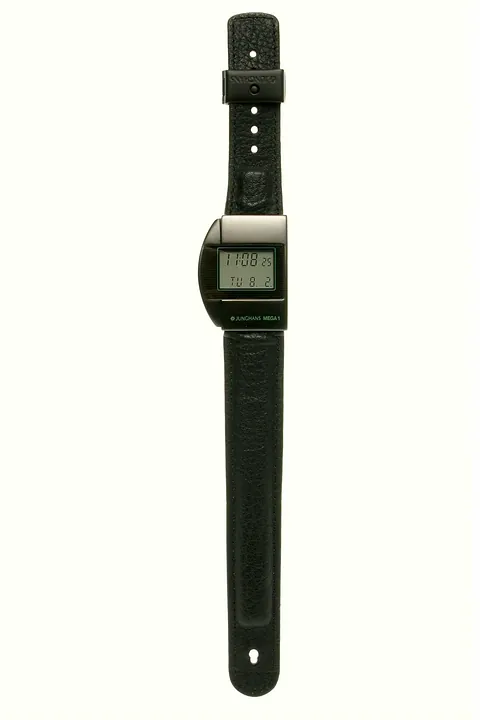
Wristwatches · c. 1990
Wristwatch, Germany, c. 1990 (no. 29875)
German Clock Museum
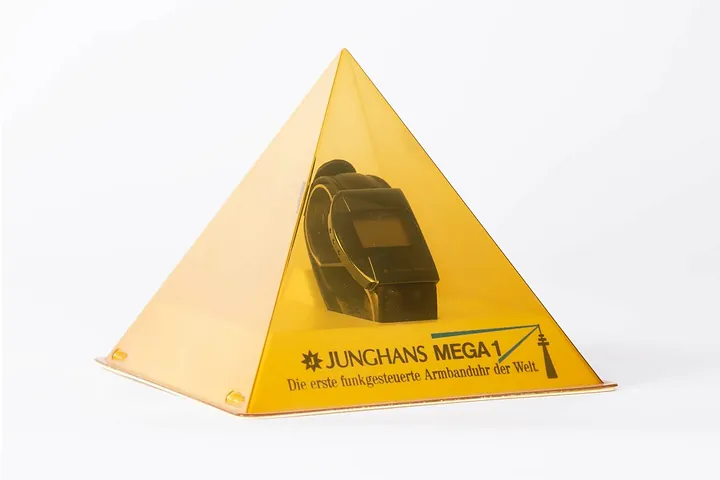
Wristwatches · 1990
Wristwatch, Germany, 1990 (no. 59620)
German Clock Museum
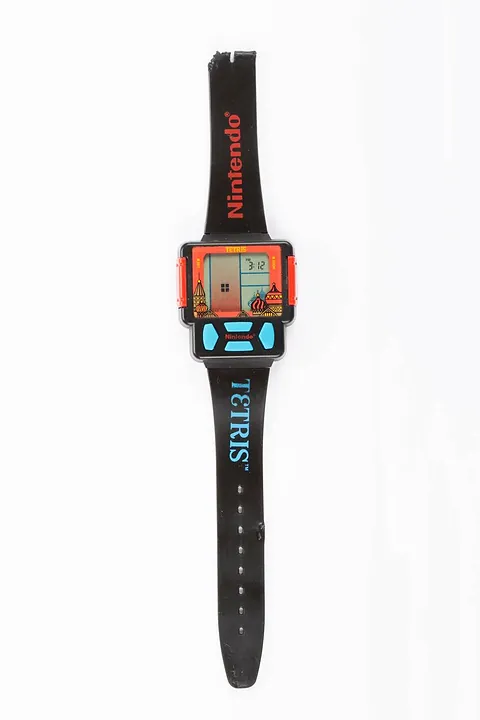
Wristwatches · c. 1991
Wristwatch by EM-Entertainment München, Merchandising, Film und Fernseh GmbH, Germany, c. 1991
German Clock Museum
Wristwatches · c. 2000
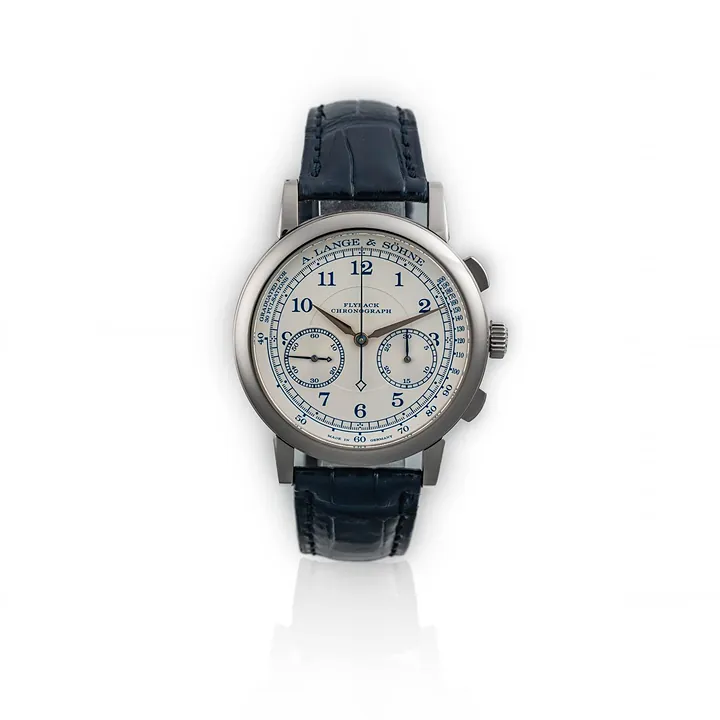
A.Lange & Söhne 1815 Chronograph, ref. 414.026, c. 2000
Antiquorum auction archive, Geneva