
Clocks · Longcase clock
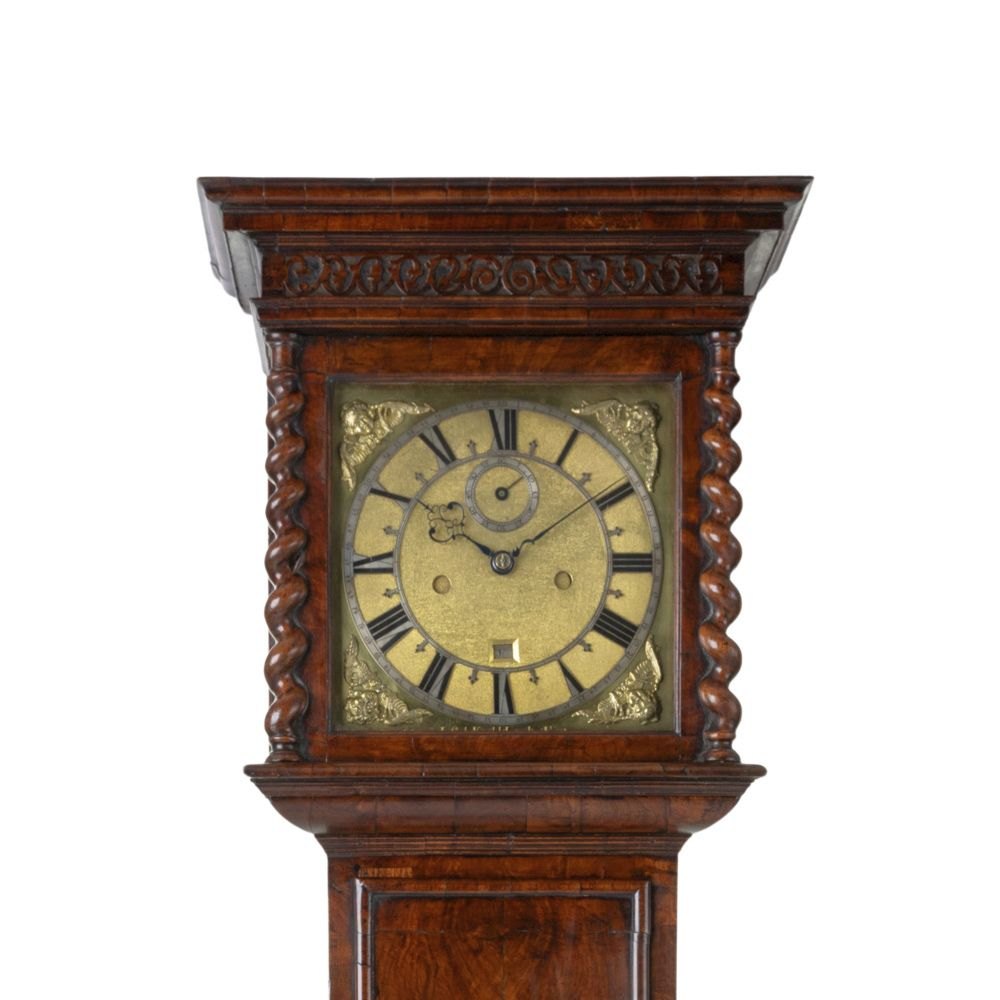
Walnut 8-day longcase clock by Joseph Knibb
- Maker / attribution
- Joseph Knibb (maker)
- Date
- c. 1680
- Historical period
- Early Modern Horology (1600 – 1750)
- Country of origin
- England
- Object type
- Longcase clock
- Materials / technique
- walnut
- Dimensions
- Height 188 cm
- Stock no.
- Product 3284
- Credit line
- Dealer listing, The Antique Clock Company (product 3284)
- Catalogue title (original)
- A VERY FINE AND RARE WALNUT 8-DAY LONGCASE CLOCK – JOSEPH KNIBB (English)
View the source record (dealer listing) ↗ (opens another website in a new tab)Suggest a correction
Record summary
Catalogued by The Antique Clock Company (dealer), Dorset (stock number Product 3284), this is a longcase clock by Joseph Knibb, made in England, dated c. 1680. The Atlas places it in the Early Modern Horology period (1600 – 1750) of its Clocks collection. Materials and techniques recorded by the source: walnut. Recorded dimensions: Height 188 cm. The record is illustrated with 5 photographs.
Assembled from the source record's structured fields. Dates and attributions are given as the source states them; where a field is missing the Atlas leaves it blank rather than estimating.
Catalogue description
Dealer description — The Antique Clock Company
A true masterpiece of horological design and craftsmanship. The Walnut case is elegantly proportioned. It features a rectangular trunk door with its original reversed iron hinges and beautifully preserved original mouldings above the plinth, all raised on refined bun feet. The rising hood has since been converted and is enhanced with a convex throat moulding, twisted walnut columns, glazed sides, and a decorative pierced walnut sound fret atop the cornice, showcasing exquisite attention to detail. The clock’s 10-inch square gilt-brass dial, fully latched and signed “Joseph Knibb London,” displays a skeletonised silvered chapter ring engraved with Roman numerals, Arabic minute markers, and fleur-de-lis half-hour markers, characteristic of Knibb’s distinctive style. The expertly pierced blued steel hands are elegantly sculpted, and the finely matted centre is adorned with a calendar aperture above the VI, a subsidiary seconds ring. Corners are embellished with gilt-brass winged cherub spandrels. An exceptional eight-day, weight-driven movement secured to the backboard with an L-shaped retaining bracket for stability. The plates are connected by five latched, knopped, and ringed pillars, showcasing the quality of traditional craftsmanship. It operates with a refined anchor escapement driving a brass-faced pendulum, equipped with a butterfly suspension and bolt-and-shutter maintaining power with an outside countwheel on the backplate. This clock promises both reliability and classic elegance and captures the essence of early English clockmaking, making it a prized addition for any horology enthusiast or collector. Joseph Knibb (1640–1711) was one of the most distinguished English clockmakers of the late 17th century. Known for his precision and innovation, Knibb was part of the esteemed Knibb family of clockmakers and apprenticed under his cousin, Samuel Knibb. He began his own practice in Oxford and later moved to London around 1670, where he became well-regarded for both his artistic and technical contributions to horology. Knibb is celebrated for his advancements in clock mechanisms, notably his development of the anchor escapement and his early use of bolt-and-shutter maintaining power, allowing the clock to continue running while wound. These features marked a leap in timekeeping accuracy and reliability. Knibb’s clocks often include fine decorative touches, such as skeletonised chapter rings and fleur-de-lis half-hour markers. He is also known for the “Roman striking” system, which strikes the hours in a way that economises bell strikes for fewer disruptions. A signature style of Knibb’s longcase clocks is their elegant walnut cases with architectural elements, including glazed panels and sound frets, which enhanced both their functionality and aesthetic appeal. Today, Joseph Knibb’s clocks are highly valued for their craftsmanship and are considered some of the finest examples of English clockmaking. Height: 74″ or 188 cm
Provenance
Private collection, UK
Historical context
Early Modern Horology (1600 – 1750)
Huygens' pendulum and balance spring transform accuracy; English makers develop the anchor and deadbeat escapements.
Huygens's pendulum (1656–57) improved clock accuracy from about a quarter of an hour to under a minute a day. The anchor escapement (c. 1670) and the long seconds pendulum created the longcase clock; London makers such as Fromanteel, Knibb, Tompion and Quare led European clockmaking, and French makers created the Boulle pendule.
Read the period in the timelineMore clocks from this periodEarlier: Renaissance Horology
Atlas type guide
Longcase (tall-case or grandfather) clocks
The longcase clock was born from two seventeenth-century innovations: Christiaan Huygens's pendulum (1656–57) and the anchor escapement (c. 1670). A long seconds pendulum, nearly a metre long, swings with a small arc, and enclosing it together with the driving weights in a tall wooden case protected the mechanism and created a new piece of furniture. London makers such as Ahasuerus Fromanteel, Thomas Tompion and Joseph Knibb set the pattern.
By the eighteenth century longcase clocks were made throughout Britain, the Netherlands, Scandinavia (the Swedish Mora clock), France (the Comtoise from the Franche-Comté), Germany and colonial America. Eight-day movements with two weights became standard in better clocks; thirty-hour clocks with one weight and a rope or chain were cheaper alternatives.
What to look for
- Winding holes in the dial: two (eight-day, going and striking) or none (thirty-hour, pulled up by a chain).
- Brass dials with applied chapter rings (earlier) versus painted iron 'white' dials (after c. 1770 in Britain).
- Moon-phase arches, date apertures, seconds dials and maker's name on the dial.
- Case woods and style: ebonised, walnut marquetry, lacquer, oak or mahogany; regional styles from London, Lancashire, Scotland or America.
- Whether the movement and dial match the case — 'marriages' are common.
Dating clues
- Square brass dials suggest c. 1670–1720; arched brass dials c. 1715–1790.
- Painted (white) dials were made by Birmingham dial-makers from about 1772.
- Comtoise clocks with repoussé pendulums are mostly nineteenth century.
General guidance written by the Atlas editors about this kind of object. It is not a statement about this particular piece; for that, rely on the source record above and on physical examination.
Read next:Deadbeat escapementAnchor escapement
Related records
Clocks · c. 1680–85
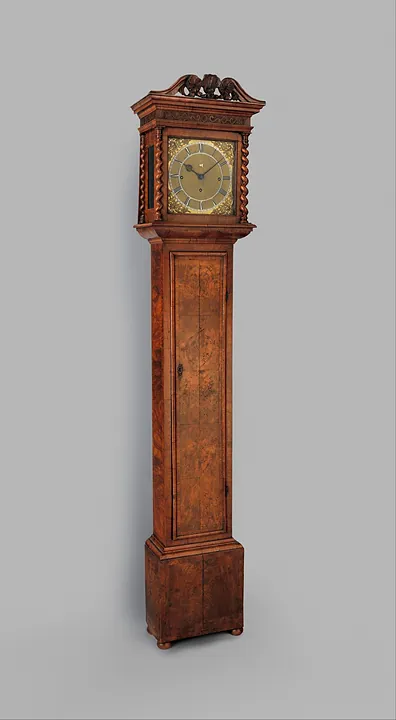
Longcase clock with calendar by Joseph Knibb, England, c. 1680–85
The Metropolitan Museum of Art, New York
Clocks · c.1690
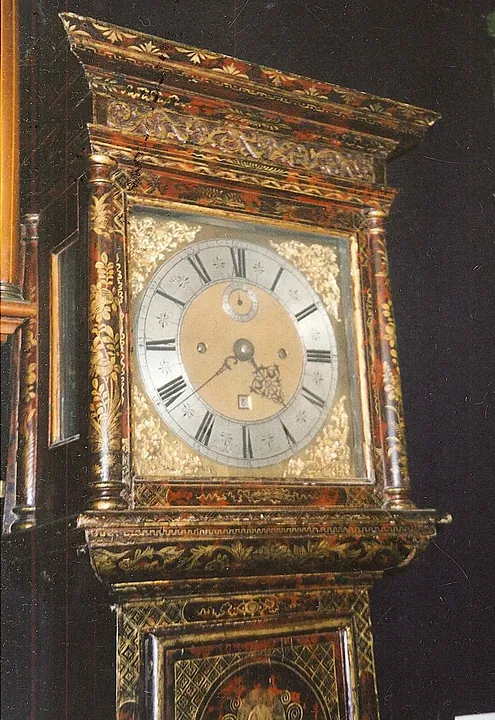
Longcase clock by Joseph Knibb, England, c.1690
Victoria and Albert Museum, London
Pocket Watches · 1670-5
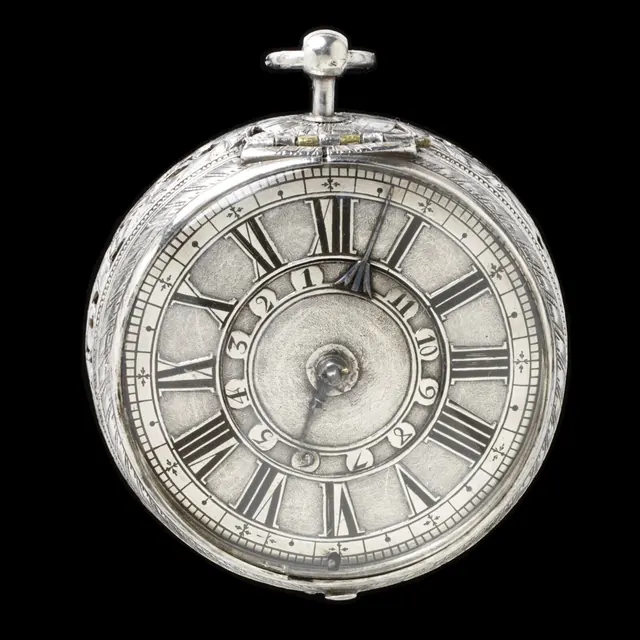
Watch by Joseph Knibb, England, 1670-5
Victoria and Albert Museum, London
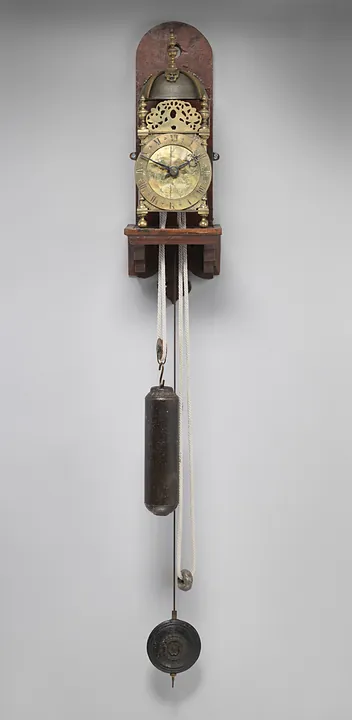
Clocks · c. 1675
Lantern clock
The Metropolitan Museum of Art, New York
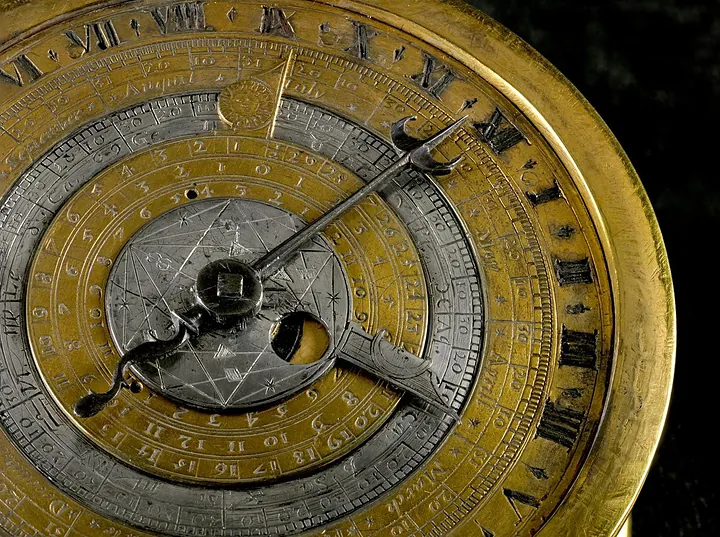
Clocks · 1598–1603
Circular table-clock with calendrical and lunar indications made by Nicholas Vallin in London between 1598 and 1603.
Science Museum Group, London
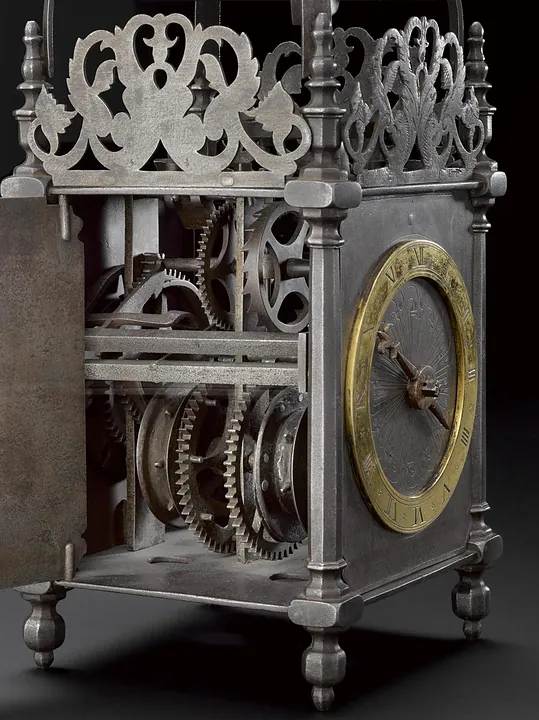
Clocks · 1611
English iron lantern clock, with wheel balance, by John Holloway, Market Lavington, Wiltshire, England, 1611.
Science Museum Group, London
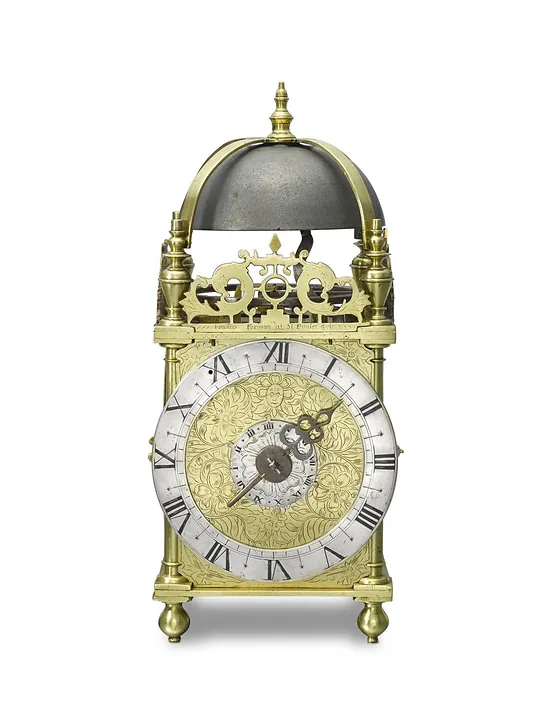
Clocks · 1630
Lantern clock by Francis Forman, England, 1630
Science Museum Group, London
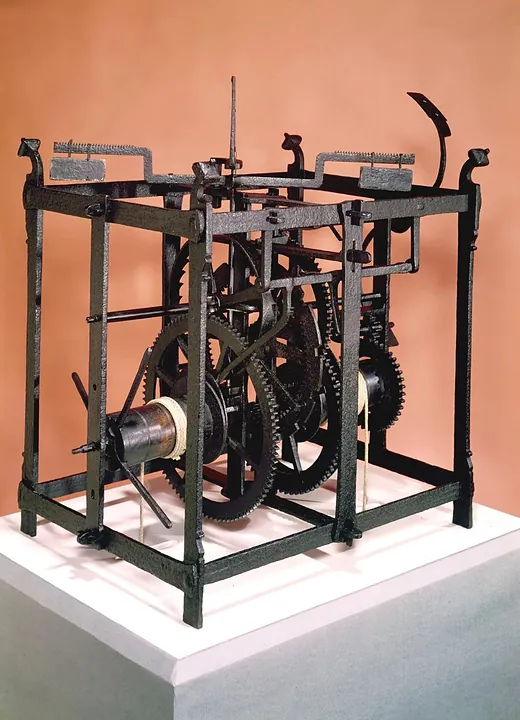
Clocks · 1632–1640
Turret clock, England, 1632–1640
Science Museum Group, London