
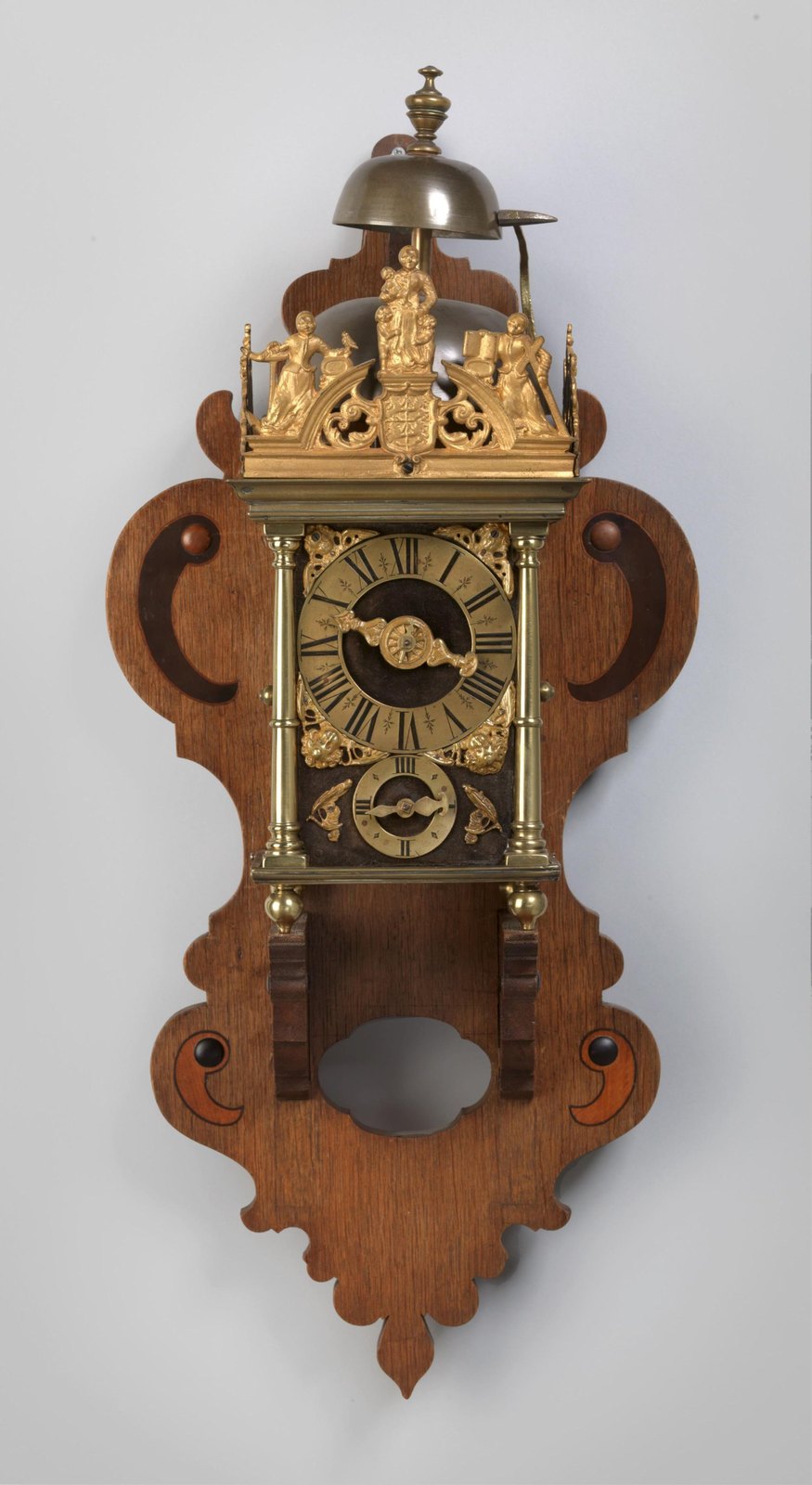
Clocks · Wall clock
Wall clock, 1650–1700
- Maker / attribution
- Unrecorded in source
- Date
- 1650–1700
- Historical period
- Early Modern Horology (1600 – 1750)
- Country of origin
- Unrecorded in source
- Object type
- Wall clock
- Materials / technique
- iron (metal), ebony (wood), satinwood (wood), velvet (fabric weave), brass (alloy), oak (wood)
- Dimensions
- height 74.5 cm x width 33.5 cm x depth 22 cm
- Holding institution
- Rijksmuseum
- Accession / object no.
- BK-KOG-2484
- Credit line
- On loan from the Koninklijk Oudheidkundig Genootschap
- Catalogue title (original)
- Hangklok (Dutch)
View the source record ↗ (opens another website in a new tab)Suggest a correction
Record summary
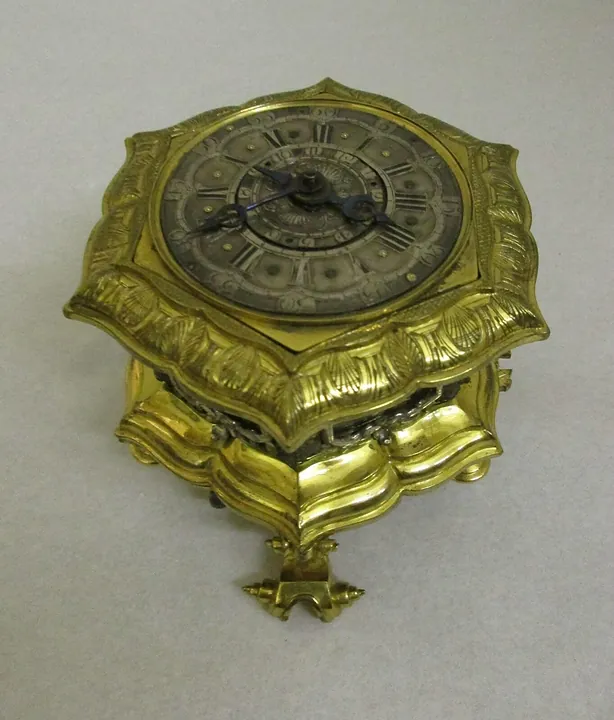
Held and catalogued by Rijksmuseum (object number BK-KOG-2484), this is a wall clock, dated 1650–1700. The Atlas places it in the Early Modern Horology period (1600 – 1750) of its Clocks collection. Materials and techniques recorded by the source: iron (metal), ebony (wood), satinwood (wood), velvet (fabric weave), brass (alloy), oak (wood). Recorded dimensions: height 74.5 cm x width 33.5 cm x depth 22 cm. The record is illustrated with 1 photograph.
Assembled from the source record's structured fields. Dates and attributions are given as the source states them; where a field is missing the Atlas leaves it blank rather than estimating.
Catalogue description
Description — Rijksmuseum (Dutch)
Hangklok. Het eikenhouten blad met ebbenhouten inlegwerk is, evenals de consoles, modern. Het kastje is in messing uitgevoerd en heeft Dorische colonetten.In het gebroken fronton zijn het Geloof, de Hoop en de Liefde weergegeven. Koperen wijzerplaat en cherubhoekstukken op een zwart fluwelen onderlaag. Op het schild van het voorfronton staat een onleesbaar huismerk. De bel is bekroond met een knop; de slinger, gewichten en touwen ontbreken.
Shown in the original language of the source catalogue. An editor-reviewed English translation has not yet been published; we do not publish machine translations as authoritative text.
Historical context
Early Modern Horology (1600 – 1750)
Huygens' pendulum and balance spring transform accuracy; English makers develop the anchor and deadbeat escapements.
Huygens's pendulum (1656–57) improved clock accuracy from about a quarter of an hour to under a minute a day. The anchor escapement (c. 1670) and the long seconds pendulum created the longcase clock; London makers such as Fromanteel, Knibb, Tompion and Quare led European clockmaking, and French makers created the Boulle pendule.
Read the period in the timelineMore clocks from this periodEarlier: Renaissance Horology
Atlas type guide
Regulators, wall and Vienna clocks
A regulator is a precision pendulum clock used as a time standard in observatories, workshops and railway offices. Typical features are a deadbeat or Graham escapement, a temperature-compensated pendulum (mercury jar, gridiron or later invar), maintaining power and a regulator dial that separates hours, minutes and seconds. George Graham's deadbeat escapement (c. 1715) and his mercury pendulum, together with Harrison's gridiron, set the pattern for two centuries.
Wall clocks span a much wider range: the elegant Viennese Laterndluhr and Dachluhr of the Biedermeier period, the Dutch stoelklok and staartklok, English 'dial' clocks used in schools, offices and railway stations, and mass-produced spring and weight wall clocks from Germany (Gustav Becker, Junghans, Kienzle) and America.
What to look for
- Deadbeat escapement and compensated pendulum (gridiron rods, mercury jar or wood rod).
- A regulator dial with a large central minute hand and separate hour and seconds dials.
- Vienna regulators: glazed cases, slender pendulum, small weights, enamel two-piece dials.
- German factory trademarks stamped on the backplate (e.g. Gustav Becker anchor and crown, Junghans star).
Dating clues
- Graham-type deadbeat regulators: from c. 1720.
- Viennese Laterndluhr: c. 1800–1850.
- German factory 'Vienna-style' regulators: c. 1870–1930; Gustav Becker serial numbers allow close dating.
General guidance written by the Atlas editors about this kind of object. It is not a statement about this particular piece; for that, rely on the source record above and on physical examination.
Read next:Deadbeat escapementAnchor (recoil) escapementGrasshopper escapement
Related records
Clocks · Early 17th century
Table clock, probably Denmark, early 17th century
German Clock Museum
Clocks · 1590–1610
Clock, France, 1590–1610
MAK – Museum of Applied Arts
Clocks · c. 1600
Table Clock, sheet brass, engraved, pierced and gilt, Paris, ca.1600, signed 'B(?) Pichard, à Paris'
Victoria and Albert Museum, London
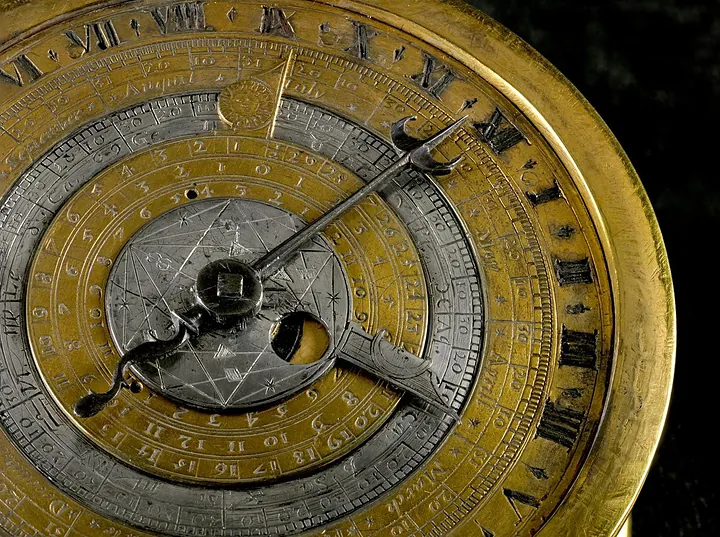
Clocks · 1598–1603
Circular table-clock with calendrical and lunar indications made by Nicholas Vallin in London between 1598 and 1603.
Science Museum Group, London
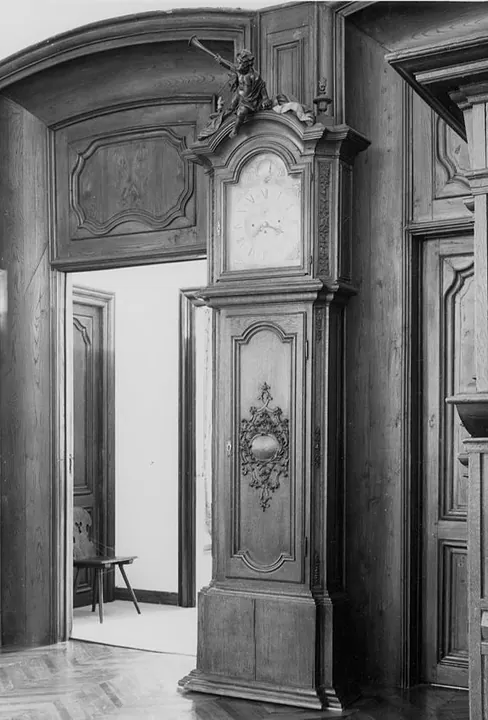
Clocks · 1600–1699
Clock by Joannes Volcker, Belgium, 1600–1699 (no. AP_10156031)
Royal Institute for Cultural Heritage
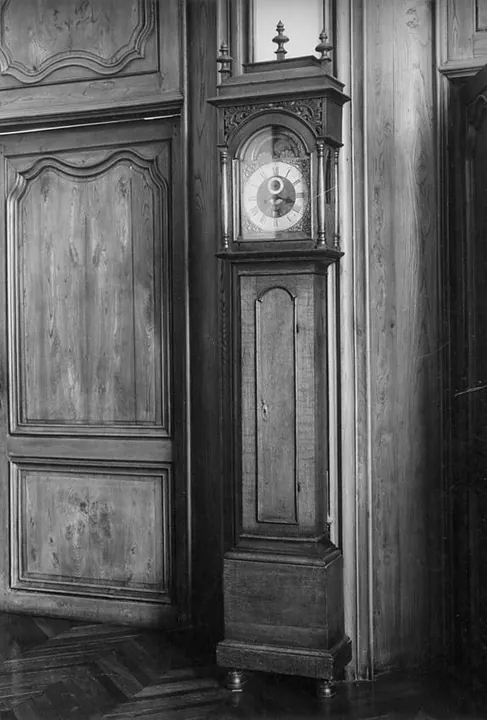
Clocks · 1600–1699
Clock by Joannes Volcker, Belgium, 1600–1699 (no. AP_10156032)
Royal Institute for Cultural Heritage
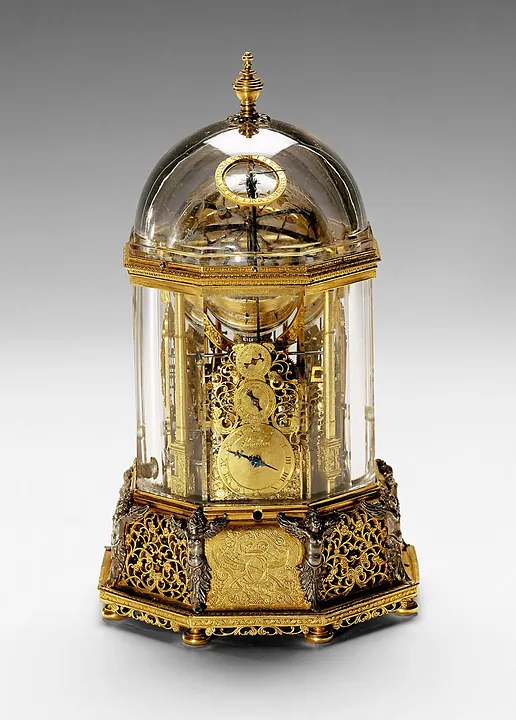
Clocks · 1600–1699
Clock attributed to Jobst Bürgi, Czech Republic, 1600–1699
Fine Arts Museum Vienna
Clocks · 1600–1700
Clock, Germany, 1600–1700
Victoria and Albert Museum, London