
Instruments · Stop watch
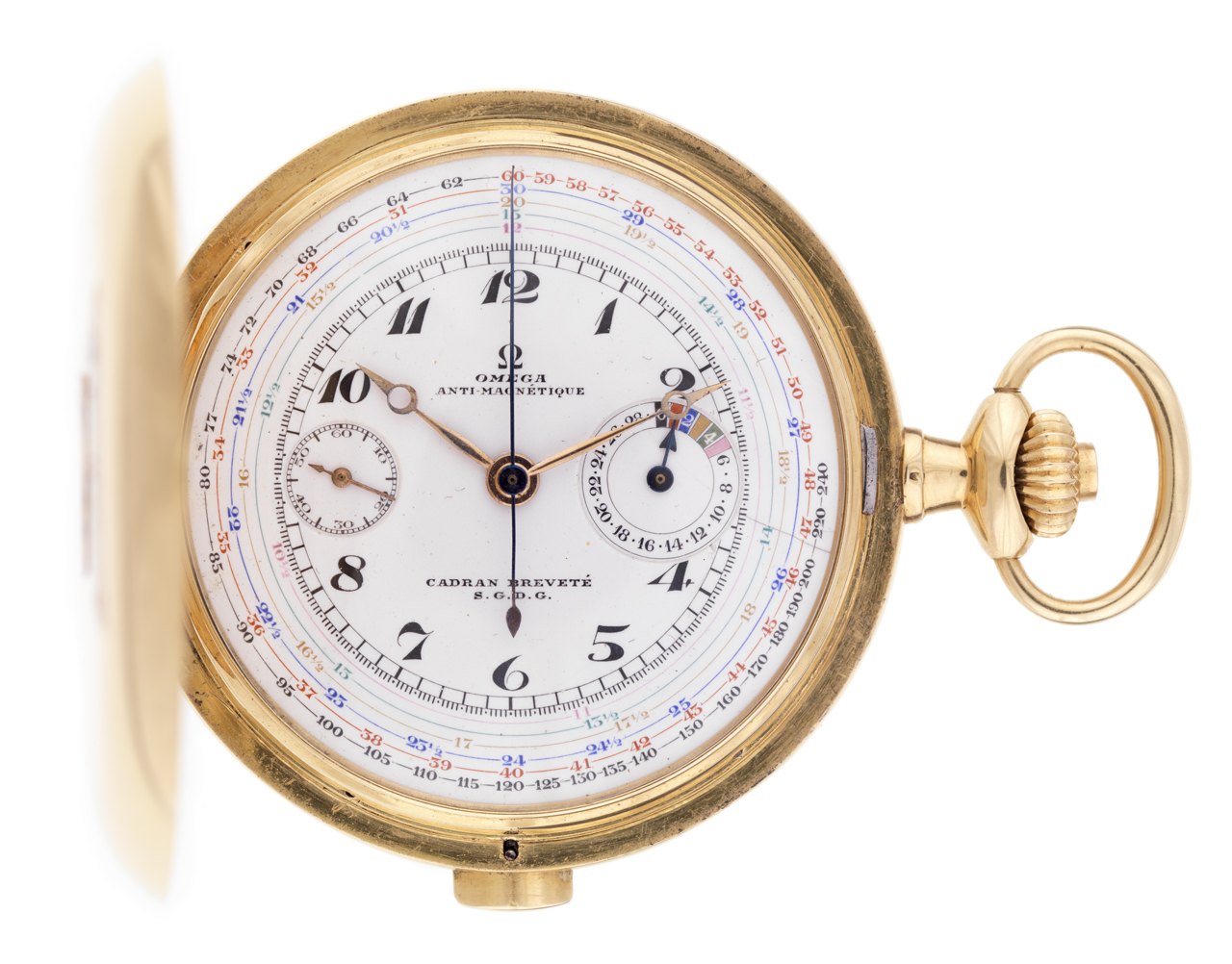
Stop watch no. 5751443 by Co., Omega Watch
- Maker / attribution
- Co., Omega Watch (maker)
- Date
- c. 1930
- Historical period
- Golden Age of Mechanical Watchmaking (1900 – 1945)
- Country of origin
- Unrecorded in source
- Object type
- Stop watch
- Materials / technique
- metal, enamel, glass
- Dimensions
- Overall: 69 x 53 x 13 mm
- Holding institution
- Royal Museums Greenwich
- Accession / object no.
- ZAA0611
- Credit line
- National Maritime Museum, Greenwich, London
- Catalogue title (original)
- 5751443 (English)
View the source record ↗ (opens another website in a new tab)Suggest a correction
Record summary
Held and catalogued by Royal Museums Greenwich (object number ZAA0611), this is a stop watch by Co., Omega Watch, dated c. 1930. The Atlas places it in the Golden Age of Mechanical Watchmaking period (1900 – 1945) of its Instruments collection. Materials and techniques recorded by the source: metal, enamel, glass. Recorded dimensions: Overall: 69 x 53 x 13 mm. The record is illustrated with 2 photographs.
Assembled from the source record's structured fields. Dates and attributions are given as the source states them; where a field is missing the Atlas leaves it blank rather than estimating.
Catalogue description
Catalogue description — Royal Museums Greenwich
Stop watch in 18-carat gold full-hunter case, which is numbered 7570295. The three-quarter plate movement is signed and numbered 5751443, with a Swiss lever escapement and compensation balance. The watch has a white enamel dial with black Roman numerals, chronograph scales around the outside, a subsidiary seconds dial, and Breguet-style hands. There is also a black central chronograph hand with a start/stop/flyback button at six o'clock. The dial is marked "OMEGA / ANTI-MAGNETIQUE / CADRAN BREVETE / S.G.D.G."
Historical context
Golden Age of Mechanical Watchmaking (1900 – 1945)
The wristwatch displaces the pocket watch; waterproof cases, self-winding and grand complications.
Timing instruments became electrical and specialised: industrial time recorders, sports timers and aviation instruments.
Read the period in the timelineMore instruments from this periodEarlier: Industrial Revolution
Atlas type guide
Timers, stopwatches, chronoscopes and time recorders
Instruments for measuring short intervals or recording when something happened form a large and practical branch of horology. Sports stopwatches and split-seconds timers, laboratory chronoscopes (such as Hipp's, which measured thousandths of a second for psychology and ballistics experiments), metronomes for music, watchmen's clocks that recorded patrol rounds, and the time recorders that clocked factory workers in and out all derive from clock and watch technology.
These objects matter historically because they show timekeeping leaving the observatory and the drawing room and entering industry, science and sport. Many were mass-produced, and their dials, scales and patents chart the rise of electrification and industrial management.
What to look for
- Scales graduated in fifths, tenths or hundredths of a second, or decimal minutes for industrial use.
- Start, stop and reset push-pieces; a second hand that can be stopped independently (split seconds).
- Recording devices: paper discs or tapes, printing mechanisms, keys or punches.
- Patent numbers and dates on the dial or case, which give a terminus post quem.
Dating clues
- Hipp chronoscopes were made from the 1840s into the twentieth century.
- Employee time recorders spread from the 1890s (Bundy, IBM, International Time Recording Co.).
- Quartz and electronic timers replaced mechanical stopwatches in sport from the 1970s.
General guidance written by the Atlas editors about this kind of object. It is not a statement about this particular piece; for that, rely on the source record above and on physical examination.
Related records
Instruments · Undated (20th century)
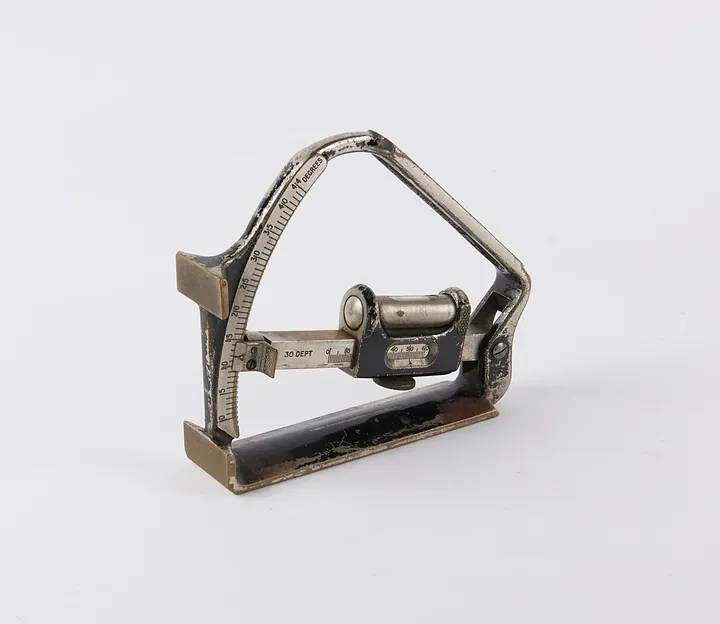
Field chronometer, Mark IV, no. 1621, by Taylor & Hobson Ltd.
Science Museum Group, London
Instruments · 1880–1920
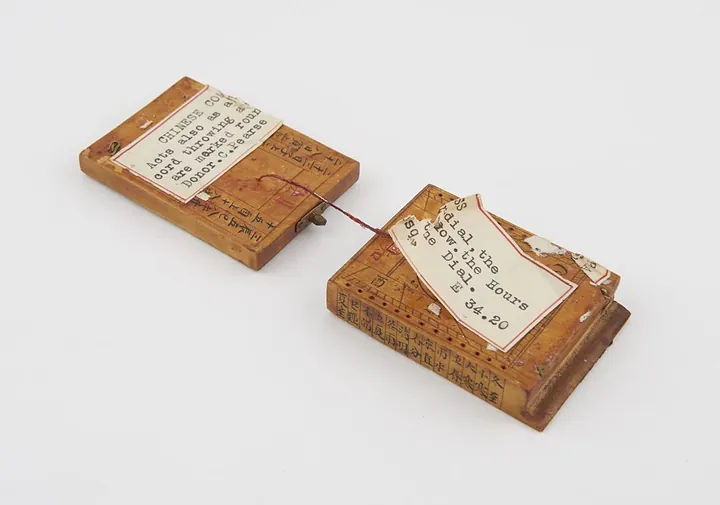
Compass and sundial, two hinged wooden blocks, compass needle set into one, covered with glass windows, painted with Chinese characters, Chinese, 1880–1920
Science Museum Group, London
Instruments · 1890–1930
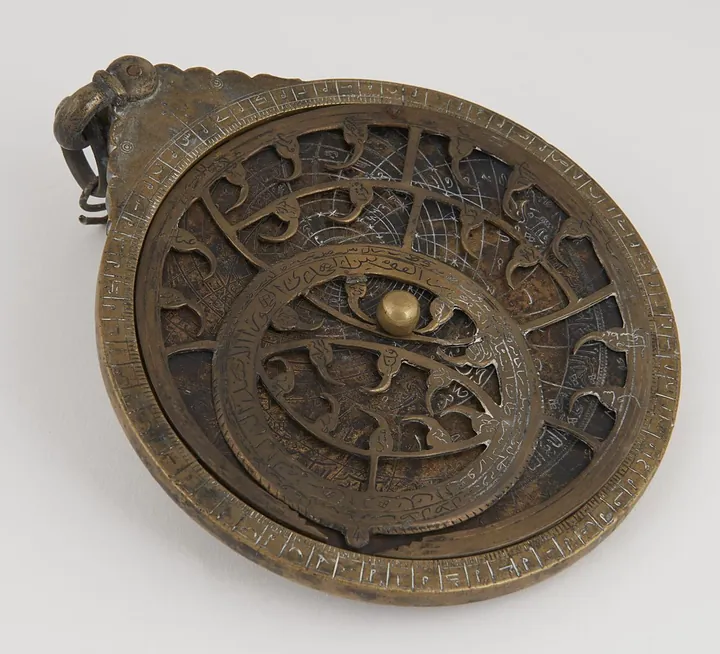
Decorative fake Islamic astrolabe with four plates and sightless alidade, pin missing.
Science Museum Group, London
Instruments · 1890–1930
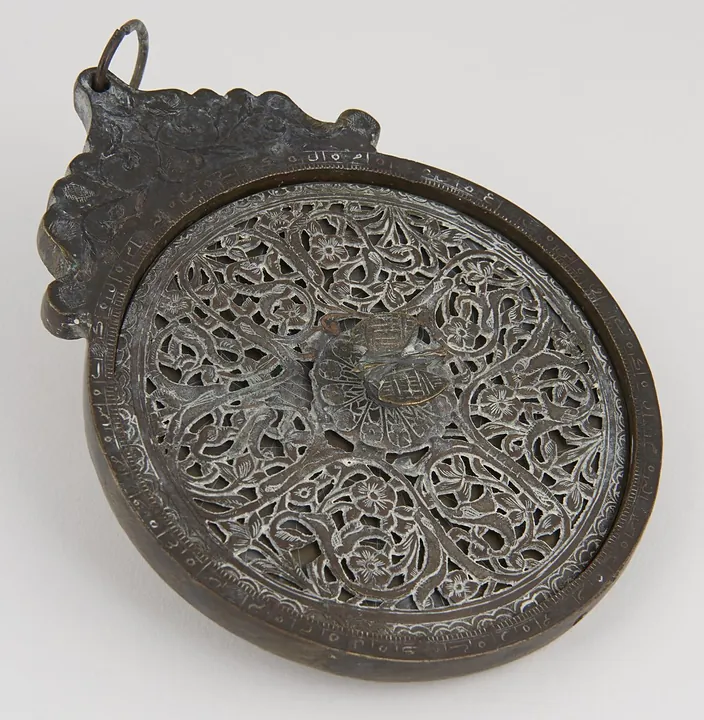
Decorative fake Islamic astrolabe, Arabic origin, brass, with four plates and foliate cover.
Science Museum Group, London
Instruments · 1890–1930
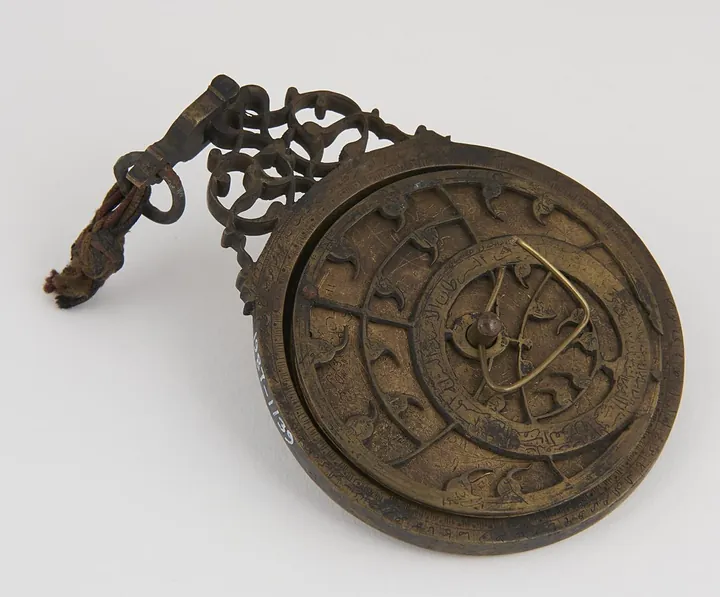
Decorative fake Islamic astrolabe, brass, with four plates, cursive kursi, and sightless alidade, pin missing.
Science Museum Group, London
Instruments · 1890–1945
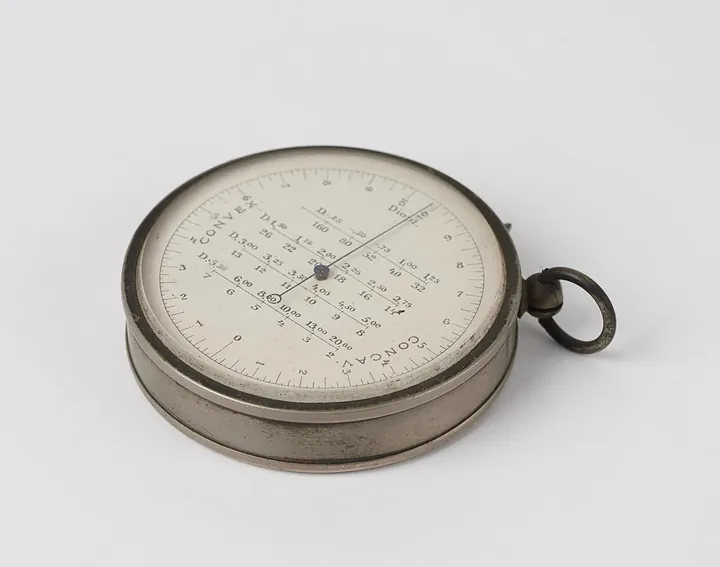
Optometer(?), stop-watch form, scaled circular face to measure concanity,[.........] of lenses, English, 1890–1945
Science Museum Group, London
Instruments · 1890–1950
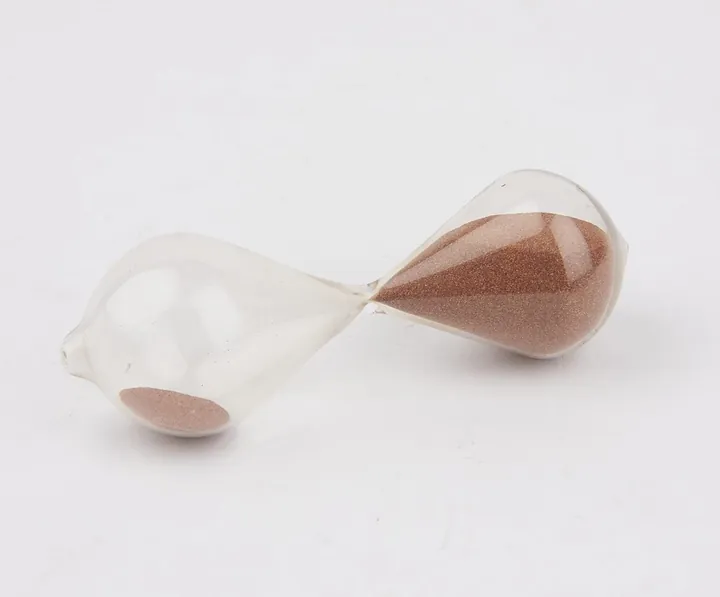
Single sand-glass unmounted, showing complete seal. 15 mins. Abbot Horne. No. Type C., 1890–1950
Science Museum Group, London
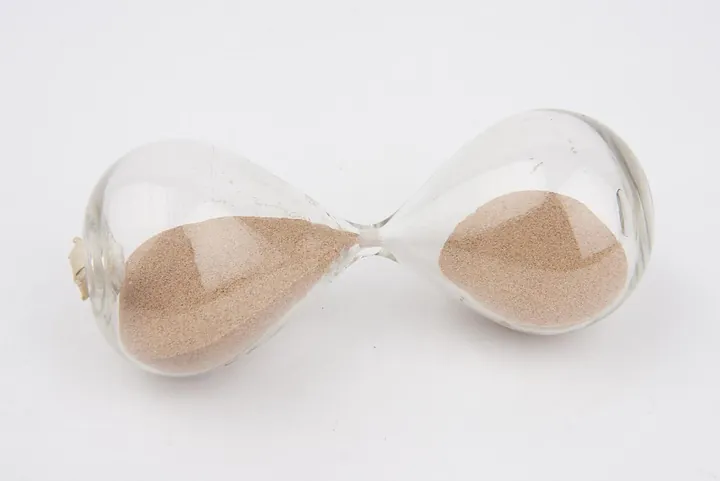
Instruments · 1890–1950
Single sand-glass unmounted, showing corked entry hole. 2 1/2 mins. Abbot Horne. Type B, 1890–1950
Science Museum Group, London