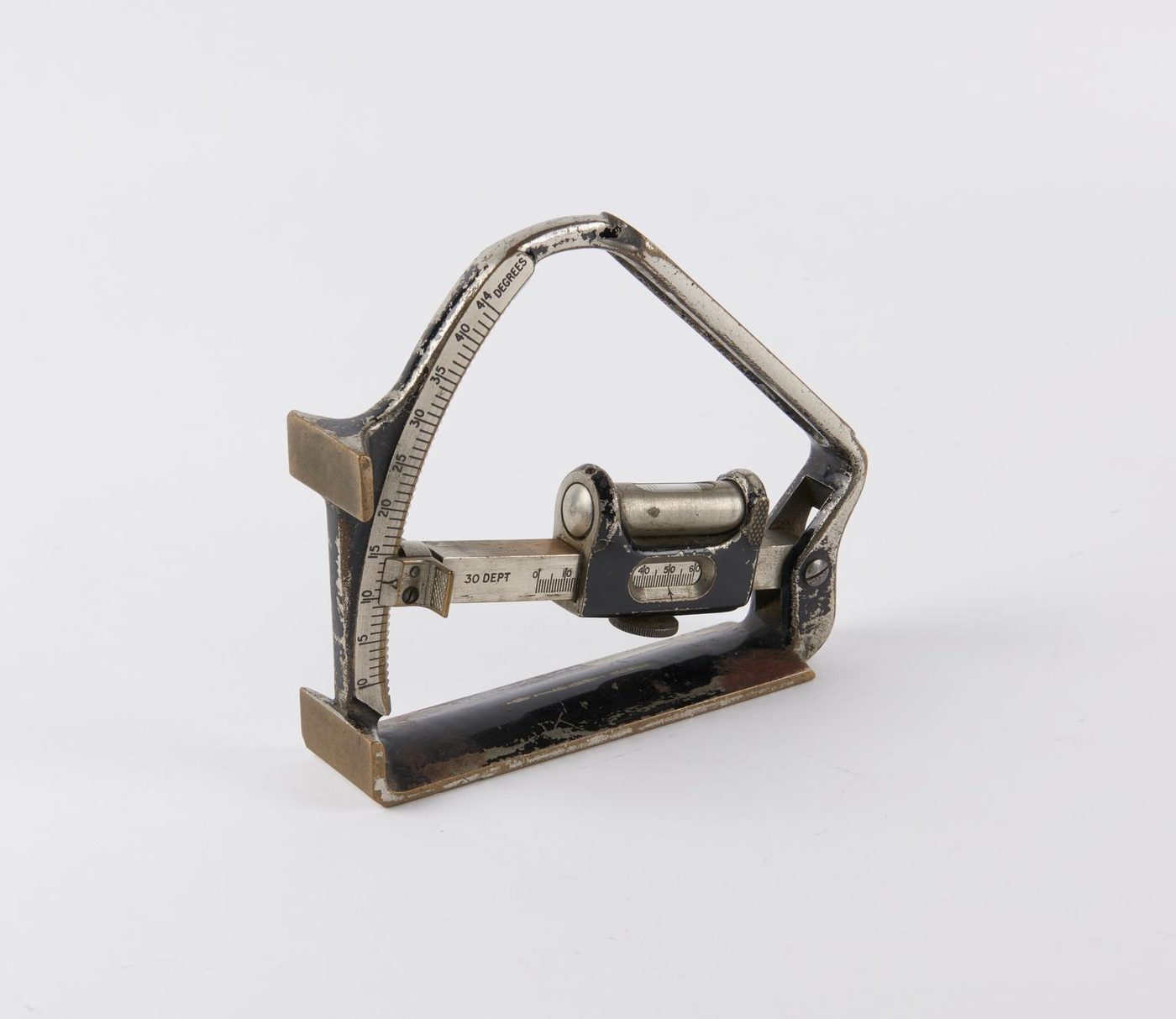
Instruments · Chronometer
Field chronometer, mark IV, no 1621. memorabilia.
- Maker / attribution
- Taylor & Hobson Ltd. (maker) (maker)
- Date
- 1621
- Historical period
- Early Modern Horology (1600 – 1750)
- Country of origin
- Unrecorded in source
- Object type
- Chronometer
- Holding institution
- Science Museum Group, London
- Accession / object no.
- 1993-2054
Record summary
Held and catalogued by Science Museum Group, London (object number 1993-2054), this is a chronometer by Taylor & Hobson Ltd. (maker), dated 1621. The Atlas places it in the Early Modern Horology period (1600 – 1750) of its Instruments collection. The record is illustrated with 1 photograph.
Assembled from the source record's structured fields. Dates and attributions are given as the source states them; where a field is missing the Atlas leaves it blank rather than estimating.
Catalogue description
The source record does not include a narrative description. The structured fields above are reproduced from it.
Historical context
Early Modern Horology (1600 – 1750)
Huygens' pendulum and balance spring transform accuracy; English makers develop the anchor and deadbeat escapements.
Pocket sundials, Butterfield dials and sandglasses remained essential companions to imperfect clocks; navigators used sandglasses and the log line; observatories began to combine telescopes with pendulum clocks.
Read the period in the timelineMore instruments from this periodEarlier: Renaissance Horology
Atlas type guide
Chronographs and split-seconds watches
A chronograph is a watch with an additional seconds hand that can be started, stopped and returned to zero independently of the timekeeping. Louis Moinet built an early example in 1816 and Nicolas Rieussec a recording 'chronographe' in 1821; Adolphe Nicole's heart-shaped reset cam (patented 1862) made the modern return-to-zero possible. Split-seconds (rattrapante) chronographs add a second hand that can be stopped for intermediate times; flyback chronographs restart instantly.
Chronographs were essential tools for doctors (pulsometer scales), artillery (telemeter), engineers and sport. In wristwatches, Valjoux, Venus, Lemania and later the automatic chronographs of 1969 (Zenith El Primero, the Chronomatic Calibre 11 group and Seiko 6139) are milestones.
What to look for
- Push-pieces on the case band or a single button in the crown (monopusher).
- Subsidiary registers for minutes and hours; tachymeter, telemeter or pulsometer scales.
- Column wheel versus cam control visible in the movement.
- Calibre markings of specialist makers (Valjoux, Lemania, Venus, Landeron).
Dating clues
- Pocket chronographs with heart cam reset: after 1862.
- Wrist chronographs: from c. 1910; two-button designs from the 1930s.
- Automatic chronographs: from 1969.
General guidance written by the Atlas editors about this kind of object. It is not a statement about this particular piece; for that, rely on the source record above and on physical examination.
Related records
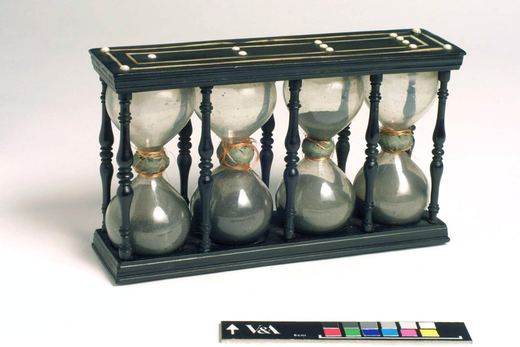
Instruments · 1575-1625
Sand-glass set (x4) fitted into an ebony case, inlaid with ivory. Italian, c1600
Victoria and Albert Museum, London
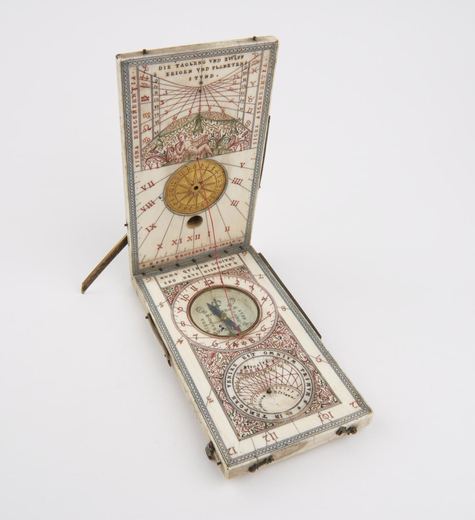
Instruments · 1578-1631
Tablet sun-dial 532-68, V & A M. reg, ivory inscribed "Hans Troschel faciebat", German, 6in by 3 1/4 in, 1578-1631
Science Museum Group, London
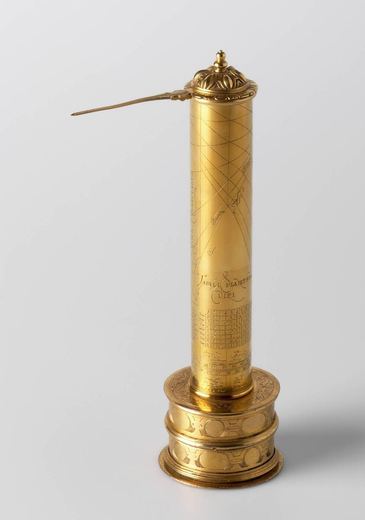
Instruments · 1593–1613
Sundial, Czech Republic, 1593–1613
MAK – Museum of Applied Arts
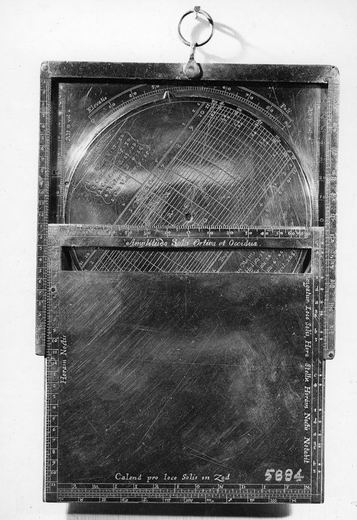
Instruments · 1600–1699
Astrolabe by Henry Sutton, Belgium, 1600–1699
Royal Institute for Cultural Heritage
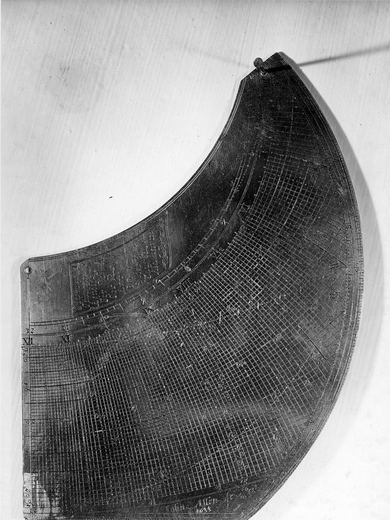
Instruments · 1600–1699
Astrolabe by John Allen, Belgium, 1600–1699
Royal Institute for Cultural Heritage
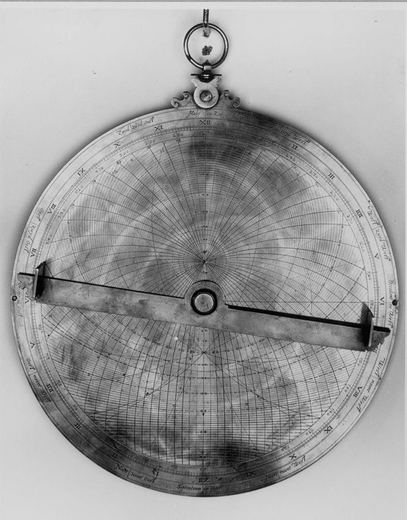
Instruments · 1600–1699
Astrolabe by Lambert Damery, Belgium, 1600–1699 (Royal Institute for Cultural Heritage AP_10277393)
Royal Institute for Cultural Heritage
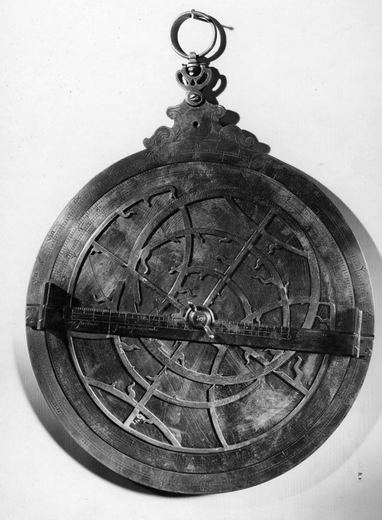
Instruments · 1600–1699
Astrolabe by Lambert Damery, Belgium, 1600–1699 (Royal Institute for Cultural Heritage AP_10368156)
Royal Institute for Cultural Heritage
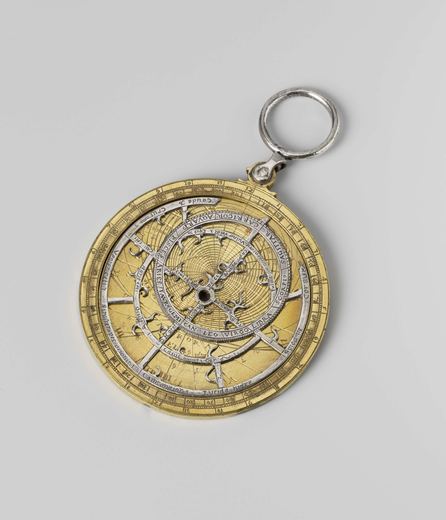
Instruments · 1600–1636
Astrolabe, Germany, 1600–1636
Rijksmuseum