
Pocket Watches · Coach watch
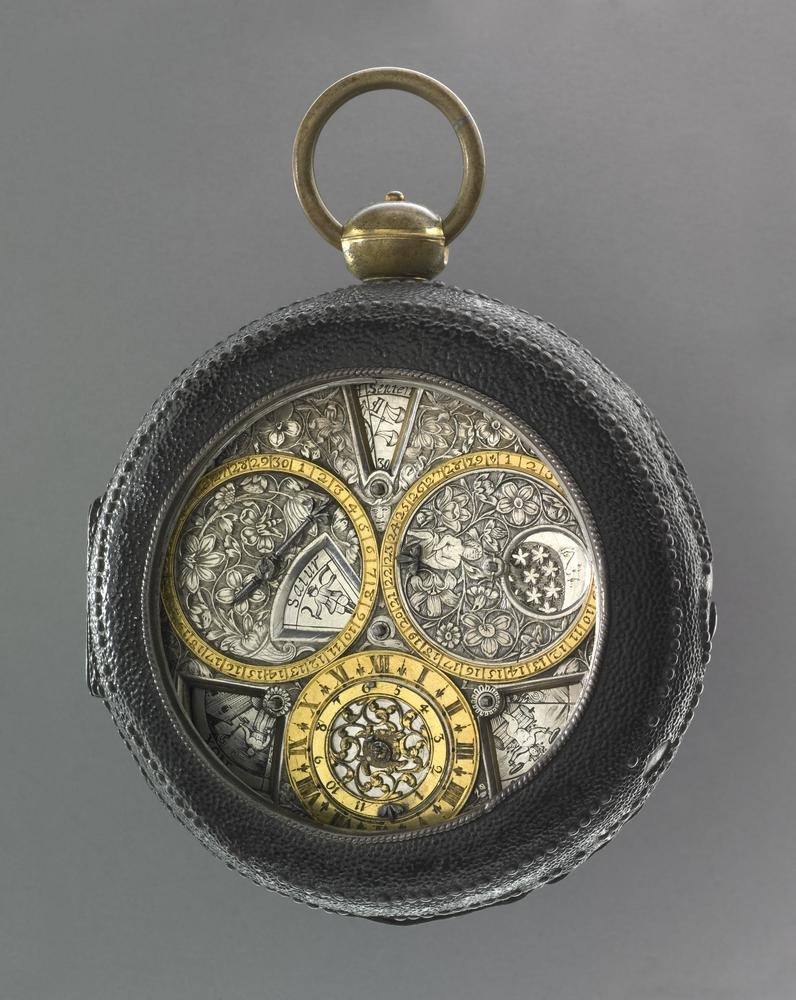
Silver cased coach watch with hour striking, alarm and lunar and calendar indications
- Maker / attribution
- Jean Baptiste Duboule (Made by)
- Date
- 1645–1655
- Historical period
- Early Modern Horology (1600 – 1750)
- Country of origin
- Switzerland
- Place
- Geneva (city)
- Object type
- Coach watch
- Materials / technique
- brass, leather, silver
- Dimensions
- Diameter: 102.50 millimetres (outer case)
- Holding institution
- British Museum
- Accession / object no.
- 1888,1201.229
- Credit line
- British Museum, London
- Catalogue title (original)
- Silver cased coach watch with hour striking, alarm and lunar and calendar indications (English)
View the source record ↗ (opens another website in a new tab)Suggest a correction
Record summary
Held and catalogued by British Museum (object number 1888,1201.229), this is a coach watch by Jean Baptiste Duboule, made in Geneva (city), Switzerland, dated 1645–1655. The Atlas places it in the Early Modern Horology period (1600 – 1750) of its Pocket Watches collection. Materials and techniques recorded by the source: brass, leather, silver. Recorded dimensions: Diameter: 102.50 millimetres (outer case). The record is illustrated with 6 photographs.
Assembled from the source record's structured fields. Dates and attributions are given as the source states them; where a field is missing the Atlas leaves it blank rather than estimating.
Catalogue description
Description — British Museum
MOVEMENT Circular gilt-brass plates with five baluster pillars. Gilt-brass barrel with ratchet and click set-up. Fusee for gut line but now with chain; standard stop-work. Three-wheel going train terminating with a verge escapement. Verge, balance and balance-cock all replaced, probably when the balance spring and slide regulator were fitted (early 18th century ?). : Striking train for hours only, powered by a gilt-brass fixed barrel with geared stop-work, and controlled by a count-wheel. : Alarm train powered by a fixed gilt-brass barrel with geared stop-work. Second, contrate and crown wheels made from steel. : DIAL & HANDS Gilt-brass dial plate with a silver dial. The dial is divided into a number of subsidiaries:- 1. Top, a sector aperture for months. 2. Upper left, an applied gilt-brass chapter-ring 0-30 for the date enclosing a sector aperture showing the days of the week. 3. Upper right, an applied gilt-brass chapter-ring, engraved 1-29.5 for the age of the moon with a circular aperture to show the phase of the moon. 4. Lower left, a sector aperture showing the periods of the day. 5. Lower right, a sector aperture showing the seasons. 6. Bottom, a gilt-brass applied ring engraved I-XII for the hours, surrounding a gilt-brass alarm-setting disc. Blued-steel hands, the alarm-setting hand now missing. : CASES Silver inner case pierced and engraved with a design of realistic flowers. The glazed silver bezel is not original. Gilt-brass pendant. Inside the case a large bell is screwed to a square boss. Leather covered brass outer case with silver rims and silver piqué decoration.
Curator's comments — British Museum
Watch-key has been registered additionally as CAI.2974. Text from 'Watches', by David Thompson, London, 2008, p. 44-45. Jean Baptiste Duboule SILVER CASED HOUR-STRIKING VERGE COACH WATCH WITH CALENDAR AND ALARM GENEVA, c. 1650 SIGNED: 'Jean Baptiste Duboule AGeneve' Jean Baptiste Duboule was baptized in Geneva on 4 June 1615 and died on 6 April 1694 at the age of seventy-nine. The second son of the watchmaker Martin Duboule and his wife Suzanne, née Martin, he was probably apprenticed to his father, but by 1638 he had become a master in his own right and began taking apprentices, continuing to do so until 1682. He is mentioned in records in Geneva as a master watchmaker and as a master engraver. He was married in 1638 to Catherine Fusy with whom he had three daughters: Catherine, who married Abraham Dupuis, a master watch-casemaker; Lucrèce, who married Henri Martin, a master watchmaker, in 1667; and Jaquemine, who married Philippe Prodhomme, a citizen of Geneva. This watch, made around 1645, is one of Jean Baptiste Duboule's finest pieces. It is far too large to wear: at about 10 centimetres (4 inches) in diameter, it weighs a great deal more than would be comfortable to carry around the neck, and hung from a belt would surely have one's breeches off! It is in fact a coach or chaise watch, in effect the complete traveller's companion. As well as telling the time, it strikes the hours, has an alarm and was intended to be carried on journeys and hung on a stout hook on the wall or the bedstead to ensure that the traveller did not miss breakfast and the morning departure of the coach. The finely pierced and engraved silver case is of high quality, with pierced decoration around the band to allow the sound of the bell to escape. However, it is without doubt the dial that draws one's attention. At the top there is a sector aperture showing the months and the signs of the zodiac. To the right a large dial shows the age and phase of the moon, useful in a time without street lights. To the lower right an aperture shows the seasons. At the bottom a gilt chapter ring and blued-steel pointer show the hours, and in its centre a pierced and engraved dial serves to indicate the alarm time (there should be a blued-steel hand over this to set the alarm).To the lower left a sector aperture shows the periods of the day and above that, in the middle left, the gilt chapter ring shows the date, while an aperture within it displays the days of the week, each named in Latin and illustrated by its ruling planet. The movement is also something of a tour de force of the watchmaker's art and presents a challenge for the repairer. It is put together in a way known as full-plate construction, which means that, when re-assembling, all the components must be in the right place and the right relationship with each other so that, when the rear plate is fitted, the going, the striking and the alarm will all perform correctly. An interesting aspect of this coach watch becomes apparent when the back plate is examined. Close inspection shows that the balance cock is more modern than the watch and that the original balance has been replaced with one fitted with a balance spring and a geared regulator. The style of the work might suggest that it was carried out in London in the early part of the eighteenth century. Such improvements were not uncommon, and were made to increase the efficiency of watches that would otherwise have become obsolete following the new improved timekeeping made possible by the introduction of the balance spring in 1675.
Inscriptions & marks
signature; Jean Baptiste Duboule AGeneve; hallmark; V [crowned, under bell]
Provenance
Bequeathed by:, Octavius Morgan; Acquired 1888
Historical context
Early Modern Horology (1600 – 1750)
Huygens' pendulum and balance spring transform accuracy; English makers develop the anchor and deadbeat escapements.
The balance spring (c. 1675) improved watches dramatically and introduced the minute hand. English pair-cased verge watches with pierced balance cocks and French oignons were typical; enamel painting at Blois and Geneva, and the repeating watch (1680s), made watches objects of great refinement.
Read the period in the timelineMore pocket watches from this periodEarlier: Renaissance Horology
Atlas type guide
Verge and pair-cased watches
After Christiaan Huygens and Robert Hooke applied the balance spring around 1675, the verge watch became a reasonably reliable timekeeper and the minute hand became standard. Through the eighteenth century the typical English watch was a pair-cased verge: a fusee movement with a pierced, engraved balance cock, housed in an inner case and a separate protective outer case, often of repoussé gold, shagreen, tortoiseshell or enamel.
French watches of the same period were thicker 'oignons', later replaced by elegant thinner watches following Jean-Antoine Lépine's bar-bridge calibre of c. 1770. Dutch, Swiss and German makers supplied international markets, and verge watches were made until the mid-nineteenth century as cheaper alternatives to the cylinder and lever.
What to look for
- The pierced balance cock on the backplate: winged (continental) or with a foot (English); its style dates the watch.
- Fusee and chain visible through the movement; key winding through the dial (early) or case back.
- Hallmarks inside English silver or gold cases, which give a date letter.
- Maker's name and serial number engraved on the backplate; watch papers inside outer cases.
- Enamel dials (after c. 1720) versus earlier champlevé metal dials.
Dating clues
- Champlevé dials: c. 1680–1730; white enamel dials thereafter.
- English case hallmarks give the year of assay to within a year.
- Verge watches persisted in cheap production until c. 1850.
General guidance written by the Atlas editors about this kind of object. It is not a statement about this particular piece; for that, rely on the source record above and on physical examination.
Read next:Verge escapement
Related records
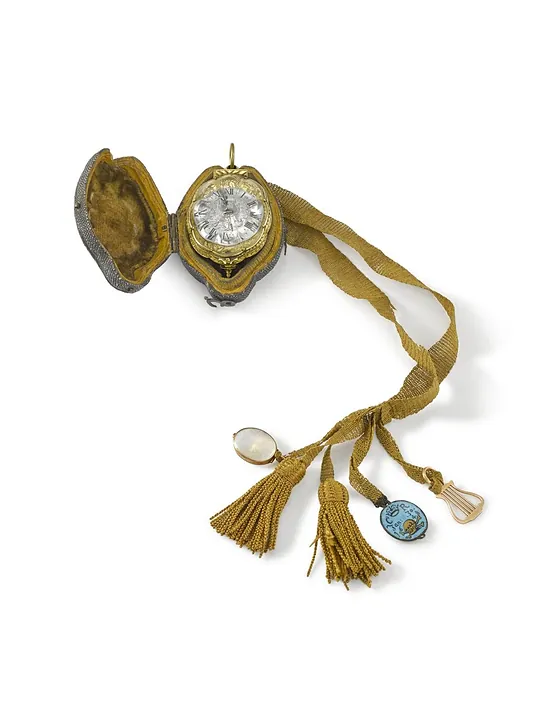
Pocket Watches · 1630
Pocket watch by A. Senebier, Switzerland, 1630
Science Museum Group, London
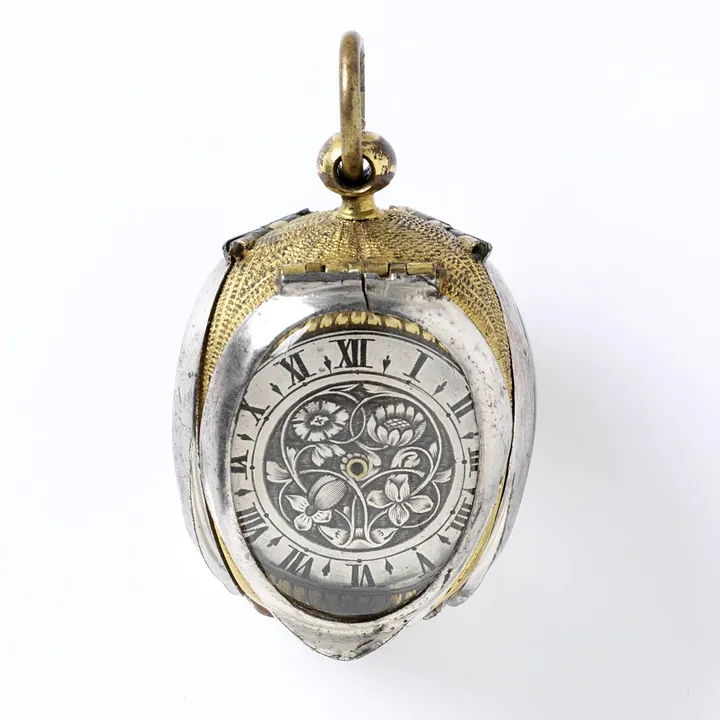
Pocket Watches · 1635-50
Silver, gilt brass and rock crystal watch in the form of a tulip, movement signed 'Senebier', Geneva, Switzerland, 1635-50
Victoria and Albert Museum, London
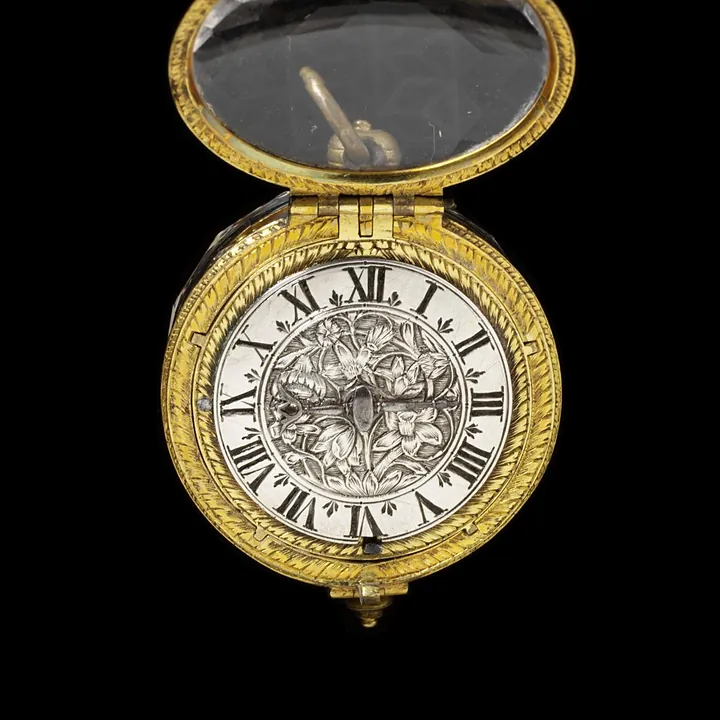
Pocket Watches · 1640-50
Gilt brass and crystal watch with an engraved silver dial, movement signed 'Charles Bobinet', Switzerland (Geneva), 1640-50
Victoria and Albert Museum, London
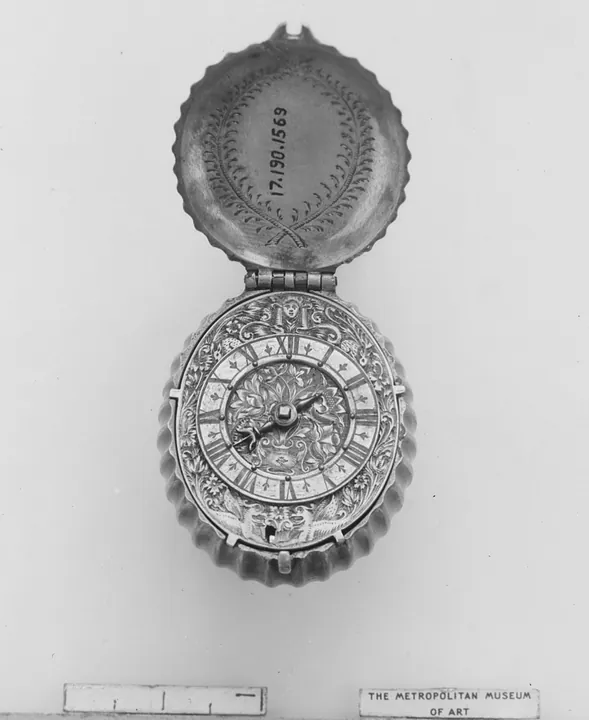
Pocket Watches · c. 1650
Watch by Denis Bordier, Switzerland, c. 1650
The Metropolitan Museum of Art, New York
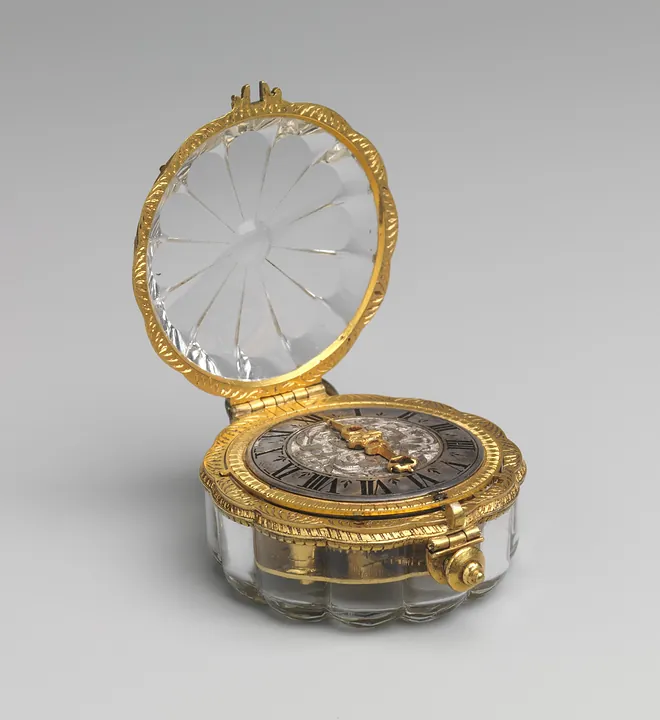
Pocket Watches · c. 1650–60
Watch probably by Jean Rousseau the Younger, Switzerland, c. 1650–60
The Metropolitan Museum of Art, New York
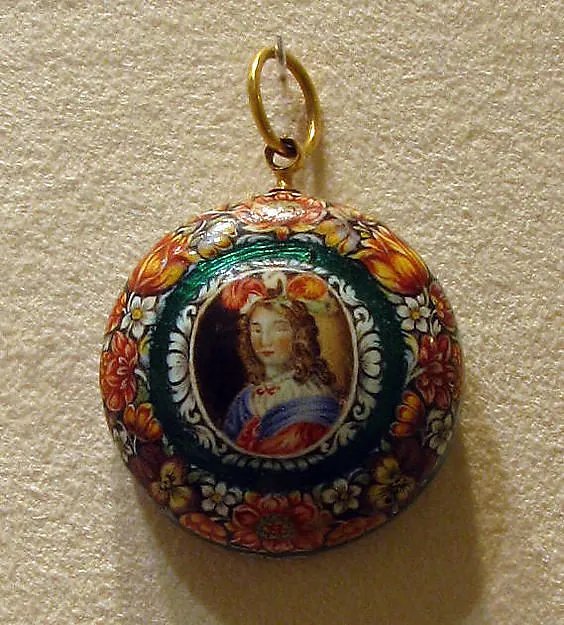
Pocket Watches · c. 1660–80
Watch by Pierre Duhamel, Switzerland, c. 1660–80
The Metropolitan Museum of Art, New York
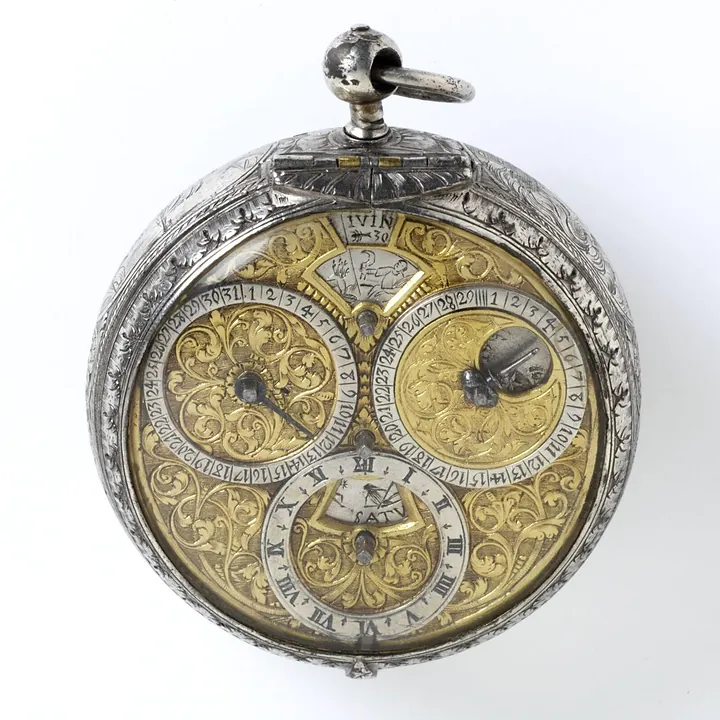
Pocket Watches · 1660–1670
Engraved silver watch with a gilt brass dial, signed 'Jean Rousseau', Switzerland (Geneva), 1660-70
Victoria and Albert Museum, London
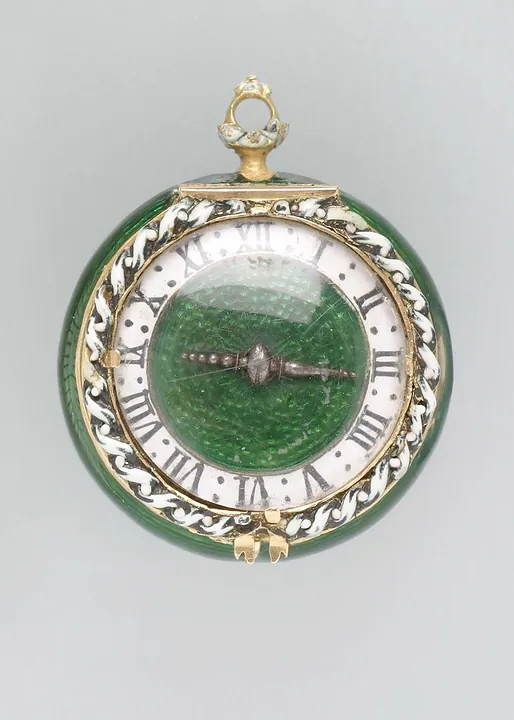
Pocket Watches · c. 1675
Pocket watch by Abraham Caillatte, Switzerland, c. 1675
German Clock Museum