
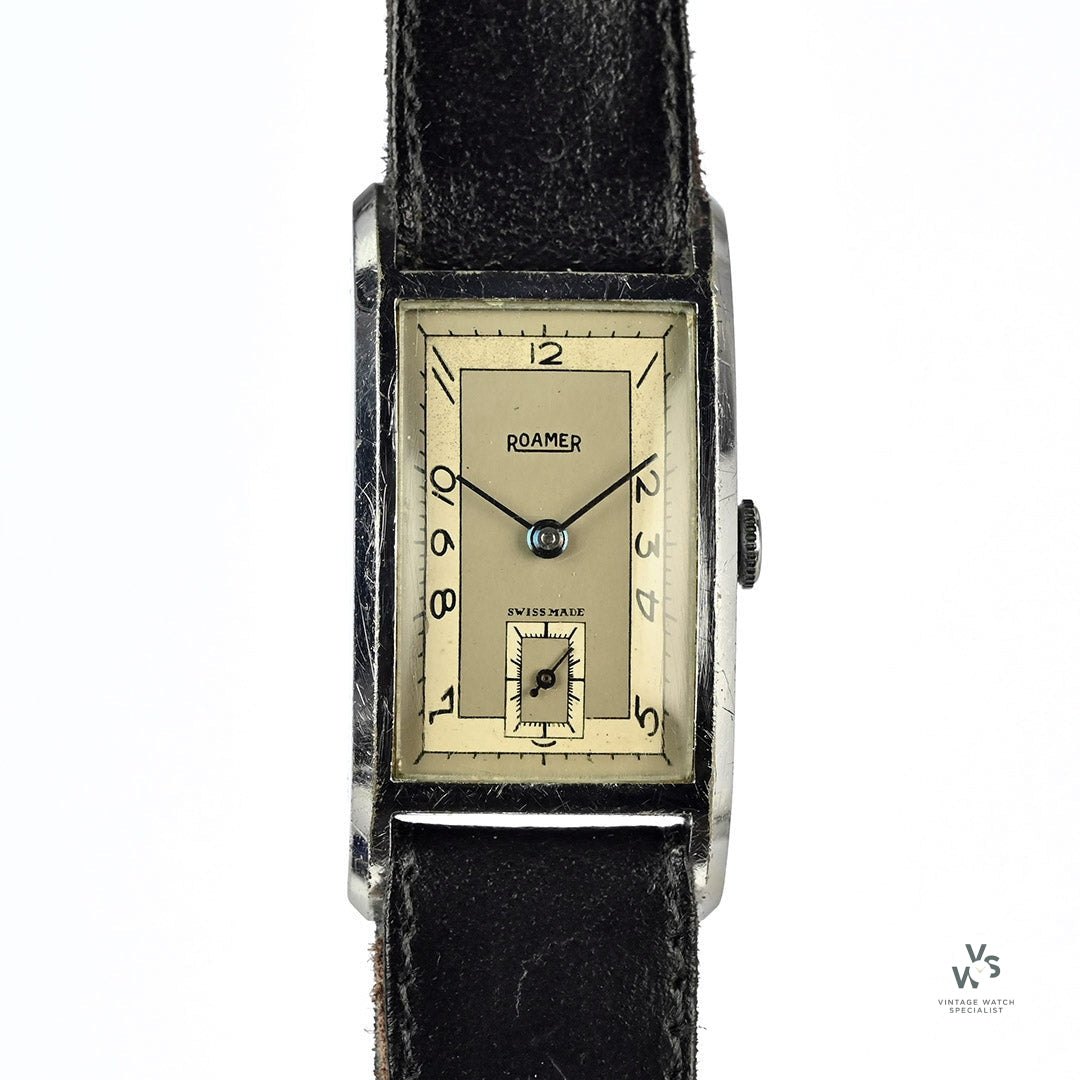
Wristwatches · Wristwatch
Roamer Art Deco Tank Case Watch, circa 1930s
- Maker / attribution
- Roamer (maker)
- Date
- c. 1930s
- Historical period
- Golden Age of Mechanical Watchmaking (1900 – 1945)
- Country of origin
- Unrecorded in source
- Object type
- Wristwatch
- Stock no.
- vws2826
- Credit line
- Dealer listing, Vintage Watch Specialist (vws2826)
- Catalogue title (original)
- Roamer Art Deco Tank Case Watch - c.1930s (English)
View the source record (dealer listing) ↗ (opens another website in a new tab)Suggest a correction
Record summary
Catalogued by Vintage Watch Specialist (dealer), United Kingdom (stock number vws2826), this is a wristwatch by Roamer, dated c. 1930s. The Atlas places it in the Golden Age of Mechanical Watchmaking period (1900 – 1945) of its Wristwatches collection. The record is illustrated with 6 photographs.
Assembled from the source record's structured fields. Dates and attributions are given as the source states them; where a field is missing the Atlas leaves it blank rather than estimating.
Catalogue description
Dealer description — Vintage Watch Specialist
A Charming Art Deco Style Roamer Tank Cased Vintage Watch from the 1930s with an Attractive Two Tone Sector dial and Blued Steel Hands Roamer watches have a rich history that dates back to the early 19th century. Founded in 1888 in Solothurn, Switzerland, by Fritz Meyer, this iconic brand has been synonymous with precision and elegance. Initially known as "Meyer & Stüdeli," the company started its journey by producing cylinder escapements for pocket watches. However, it was in 1905 when the brand adopted the name "Roamer" and began manufacturing wristwatches, marking a significant milestone for the company. During World War I, Roamer watches gained popularity among pilots due to their durability and accuracy. This led to the development of specialized aviator timepieces that were highly sought after by aviation enthusiasts. In the 1930s, Roamer introduced innovative designs such as waterproof cases and shock-resistant movements, further establishing its reputation for quality craftsmanship. The brand continued to innovate throughout the following decades with advancements like self-winding mechanisms and chronograph functions. Roamer's commitment to excellence propelled them into international markets during the mid-20th century. Their timepieces became highly regarded worldwide and were celebrated for their timeless designs, precision movements, and exceptional durability. In recent years, Roamer has continued to evolve while staying true to its heritage. They have embraced modern technologies while maintaining their dedication to crafting Swiss-made watches of exceptional quality. What’s On Offer We love this Art-Deco style Roamer watch, the tank case is crafted from stainless steel and has been preserved very well considering this watch hails from the 1930s! The dial is an unusual sector design in two tone with Art Deco Arabic numerals and a tank-shaped inset sub-seconds dial. There is a Roamer signature at 12 o'clock, blued steel hands are a nice opulent touch that complete the dial which is encapsulated underneath acrylic crystal. The watch wears beautifully on the wrist and is running well - a charming timepiece which will bring the purchaser many years of wear to all manner of occasions.
Historical context
Golden Age of Mechanical Watchmaking (1900 – 1945)
The wristwatch displaces the pocket watch; waterproof cases, self-winding and grand complications.
The wristwatch overtook the pocket watch. Military use in the First World War, aviation, water-resistant cases (1926), automatic winding (1923–31), rectangular Art Deco designs and early chronographs and calendars defined the period.
Read the period in the timelineMore wristwatches from this periodEarlier: Industrial Revolution
Atlas type guide
Wristwatches
Bracelet watches were worn by women from the early nineteenth century — Breguet made one for Caroline Murat, Queen of Naples, in 1810–12 — but the wristwatch only became a man's instrument with military use and aviation in the early twentieth century. Between the World Wars it overtook the pocket watch; the 1920s and 1930s brought rectangular Art Deco cases, water-resistant cases and the first automatic winding systems.
After 1945 the wristwatch became a carrier of identity — dress watches, sports and dive watches, chronographs, calendars — produced by Swiss, American, Japanese, German, Soviet and Chinese industries. The quartz revolution after 1969 and the mechanical renaissance since the 1990s, including the rise of independent watchmakers, complete the story.
What to look for
- The reference number (between the lugs or inside the case back) and serial number, the starting point for dating.
- The calibre: its maker and number are often stamped under the dial or on the bridge.
- Originality of dial, hands and crown — refinished ('redial') dials are common.
- Case material marks: 18K/750, 14K/585, stainless steel, gold-filled, plated.
Dating clues
- Wire-lug cases: before c. 1925.
- Water-resistant screw-down cases: from 1926.
- Quartz movements: from 1969; sapphire crystals widespread after c. 1980.
General guidance written by the Atlas editors about this kind of object. It is not a statement about this particular piece; for that, rely on the source record above and on physical examination.
Related records
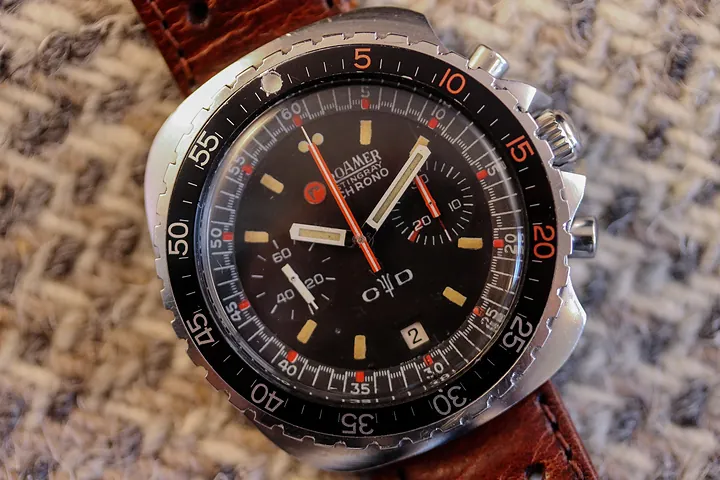
Wristwatches · c. 1967
Roamer Stingray Chronograph, c. 1967
Analog/Shift (dealer), New York
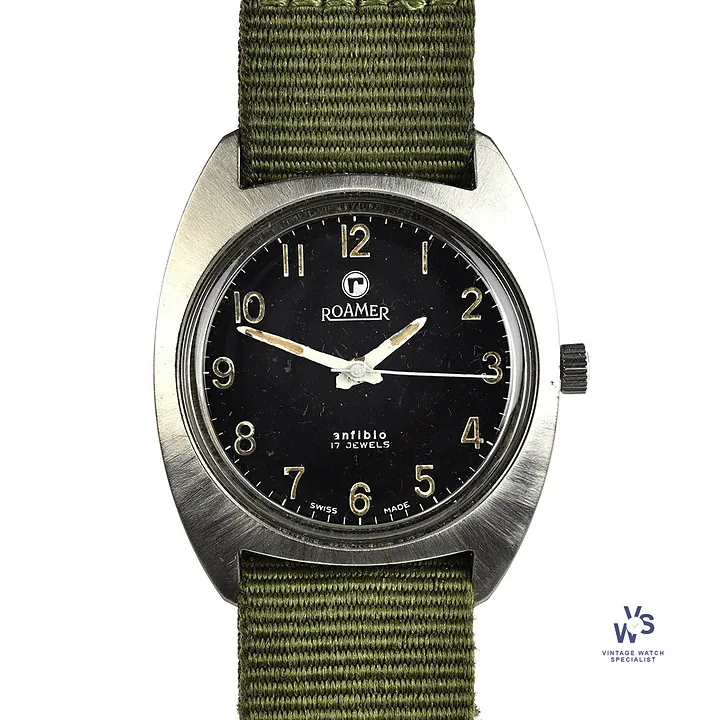
Wristwatches · c. 1973
Roamer Anfibio Watch, Rhodesian Military Issued, ref. 520-1120.016, circa 1973
Vintage Watch Specialist (dealer), United Kingdom
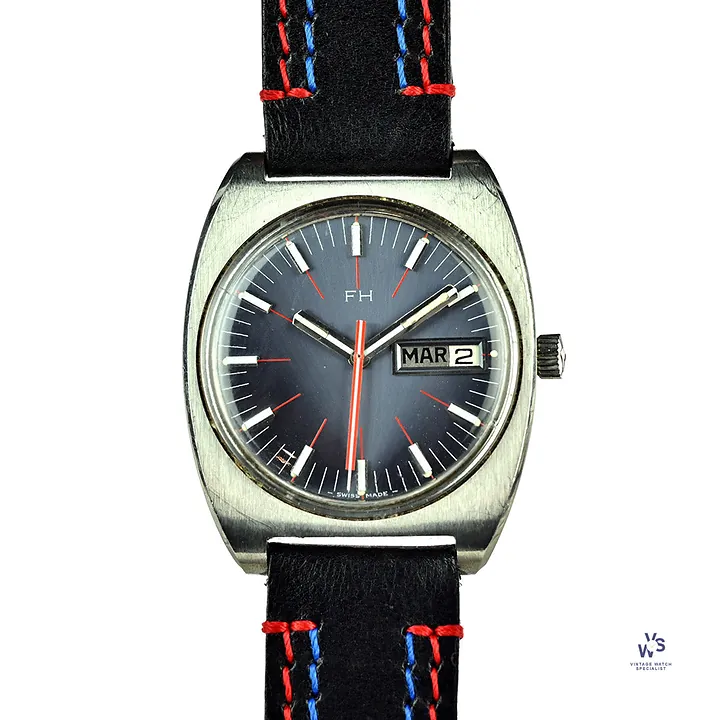
Wristwatches · c. 1970s
Roamer FH Dial (Federation Horology Assembled), Dial with Automatic Movement, Cushion Case, circa 1970s
Vintage Watch Specialist (dealer), United Kingdom
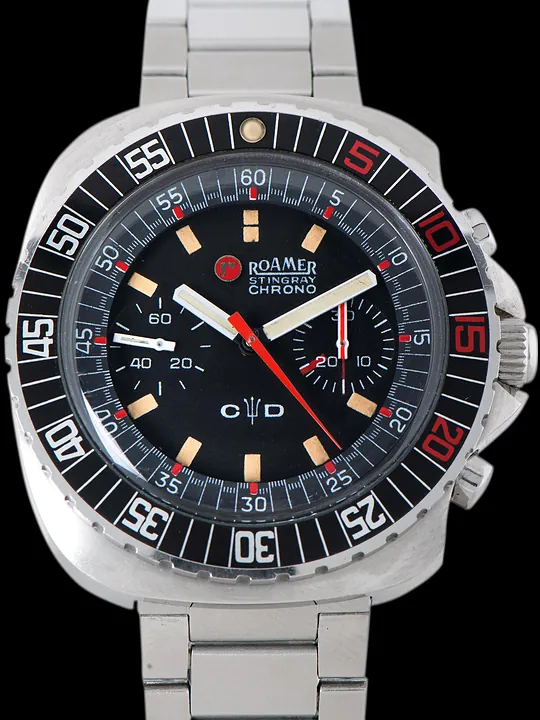
Wristwatches · 1970s
Roamer Stingray Chronograph (Ref. 023-912.900) "Valjoux 23", 1970s
Craft & Tailored (dealer), Los Angeles
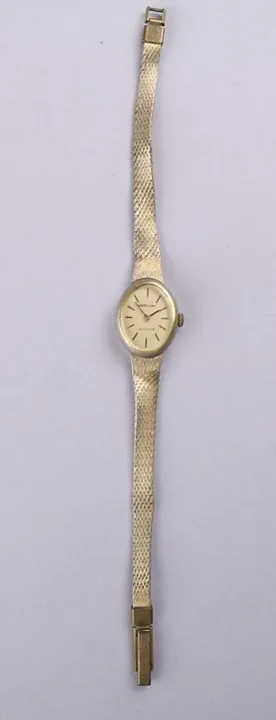
Wristwatches · 1900–1999
Wristwatch by Mercury, 1900–1999
Modemuseum Hasselt
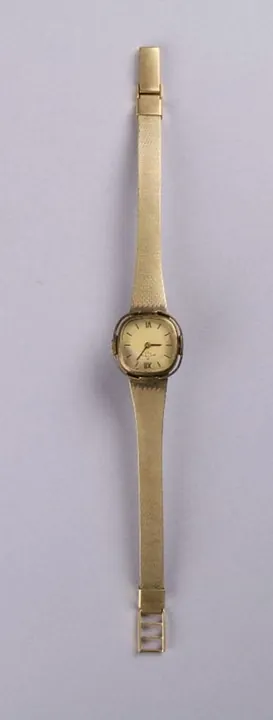
Wristwatches · 1900–1999
Wristwatch by Nutrix, 1900–1999
Modemuseum Hasselt

Wristwatches · 1920
Wristwatch, 1920
Modemuseum Hasselt

Wristwatches · 1931
Rolex 'Oyster Perpetual' rotor self-winding wrist-watch, lever escapement, in steel case with glass in back, Montres Rolex SA, Geneva, Switzerland, 1931
Science Museum Group, London