
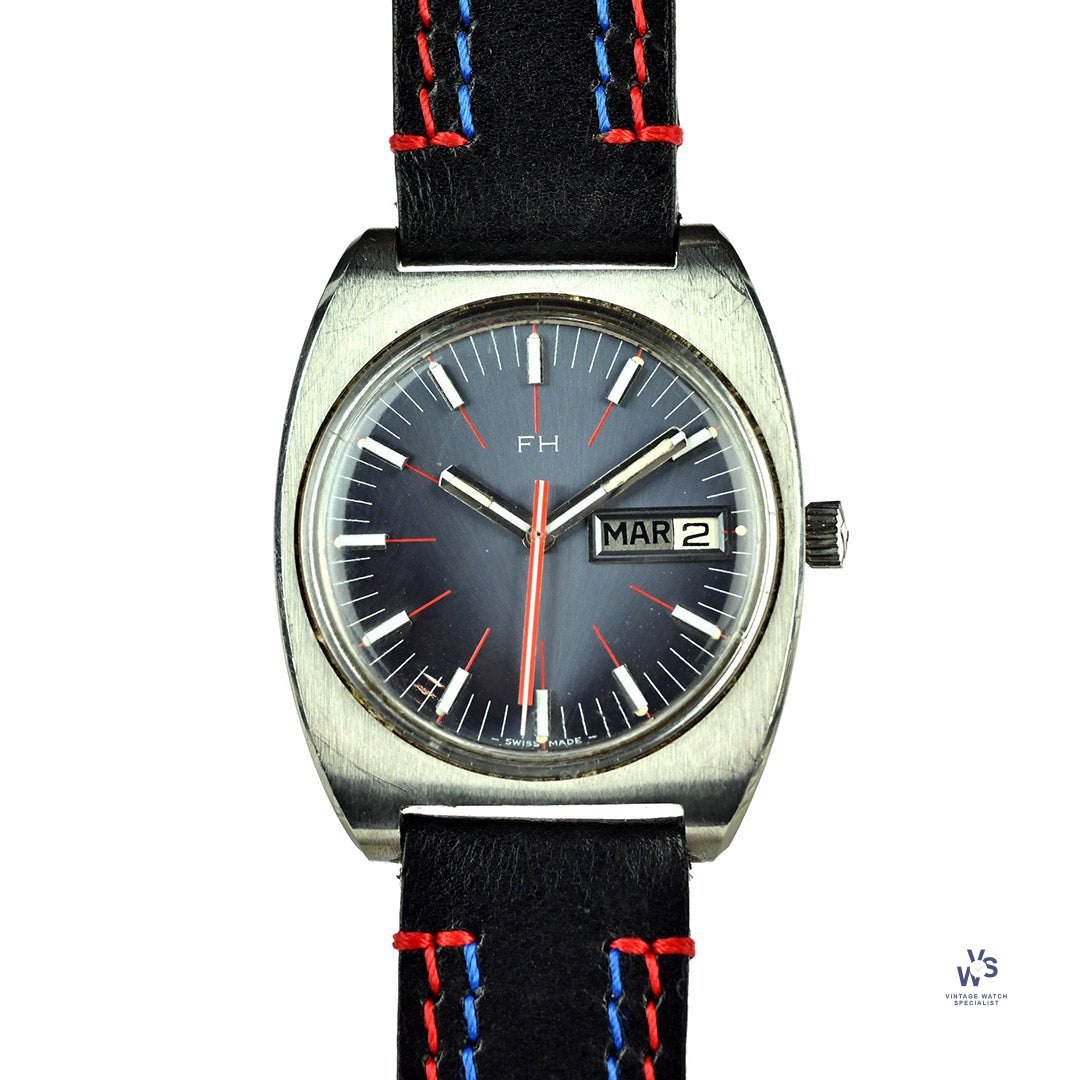
Wristwatches · Wristwatch
Roamer FH Dial (Federation Horology Assembled), Dial with Automatic Movement, Cushion Case, circa 1970s
- Maker / attribution
- Roamer (maker)
- Date
- c. 1970s
- Historical period
- Quartz Revolution (1969 – 1990)
- Country of origin
- Unrecorded in source
- Object type
- Wristwatch
- Dimensions
- Case 34 mm
- Stock no.
- vws3485
- Credit line
- Dealer listing, Vintage Watch Specialist (vws3485)
- Catalogue title (original)
- Roamer - FH Dial (Federation Horology Assembled) - Rare Dial with Automatic Movement - Cushion Case - c.1970s (English)
View the source record (dealer listing) ↗ (opens another website in a new tab)Suggest a correction
Record summary
Catalogued by Vintage Watch Specialist (dealer), United Kingdom (stock number vws3485), this is a wristwatch by Roamer, dated c. 1970s. The Atlas places it in the Quartz Revolution period (1969 – 1990) of its Wristwatches collection. Recorded dimensions: Case 34 mm. The record is illustrated with 6 photographs.
Assembled from the source record's structured fields. Dates and attributions are given as the source states them; where a field is missing the Atlas leaves it blank rather than estimating.
Catalogue description
Dealer description — Vintage Watch Specialist
A Very Rare Roamer Automatic Cushion Case (Federation Horology) assembled circa 1970s Formed in 1982 through the merger of the Swiss Federation of Watch Manufacturers’ Associations and the Swiss Chamber of Watchmaking, the Federation of the Swiss Watch Industry FH embodies nearly 150 years of collaborative efforts within the Swiss watchmaking sector. As a leading industry association, the FH today represents approximately 500 members, encompassing over 90% of Swiss companies involved in the production and sale of watches, clocks, and components. What's on Offer A head-scratcher for us here at VWS, after doing some research we believe this watch was supplied in parts by Roamer but assembled by the watchmakers at the Swiss Federation of Watch Manufacturers. The watch not only has a familiar shape to a Roamer Searock but it also has the same automatic MST 523 calibre movement further backing up its origins as manufactured by Roamer. We have found similar examples made by Omega which also had the same FH dials. There are very few examples of these watches we could find and very little information is documented. The 34mm steel cushion case has a very sleek profile and feels very comfortable when wearing. cosmetically it is in very good condition displaying only very light wear. A very nice metallic dust blue dial is encapsulated under a Roamer marked plexiglass, you can also find an R on the crown. Purposely paired with a blue and red stitch strap to match the red accents incorporated into the dial. Running well and ready to wear, this is a truly oddball vintage piece which most likely has an interesting backstory behind it.
Historical context
Quartz Revolution (1969 – 1990)
Seiko's Astron begins mass quartz timekeeping; traditional industries contract sharply.
Quartz and digital watches transformed the market after 1969. Swiss employment collapsed, Japanese and Hong Kong production soared, and the Swatch (1983) helped the Swiss industry recover; mechanical watches survived as luxury goods.
Read the period in the timelineMore wristwatches from this periodEarlier: Modern Mechanical Horology
Atlas type guide
Automatic (self-winding) watches
Self-winding watches use the wearer's motion to wind the mainspring. Abraham-Louis Perrelet and Breguet made 'perpétuelle' pocket watches with oscillating weights in the late eighteenth century, but the principle only became practical in the wristwatch. John Harwood patented a bumper automatic in 1923; Rolex's Perpetual rotor (1931) winding in one direction, and later bidirectional rotors (Eterna, Felsa Bidynator), established the modern form. Micro-rotors (Universal Genève, Buren) and peripheral rotors made automatic watches thinner.
What to look for
- A semicircular rotor turning 360° over the movement, or a 'bumper' weight that rebounds between springs.
- 'Automatic', 'Perpetual' or 'Self-winding' on the dial.
- A sealed screw-back case, since automatic watches are wound less often by the crown.
Dating clues
- Bumper automatics: 1923–c. 1955.
- Full rotors: from 1931 (Rolex); widespread after c. 1950.
- Micro-rotors: from 1954–1958.
General guidance written by the Atlas editors about this kind of object. It is not a statement about this particular piece; for that, rely on the source record above and on physical examination.
Related records
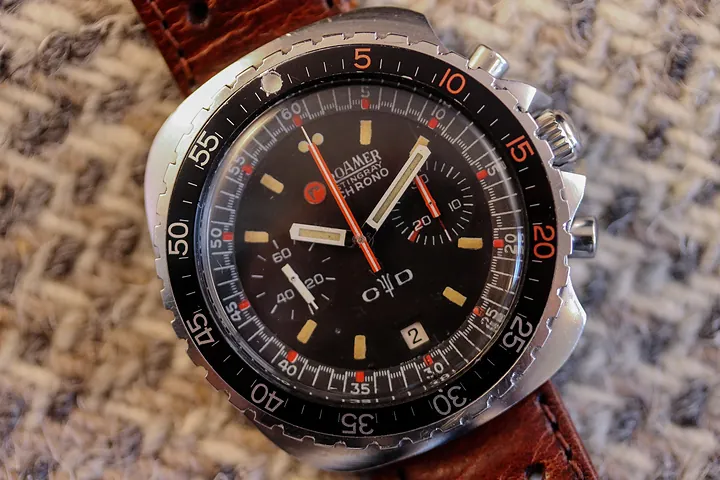
Wristwatches · c. 1967
Roamer Stingray Chronograph, c. 1967
Analog/Shift (dealer), New York
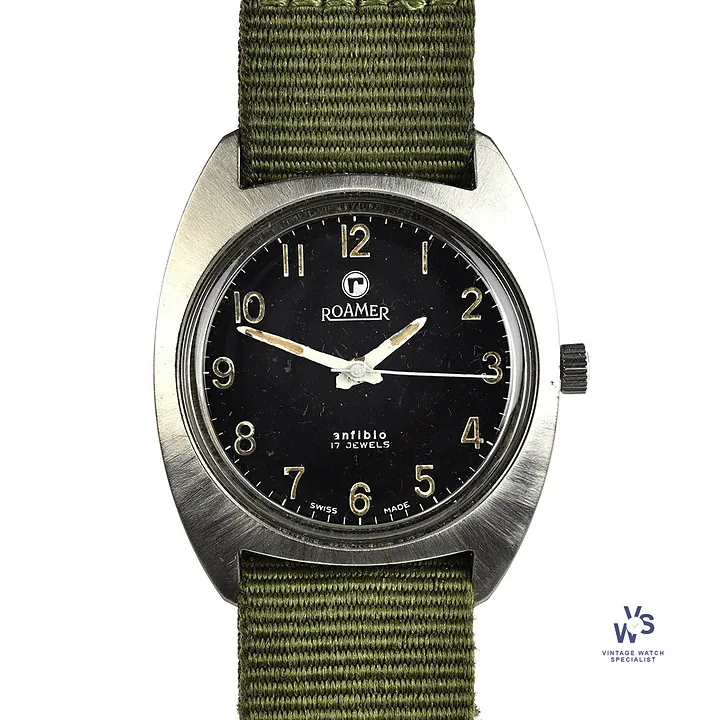
Wristwatches · c. 1973
Roamer Anfibio Watch, Rhodesian Military Issued, ref. 520-1120.016, circa 1973
Vintage Watch Specialist (dealer), United Kingdom
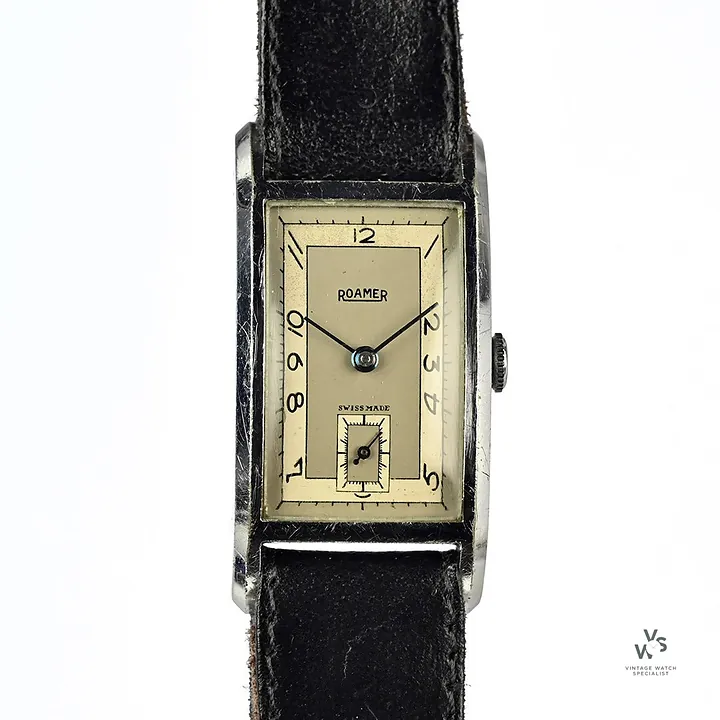
Wristwatches · c. 1930s
Roamer Art Deco Tank Case Watch, circa 1930s
Vintage Watch Specialist (dealer), United Kingdom
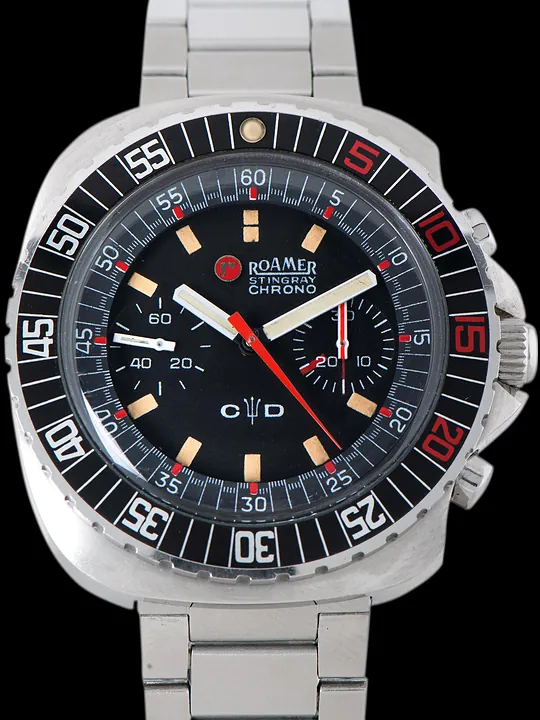
Wristwatches · 1970s
Roamer Stingray Chronograph (Ref. 023-912.900) "Valjoux 23", 1970s
Craft & Tailored (dealer), Los Angeles

Wristwatches · 1970
Wristwatch by Heno, Switzerland, 1970
Museum Rotterdam
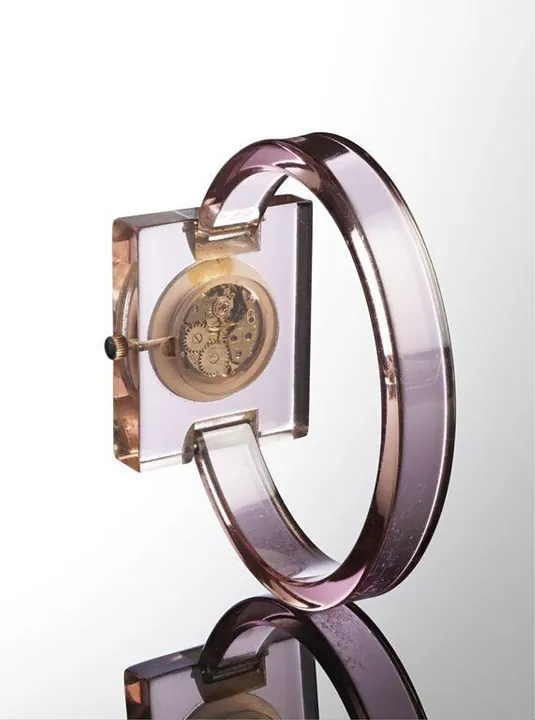
Wristwatches · 1970s
Wristwatch, plastic, by Gucci; Italy, 1970s.
Victoria and Albert Museum, London
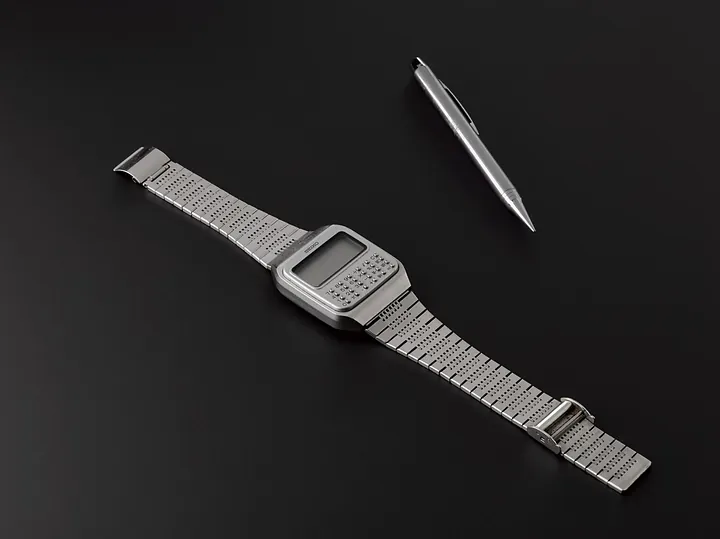
Wristwatches · 1978
Calculator wristwatch by Suwa Seikosha Co. Limited, Japan, 1978
Science Museum Group, London
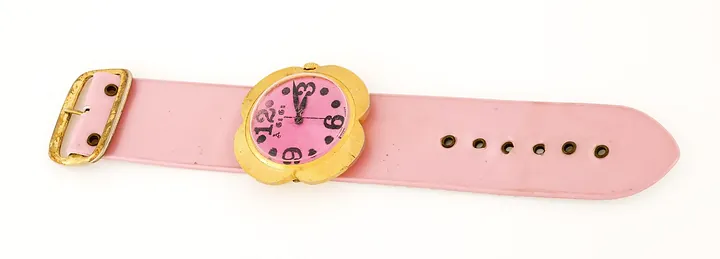
Wristwatches · 1980
Wristwatch, 1980 (no. 71413)
Museum Rotterdam