
Clocks · Longcase clock
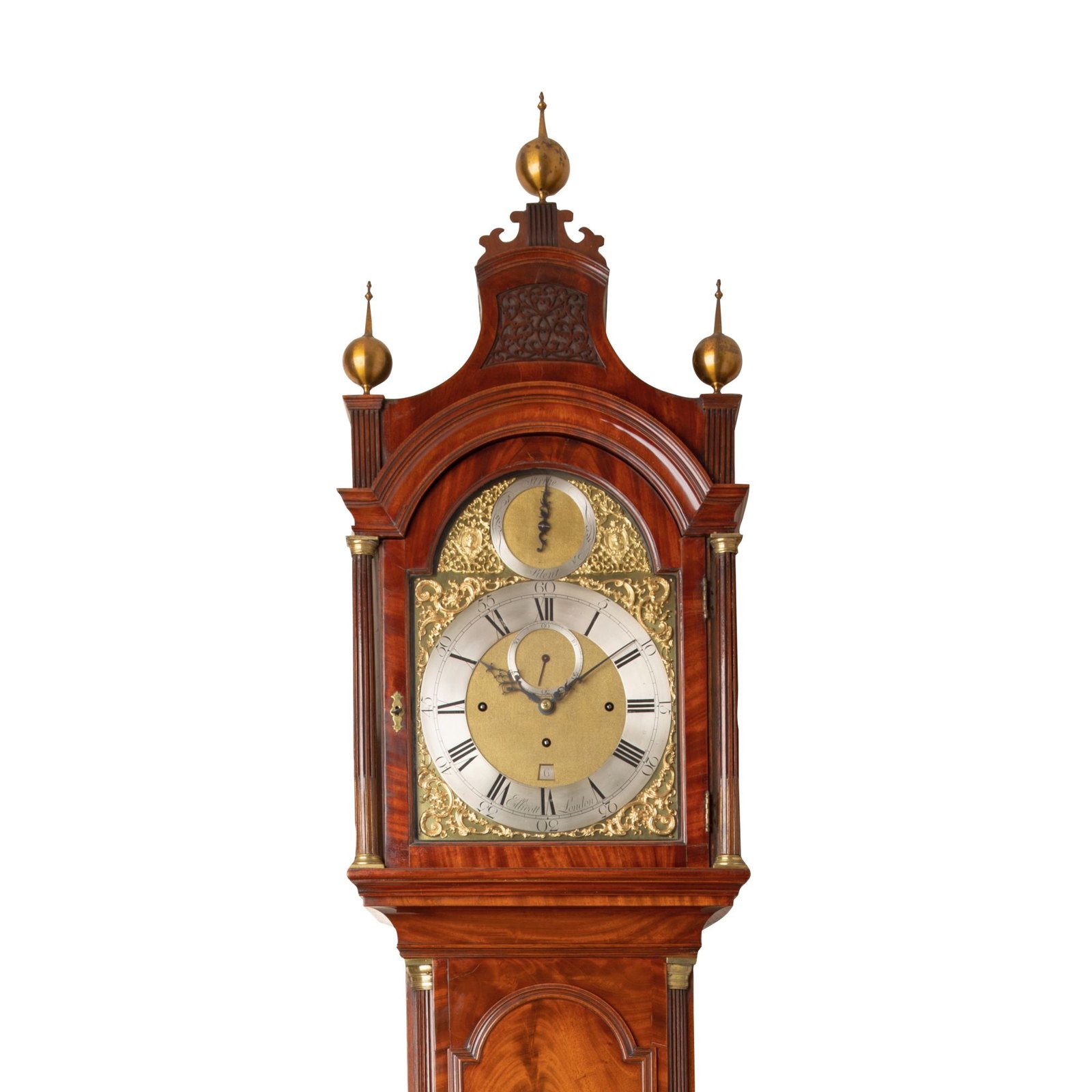
Quarter chiming longcase clock by John Ellicott, London
- Maker / attribution
- John Ellicott (maker)
- Date
- c. 1740
- Historical period
- Early Modern Horology (1600 – 1750)
- Country of origin
- England
- Place
- London
- Object type
- Longcase clock
- Dimensions
- Height 259 cm
- Stock no.
- Product 2693
- Credit line
- Dealer listing, The Antique Clock Company (product 2693)
- Catalogue title (original)
- QUARTER CHIMING LONGCASE CLOCK – JOHN ELLICOTT – LONDON (English)
View the source record (dealer listing) ↗ (opens another website in a new tab)Suggest a correction
Record summary
Catalogued by The Antique Clock Company (dealer), Dorset (stock number Product 2693), this is a longcase clock by John Ellicott, made in London, England, dated c. 1740. The Atlas places it in the Early Modern Horology period (1600 – 1750) of its Clocks collection. Recorded dimensions: Height 259 cm. The record is illustrated with 6 photographs.
Assembled from the source record's structured fields. Dates and attributions are given as the source states them; where a field is missing the Atlas leaves it blank rather than estimating.
Catalogue description
Dealer description — The Antique Clock Company
This stunning quarter chiming longcase clock boasts the high quality workmanship associated with this fine period of clockmaking excellence. A truly stunning case would not look out of place amongst royalty, with the beautiful mahogany case, attractive dial and comprehensive movement to match. This is a wonderful clock that would complement any collection. Movement : The substantial movement held by six knopped and finned pillars is of 8-day duration, with three brass bound weights driving the clock. The movement runs three trains for the going train; to tell the time and date, the hourly strike train; striking a single bell upon the hour, and the quarter chiming train; striking two smaller bells, where each strike represents each quarter hour passed. Using Graham’s dead-beat escapement, with a considerable iron and wood rod pendulum, with a very heavy lenticular brass bob and silvered engraved rating nut. Case : A wonderfully grand mahogany veneered case. The elegant deep flamed Mahogany case with pagoda top and blind fret above a long shaped moulded door with canted corners and typical London applied panel base upon a double plinth. The clock is complete with all three original “ball and spire” finials. Dial : The 13” Break-arch brass dial with elegantly matted centre, Date aperture above VI and silvered engraved seconds subsidiary dial below XII featuring Arabic 10 second markers. Surrounded by the silvered engraved chapter ring featuring both roman numerals and Arabic five minute markers. The rococo spandrels have all been deep cast and then chased to improve finishing and definition. There is a strike/silent subsidiary situated in the arch of the dial allowing the silencing of the strike. The dial is completed with original all finely shaped and blued steel hands. John Ellicott – B.1706 – D.1791 John Ellicott was born in 1706, the son of a clockmaker of the same name. He was one of the outstanding clockmakers of the 18th century, producing many quality clocks for the home market and export. John Ellicott developed his own form temperature compensated pendulum and was instrumental in the perfection of the cylinder escapement. He made very thin watch movements and paid great attention to detail. His reputation brought him to the attention of the Royal Court and he was elevated to the position of Clockmaker to King George II, later to George III and designed public clocks, including that of the London Hospital. King George III paid John Ellicott 150 pounds per annum as was George Lindsay (watchmaker). He worked from St Swithins Alley, Royal Exchange, London. Ellicott was elected a fellow of the Royal Society on the 26th of October 1738. He published two articles on clocks and also an equation of time table in their Philosophical Transactions for the Society. Ellicott supplied portable regulators to astronomers notably; Nevil Maskelyne, Charles Mason and James Cook for the recording of the transit of Venus. Ellicott was also a keen astronomer and observed the transit of Venus in 1761 from an observatory built in his home in Hackney. He died in 1772 and was followed by his son, Edward, who became Master of the Clockmakers Company in 1834. Height: 102 ″ or 259 cm *This clock is delivered and set up for free within the UK. We regularly ship clocks all over the world with our approved and well-established Antiques and Fine Art Packers & Shippers. Please ask for a quote should you require this service.
Provenance
Private collection U.K.
Historical context
Early Modern Horology (1600 – 1750)
Huygens' pendulum and balance spring transform accuracy; English makers develop the anchor and deadbeat escapements.
Huygens's pendulum (1656–57) improved clock accuracy from about a quarter of an hour to under a minute a day. The anchor escapement (c. 1670) and the long seconds pendulum created the longcase clock; London makers such as Fromanteel, Knibb, Tompion and Quare led European clockmaking, and French makers created the Boulle pendule.
Read the period in the timelineMore clocks from this periodEarlier: Renaissance Horology
Atlas type guide
Longcase (tall-case or grandfather) clocks
The longcase clock was born from two seventeenth-century innovations: Christiaan Huygens's pendulum (1656–57) and the anchor escapement (c. 1670). A long seconds pendulum, nearly a metre long, swings with a small arc, and enclosing it together with the driving weights in a tall wooden case protected the mechanism and created a new piece of furniture. London makers such as Ahasuerus Fromanteel, Thomas Tompion and Joseph Knibb set the pattern.
By the eighteenth century longcase clocks were made throughout Britain, the Netherlands, Scandinavia (the Swedish Mora clock), France (the Comtoise from the Franche-Comté), Germany and colonial America. Eight-day movements with two weights became standard in better clocks; thirty-hour clocks with one weight and a rope or chain were cheaper alternatives.
What to look for
- Winding holes in the dial: two (eight-day, going and striking) or none (thirty-hour, pulled up by a chain).
- Brass dials with applied chapter rings (earlier) versus painted iron 'white' dials (after c. 1770 in Britain).
- Moon-phase arches, date apertures, seconds dials and maker's name on the dial.
- Case woods and style: ebonised, walnut marquetry, lacquer, oak or mahogany; regional styles from London, Lancashire, Scotland or America.
- Whether the movement and dial match the case — 'marriages' are common.
Dating clues
- Square brass dials suggest c. 1670–1720; arched brass dials c. 1715–1790.
- Painted (white) dials were made by Birmingham dial-makers from about 1772.
- Comtoise clocks with repoussé pendulums are mostly nineteenth century.
General guidance written by the Atlas editors about this kind of object. It is not a statement about this particular piece; for that, rely on the source record above and on physical examination.
Related records
Clocks · 1740–1760
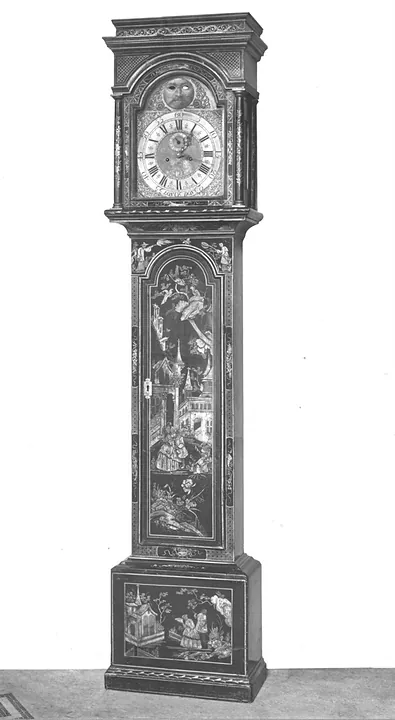
Longcase clock, English, 1740–1760, japanned wood, John Ellicott
Victoria and Albert Museum, London
Pocket Watches · c. 1753
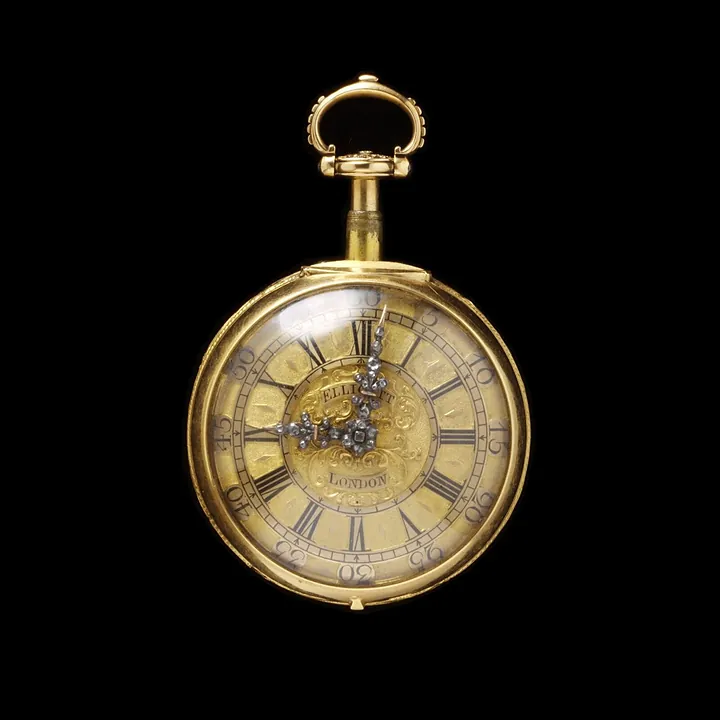
Gold watch, signed 'Jno. Ellicott, London, 3719', the inner case pierced and engraved, with a casemaker's mark 'JB', London, about 1753
Victoria and Albert Museum, London
Pocket Watches · c. 1760
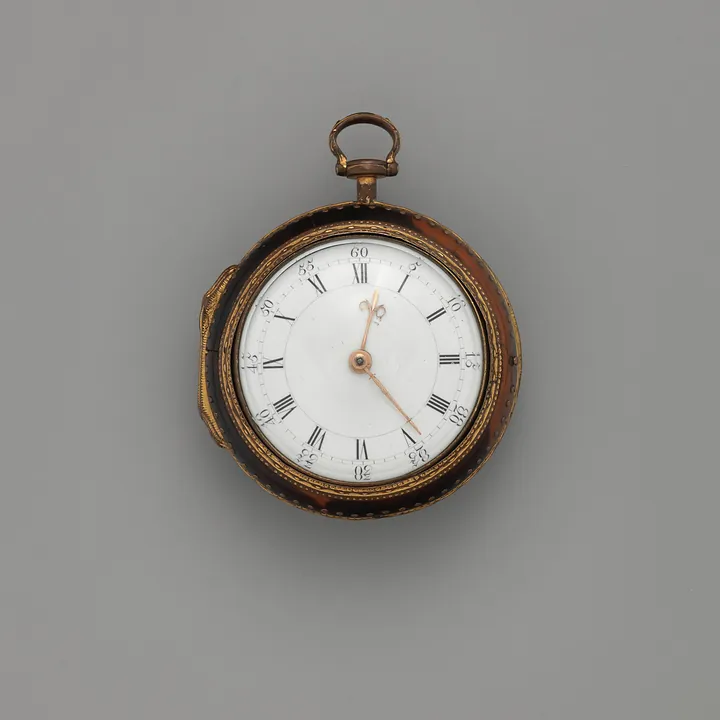
Watch by John Ellicott, England, c. 1760
The Metropolitan Museum of Art, New York
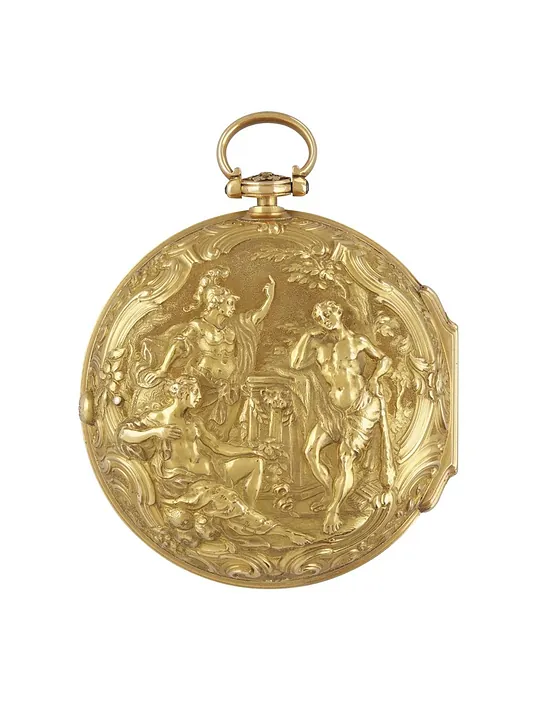
Pocket Watches · 1767
Pocket watch by John Ellicott, England, 1767
Science Museum Group, London
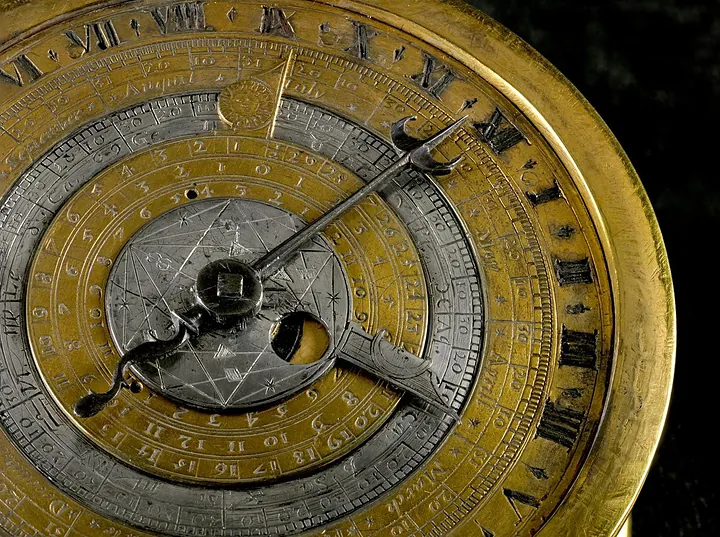
Clocks · 1598–1603
Circular table-clock with calendrical and lunar indications made by Nicholas Vallin in London between 1598 and 1603.
Science Museum Group, London
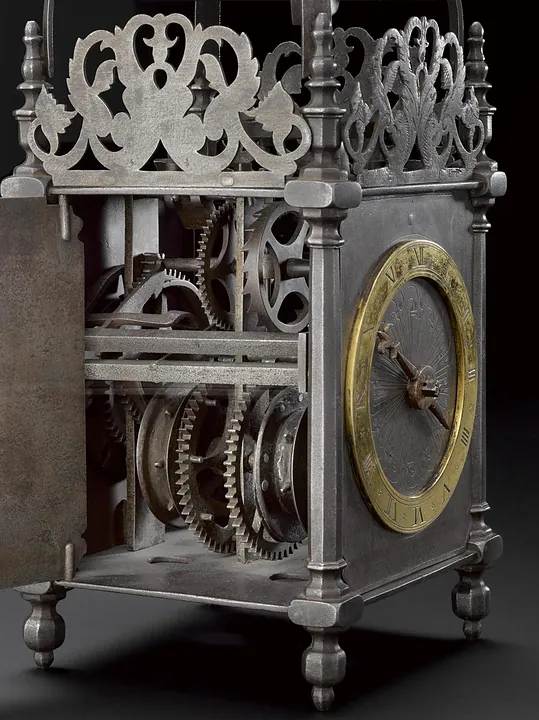
Clocks · 1611
English iron lantern clock, with wheel balance, by John Holloway, Market Lavington, Wiltshire, England, 1611.
Science Museum Group, London
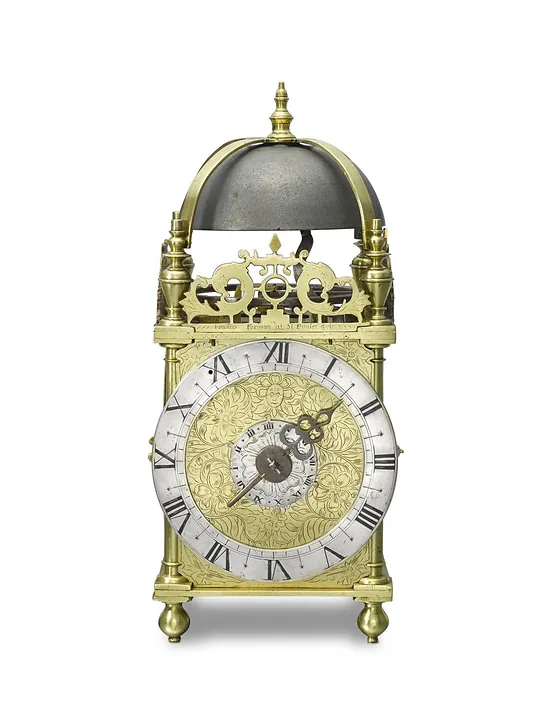
Clocks · 1630
Lantern clock by Francis Forman, England, 1630
Science Museum Group, London
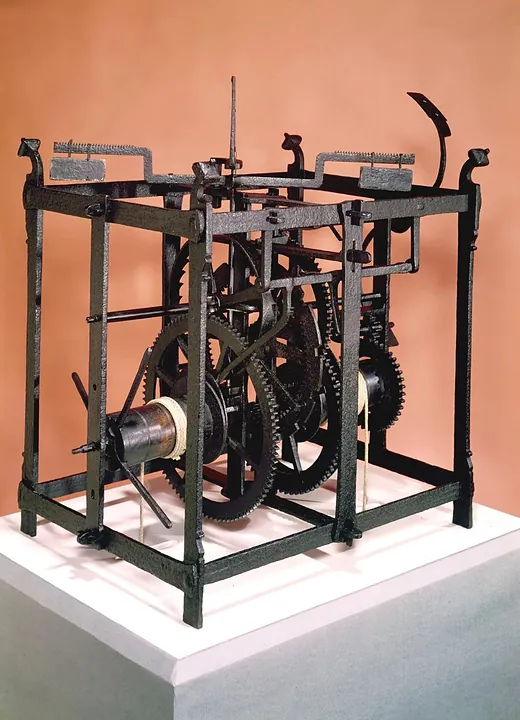
Clocks · 1632–1640
Turret clock, England, 1632–1640
Science Museum Group, London