
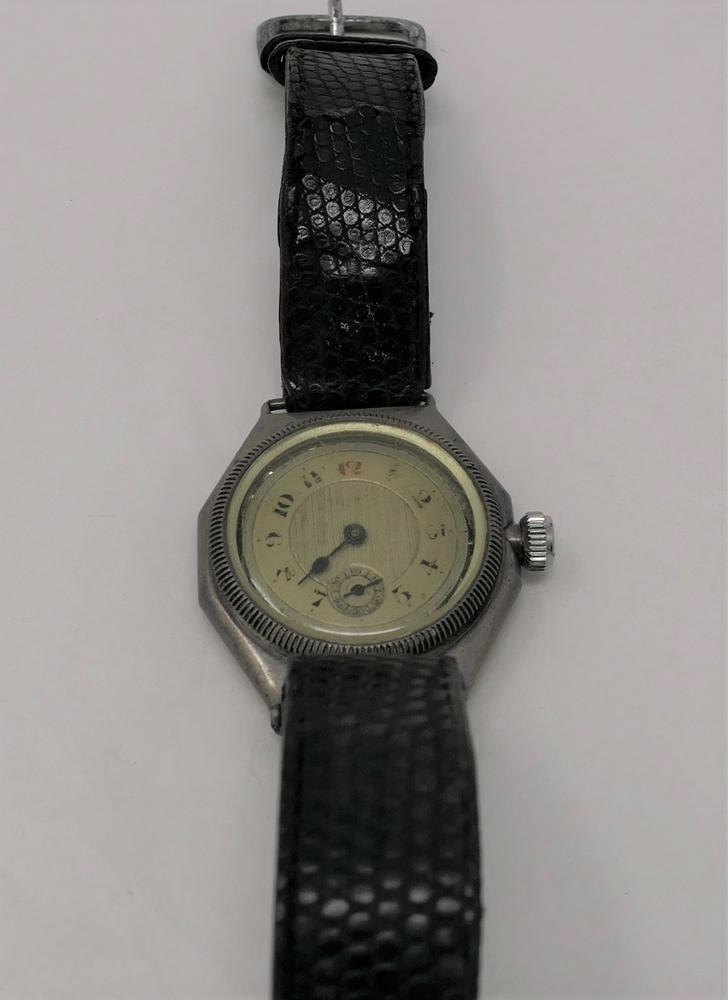
Wristwatches · Wrist-watch
Octagonal silver-cased rolex oyster club-tooth lever wrist-watch with black crocodile-skin strap
- Maker / attribution
- Rolex (movement swiss made, not Rolex) (Case made by)
- Date
- 1925 (?); 1928 (retailed)
- Historical period
- Golden Age of Mechanical Watchmaking (1900 – 1945)
- Country of origin
- Switzerland
- Place
- Switzerland, Glasgow
- Object type
- Wrist-watch
- Materials / technique
- silver, plastic
- Dimensions
- Diameter: 28.50 millimetres (bezel) Diameter: 27.30 millimetres (dial) Length: 224 millimetres (strap) Thickness: 10 millimetres
- Holding institution
- British Museum
- Accession / object no.
- 1986,0509.4
- Credit line
- British Museum, London
- Catalogue title (original)
- Octagonal silver-cased rolex oyster club-tooth lever wrist-watch with black crocodile-skin strap (English)
View the source record ↗ (opens another website in a new tab)Suggest a correction
Record summary
Held and catalogued by British Museum (object number 1986,0509.4), this is a wrist-watch by Rolex (movement swiss made, not Rolex), made in Switzerland, Glasgow, dated 1925 (?); 1928 (retailed). The Atlas places it in the Golden Age of Mechanical Watchmaking period (1900 – 1945) of its Wristwatches collection. Materials and techniques recorded by the source: silver, plastic. Recorded dimensions: Diameter: 28.50 millimetres (bezel) Diameter: 27.30 millimetres (dial) Length: 224 millimetres (strap) Thickness: 10 millimetres. The record is illustrated with 3 photographs.
Assembled from the source record's structured fields. Dates and attributions are given as the source states them; where a field is missing the Atlas leaves it blank rather than estimating.
Catalogue description
Description — British Museum
Rolex Oyster wrist-watch. Bar movement with club-tooth lever escapement. Silvered dial with Arabic hour numerals, 12 in red; subsidiary seconds. Blued steel hands. Silver case with screw-on back and bezel. Black leather wrist-strap.
Curator's comments — British Museum
Comment from Richard Good, Catalogue of Watches in the British Museum. Vol. V (Unpublished manuscript) Made by Rolex Switzerland, Case c. 1928 Waterproof silver cased wrist watch with club tooth lever escapement. Signature: Only the case is marked in the back 'ROLEX'. The movement marked 'SWISS MADE' on the front plate and '15 JEWELS' on the train bridge. However the movement is not original to the case.(1) Case: Silver four part case, open face with a screw back and bezel both of which screw onto a threaded ring which fits inside the case band. In the back is 'ROLEX 20 W RECORDS GREAT BRITAIN PATENTS 260554/1925 SWISS PATENTS + 260054/1925 274,789 SWISS PATENTS + 114.948 + 120.851'. The import marks for Glasgow 1928. Makers mark R W C LTD Numbered 55301 43. Dial & Hands: A silvered dial with black painted Arabic numerals but with the 12 in red. A sunk subsidiary seconds dial Scratched on the back of the dial Jm Forster 6 Eldon Square Newcastle on Tyne 1923. The hands of blued-steel, the minute hand missing, the hour hand of spade design. The seconds hand of blued-steel. Movement: The movement not original. Frame: A nickel silver movement with a bridge for the barrel another for the centre and third wheels and cocks for the escape wheel the pallets and the balance. The train bridge and the escape wheel cock are marked 67. The balance cock is marked 67 twice. Barrel and Mainspring: A recessed cover to the going barrel. Barrel: I diameter 9.5 mm., height 1.5 mm. Mainspring: height 1.5 mm., thickness 0.125 mm. Barrel Arbor: diameter 3.1 mm, snailed. Hooking: A tongue is pressed from the barrel wall. Train: All the brass wheels gilded but on one side only, the centre wheel, third and fourth wheels with five crossings. The steel escape wheel with four. Jewelling: Jewelled bearings from the third wheel onwards, all the jewels rubbed in. Ruby endstones to the balance jewels. Escapement: A straight line layout, club tooth lever escapement with short lever, double roller and D-shaped impulse pin. The exposed pallet stones have flat acting faces. A steel escape wheel with four crossings. An equidistant locking escapement. No. of teeth embraced 3½. Balance & Spring: a bimetallic balance with brass screws and two platinum timing screws. Balance diameter 9.2 mm., thickness 0.6 mm. A blued-steel flat spiral spring with 10 turns. Means of Regulation: An index on the balance cock registers against a divided scale with 'F S' and 'A R' engraved on the balance cock table. Train Counts and Beat Rate: Great wheel 70 (barrel) Centre wheel 64 pinion 10 Third wheel 60 pinion 8 Fourth wheel 60 pinion 8 Escape wheel 15 pinion 6 Beat rate: 18,000 Motion work: cannon pinion 10 minute wheel 30, minute pinion 8 hour wheel 32 Winding System: Conventional positive set keyless work with the winding button able to be screwed onto the pendant tube, for an illustration and explanation see registration no. 1995,1205.1. Dimensions: Case: Length 33.0 mm., width 31.7 mm., height 9.4 mm., over the glass. Movement: diameter 23.0 mm., height 6.0 mm. Provenance: Purchased in 1986 with funds made available by the late Stanley H. Burton. Note: (1) For the correct movement for this case see registration no. 1995,1205.1.
Inscriptions & marks
inscription; SWISS MADE 15 JEWELS [escapement]; signature; ROLEX 20 WORLD'S RECORDS, GREAT BRITAIN PATENTS 260554/1925 274.788 SWISS PATENTS F114.948 F120.851 [inside case]; casemaker's mark; RWC LTD; mark; 55301 43 [case]; mark; Glasgow import assay mark 1928. [case-back]
Provenance
Purchased from:, William Skeen
Historical context
Golden Age of Mechanical Watchmaking (1900 – 1945)
The wristwatch displaces the pocket watch; waterproof cases, self-winding and grand complications.
The wristwatch overtook the pocket watch. Military use in the First World War, aviation, water-resistant cases (1926), automatic winding (1923–31), rectangular Art Deco designs and early chronographs and calendars defined the period.
Read the period in the timelineMore wristwatches from this periodEarlier: Industrial Revolution
Atlas type guide
Dive and water-resistant watches
Keeping water and dust out of a wristwatch was a long-standing challenge. Rolex's screw-down Oyster case (1926) and Omega's Marine (1932) were landmarks; in the early 1950s Blancpain's Fifty Fathoms and Rolex's Submariner defined the professional dive watch with rotating bezels for timing dives, luminous dials and high water resistance. The ISO 6425 standard (1982) later codified what a 'diver's watch' must do.
Dive watches became icons of post-war design and exploration, and their evolution — helium escape valves, ceramic bezels, saturation-diving depth ratings — records the history of underwater work.
What to look for
- Unidirectional or bidirectional rotating bezel with minute markings.
- Screw-down crown and case back; depth rating printed on the dial.
- Luminous hands and markers (radium before c. 1960, tritium c. 1960–1998, then Super-LumiNova).
- Reference numbers on the case between the lugs or inside the back.
Dating clues
- Screw-down Oyster cases: from 1926.
- Professional dive watches: from 1953.
- Tritium 'T' marks on dials: c. 1960–1998.
General guidance written by the Atlas editors about this kind of object. It is not a statement about this particular piece; for that, rely on the source record above and on physical examination.
Related records

Wristwatches · 1931
Rolex 'Oyster Perpetual' rotor self-winding wrist-watch, lever escapement, in steel case with glass in back, Montres Rolex SA, Geneva, Switzerland, 1931
Science Museum Group, London

Wristwatches · 1900–1999
Wristwatch by Certina, Switzerland, 1900–1999
Nordic Museum Foundation
Wristwatches · 1900–1999
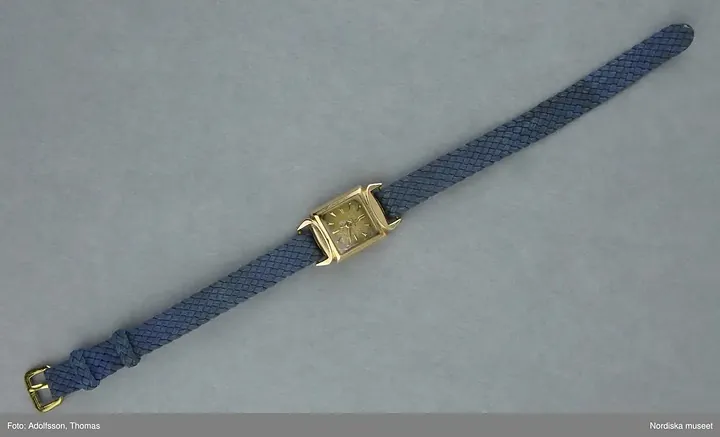
Wristwatch by Omega, Västerås, 1900–1999
Nordic Museum Foundation
Wristwatches · 1900–1999
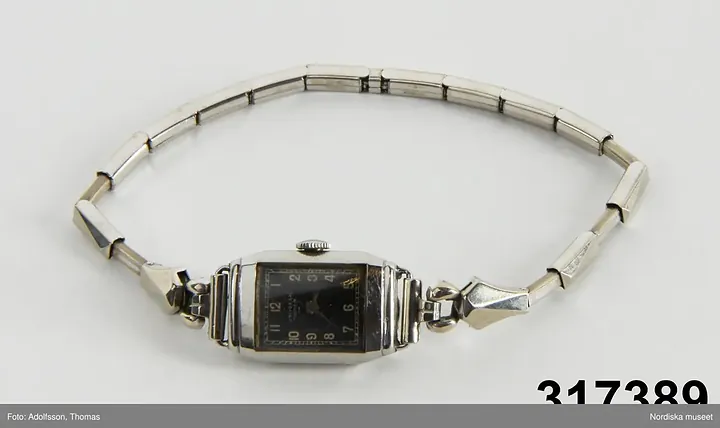
Wristwatch by Universal, Switzerland, 1900–1999
Nordic Museum Foundation
Wristwatches · c. 1900
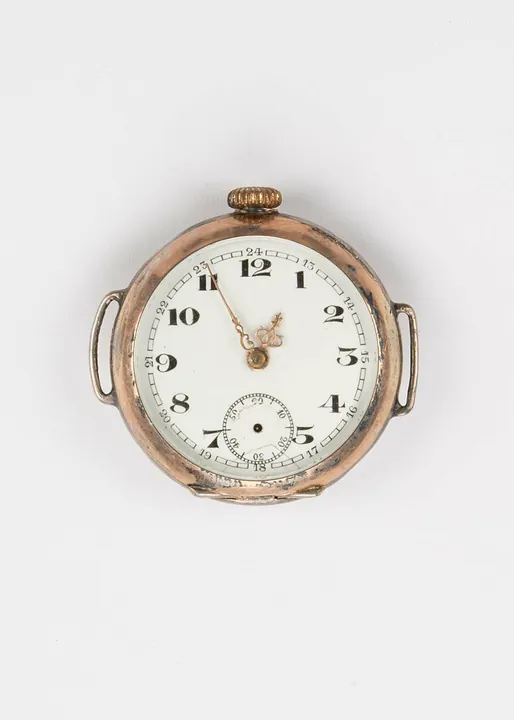
Wristwatch, probably Switzerland, c. 1900 (no. 57124)
German Clock Museum
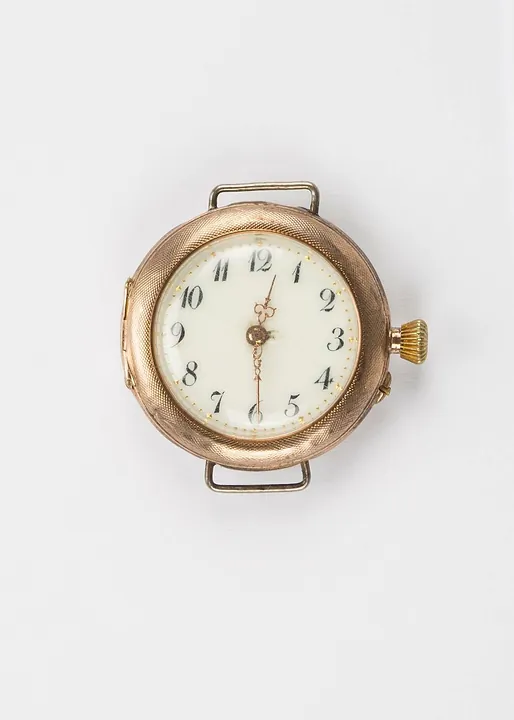
Wristwatches · c. 1900
Wristwatch, probably Switzerland, c. 1900 (no. 57216)
German Clock Museum
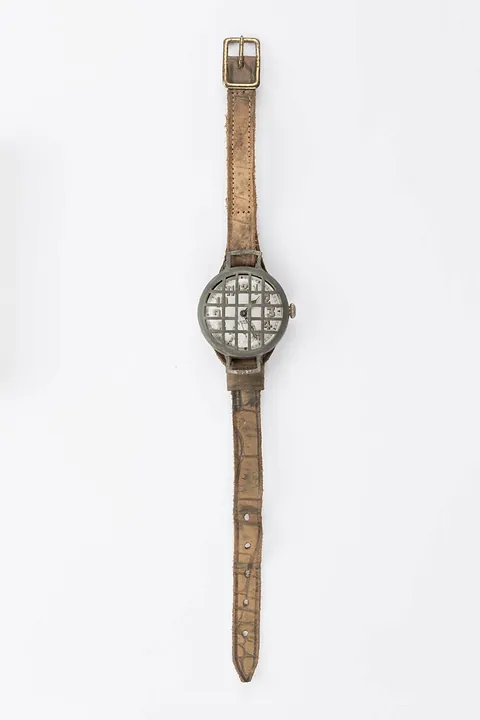
Wristwatches · c. 1915
Wristwatch by S.S.und Co., Stauffer, Son und Co., Switzerland, c. 1915
German Clock Museum
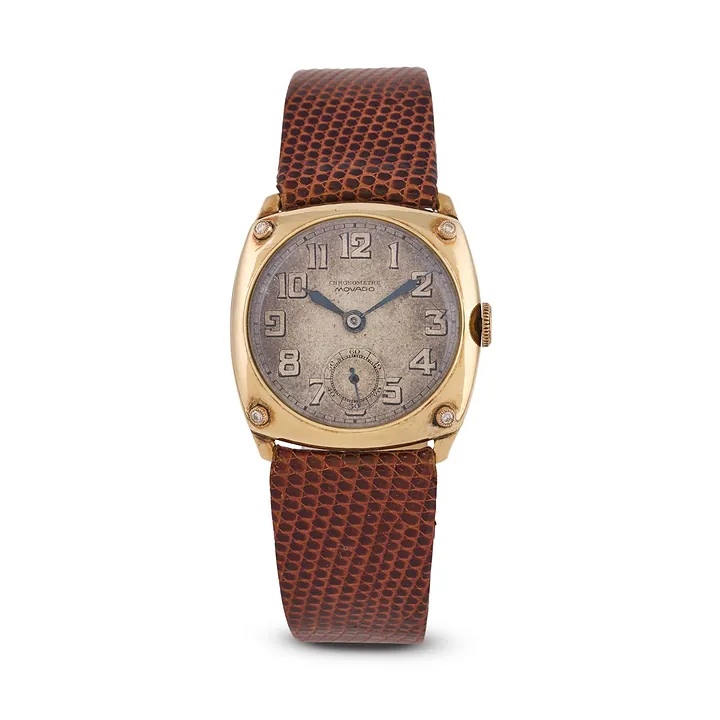
Wristwatches · c. 1920s
Movado Chronometre, ref. 41536, c. 1920s
Antiquorum auction archive, Geneva