
Wristwatches · Wristwatch
Ming 19.01, 2019
- Maker / attribution
- MING (maker)
- Date
- 2019
- Historical period
- Contemporary Horology (2010 – Present)
- Country of origin
- Unrecorded in source
- Object type
- Wristwatch
- Dimensions
- Case 39 mm
- Stock no.
- Product 7508628897879
- Credit line
- Dealer listing, S.Song Watches (product 7508628897879)
- Catalogue title (original)
- Ming 19.01 (English)
View the source record (dealer listing) ↗ (opens another website in a new tab)Suggest a correction
Record summary
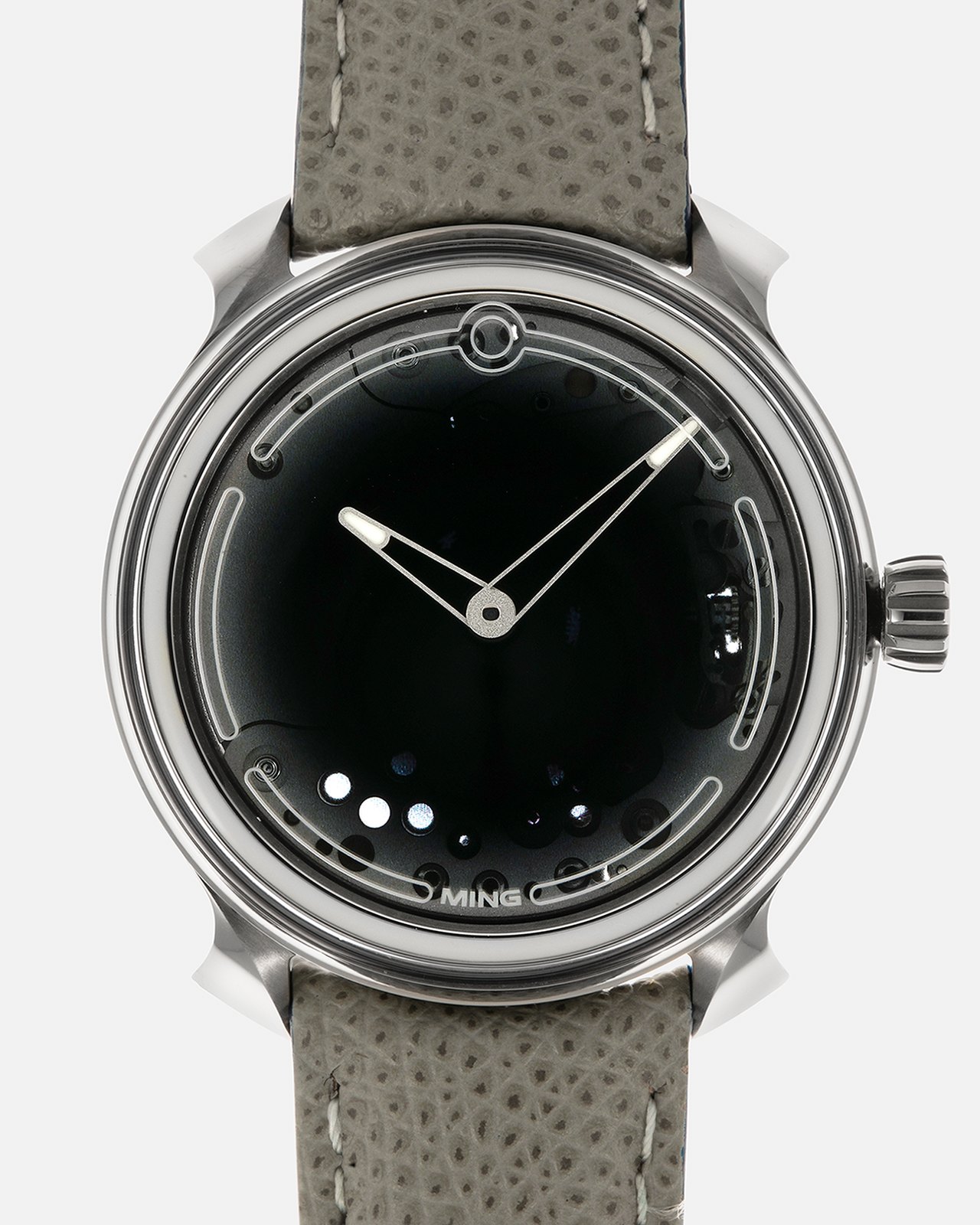
Catalogued by S.Song Watches (dealer), Seattle (stock number Product 7508628897879), this is a wristwatch by MING, dated 2019. The Atlas places it in the Contemporary Horology period (2010 – Present) of its Wristwatches collection. Recorded dimensions: Case 39 mm. The record is illustrated with 6 photographs.
Assembled from the source record's structured fields. Dates and attributions are given as the source states them; where a field is missing the Atlas leaves it blank rather than estimating.
Catalogue description
Dealer description — S.Song Watches
Establishing oneself as an independent watch brand is no small undertaking. In a market greatly saturated with a vast array of watches and dominated by longstanding Swiss watchmaking juggernauts, the odds are typically overwhelmingly stacked against newcomers. History has repeatedly shown that many independent brands have struggled to survive, with some absorbed by larger conglomerates and others quietly disappearing altogether. The 19.01 is the second model released after the 17.01. It was developed and built without regard for cost, born from the MING team's vision of the ultimate daily wearer. Created to embody all the elements of an ideal MING timepiece, the 19.01 is distinctive, robust, and practical, showcasing the signature design choices we’ve come to expect from this beloved independent brand. Starting with its construction, the 19.01 features a 39mm × 10.9mm Grade 5 titanium case milled precisely to house its bespoke movement. This approach eliminates the need for spacer rings, allowing the caseback to fit directly into the case. Both sapphire crystals receive double anti-reflective coating and feature a shouldered profile, often referred to as “box” crystals. The dial is, I think, the main standout element of the 19.01, visually striking and genuinely original. Traditionally, the glass and dial are separate components, but here they are seamlessly integrated through layered sapphire. The upper sapphire layer carries a fumé finish in deep shades of blue and purple, opaque at the centre and gradually transitioning to translucence toward the edges. This gradient subtly reveals glimpses of the movement beneath, even before turning the watch over. Inside beats a MING-exclusive iteration of the Schwarz-Etienne MSE100, designated Cal. MSE100.1. It is equipped with twin skeletonised mainspring barrels delivering a whopping 100 hours of power reserve, a two-tone anthracite bead-blasted finish, and openworked bridges. Meticulously executed anglage accentuate its architecture, combining mechanical excellence with visual depth and perfectly complementing the 19.01’s intricate construction. Undoubtedly a flagship model in its own right, the 19.01 represents MING’s bold investment in themselves as both designers and watchmakers in their early days. It’s a testament to their vision and ambition, embodied in a truly exciting timepiece. With its mechanical excellence and visually striking design, the 19.01 will make for a wonderful addition to any serious watch collection.
Historical context
Contemporary Horology (2010 – Present)
Silicon components, connected watches, optical-lattice research clocks and a thriving independent scene.
Smartwatches became the world's best-selling watches, while mechanical watchmaking focuses on craft, innovation (silicon components, new escapements) and independent makers.
Read the period in the timelineMore wristwatches from this periodEarlier: Mechanical Renaissance
Atlas type guide
Wristwatches
Bracelet watches were worn by women from the early nineteenth century — Breguet made one for Caroline Murat, Queen of Naples, in 1810–12 — but the wristwatch only became a man's instrument with military use and aviation in the early twentieth century. Between the World Wars it overtook the pocket watch; the 1920s and 1930s brought rectangular Art Deco cases, water-resistant cases and the first automatic winding systems.
After 1945 the wristwatch became a carrier of identity — dress watches, sports and dive watches, chronographs, calendars — produced by Swiss, American, Japanese, German, Soviet and Chinese industries. The quartz revolution after 1969 and the mechanical renaissance since the 1990s, including the rise of independent watchmakers, complete the story.
What to look for
- The reference number (between the lugs or inside the case back) and serial number, the starting point for dating.
- The calibre: its maker and number are often stamped under the dial or on the bridge.
- Originality of dial, hands and crown — refinished ('redial') dials are common.
- Case material marks: 18K/750, 14K/585, stainless steel, gold-filled, plated.
Dating clues
- Wire-lug cases: before c. 1925.
- Water-resistant screw-down cases: from 1926.
- Quartz movements: from 1969; sapphire crystals widespread after c. 1980.
General guidance written by the Atlas editors about this kind of object. It is not a statement about this particular piece; for that, rely on the source record above and on physical examination.
Related records
Wristwatches · 2022
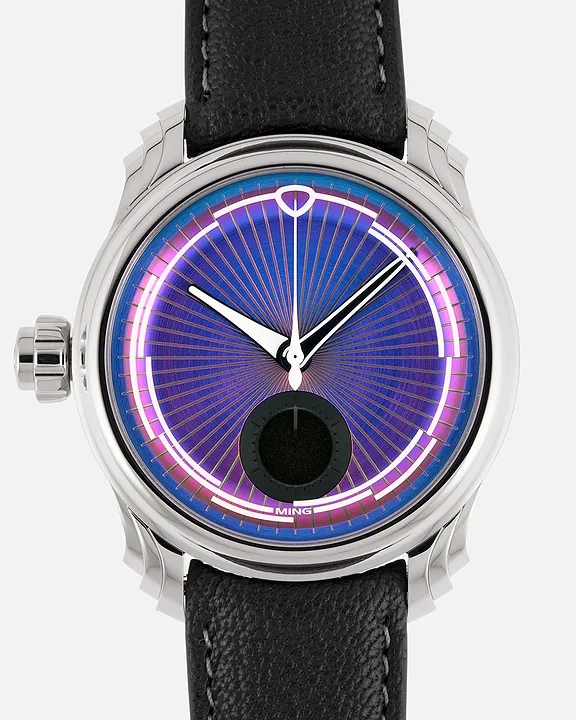
Ming 57.04 Iris Monopusher Chronograph, 2022
S.Song Watches (dealer), Seattle
Wristwatches · 2023
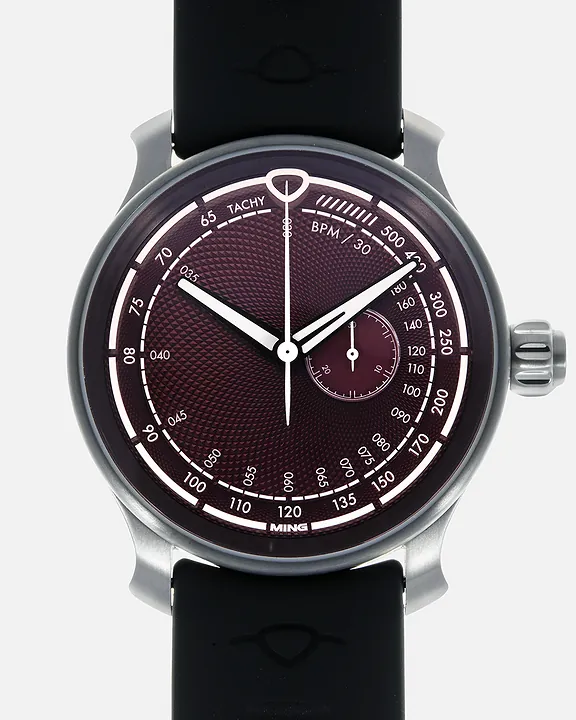
Ming 37.04 Monopusher Chronograph Tantalum, 2023
S.Song Watches (dealer), Seattle
Wristwatches · 2022
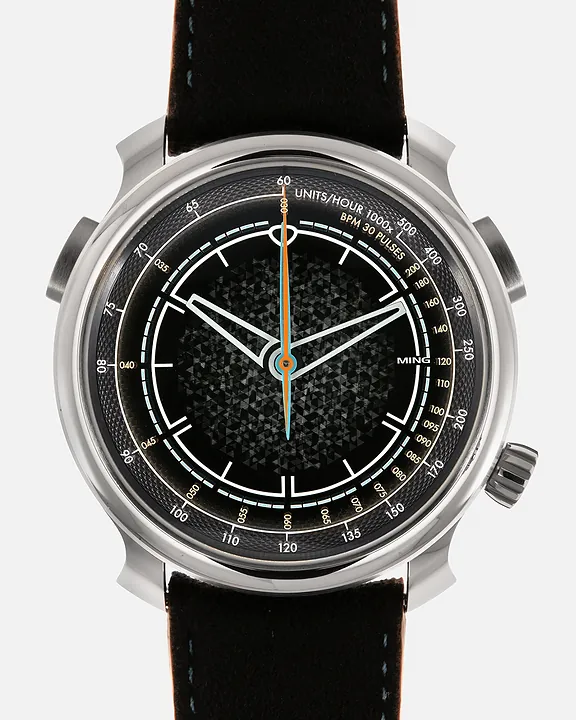
Ming 20.01 Series II Agengraphe Chronograph Special Projects Cave, 2022
S.Song Watches (dealer), Seattle
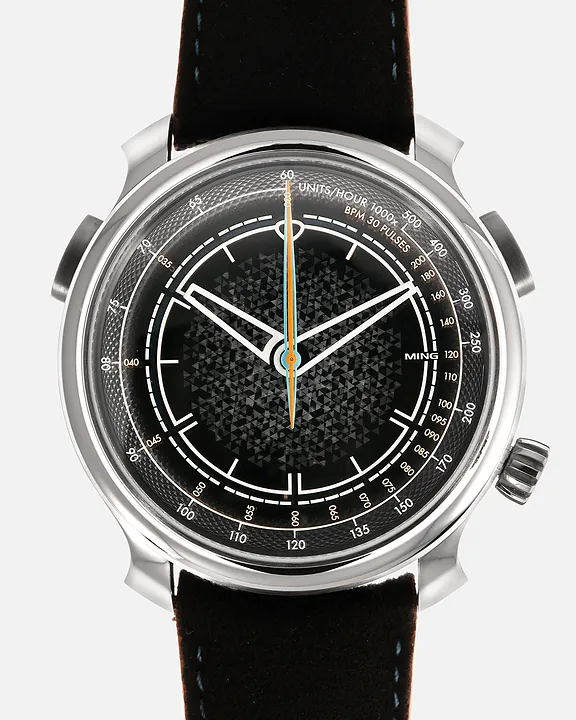
Wristwatches · 2022
Ming 20.01 Series II Agengraphe Chronograph Special Projects Cave, 2022
S.Song Watches (dealer), Seattle
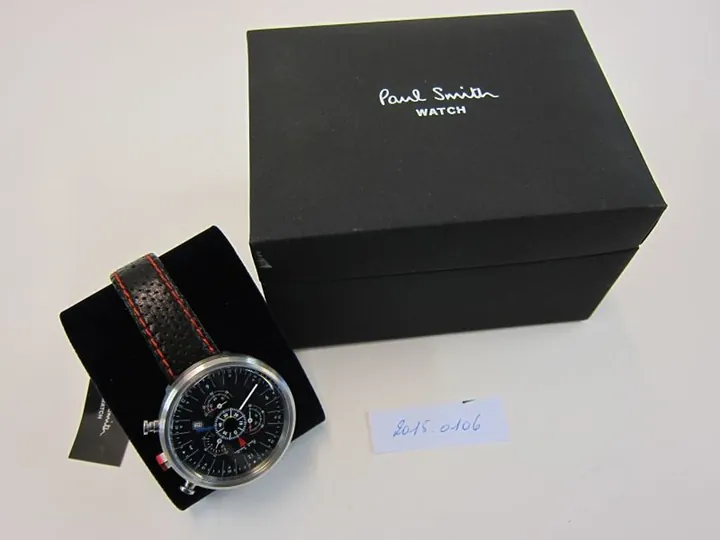
Wristwatches · 2010
Wristwatch, 2010
Modemuseum Hasselt
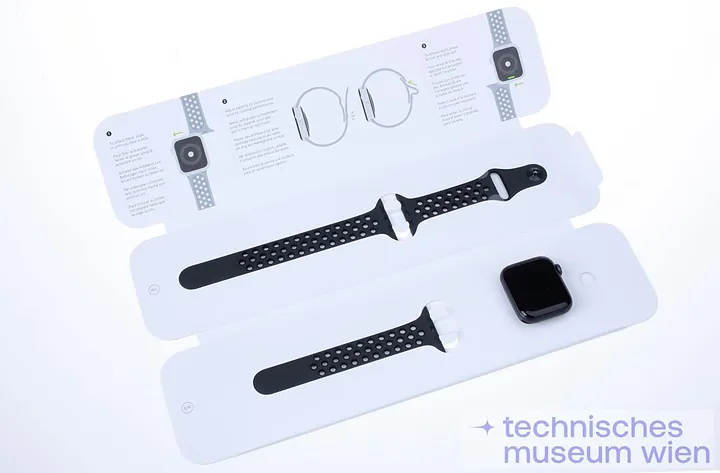
Wristwatches · 2018 (Series 4 released in September 2018; '1977' in the source is the model number A1977)
Apple Watch Series 4 (GPS, 40 mm, model A1977), 2018
Vienna Museum of Science and Technology
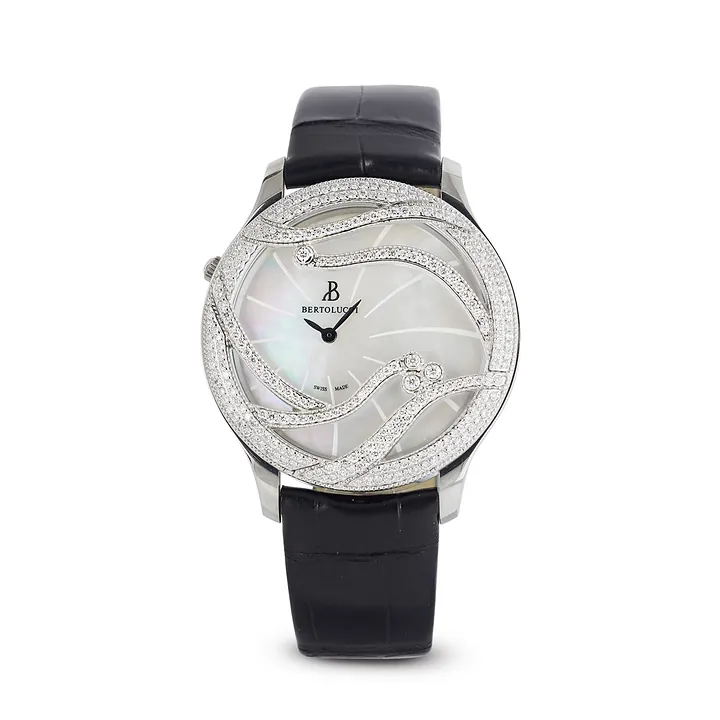
Wristwatches · c. 2010s
Bertolucci Stria III, ref. 11513.50.45.B88.6C1.501, c. 2010s
Antiquorum auction archive, Geneva
Wristwatches · c. 2010s
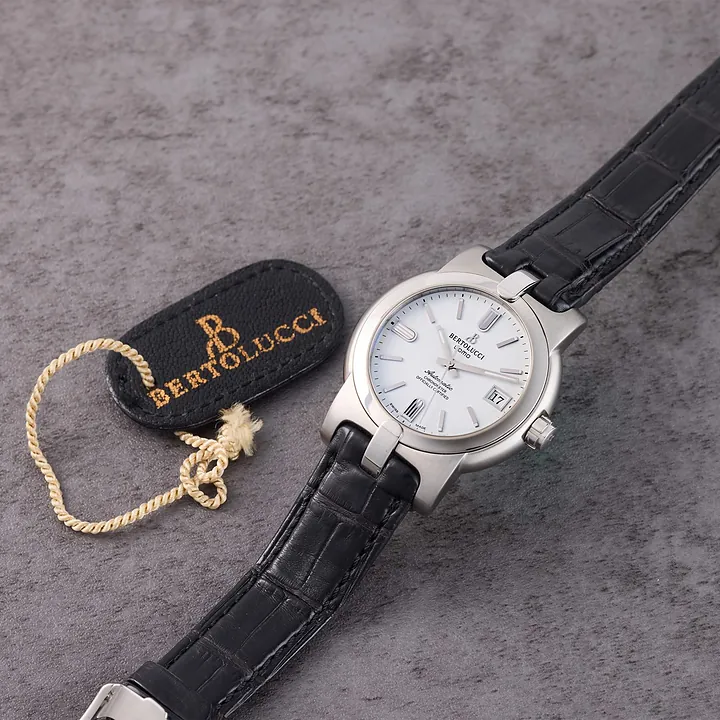
Bertolucci Uoma, ref. 824.51.41.10B, c. 2010s
Antiquorum auction archive, Geneva