
Wristwatches · Wristwatch
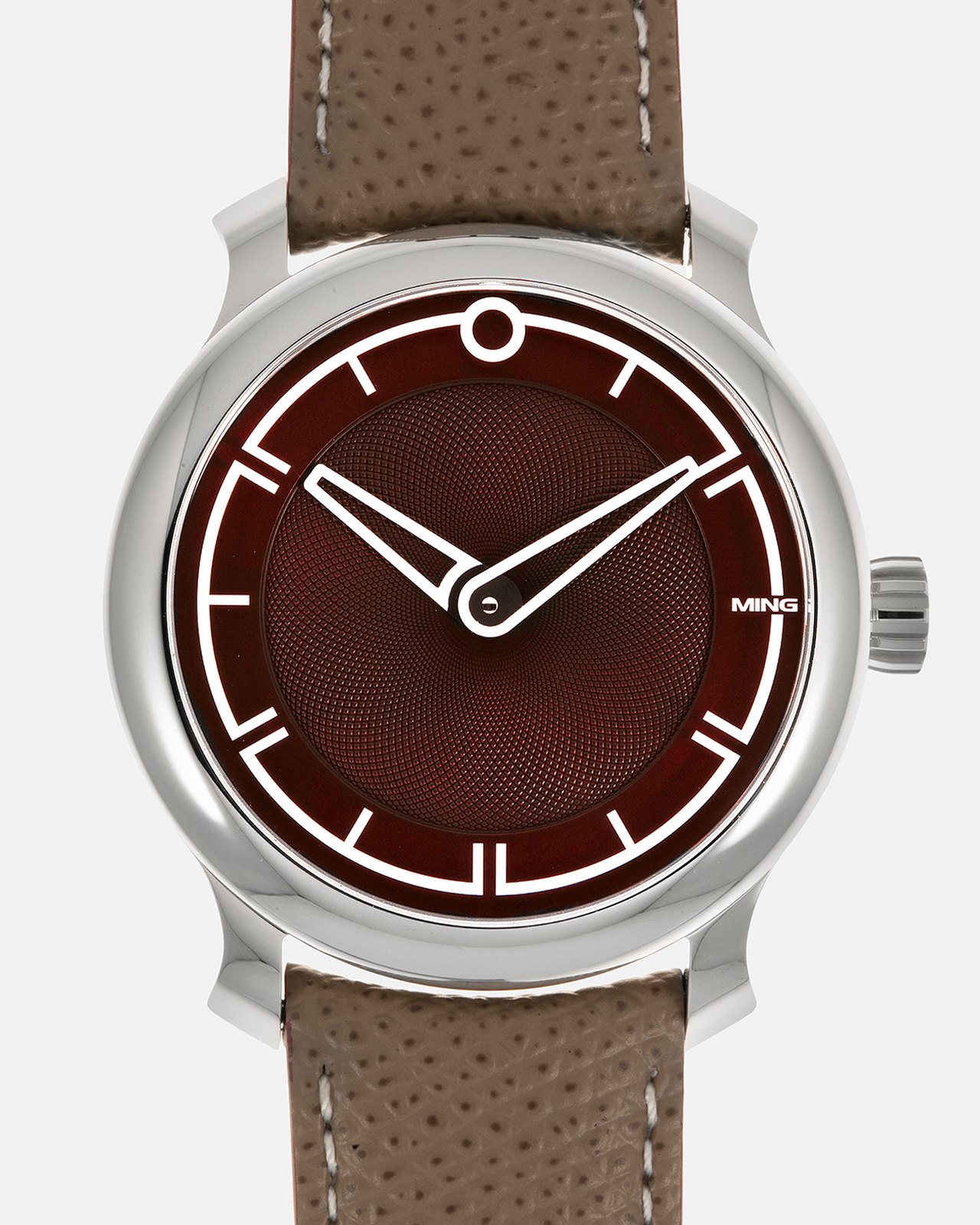
Ming 17.09 Burgundy, 2022
- Maker / attribution
- MING (maker)
- Date
- 2022
- Historical period
- Contemporary Horology (2010 – Present)
- Country of origin
- Unrecorded in source
- Object type
- Wristwatch
- Dimensions
- Case 38 mm
- Stock no.
- Product 7346423038039
- Credit line
- Dealer listing, S.Song Watches (product 7346423038039)
- Catalogue title (original)
- Ming 17.09 Burgundy (English)
View the source record (dealer listing) ↗ (opens another website in a new tab)Suggest a correction
Record summary
Catalogued by S.Song Watches (dealer), Seattle (stock number Product 7346423038039), this is a wristwatch by MING, dated 2022. The Atlas places it in the Contemporary Horology period (2010 – Present) of its Wristwatches collection. Recorded dimensions: Case 38 mm. The record is illustrated with 6 photographs.
Assembled from the source record's structured fields. Dates and attributions are given as the source states them; where a field is missing the Atlas leaves it blank rather than estimating.
Catalogue description
Dealer description — S.Song Watches
Bursting onto the scene in 2017, MING has become one of the hottest watch brands in the realm of independent watchmaking. Founded and fully funded collectively by a group of six enthusiasts, MING has built their business model on limited production ‘drops’ whereby it has quickly become the case that their watches sell out almost instantly. With such incredibly unique designs and a story that all watch enthusiasts can get behind, it is no surprise that MING sits in the prestigious position it occupies today. Here I have a MING 17.09 with a vivid burgundy dial, which marked an evolution from the critically-acclaimed 17.03 GMT and the 17.06, serving as the final design to conclude the 17-series. When considering its overall aesthetic, it becomes evident that this 17.09 offers more than initially meets the eye. Its entire design revolves around the visual impact of its dial, which is further enhanced by its distinct 38mm case with MING’s signature flared lugs. Despite its apparent visual simplicity, the 17.09 is a captivating aesthetic enigma, thanks to the intricate interplay of various textures and layers on its dial. If you look closer, you'll notice that the minute track and indices, both filled with Super-LumiNova X1, are intricately laser-etched onto the underside of the sapphire crystal itself. This unique feature is complemented by a delicate Clous de Paris guilloche motif at the center, surrounded by a circular brushed outer section extending to the periphery of the dial. These elements combine to create a fascinating and dynamic visual effect, especially when viewed under specific lighting conditions. In addition to its beautiful aesthetics, the 17.09 is also technically impressive. With water resistance up to 100 meters, facilitated by its triple crown gasket, the 17.09 proves to be a highly capable dress watch suitable for daily wear. Powering it from within is the MING Cal. 330.M1, a caliber derived from the workhorse Sellita Cal. SW330-2, which was originally a GMT movement, but has been extensively modified by Schwarz-Etienne exclusively for MING to include the integration of an independent hour hand adjustment mechanism. It is also worth noting that the Cal. 330.M1 has undergone a rigorous 250-hour movement regulation program and offers a power reserve of up to 42 hours when fully wound. If you ask me, the MING 17.09 is, in its entirety, a captivating work of watch design that is sure to spark a conversation amongst enthusiasts. It also serves as a fitting farewell to the definitive 17-series that helped put MING on the horological map.
Historical context
Contemporary Horology (2010 – Present)
Silicon components, connected watches, optical-lattice research clocks and a thriving independent scene.
Smartwatches became the world's best-selling watches, while mechanical watchmaking focuses on craft, innovation (silicon components, new escapements) and independent makers.
Read the period in the timelineMore wristwatches from this periodEarlier: Mechanical Renaissance
Atlas type guide
Wristwatches
Bracelet watches were worn by women from the early nineteenth century — Breguet made one for Caroline Murat, Queen of Naples, in 1810–12 — but the wristwatch only became a man's instrument with military use and aviation in the early twentieth century. Between the World Wars it overtook the pocket watch; the 1920s and 1930s brought rectangular Art Deco cases, water-resistant cases and the first automatic winding systems.
After 1945 the wristwatch became a carrier of identity — dress watches, sports and dive watches, chronographs, calendars — produced by Swiss, American, Japanese, German, Soviet and Chinese industries. The quartz revolution after 1969 and the mechanical renaissance since the 1990s, including the rise of independent watchmakers, complete the story.
What to look for
- The reference number (between the lugs or inside the case back) and serial number, the starting point for dating.
- The calibre: its maker and number are often stamped under the dial or on the bridge.
- Originality of dial, hands and crown — refinished ('redial') dials are common.
- Case material marks: 18K/750, 14K/585, stainless steel, gold-filled, plated.
Dating clues
- Wire-lug cases: before c. 1925.
- Water-resistant screw-down cases: from 1926.
- Quartz movements: from 1969; sapphire crystals widespread after c. 1980.
General guidance written by the Atlas editors about this kind of object. It is not a statement about this particular piece; for that, rely on the source record above and on physical examination.
Related records
Wristwatches · 2022
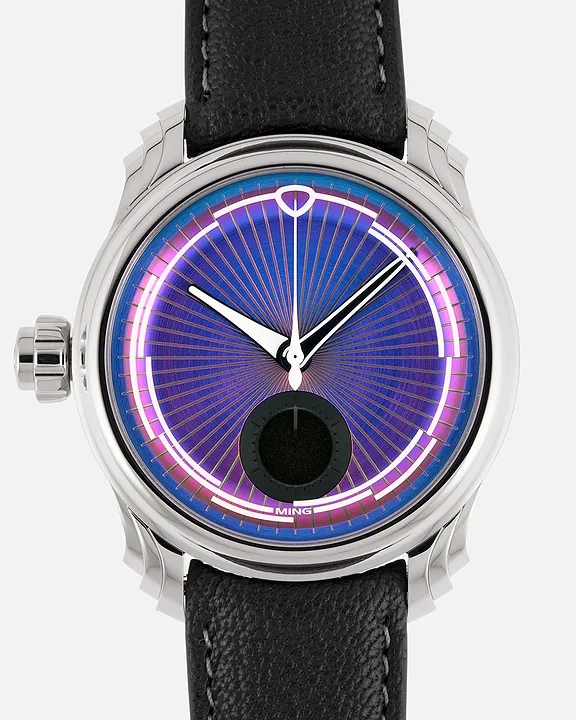
Ming 57.04 Iris Monopusher Chronograph, 2022
S.Song Watches (dealer), Seattle
Wristwatches · 2023
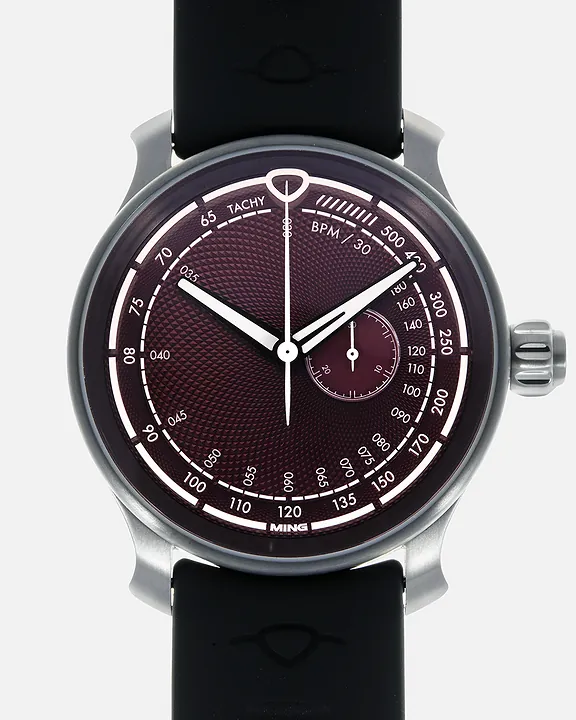
Ming 37.04 Monopusher Chronograph Tantalum, 2023
S.Song Watches (dealer), Seattle
Wristwatches · 2022
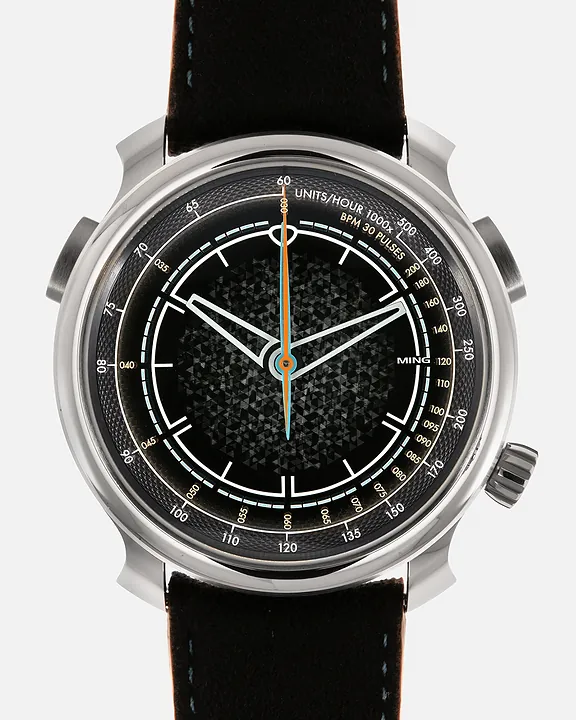
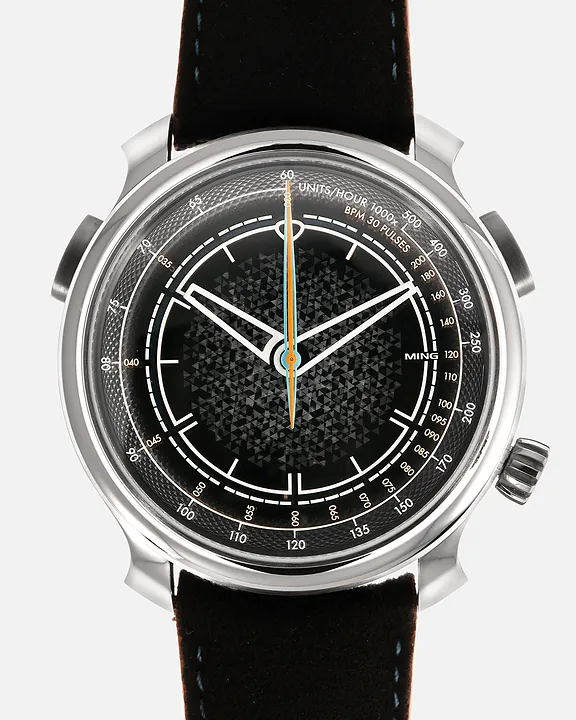
Ming 20.01 Series II Agengraphe Chronograph Special Projects Cave, 2022
S.Song Watches (dealer), Seattle
Wristwatches · 2022
Ming 20.01 Series II Agengraphe Chronograph Special Projects Cave, 2022
S.Song Watches (dealer), Seattle
Wristwatches · 2010
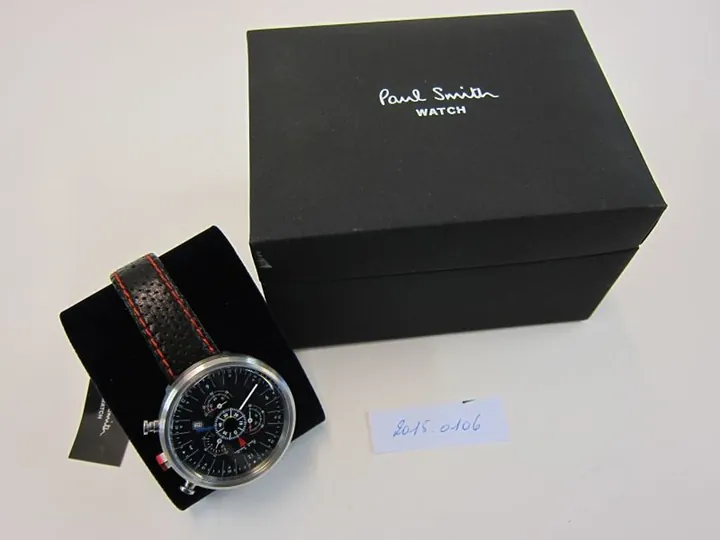
Wristwatch, 2010
Modemuseum Hasselt
Wristwatches · 2018 (Series 4 released in September 2018; '1977' in the source is the model number A1977)
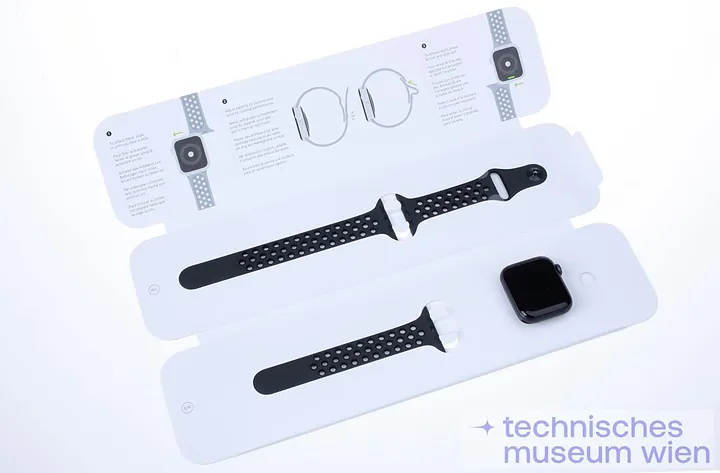
Apple Watch Series 4 (GPS, 40 mm, model A1977), 2018
Vienna Museum of Science and Technology
Wristwatches · c. 2010s
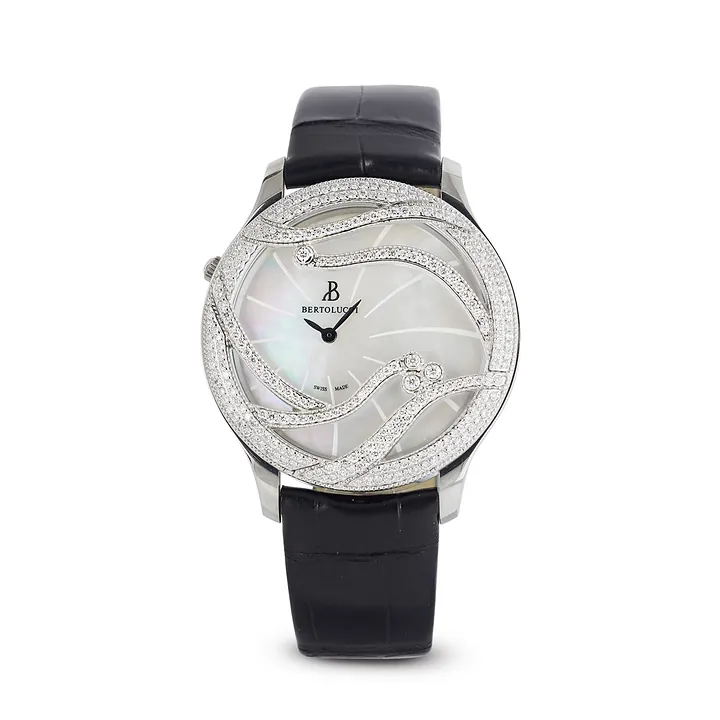
Bertolucci Stria III, ref. 11513.50.45.B88.6C1.501, c. 2010s
Antiquorum auction archive, Geneva
Wristwatches · c. 2010s
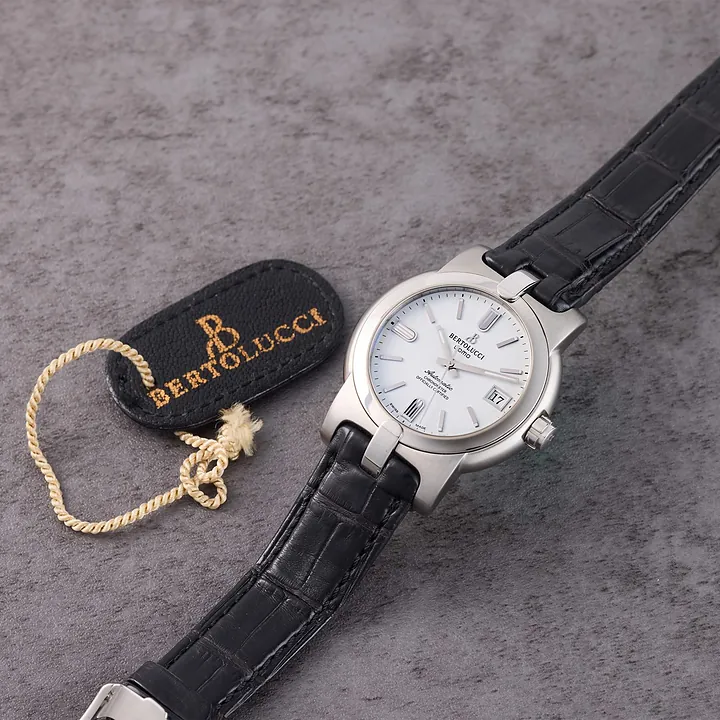
Bertolucci Uoma, ref. 824.51.41.10B, c. 2010s
Antiquorum auction archive, Geneva