
Instruments · Marine chronometer
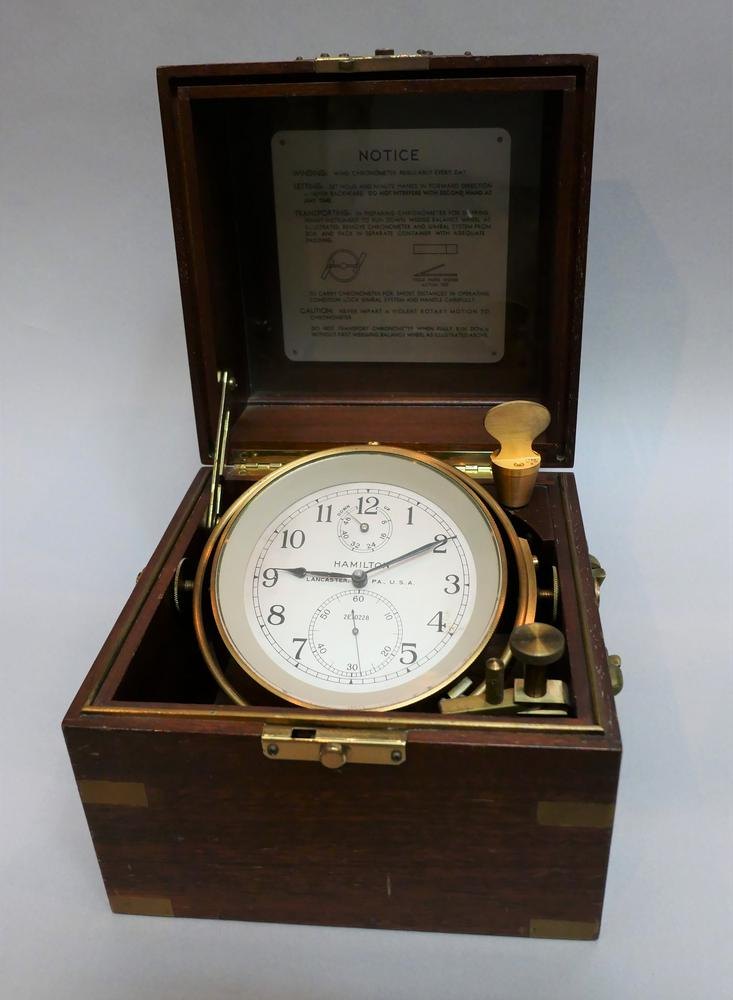
Marine chronometer by Hamilton Watch Company
- Maker / attribution
- Hamilton Watch Company (Made by)
- Date
- 1959–1965
- Historical period
- Modern Mechanical Horology (1945 – 1969)
- Country of origin
- North America
- Place
- Lancaster (Pennsylvania)
- Object type
- Marine chronometer
- Materials / technique
- mahogany, brass
- Holding institution
- British Museum
- Accession / object no.
- 1988,0410.2
- Credit line
- British Museum, London
- Catalogue title (original)
- Marine chronometer by Hamilton Watch Company (English)
View the source record ↗ (opens another website in a new tab)Suggest a correction
Record summary
Held and catalogued by British Museum (object number 1988,0410.2), this is a marine chronometer by Hamilton Watch Company, made in Lancaster (Pennsylvania), North America, dated 1959–1965. The Atlas places it in the Modern Mechanical Horology period (1945 – 1969) of its Instruments collection. Materials and techniques recorded by the source: mahogany, brass. The record is illustrated with 5 photographs.
Assembled from the source record's structured fields. Dates and attributions are given as the source states them; where a field is missing the Atlas leaves it blank rather than estimating.
Catalogue description
Description — British Museum
Marine chronometer; Earnshaw spring detent escapement; flat silvered dial; brass painted black hour and minute hands, blued steel seconds hand; movement in brass bowl gimballed in brass bound mahogany box; key, rate certificate,carrying box and two manuals.
Curator's comments — British Museum
Two manuals: 'Manual for overhaul, repair & handling of Hamilton Ship Chronometer with parts catalogue' Bureau of ship, Navy dept, October 1948 'Care and Handling of the Hamilton Marine Chronometer' Hamilton watch Company, Lancaster, Pennsylvania, U.S.A. Comment from Anthony G. Randall and Richard Good, Catalogue of Watches in the British Museum. Vol. VI (1990) Made by Hamilton Watch Company, c. 1962 Marine Chronometer Signatures: On the front of the box 'Hamilton Watch Co. Lancaster, Pa, U.S.A.'. On the dial 'HAMILTON LANCASTER P.A., U.S.A.' and the number '2 10228 '. On the back plate 'HAMILTON WATCH CO LANCASTER, PENNA. Model 21. 14 jewels Made in U.S.A.' and the number '2 10228'. Case: The movement contained in a brass bowl. The winding hole is protected by a circular cover which can be moved aside to reveal it and which is returned by a spring. The heavy dial ring, also of brass, drops into a recess in the bowl top and is positioned by a peg. The glazed bezel clamps the movement into the bowl. The gimbal ring, its lock and the box furniture all of brass, the gimbal lock unusually fitted with two tensioning springs so as to make it a spring fit into the slot of the lock bracket that is on the bowl. The brass bound mahogany box has a glazed panel in the top under the hinged lid. Inside the lid is fixed a panel. Notice winding: Wind chronometer regularly every day. Setting: Set hour and minute hands in forward direction - never backward. Do not interfere with second hand at any time. Transporting: In preparing chronometer for shipping, permit instrument to run down, wedge balance wheel as illustrated, remove chronometer and gimbal system from box, and pack in separate container with adequate padding. [Two illustrations showing the wedging of the balance.] To carry chronometer for short distances in operating condition, lock gimbal system and handle carefully. Caution: Never impart a violent rotary motion to chronometer. Do not transport chronometer when fully run down without first wedging balance wheel as illustrated above. The hinges are continuous, that is of the piano hinge type. The lid catch is operated by a sideways movement of the small knob. The glazed middle portion carries a brass label with the signature as detailed above. There is no lock for the main box just a catch as for the lid. The carrying handles are cast and not recessed into the box. In the bottom of the box is another label with: 'CAUTION This instrument was designed for maritime navigation, and to be run only in the flat position. All factory rating tests have been made accordingly. To ensure accurate performance, always keep watch in horizontal dial up position, WHEN SHIPPING - always remove cased movement from gimbal ring and ship separately from mounting box'. A tipsy key sits in a gusset in the box corner. Size of box 192 mm square x h. 190 mm. Dial and hands: Flat silvered dial, the markings produced by etching and filling black. The dial secured by three screws with polished heads from the back, the screw ends visible at the dial edge but not polished, being hidden by the bezel. The reserve of going in the top half of the dial, the seconds in the lower. Signed as detailed above. Arabic numerals. The hour and minute hands of brass painted black, the seconds blued steel. Movement: Dial ring flange diam. 1066 mm reduced to 97.7 mm; dial ring th. 9.0 mm; front plate diam. 97.8 mm; back plate diam. 87.7 mm; frame h. 46.6 mm. Frame: Of nickel-silver, the screws steel with polished heads. The nickel-silver parts finished with a wave decoration in straight lines. The pillars not riveted in but secured by screws at both ends. All the bearing holes bushed with gilded brass bushes or with jewels set in gilded brass chatons. The front plate numbered ZE 10228. The back plate unusual, being supported by three pillars only, the plate being cut away where it would normally be supported by the fourth pillar. Two large cut-outs allow for the removal of both the barrel and fusee once the barrel bridge has been removed. The polished steel setting up ratchet wheel is on the barrel bridge. The ratchet also of polished steel and controlled by a spring. The whole retained by a subsidiary bridge. The disc excluding pipe for the fusee arbor fitted with a rubber grommet. There is a separate bridge for the escape wheel lower pivot in the back plate which greatly facilitates assembly. The upper third and fourth jewels in a bridge secured to the front plate. Fusee: Harrison's maintaining power with a brass ratchet wheel. The fusee gilded. The polished steel detent with an integral wire spring standing parallel to the arbor. The stop actuated by the chain which pushes a spring-loaded slider in the fusee so that it contacts a stud in the barrel bridge. The barrel unusual, the lid being retained by five small screws. The barrel flanged at the cover end. The solid steel arbor snailed and 13 mm in diameter. Barrel: Inside dim. 38 mm, internal available h. 15.3 mm, mainspring h. 15.0 mm, th. 0.44 mm. The mainspring fitted with a brace. Train: Gilded throughout but wheels finished with a rather coarse straight grain. Pinions well polished all over, the centre alone with an undercut. Jewelling: 14 jewels in all: lower third, upper and lower fourth, escape top and bottom, both with endstones. Two pierced balance jewels with endstones, that in the balance cock diamond, the other endstone ruby. Impulse, locking and discharge jewels. Escapement: Spring detent escapement of the Earnshaw type but with some continental features. The brass escape wheel with only the teeth full thickness. The impulse roller set with a jewel, its acting face radial. The discharge roller unusual being made as a long split collet with two flats for adjusting and set with a jewel with a radius to the back of the acting part of the tip. The detent built up on nickel silver block which is steady pinned and screwed and made so as to provide an adjustable stop for the detent.
Inscriptions & marks
signature; front of box; Hamilton Watch Co. Lancaster, Pa, U.S.A.; signature; dial; HAMILTON LANCASTER P.A., U.S.A.; signature; back-plate; HAMILTON WATCH CO LANCASTER, PENNA. Model 21. 14 jewels Made in U.S.A.; mark; back-plate & dial; 2 10228; inscription; label on inside of lid; NOTICE...; series of rules; inscription; label in bottom of box; CAUTION...; series of rules; mark; front-plate; ZE 10228
Provenance
Purchased from:, R Mellor
Historical context
Modern Mechanical Horology (1945 – 1969)
Tool watches for divers, pilots and astronauts; electric watches anticipate the electronic age.
Electronic instruments, quartz frequency standards and the first atomic clocks transformed precision timing in laboratories and broadcasting.
Read the period in the timelineMore instruments from this periodEarlier: Golden Age of Mechanical Watchmaking
Atlas type guide
Marine chronometers
A marine chronometer is a precision timekeeper carried at sea to find longitude: the navigator compares local noon, observed with a sextant, with the time at a reference meridian kept by the chronometer. Each hour of difference corresponds to fifteen degrees of longitude. John Harrison proved the method in the 1760s; Pierre Le Roy, Ferdinand Berthoud, John Arnold and Thomas Earnshaw then developed the detent escapement and the compensation balance that made chronometers practical to manufacture.
By the nineteenth century London, Liverpool, Le Locle and Glashütte supplied navies and merchant fleets. A typical box chronometer has a spring-detent escapement, a fusee to equalise mainspring torque, a bimetallic compensation balance with a helical balance spring, and is mounted in gimbals inside a wooden box so that it stays level.
What to look for
- Gimbals and a three-tier wooden box with a glazed inner lid.
- A power-reserve ('up and down') indicator on the dial, usually showing 56 hours on two-day instruments.
- Spring-detent escapement and a cylindrical (helical) balance spring visible through the movement.
- Admiralty or navy marks (broad arrow), and rating certificates from observatories.
- The maker's number on the dial and movement; many makers' registers survive, allowing dating.
Dating clues
- Earnshaw-type spring-detent chronometers became standard after about 1800.
- Auxiliary compensation devices on the balance appear from the mid-nineteenth century.
- Quartz and radio time signals ended routine use of mechanical chronometers in the 1970s and 1980s.
General guidance written by the Atlas editors about this kind of object. It is not a statement about this particular piece; for that, rely on the source record above and on physical examination.
Related records
Wristwatches · 1972
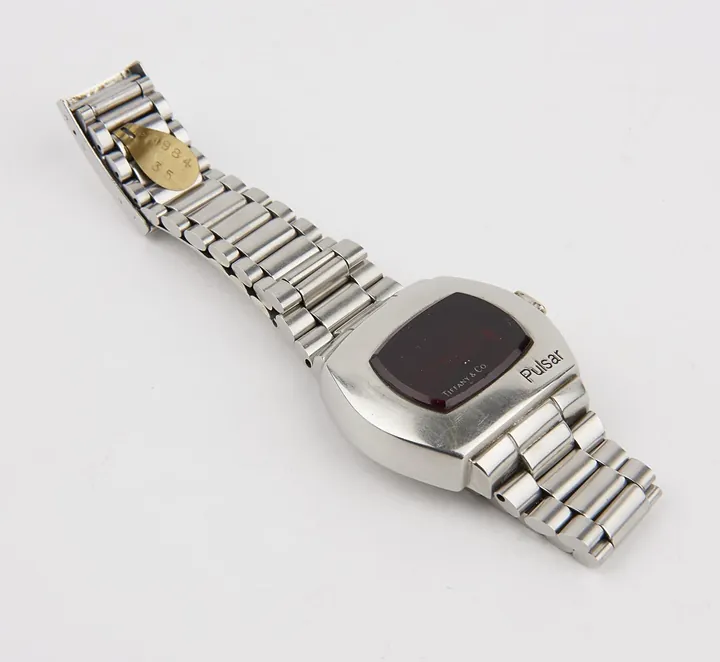
Wristwatch by Hamilton Watch Company and Electro-Data Inc, United States, 1972
Science Museum Group, London
Wristwatches · 1973
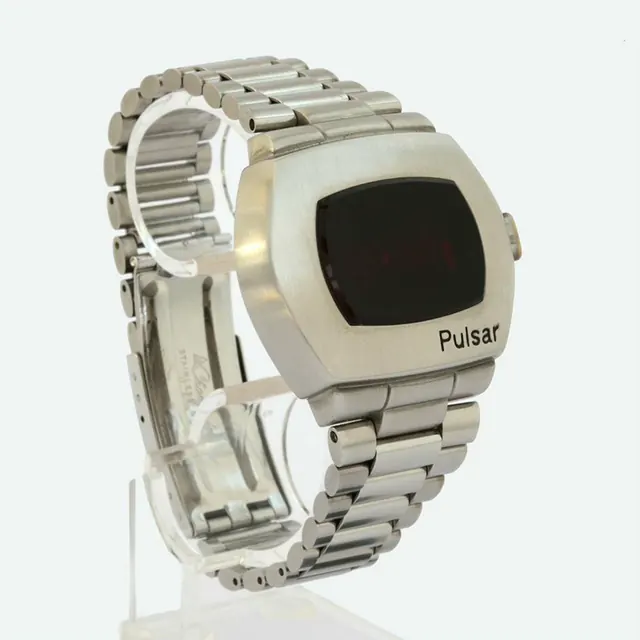
Wristwatch by Hamilton Watch Company, United States, 1973
German Clock Museum
Wristwatches · 1957
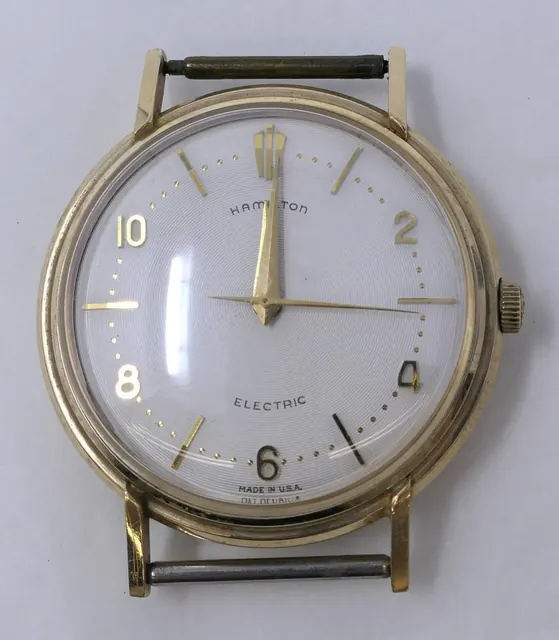
Centre-seconds wrist-watch with electro-magnetically impulsed balance with gold-filled case and leather strap
British Museum
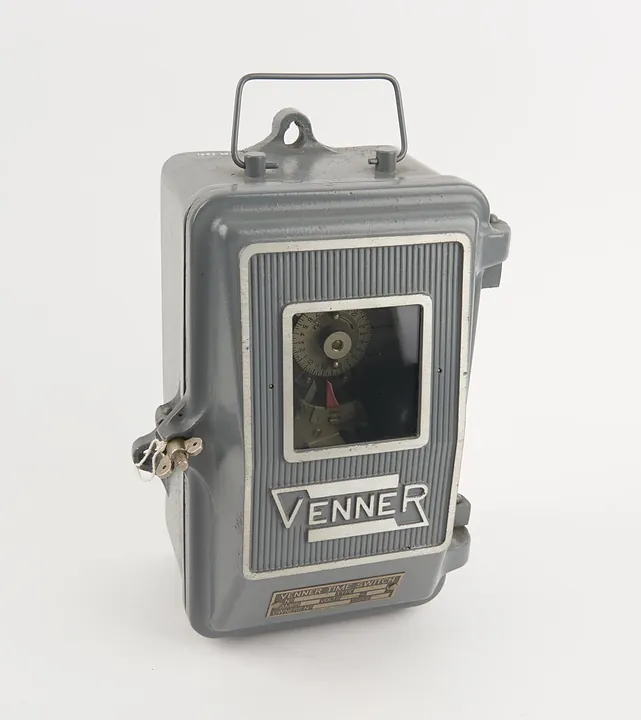
Instruments · 1930–1960
Electronically wound triple-pole changeover time-switch, type MWDGPS, by Venner Limited, New Malden, Kingston-upon-Thames, London, England, 1930–1960.
Science Museum Group, London
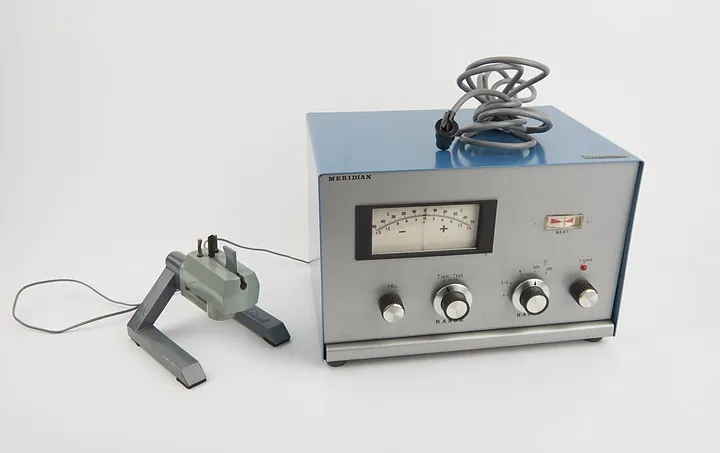
Instruments · 1940–1976
'Meridian' watch timer, by Walker Electronics, Newark-on-Trent, Nottinghamshire, England, 1940–1976.
Science Museum Group, London
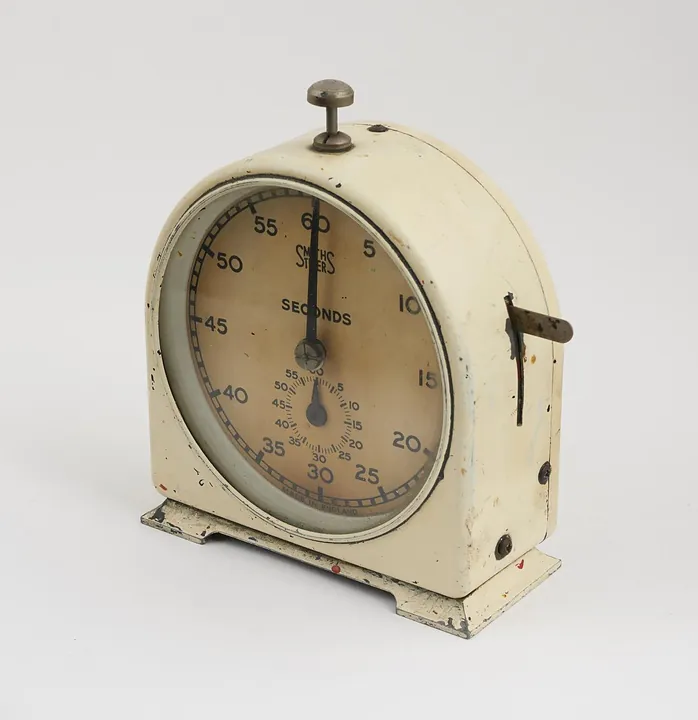
Instruments · 1940–1980
Clockwork timer used by renal dialysis patients to time blood clotting reaction when adding heparin to blood for dialysis
Science Museum Group, London
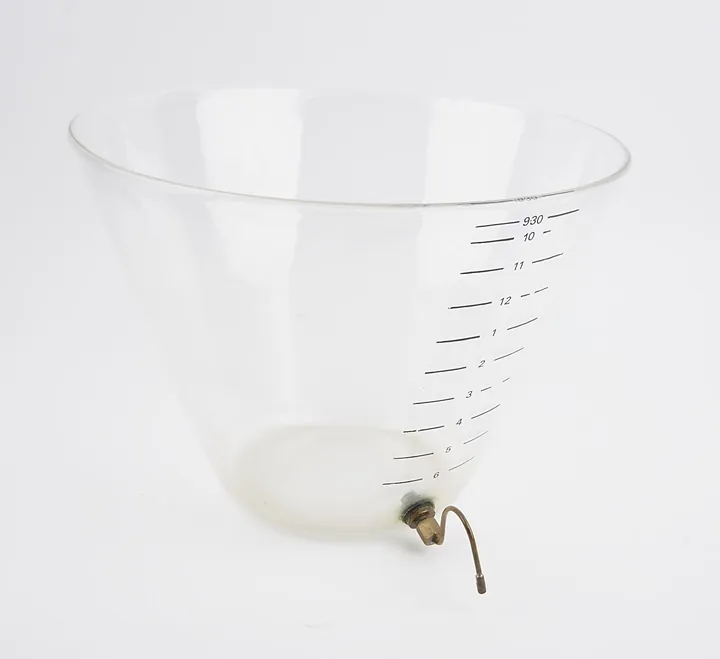
Instruments · 1940–1965
Glass bowl in the shape of an ancient Egyptian water-clock, 1940–1965
Science Museum Group, London
Instruments · 1940–1974
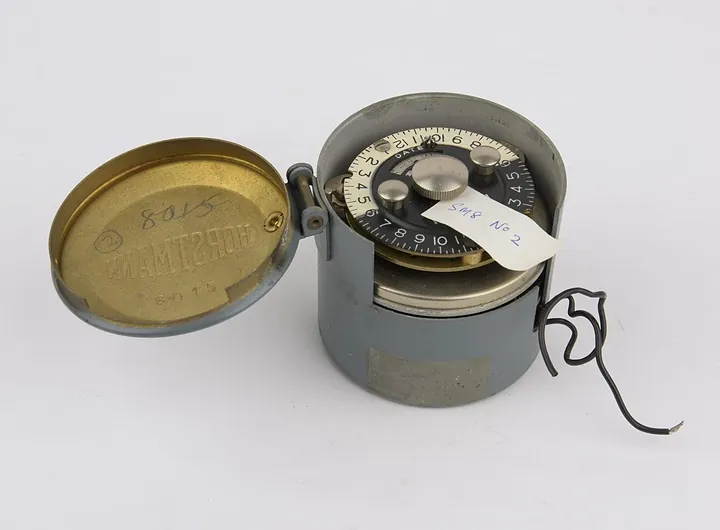
Stopwatch / timer by Horstmann Gear Co. Ltd., England, 1940–1974
Science Museum Group, London