
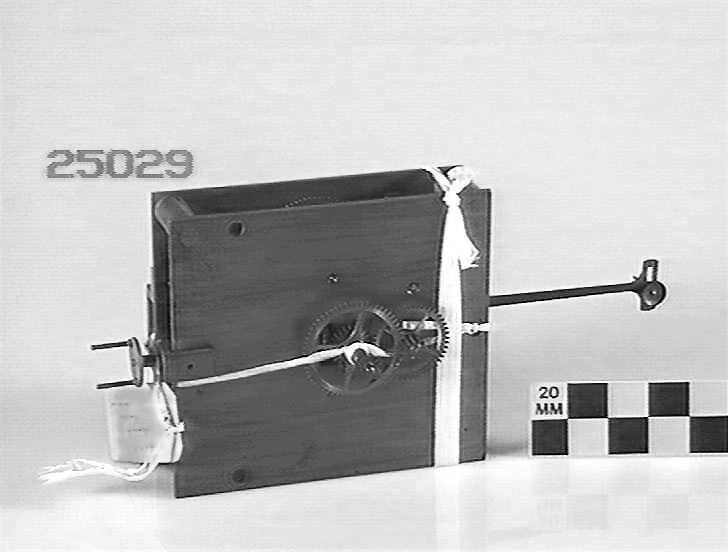
Movements & Components · Longcase clock movement
Longcase Clock Movement - Henry Lepaute, Paris, c. 1850
- Maker / attribution
- Augustin Michel Henry - Henry Neveau Lepaute (Maker)
- Date
- c. 1850
- Historical period
- Industrial Revolution (1850 – 1900)
- Country of origin
- France
- Place
- Paris, France
- Object type
- Longcase clock movement
- Holding institution
- Museums Victoria, Melbourne
- Accession / object no.
- ST 25029
- Catalogue title (original)
- Longcase Clock Movement - Henry Lepaute, Paris, circa 1850 (English)
View the source record ↗ (opens another website in a new tab)Suggest a correction
Record summary
Held and catalogued by Museums Victoria, Melbourne (object number ST 25029), this is a longcase clock movement by Augustin Michel Henry - Henry Neveau Lepaute, made in Paris, France, dated c. 1850. The Atlas places it in the Industrial Revolution period (1850 – 1900) of its Movements & Components collection. The record is illustrated with 1 photograph.
Assembled from the source record's structured fields. Dates and attributions are given as the source states them; where a field is missing the Atlas leaves it blank rather than estimating.
Catalogue description
Summary — Museums Victoria
Longcase clock movement, made by Henry Lepaute, Paris, circa 1850. 'Henry Lepaute' was the business name of Augustin Michel Henry.
Physical description — Museums Victoria
Weight driven; pin-wheel escapement. Pendulum on wooden shaft.
Inscriptions & marks
Back plate marked in a circle 'Henry Lepaute Paris'.
Provenance
Purchase
Historical context
Industrial Revolution (1850 – 1900)
American interchangeable-parts manufacture; railroad time standards; Swiss and German factory systems.
Standardised calibres, interchangeable parts and machine tools allowed movements to be mass-produced in American and Swiss factories.
Read the period in the timelineMore movements & components from this periodEarlier: Precision & Scientific Horology
Atlas type guide
Cases, keys and accessories
Clock and watch cases protect the movement and express taste and status. Watch cases were made by separate specialist case-makers whose marks, along with assay hallmarks, help to date and place them. Clock cases were the work of cabinet-makers, bronze founders, ceramic factories and silversmiths, so they belong as much to the history of decorative arts as to horology.
Keys, chatelaines, watch stands, watch papers and winding tools are part of the material culture of timekeeping: they show how timepieces were worn, displayed, wound and maintained.
What to look for
- Case maker's sponsor's marks and assay hallmarks in gold and silver cases.
- Materials: shagreen, tortoiseshell, enamel, porcelain, jasperware, gilt bronze.
- Breguet-style ratchet keys, crank keys and watch-key fobs.
- Engraved names, presentations and dates.
Dating clues
- English hallmark date letters allow exact dating of the case assay.
- Porcelain cases from Meissen and Sèvres: mostly eighteenth century.
General guidance written by the Atlas editors about this kind of object. It is not a statement about this particular piece; for that, rely on the source record above and on physical examination.
Related records
Movements & Components · 1850–1909
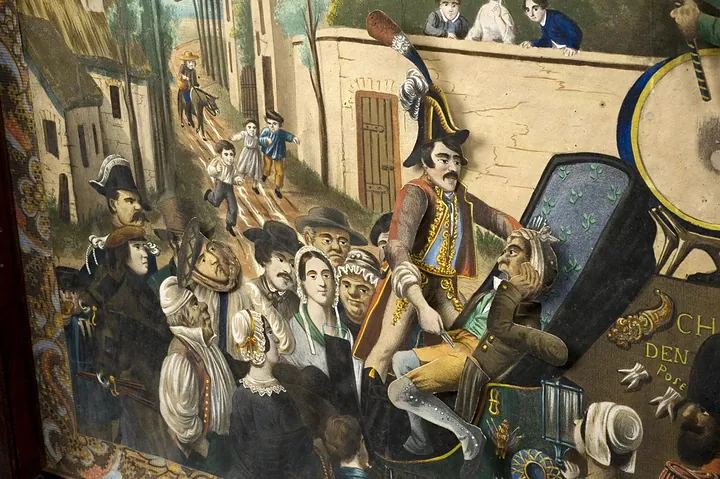
Clockwork picture showing a tooth extraction, France, 1850–1909
Science Museum Group, London
Movements & Components · c. 1850
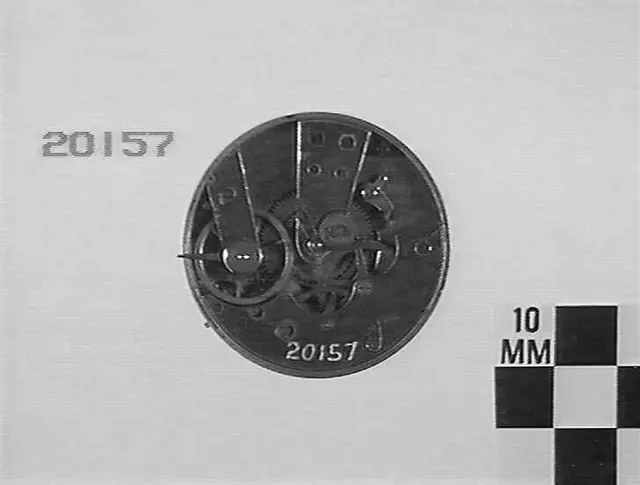
Pocket Watch Movement - Gontard & Co, Paris, c. 1850
Museums Victoria, Melbourne
Movements & Components · c. 1880
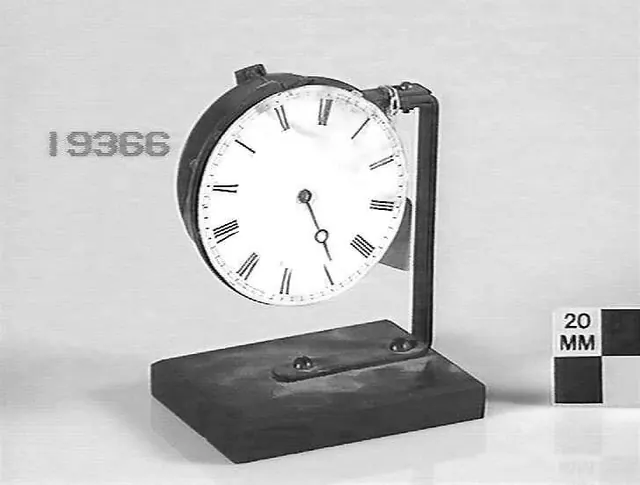
Mantel Clock Movement - France, c. 1880
Museums Victoria, Melbourne
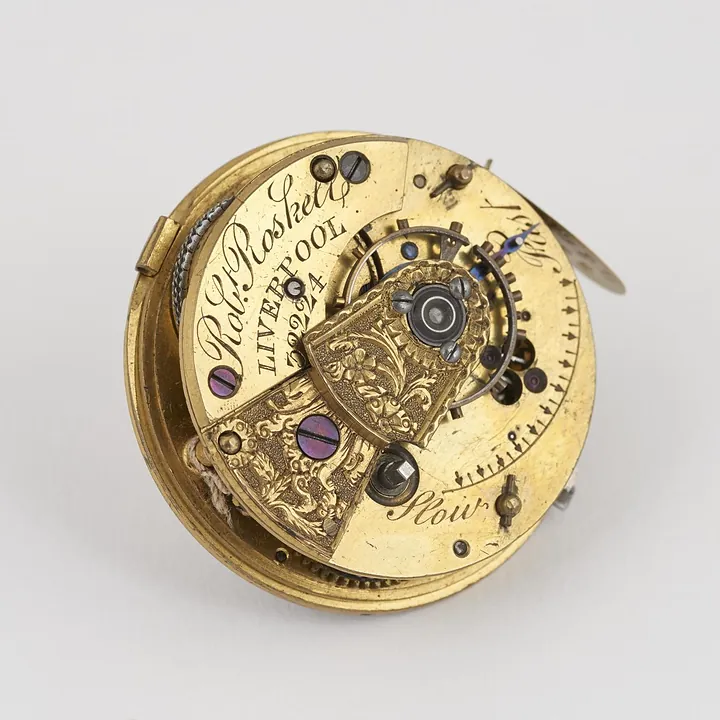
Movements & Components · 1840–1900
English lever, by Roskell, "banking" on escape wheel arbor, no.32224, 1840–1900
Science Museum Group, London
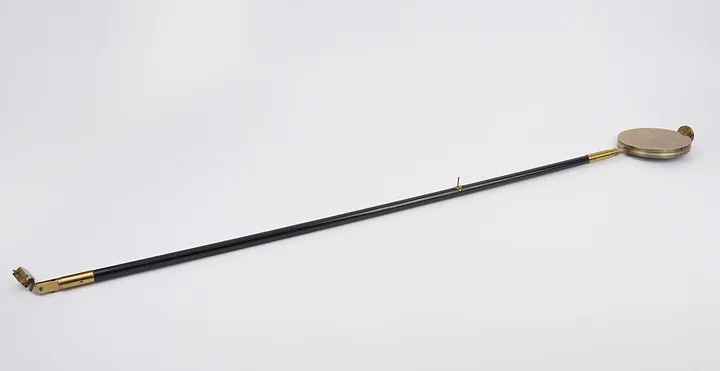
Movements & Components · 1841–1870
Pendulum from electric clock, unsigned, London, England, 1841–1870
Science Museum Group, London
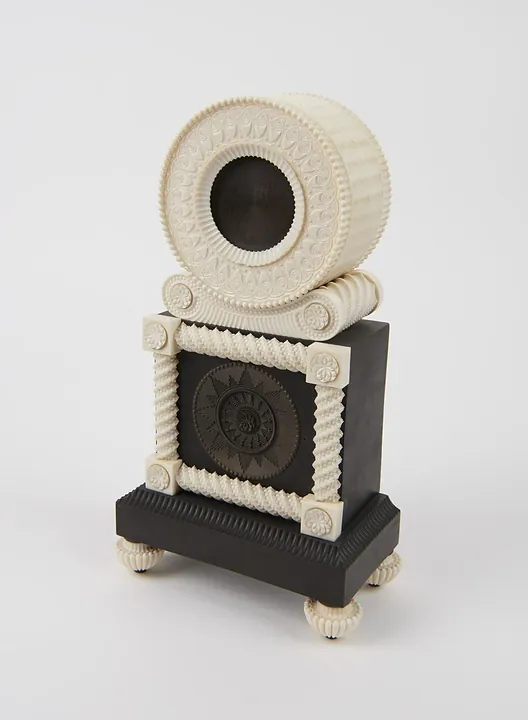
Movements & Components · 1843–1884
Ivory and blackwood clock case, by Holtzapffel and Company, London, England, 1843–1884
Science Museum Group, London
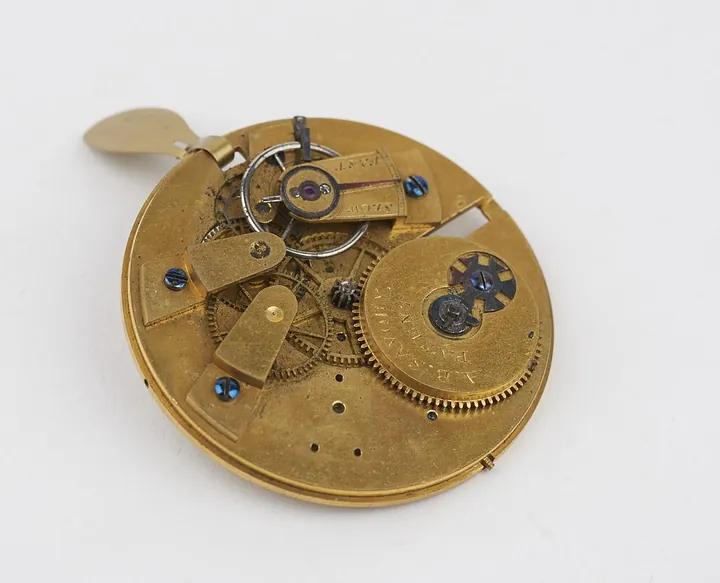
Movements & Components · c. 1850
Self-winding pumping keyless cylinder watch mechanism, by Savory, about 1850
Science Museum Group, London
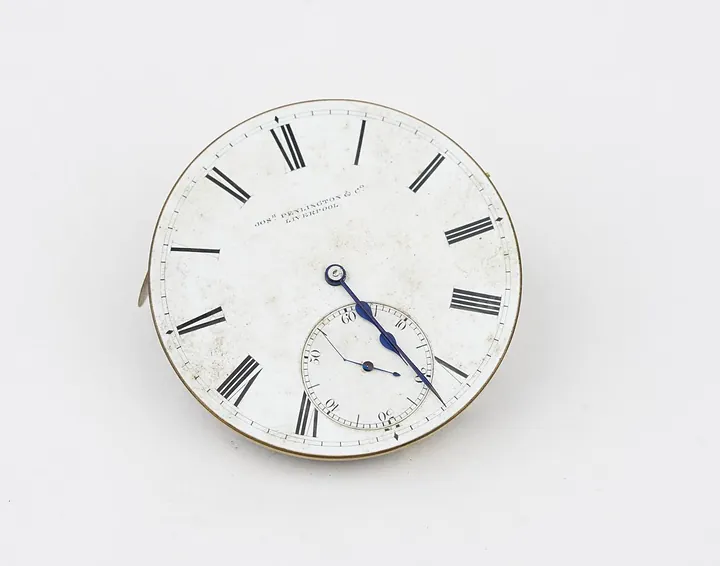
Movements & Components · 1848–1903
Watch movement by Josh Penlington, Liverpool, No.15231, with bi-metallic compensation balance and overcoil hairspring
Science Museum Group, London