
Clocks · Longcase clock
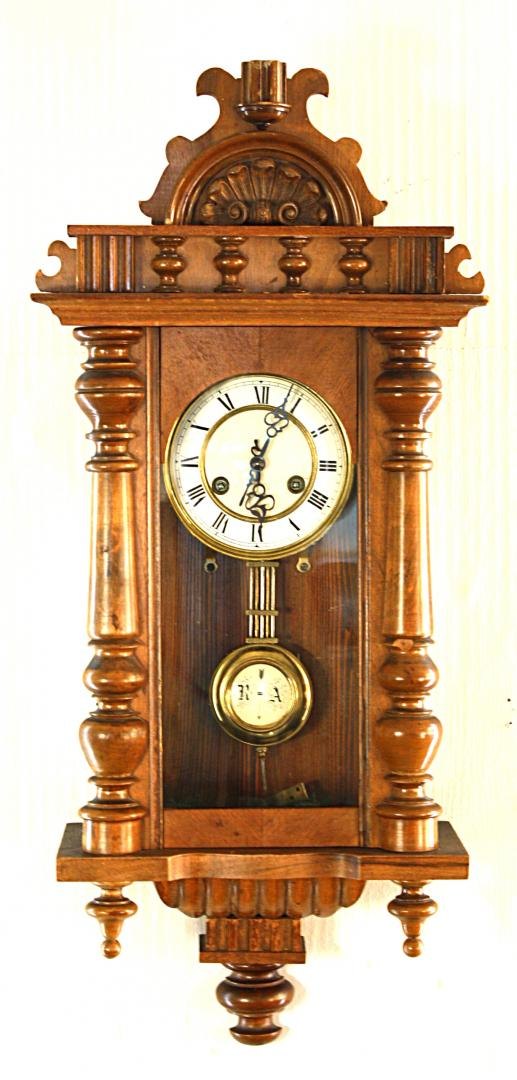
Longcase clock, Germany, late 1800s - early 1900s ?
- Maker / attribution
- Unrecorded in source
- Date
- late 1800s - early 1900s ?
- Historical period
- Precision & Scientific Horology (1750 – 1850)
- Country of origin
- Germany
- Place
- Germany ?
- Object type
- Longcase clock
- Materials / technique
- wood, glass
- Dimensions
- length: 74 cm width: 32,8 cm thickness: 16,9cm Kellotaulun diameter: 14,5 cm Heilurin length: 20 cm Avaimen height: 6,9 cm Avaimen width: 5,5 cm
- Holding institution
- Ilomantsin Museosäätiö
- Accession / object no.
- M152:1
- Credit line
- Ilomantsin Museosäätiö (via Finna)
- Catalogue title (original)
- Kello; Seinäkello, Kaappikello, Heilurikello (Finnish)
View the source record ↗ (opens another website in a new tab)Suggest a correction
Record summary
Held and catalogued by Ilomantsin Museosäätiö (object number M152:1), this is a longcase clock, made in Germany ?, dated late 1800s - early 1900s ?. The Atlas places it in the Precision & Scientific Horology period (1750 – 1850) of its Clocks collection. Materials and techniques recorded by the source: wood, glass. Recorded dimensions: length: 74 cm width: 32,8 cm thickness: 16,9cm Kellotaulun diameter: 14,5 cm Heilurin length: 20 cm Avaimen height: 6,9 cm Avaimen width: 5,5 cm. The record is illustrated with 2 photographs.
Assembled from the source record's structured fields. Dates and attributions are given as the source states them; where a field is missing the Atlas leaves it blank rather than estimating.
Catalogue description
Description — Ilomantsin Museosäätiö
Esine on petsatusta puusta, lasista ja mekaanisesta kellokoneistosta valmistettu, seinälle ripustettava heilurikaappikello. Kellon runko koostuu suorakaiteen muotoisesta varsinaisesta runko-osasta, jonka etusivu aukeaa saranoiden avulla, sekä rungon päällä ja allapuolella olevista koristelistoista. Rungon vasemmalla puolella edessä on pieni hakanen, jolla oven saa lukittua. Puun petsaus on hakasen kohdalta kulunut. Rungon etu- ja sivuseinät ovat puureunusteista lasia. Etuseinän molemmilla pitkillä sivuilla on puiset, sorvatut, pylväsmäiset koristeet ja lasin yläosa on kaareva. Rungon päällä on ulkoneva lippa, jonka päällä on ruukkumaisilla sorvauksilla koristeltu lista, jonka päällä keskellä puutapilla kiinnitetty, viuhkamainen, kasvi- ja pylväsaihein koristeltu lista. Viuhkan päällä ja sen molemmin puolin alemman koristelistan päällä on tyhjät reiät tappikiinnitystä varten. Rungon alapuolella on edestä aaltomaiseksi muotoiltu puulevy ja sen alla etuseinän sorvattujen koristeiden jatkona sorvatut nupit molemmilla puolilla. Keskellä levyä on suorakaiteen muotoinen pyöristetty ja urakoristeltu puu-uloke, johon kiinnittyy pienempi suorakaiteen muotoinen, urainen koriste. Sen alapuolella on vielä sorvattu nuppi. Kellokoneisto on kaapin sisällä takaseinään ruuveilla kiinnitettynä. Kellotaulussa on ulkoreunalla mustat roomalaiset numerot valkealla pohjalla. Taulun keskusta on kellertävä ja siinä on kaksi ympyrän muotoista koloa, joista kello vedetään. Kellotaulua ja sen keskiosaa ympäröi kullatut metalliosat. Kellokoneisto on kellotaulun takana. Kellotaulun alaosasta roikkuu irrotettava heiluri. Heilurissa on koukkumainen yläosa ja siitä lähtee viisi pystysuoraa verekkäistä metalliputkea. Putkien ala- ja yläpäässä sekä keskellä on poikittaiset kaiverruskoristeiset metallin kappaleet. Alimman listan alapuolella on pyöreä, 8 cm halkaisijaltaan oleva. metallireunainen osa, jonka keskellä on kellotauluntapainen aukko, jossa koristeellinen teksti R = A. =-merkin läpi menee alaspäin osoittava nuoli. Pyöreän osan alapuolella vielä ruuvimainen piikki. Kelloon kuuluu myös kaksi kolme reikäistä metallista seinäkiinnikettä ja vetoavain. Avain on metallinen, T:n muotoinen esine. Avaimen poikkisakara koostuu keskeltä matalammasta soikiosta, jonka keskellä on teksti UBA. B:n alapuolelta lähtee putkimaiseksi muuttuva avainosa, jonka puolivälissä on kolme poikittaista uraa. Putken päässä neliönmuotoinen ontto tila, joka sopii kellotaulussa oleviin aukkoihin.
Shown in the original language of the source catalogue. An editor-reviewed English translation has not yet been published; we do not publish machine translations as authoritative text.
Inscriptions & marks
Kaapin sisällä erillinen pahvinen kortti: "Takuulippu No 2667, pv 3/5-93, Suoritettu työ: laitos, mk 600,-, P. Tilli, Kelloliike - Uraffär, Korkeavuorenk. 6. Högbergsg., Puh. 632 165 Tel." Päivämäärä, "laitos" ja hinta kirjoitettu kuivamustekynällä.
Historical context
Precision & Scientific Horology (1750 – 1850)
Harrison solves longitude; Mudge invents the lever; Breguet's Paris workshop defines the modern watch.
The age of the deadbeat escapement, compensated pendulums and observatory regulators. Domestic clocks spread through the middle classes: English longcase and bracket clocks, French gilt-bronze mantel clocks, Viennese Biedermeier wall clocks, Black Forest painted-shield clocks, and the first American shelf clocks.
Read the period in the timelineMore clocks from this periodEarlier: Early Modern Horology
Atlas type guide
Longcase (tall-case or grandfather) clocks
The longcase clock was born from two seventeenth-century innovations: Christiaan Huygens's pendulum (1656–57) and the anchor escapement (c. 1670). A long seconds pendulum, nearly a metre long, swings with a small arc, and enclosing it together with the driving weights in a tall wooden case protected the mechanism and created a new piece of furniture. London makers such as Ahasuerus Fromanteel, Thomas Tompion and Joseph Knibb set the pattern.
By the eighteenth century longcase clocks were made throughout Britain, the Netherlands, Scandinavia (the Swedish Mora clock), France (the Comtoise from the Franche-Comté), Germany and colonial America. Eight-day movements with two weights became standard in better clocks; thirty-hour clocks with one weight and a rope or chain were cheaper alternatives.
What to look for
- Winding holes in the dial: two (eight-day, going and striking) or none (thirty-hour, pulled up by a chain).
- Brass dials with applied chapter rings (earlier) versus painted iron 'white' dials (after c. 1770 in Britain).
- Moon-phase arches, date apertures, seconds dials and maker's name on the dial.
- Case woods and style: ebonised, walnut marquetry, lacquer, oak or mahogany; regional styles from London, Lancashire, Scotland or America.
- Whether the movement and dial match the case — 'marriages' are common.
Dating clues
- Square brass dials suggest c. 1670–1720; arched brass dials c. 1715–1790.
- Painted (white) dials were made by Birmingham dial-makers from about 1772.
- Comtoise clocks with repoussé pendulums are mostly nineteenth century.
General guidance written by the Atlas editors about this kind of object. It is not a statement about this particular piece; for that, rely on the source record above and on physical examination.
Read next:Anchor (recoil) escapementDeadbeat escapementAnchor escapement
Related records
Clocks · 1780s (inferred: the museum dates the style to the 1780s and the music includes Gluck's Iphigénie en Tauride of 1779)
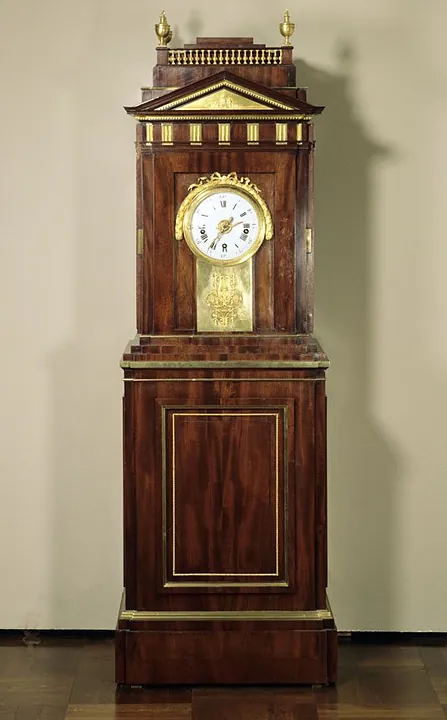
Musical longcase clock, Roentgen workshop, Neuwied, 1780s
Badisches Landesmuseum Karlsruhe
Clocks · c. 1750
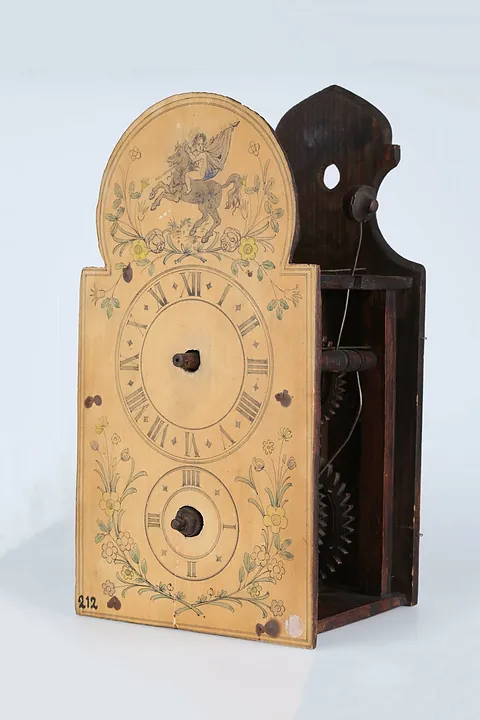
Clock by Georg Gfell, Germany, c. 1750
German Clock Museum
Clocks · 1750–1799
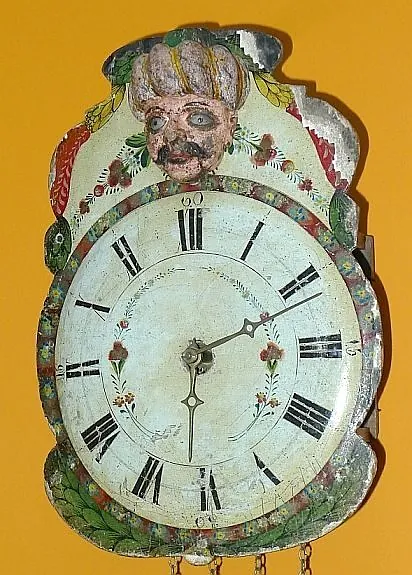
Cuckoo / black forest clock, Germany, 1750–1799
Badisches Landesmuseum Karlsruhe
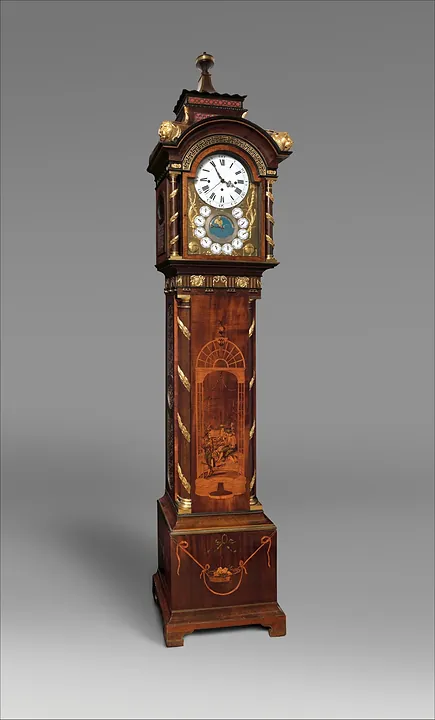
Clocks · c. 1774–75
Longcase clock by Hermann Achenbach, Germany, c. 1774–75
The Metropolitan Museum of Art, New York
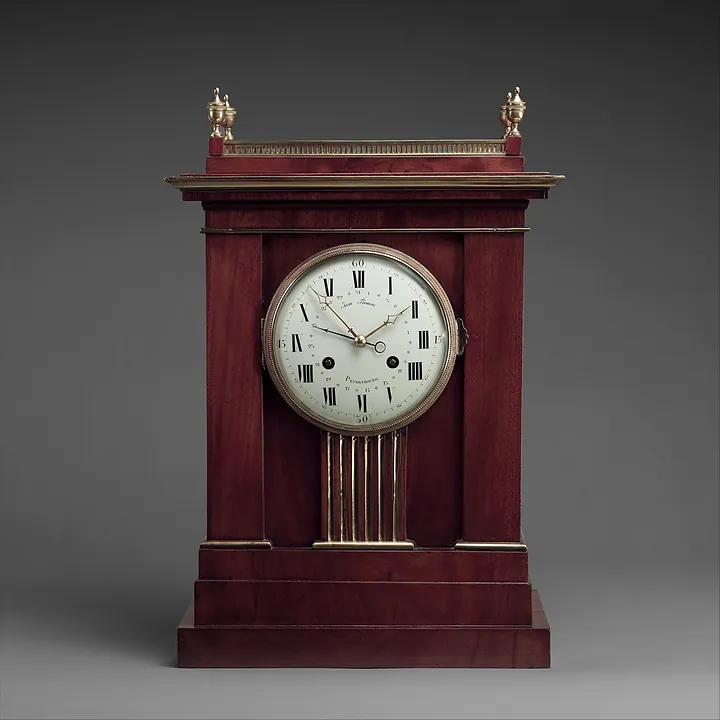
Clocks · c. 1780–90
Clock, workshop of David Roentgen, Germany, c. 1780–90
The Metropolitan Museum of Art, New York
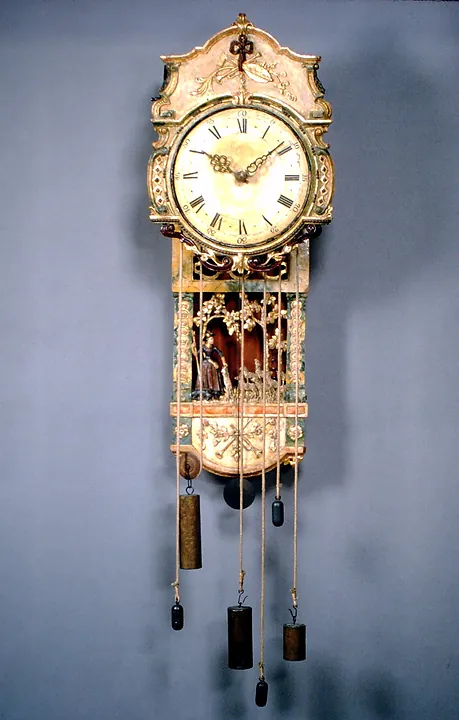
Clocks · c. 1800
Musical clock by Martin Vanlo?, Germany, c. 1800
The Metropolitan Museum of Art, New York
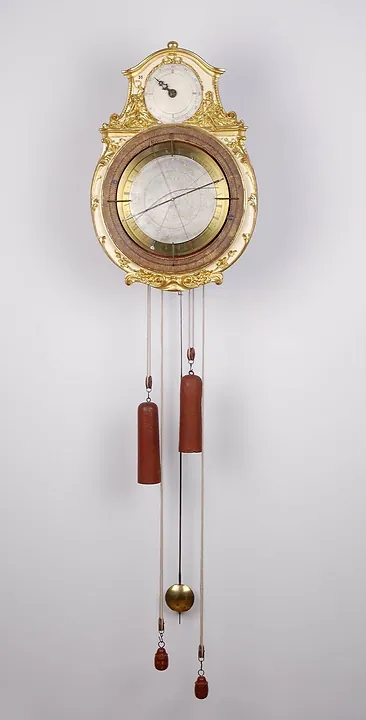
Clocks · 1787
Astronomical clock, Germany, 1787
German Clock Museum
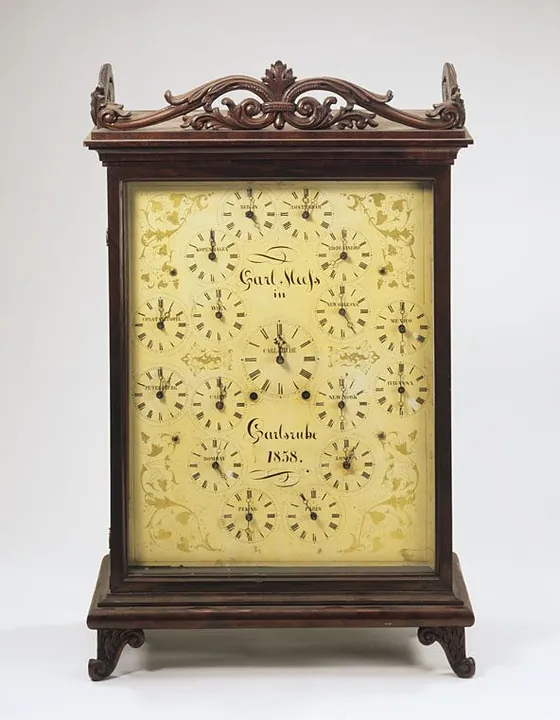
Clocks · 1800–1899
Clock by Carl Meeß, Germany, 1800–1899
Badisches Landesmuseum Karlsruhe