
Clocks · Longcase clock
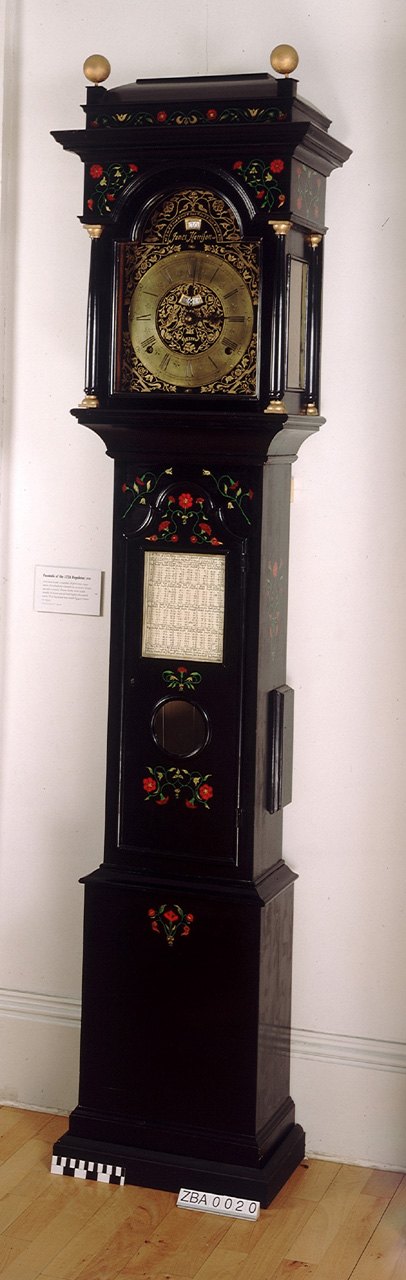
Longcase clock by Leonard Salzer
- Maker / attribution
- Leonard Salzer (maker)
- Date
- 1988–1990
- Historical period
- Quartz Revolution (1969 – 1990)
- Country of origin
- Unrecorded in source
- Object type
- Longcase clock
- Materials / technique
- brass, lead, steel, bell metal, oak, lignum vitae, paper
- Dimensions
- Overall: 2300 x 550 x 310 mm
- Holding institution
- Royal Museums Greenwich
- Accession / object no.
- ZBA0020
- Credit line
- National Maritime Museum, Greenwich, London
- Catalogue title (original)
- Longcase clock (English)
View the source record ↗ (opens another website in a new tab)Suggest a correction
Record summary
Held and catalogued by Royal Museums Greenwich (object number ZBA0020), this is a longcase clock by Leonard Salzer, dated 1988–1990. The Atlas places it in the Quartz Revolution period (1969 – 1990) of its Clocks collection. Materials and techniques recorded by the source: brass, lead, steel, bell metal, oak, lignum vitae, paper. Recorded dimensions: Overall: 2300 x 550 x 310 mm. The record is illustrated with 2 photographs.
Assembled from the source record's structured fields. Dates and attributions are given as the source states them; where a field is missing the Atlas leaves it blank rather than estimating.
Catalogue description
Catalogue description — Royal Museums Greenwich
The weight-driven movement is held within a mortise and tenoned oak frame. The four-wheel going train consists of three wooden wheels; the teeth are cut onto segments which are mortised around the rim (in the same manner used by a mill-wright in constructing large geared wooden wheels). The brass sixty-toothed escape wheel runs on paired anti-friction wheels. The wooden teeth engage with lignum vitae rollers running on brass pins enclosed by two brass shrouds mounted to the shaped and ringed box wood arbors. The arbors have brass pivots which run in lignum vitae bearings. The minute wheel is mounted to the second wheel arbor and drives a cocked cannon pinion and hour wheel. The third wheel has twenty-one brass pins which engage with the maintaining power lever. An oak bowl with paper seconds scale is mounted to the extended front pivot. The grasshopper escapement is Harrison’s second type with co-axial oak pallets within a brass frame, the brass composers are set by two brass pins running through the frame. The pallet frame is mounted to a brass arbor with knife edges on glass plates. The pendulum has a spring suspension which is mounted within brass cycloidal cheeks which are adjustable in three places. The gridiron pendulum has a smaller upper grid and a ‘tin-whistle’ adjuster to the lower grid, and a brass faced lead bob. A reconstruction of the Harrison 1726 regulator by Len Salzer, 1988-1990. The maintaining power is activated by a brass lever within a slot to the upper right-hand side of the dial. When activated the lever pulls back a shutter in the form of false end to the winding square allowing the key to be inserted. The striking train employs wooden wheelwork and is laid out in the same manner as a standard striking train of the day but with lignum rollers to lift the hammer tail. The hammer is pivoted within a turret mounted above the bell. The twelve-inch oak dial has a black spirit varnish ground which is decorated with floral and symbolic motifs, has an applied brass chapter ring with pierced blued steel hands, seconds aperture and calendar to the arch above the signature James Harrison. The pine case is polished throughout with a black spirit varnish and is lightly decorated with floral motifs. The hood is surmounted by an elevated caddy with two gilt wood ball finials and a hidden aperture over a moulded cornice, glazed side apertures and break arched door with two integral pillars. The sides of the trunk and plinth are mitred from top to bottom as is the original clock. The moulded door has a Dutch arch, glazed aperture with hand written equation of time table and moulded lenticle to the centre.
Historical context
Quartz Revolution (1969 – 1990)
Seiko's Astron begins mass quartz timekeeping; traditional industries contract sharply.
Quartz movements and digital displays made accurate clocks cheap and ubiquitous after the early 1970s. LED and LCD clocks, clock radios and radio-controlled clocks appeared, while traditional mechanical clockmaking contracted sharply in Germany, France and Britain.
Read the period in the timelineMore clocks from this periodEarlier: Modern Mechanical Horology
Atlas type guide
Longcase (tall-case or grandfather) clocks
The longcase clock was born from two seventeenth-century innovations: Christiaan Huygens's pendulum (1656–57) and the anchor escapement (c. 1670). A long seconds pendulum, nearly a metre long, swings with a small arc, and enclosing it together with the driving weights in a tall wooden case protected the mechanism and created a new piece of furniture. London makers such as Ahasuerus Fromanteel, Thomas Tompion and Joseph Knibb set the pattern.
By the eighteenth century longcase clocks were made throughout Britain, the Netherlands, Scandinavia (the Swedish Mora clock), France (the Comtoise from the Franche-Comté), Germany and colonial America. Eight-day movements with two weights became standard in better clocks; thirty-hour clocks with one weight and a rope or chain were cheaper alternatives.
What to look for
- Winding holes in the dial: two (eight-day, going and striking) or none (thirty-hour, pulled up by a chain).
- Brass dials with applied chapter rings (earlier) versus painted iron 'white' dials (after c. 1770 in Britain).
- Moon-phase arches, date apertures, seconds dials and maker's name on the dial.
- Case woods and style: ebonised, walnut marquetry, lacquer, oak or mahogany; regional styles from London, Lancashire, Scotland or America.
- Whether the movement and dial match the case — 'marriages' are common.
Dating clues
- Square brass dials suggest c. 1670–1720; arched brass dials c. 1715–1790.
- Painted (white) dials were made by Birmingham dial-makers from about 1772.
- Comtoise clocks with repoussé pendulums are mostly nineteenth century.
General guidance written by the Atlas editors about this kind of object. It is not a statement about this particular piece; for that, rely on the source record above and on physical examination.
Read next:Anchor (recoil) escapementDeadbeat escapementAnchor escapement
Related records
Clocks · late 20th century
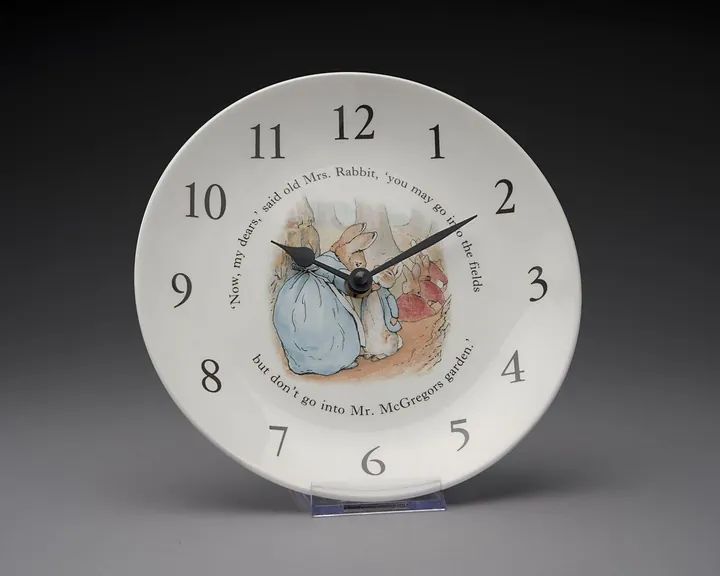
Clock, 'Peter Rabbit', Queen's ware, transfer printing, Josiah Wedgwood and Sons, Barlaston, late 20th century (V&A WE.17466-2014)
Victoria and Albert Museum, London
Clocks · late 20th century
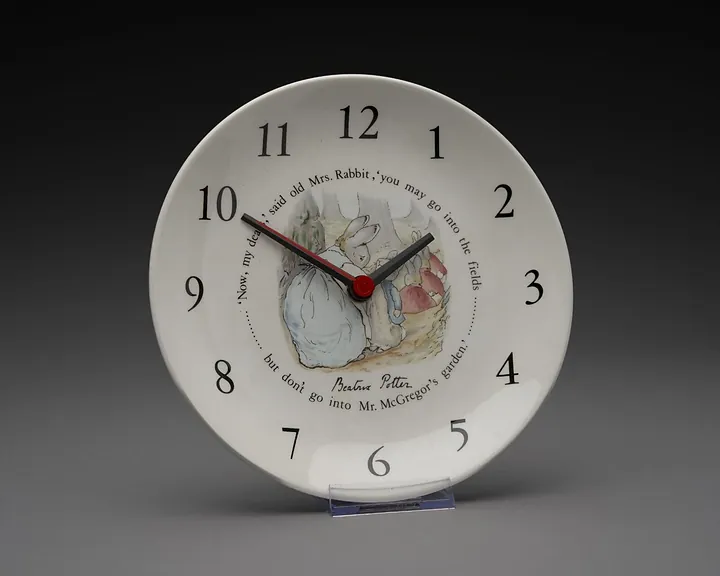
Clock, 'Peter Rabbit', Queen's ware, transfer printing, Josiah Wedgwood and Sons, Barlaston, late 20th century (V&A WE.18029-2014)
Victoria and Albert Museum, London
Clocks · late 20th century
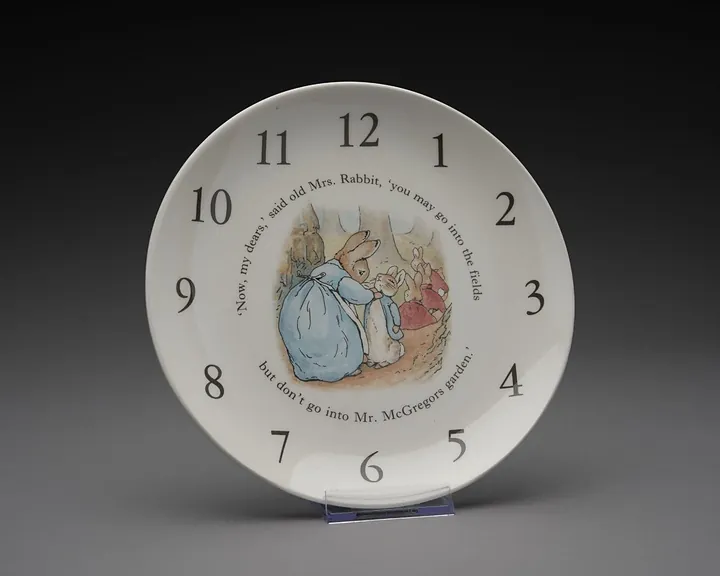
Clock, 'Peter Rabbit', glazed earthenware, transfer printing, Josiah Wedgwood and Sons, Barlaston, late 20th century
Victoria and Albert Museum, London
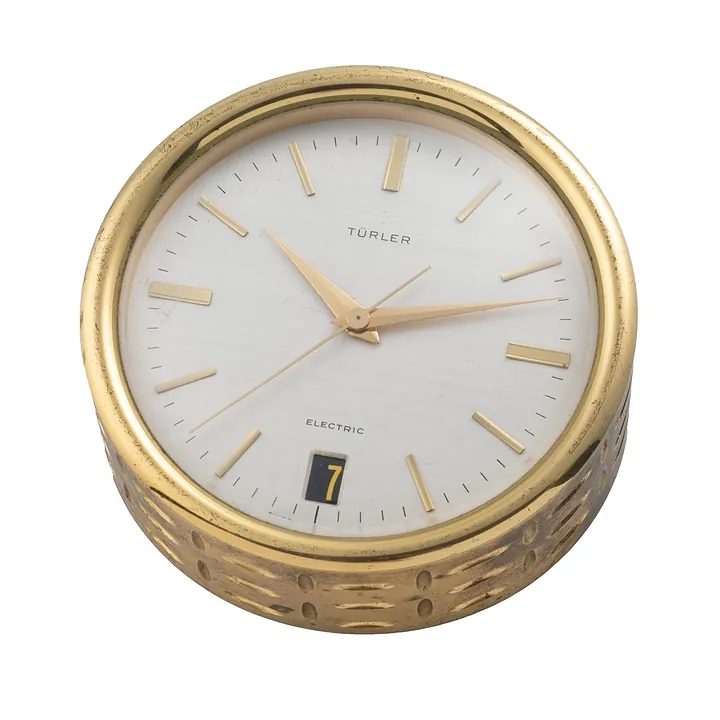
Clocks · c. 1960-1970s
Anonymous clock, c. 1960-1970s
Antiquorum auction archive, Geneva
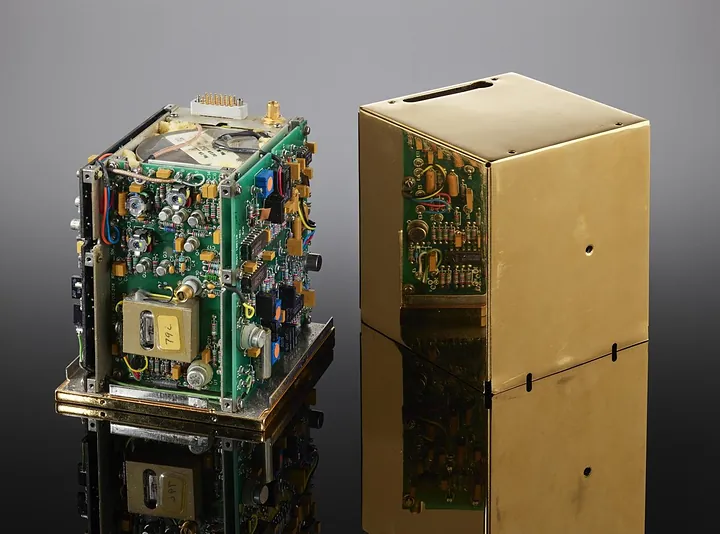
Clocks · 1960–1996
Electric clock by Efratom GmbH, Germany, 1960–1996
Science Museum Group, London
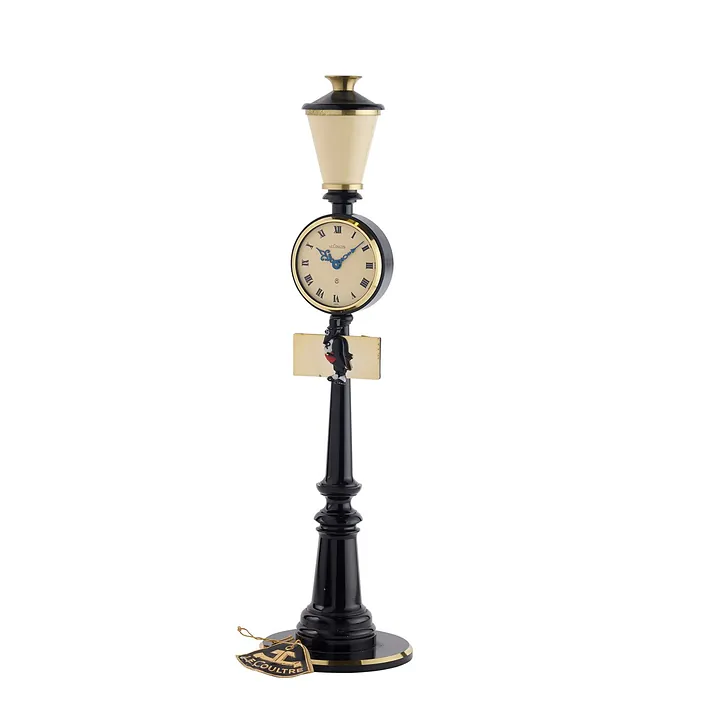
Clocks · c. 1960-1970s
Lecoultre Street Light Lamp, ref. 397, c. 1960-1970s
Antiquorum auction archive, Geneva
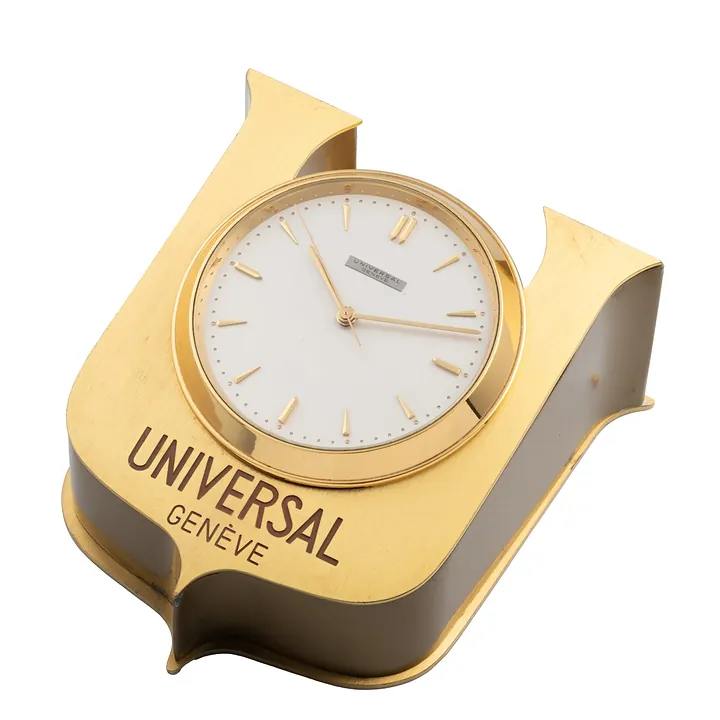
Clocks · c. 1960-1970s
Universal Genève clock, ref. 999.116.01, c. 1960-1970s
Antiquorum auction archive, Geneva
Clocks · 1964–1988
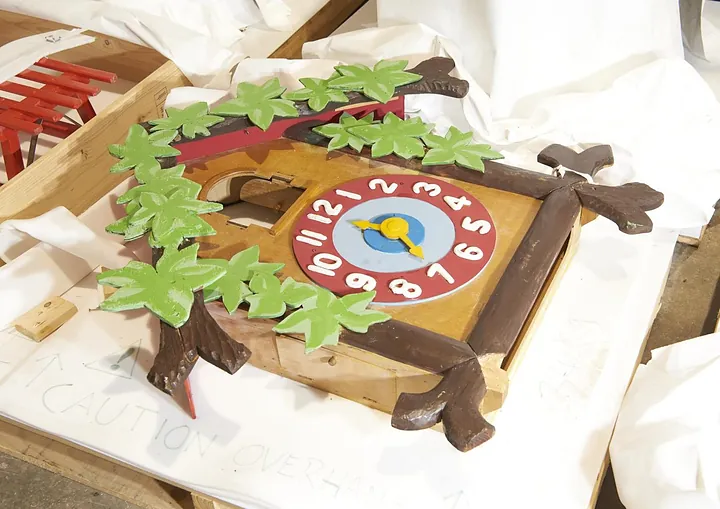
The clock from BBC children's television series 'Playschool', c 1977
Science Museum Group, London