
Clocks · Longcase clock
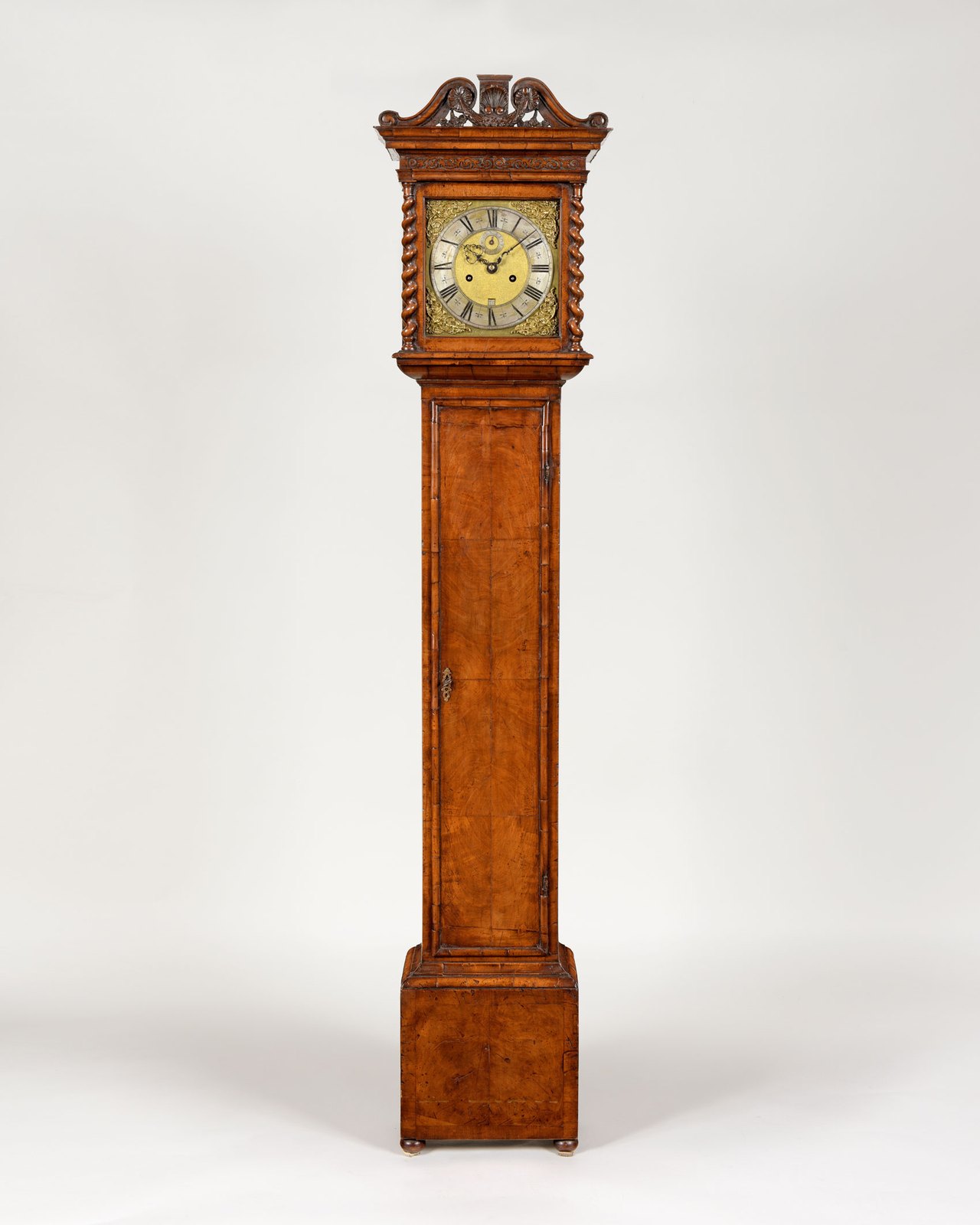
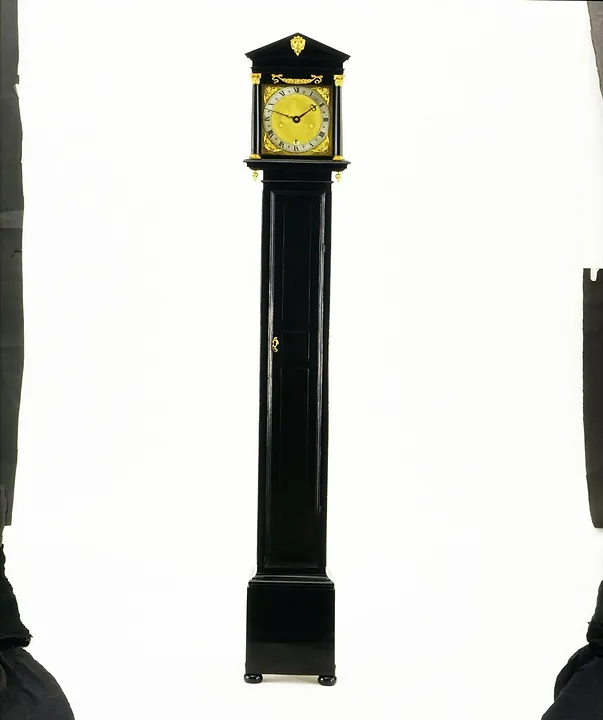
Longcase clock by John Wise, London, c. 1685
- Maker / attribution
- John Wise (maker)
- Date
- c. 1685
- Historical period
- Early Modern Horology (1600 – 1750)
- Country of origin
- England
- Place
- London
- Object type
- Longcase clock
- Materials / technique
- walnut
- Dimensions
- Height 204 cm
- Stock no.
- Product 5164
- Credit line
- Dealer listing, Howard Walwyn (product 5164)
- Catalogue title (original)
- JOHN WISE. A fine James II period walnut longcase clock by this early London maker. (English)
View the source record (dealer listing) ↗ (opens another website in a new tab)Suggest a correction
Record summary
Catalogued by Howard Walwyn Fine Antique Clocks (dealer), London (stock number Product 5164), this is a longcase clock by John Wise, made in London, England, dated c. 1685. The Atlas places it in the Early Modern Horology period (1600 – 1750) of its Clocks collection. Materials and techniques recorded by the source: walnut. Recorded dimensions: Height 204 cm. The record is illustrated with 4 photographs.
Assembled from the source record's structured fields. Dates and attributions are given as the source states them; where a field is missing the Atlas leaves it blank rather than estimating.
Catalogue description
Dealer description — Howard Walwyn
A fine James II period walnut longcase clock by this early London maker. The 10-inch gilt brass dial has a silvered Roman chapter ring with sword-hilt half-hour markers and an outer minute division, enclosing a finely matted centre with a subsidiary seconds dial below XII and a date aperture above VI. The dial is signed along the lower edge John Wise Londini Fecit and retains its original pierced and faceted steel hands. The case is veneered in walnut of rich colour and patination, with a rising hood surmounted by a carved cresting centred by a shell, with pierced foliate carving beneath the cornice. The front of the hood is flanked by barley twist columns, repeated to the rear angles, and there are glazed side apertures. The trunk door is long and slender, with a cross grain walnut moulding. The base is similarly veneered and stands on four turned bun feet. The 8-day movement has an anchor escapement and strikes the hours on a bell. It retains its original brass weights and pendulum, and survives with pleasing early character throughout. Inside the trunk there is an old paper presentation label which reads: ‘ This clock was presented to Colonel Charles Henley by Mrs. Ethel Buchanan in memory of a pleasant time spent with him in exploring some of the ancient buildings in the City of London in the spring of 1907 .’ Height : 8 ¼ in (204 cm) * John Wise (1624–1690) was born in Banbury and apprenticed in 1638 to the lantern clockmaker Peter Closon through the Clockmakers’ Company. He was freed in 1646. He is recorded working first in London, then in Warwick from the 1650s to the later 1660s, before returning to London, where he made some of the most attractive early longcase, bracket and lantern clocks of the period. Examples of his work are in the Royal Collection , while a bracket clock movement by him is in the Royal Albert Memorial Museum, Exeter. HW6693
Historical context
Early Modern Horology (1600 – 1750)
Huygens' pendulum and balance spring transform accuracy; English makers develop the anchor and deadbeat escapements.
Huygens's pendulum (1656–57) improved clock accuracy from about a quarter of an hour to under a minute a day. The anchor escapement (c. 1670) and the long seconds pendulum created the longcase clock; London makers such as Fromanteel, Knibb, Tompion and Quare led European clockmaking, and French makers created the Boulle pendule.
Read the period in the timelineMore clocks from this periodEarlier: Renaissance Horology
Atlas type guide
Longcase (tall-case or grandfather) clocks
The longcase clock was born from two seventeenth-century innovations: Christiaan Huygens's pendulum (1656–57) and the anchor escapement (c. 1670). A long seconds pendulum, nearly a metre long, swings with a small arc, and enclosing it together with the driving weights in a tall wooden case protected the mechanism and created a new piece of furniture. London makers such as Ahasuerus Fromanteel, Thomas Tompion and Joseph Knibb set the pattern.
By the eighteenth century longcase clocks were made throughout Britain, the Netherlands, Scandinavia (the Swedish Mora clock), France (the Comtoise from the Franche-Comté), Germany and colonial America. Eight-day movements with two weights became standard in better clocks; thirty-hour clocks with one weight and a rope or chain were cheaper alternatives.
What to look for
- Winding holes in the dial: two (eight-day, going and striking) or none (thirty-hour, pulled up by a chain).
- Brass dials with applied chapter rings (earlier) versus painted iron 'white' dials (after c. 1770 in Britain).
- Moon-phase arches, date apertures, seconds dials and maker's name on the dial.
- Case woods and style: ebonised, walnut marquetry, lacquer, oak or mahogany; regional styles from London, Lancashire, Scotland or America.
- Whether the movement and dial match the case — 'marriages' are common.
Dating clues
- Square brass dials suggest c. 1670–1720; arched brass dials c. 1715–1790.
- Painted (white) dials were made by Birmingham dial-makers from about 1772.
- Comtoise clocks with repoussé pendulums are mostly nineteenth century.
General guidance written by the Atlas editors about this kind of object. It is not a statement about this particular piece; for that, rely on the source record above and on physical examination.
Read next:Deadbeat escapementAnchor escapement
Related records
Clocks · 1598–1603
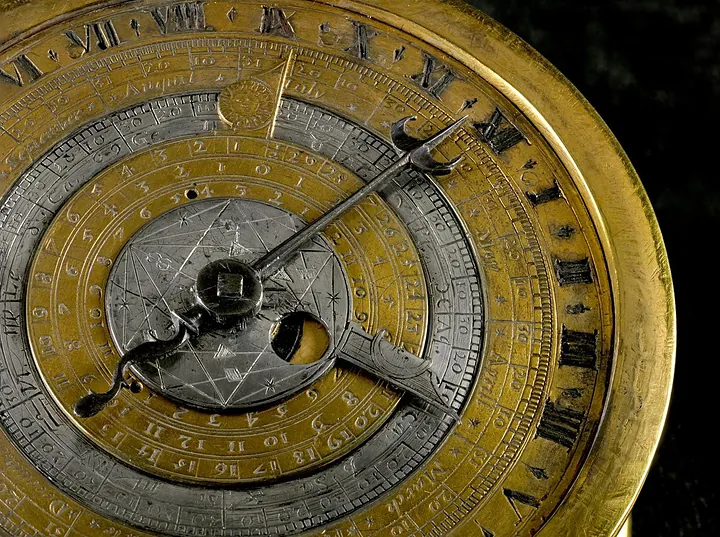
Circular table-clock with calendrical and lunar indications made by Nicholas Vallin in London between 1598 and 1603.
Science Museum Group, London
Clocks · 1611
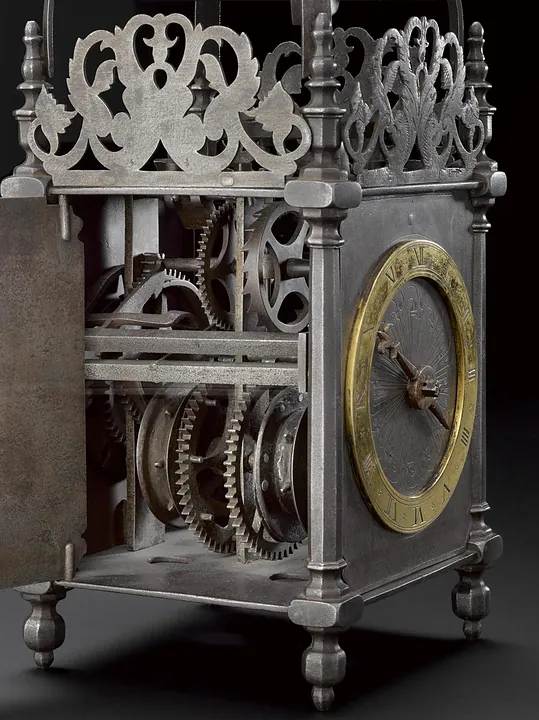
English iron lantern clock, with wheel balance, by John Holloway, Market Lavington, Wiltshire, England, 1611.
Science Museum Group, London
Clocks · 1630
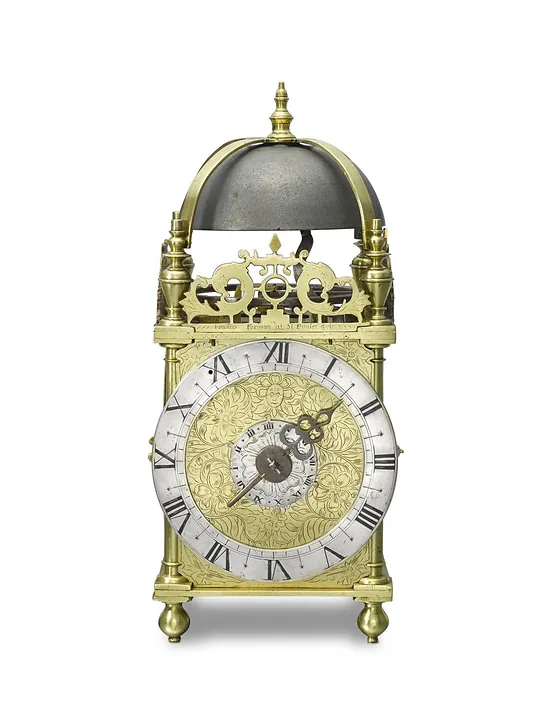
Lantern clock by Francis Forman, England, 1630
Science Museum Group, London
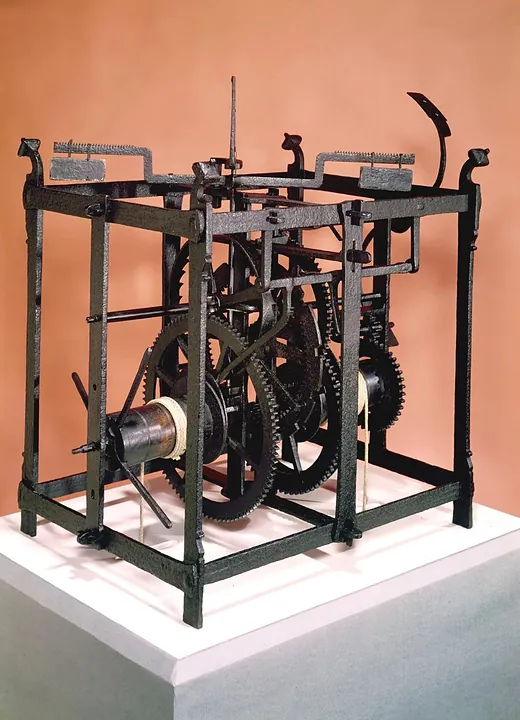
Clocks · 1632–1640
Turret clock, England, 1632–1640
Science Museum Group, London
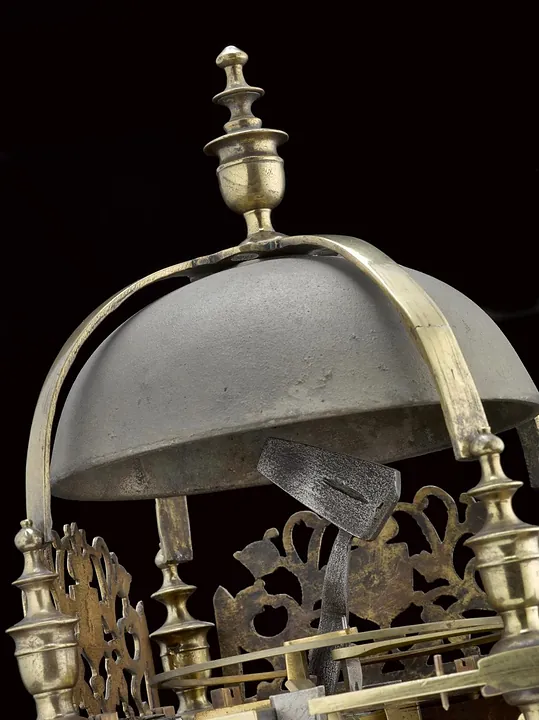
Clocks · 1645–1655
Balance-wheel brass lantern clock, with two driving weights and one counterweight, by Thomas Knifton, Cross Keys, Lothbury, London, England, 1645–1655.
Science Museum Group, London
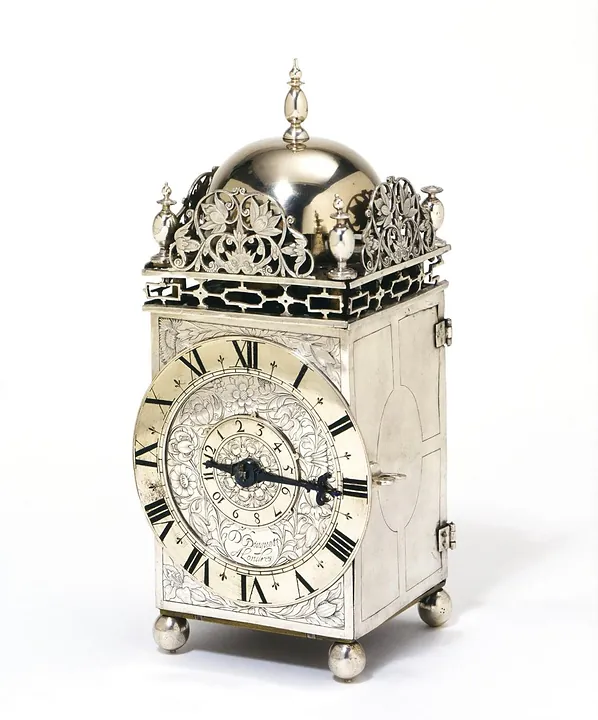
Clocks · c. 1650
Lantern alarm clock, silver, by David Bouquet, circa 1650
Victoria and Albert Museum, London
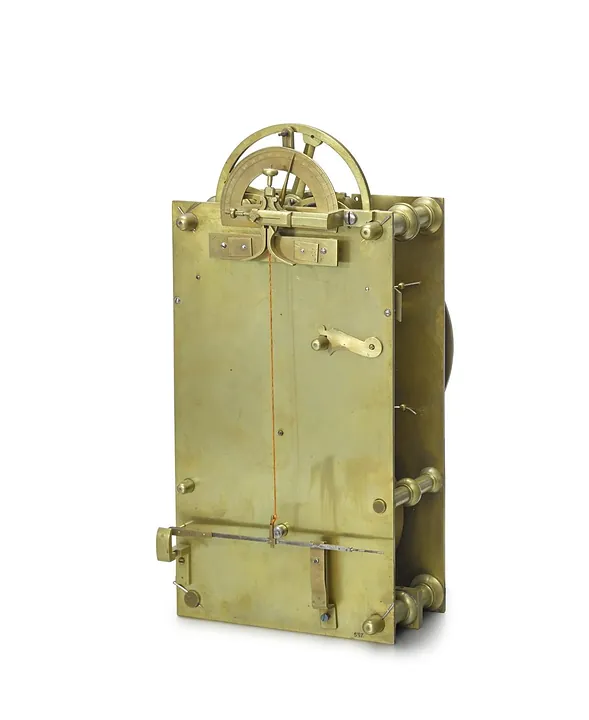
Clocks · 1650–1660
Lantern clock by Peter Closon, England, 1650–1660
Science Museum Group, London
Clocks · c. 1660
Longcase clock, c. 1660, English, made by Ahasuerus Fromanteel
Victoria and Albert Museum, London