
Wristwatches · Wristwatch
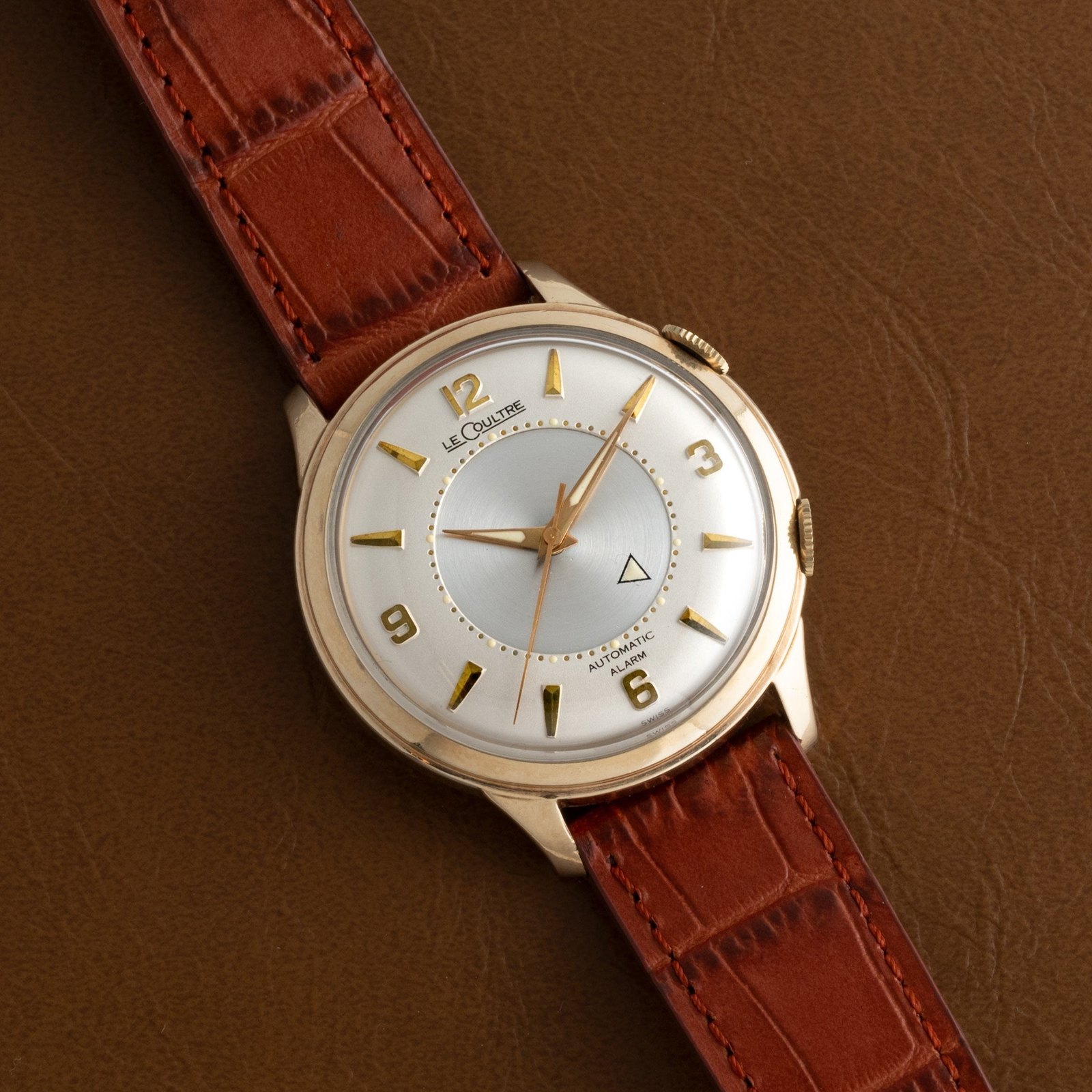
LeCoultre Memovox Bumper-Wind Automatic, 1950s
- Maker / attribution
- Jaeger LeCoultre (maker)
- Date
- 1950s
- Historical period
- Modern Mechanical Horology (1945 – 1969)
- Country of origin
- Unrecorded in source
- Object type
- Wristwatch
- Dimensions
- Case 37 mm
- Stock no.
- 40980061
- Credit line
- Dealer listing, Analog/Shift (40980061)
- Catalogue title (original)
- LeCoultre Memovox Bumper-Wind Automatic (English)
View the source record (dealer listing) ↗ (opens another website in a new tab)Suggest a correction
Record summary
Catalogued by Analog/Shift (dealer), New York (stock number 40980061), this is a wristwatch by Jaeger LeCoultre, dated 1950s. The Atlas places it in the Modern Mechanical Horology period (1945 – 1969) of its Wristwatches collection. Recorded dimensions: Case 37 mm. The record is illustrated with 6 photographs.
Assembled from the source record's structured fields. Dates and attributions are given as the source states them; where a field is missing the Atlas leaves it blank rather than estimating.
Catalogue description
Dealer description — Analog/Shift
The first popular mechanical alarm wristwatch was the Vulcain Cricket. It gained many accolades upon its debut in 1947, making its way onto the wrists of numerous notable individuals — including several U.S. Presidents. In the late 1940s, Jaeger-LeCoultre began producing its own mechanical alarm watch to compete with the popular Cricket. Utilizing a unique twin-crown system and a unique alarm mechanism — the Memovox employs a hammer that strikes against a post welded to the caseback, whereas the Cricket uses a resonant, dual-case back design — JLC set itself apart and in so doing, created one of the most iconic models of post-War watchmaking. LeCoultre's earliest Memovox expressions were largely available in Europe, while American-market models — cased in steel, two-tone, or in 14K gold in an array of dial configurations — were offered as early as 1951. This particular example dates to the 1950s and bears the hallmarks of a U.S. model, the most distinct of which is the use of a “LeCoultre” signature rather than “Jaeger-LeCoultre” branding on the dial. (Another sign, located inside the snapback case, is a stamp reading “Cased and Timed in the United States.”) Housed in a 37mm 10K gold-filled, two-tone stainless steel case with dual winding crowns, an acrylic crystal, and a smooth bezel, it features a luminous, two-piece silver-tone dial with an inner, rotating alarm-setting disc. Applied ‘dart’ and ‘Arabic’ quadrant indices are joined by luminous ‘dauphine’ hands, while the self-winding Jaeger-LeCoultre Calibre 815 bumper movement provides power. The dial and luminous elements are in absolutely stunning condition on this particular example, suggesting it likely spent some time visiting home in Le Sentier in recent years - as it shows signs of a professional dial restoration, or perhaps an old-stock replacement, likely by the manufacture. This is the spa treatment we all deserve when we're pushing 70! With its handsome dial and delightful alarm sound, this piece is sure to make you smile every time you strap it on your wrist!
Historical context
Modern Mechanical Horology (1945 – 1969)
Tool watches for divers, pilots and astronauts; electric watches anticipate the electronic age.
The classic era of the mechanical wristwatch: dive watches, chronographs for motor racing and space flight, GMT watches for jet travel, slim dress watches, automatic calendars, and the rise of Japanese manufacturers alongside Swiss, American, German and Soviet industries.
Read the period in the timelineMore wristwatches from this periodEarlier: Golden Age of Mechanical Watchmaking
Atlas type guide
Automatic (self-winding) watches
Self-winding watches use the wearer's motion to wind the mainspring. Abraham-Louis Perrelet and Breguet made 'perpétuelle' pocket watches with oscillating weights in the late eighteenth century, but the principle only became practical in the wristwatch. John Harwood patented a bumper automatic in 1923; Rolex's Perpetual rotor (1931) winding in one direction, and later bidirectional rotors (Eterna, Felsa Bidynator), established the modern form. Micro-rotors (Universal Genève, Buren) and peripheral rotors made automatic watches thinner.
What to look for
- A semicircular rotor turning 360° over the movement, or a 'bumper' weight that rebounds between springs.
- 'Automatic', 'Perpetual' or 'Self-winding' on the dial.
- A sealed screw-back case, since automatic watches are wound less often by the crown.
Dating clues
- Bumper automatics: 1923–c. 1955.
- Full rotors: from 1931 (Rolex); widespread after c. 1950.
- Micro-rotors: from 1954–1958.
General guidance written by the Atlas editors about this kind of object. It is not a statement about this particular piece; for that, rely on the source record above and on physical examination.
Related records
Wristwatches · 1953–1956
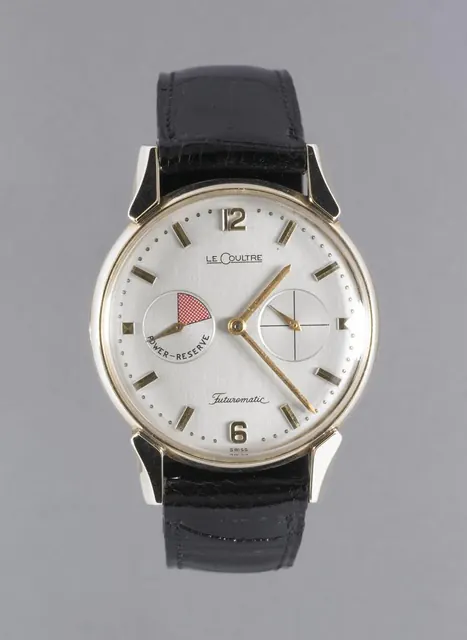
Automatic wristwatch with subsidiary seconds and power-reserve dial
British Museum
Wristwatches · mid 1960s
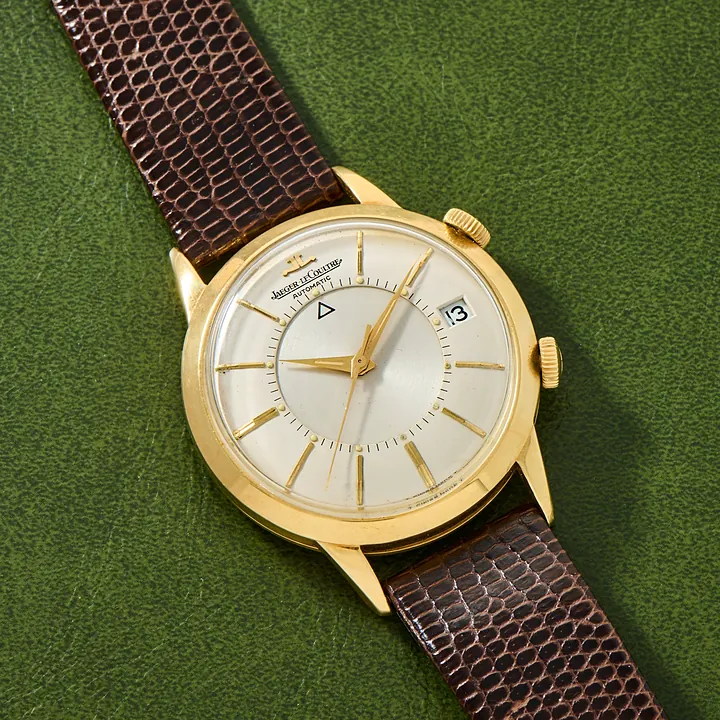
Jaeger-LeCoultre Memovox, mid 1960s
Analog/Shift (dealer), New York
Wristwatches · 1960
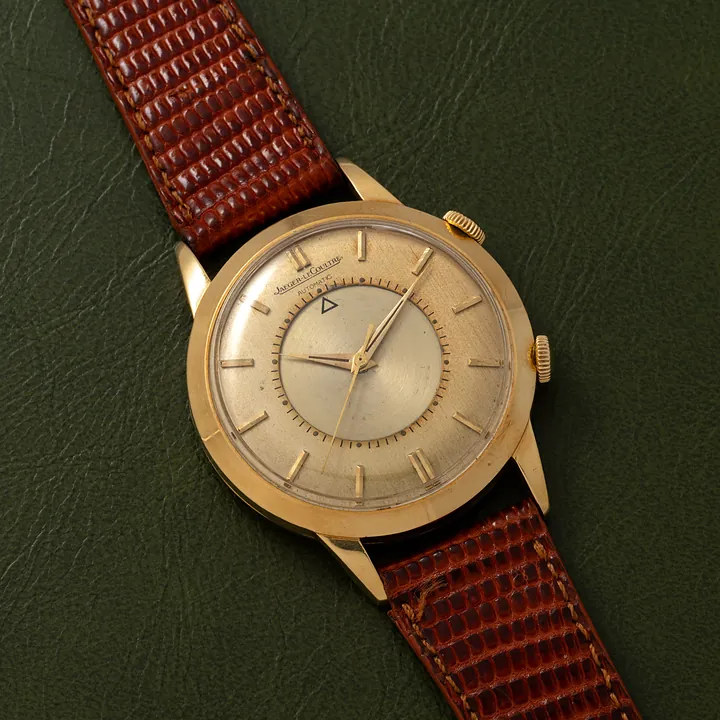
Jaeger-LeCoultre 'European Market' Memovox, 1960
Analog/Shift (dealer), New York
Wristwatches · 2010s
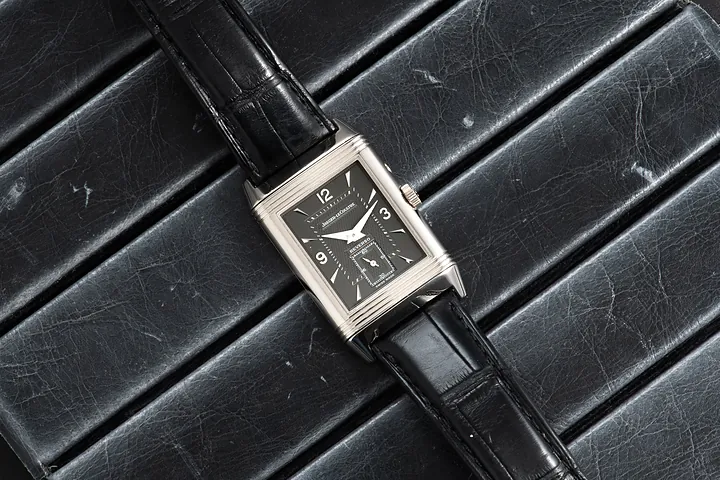
Jaeger-LeCoultre Reverso Duoface Day/Night, 2010s
Analog/Shift (dealer), New York

Wristwatches · 1945
Wristwatch by Eterna, 1945
Museum Rotterdam

Wristwatches · c. 1945
Breitling Premier, ref. 790, c. 1945
Antiquorum auction archive, Geneva

Wristwatches · c. 1945
Universal Genève Uni-Compax, ref. 22492, c. 1945
Antiquorum auction archive, Geneva
Wristwatches · c. 1950s
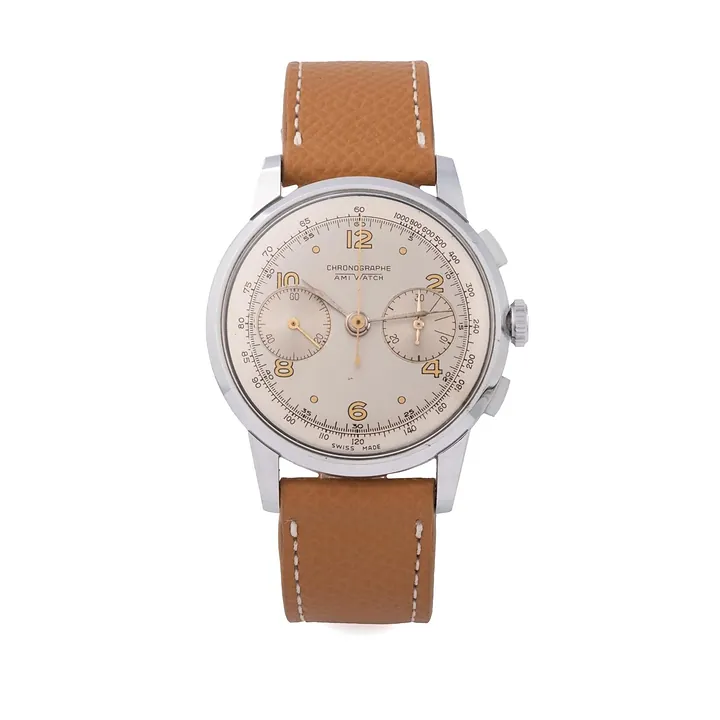
Ami Watch Chronographe, c. 1950s
Antiquorum auction archive, Geneva