
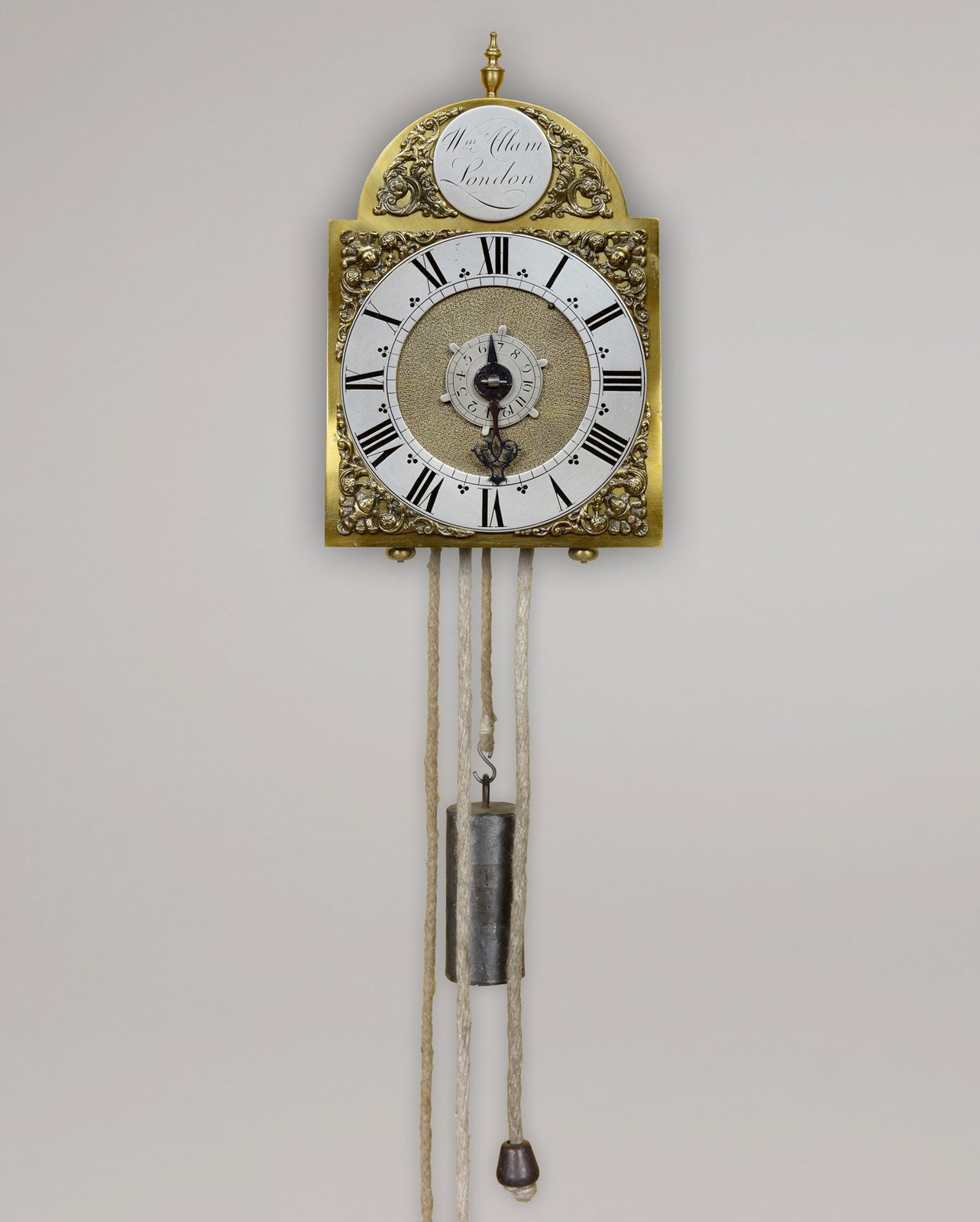
Clocks · Lantern clock
Lantern clock by William Allam, London, c. 1770
- Maker / attribution
- William Allam (maker)
- Date
- c. 1770
- Historical period
- Precision & Scientific Horology (1750 – 1850)
- Country of origin
- England
- Place
- London
- Object type
- Lantern clock
- Materials / technique
- brass
- Dimensions
- Height 18 cm
- Stock no.
- SKU 360
- Credit line
- Dealer listing, Howard Walwyn (SKU 360)
- Catalogue title (original)
- WILLIAM ALLAM. A George III period brass dial lantern clock (English)
View the source record (dealer listing) ↗ (opens another website in a new tab)Suggest a correction
Record summary
Catalogued by Howard Walwyn Fine Antique Clocks (dealer), London (stock number SKU 360), this is a lantern clock by William Allam, made in London, England, dated c. 1770. The Atlas places it in the Precision & Scientific Horology period (1750 – 1850) of its Clocks collection. Materials and techniques recorded by the source: brass. Recorded dimensions: Height 18 cm. The record is illustrated with 2 photographs.
Assembled from the source record's structured fields. Dates and attributions are given as the source states them; where a field is missing the Atlas leaves it blank rather than estimating.
Catalogue description
Dealer description — Howard Walwyn
A fine George III period brass dial lantern clock of small proportions, the short duration timepiece movement with crown-wheel verge escapement and alarm train. The 4 ¾ inch break-arch dial has a raised silvered brass chapter ring with Roman hour numerals and inside quarter-hour markings. It has a single pierced blued steel hand and a central alarm disc. The maker’s signature is engraved on a raised circular silvered brass disc in the arch between gilt foliate spandrels. Height : 7 in (18 cm) Width : 5 ¼ in (13.5 cm) Depth : 5 in (12.75 cm) * William Allam was a well-known maker who is recorded on page 11 of Loomes’s Watchmakers and Clockmakers of the World: Complete 21 st Century Edition. Allam worked from Bond Street London and was a Brother of the Clockmakers’ Company between 1743 and 85. This type of pantry alarm lantern clock was probably made for the servants’ quarters of a wealthy Georgian client. HW5707
Historical context
Precision & Scientific Horology (1750 – 1850)
Harrison solves longitude; Mudge invents the lever; Breguet's Paris workshop defines the modern watch.
The age of the deadbeat escapement, compensated pendulums and observatory regulators. Domestic clocks spread through the middle classes: English longcase and bracket clocks, French gilt-bronze mantel clocks, Viennese Biedermeier wall clocks, Black Forest painted-shield clocks, and the first American shelf clocks.
Read the period in the timelineMore clocks from this periodEarlier: Early Modern Horology
Atlas type guide
Lantern, chamber and Gothic clocks
Domestic weight-driven clocks were made in southern Germany, Switzerland, Italy and Flanders from the fifteenth century. These 'Gothic' or chamber clocks have an open iron frame with corner posts, a verge escapement controlled by a foliot or balance wheel, and often an alarm or hour striking on a bell mounted above.
In England the lantern clock appeared around 1600: a brass posted-frame clock with a bell on top under decorative frets, hung on a hook or set on a wall bracket. After about 1658 many were converted to pendulum control, so originality of the escapement is a key question for any surviving example.
What to look for
- Iron (continental) or brass (English) posted frames with turned corner pillars and finials.
- A single hour hand — minute hands are rare before the pendulum era.
- Evidence of conversion: plugged holes, replaced escapement wheels or later pendulums.
- Fret designs and engraving on the dial centre, which help date English lantern clocks.
Dating clues
- Continental Gothic chamber clocks: c. 1450–1650.
- English lantern clocks: c. 1600–1720, with provincial examples later.
- Short 'bob' pendulum conversions after 1658; long pendulums with anchor escapement after c. 1670.
General guidance written by the Atlas editors about this kind of object. It is not a statement about this particular piece; for that, rely on the source record above and on physical examination.
Read next:FoliotAnchor (recoil) escapement
Related records
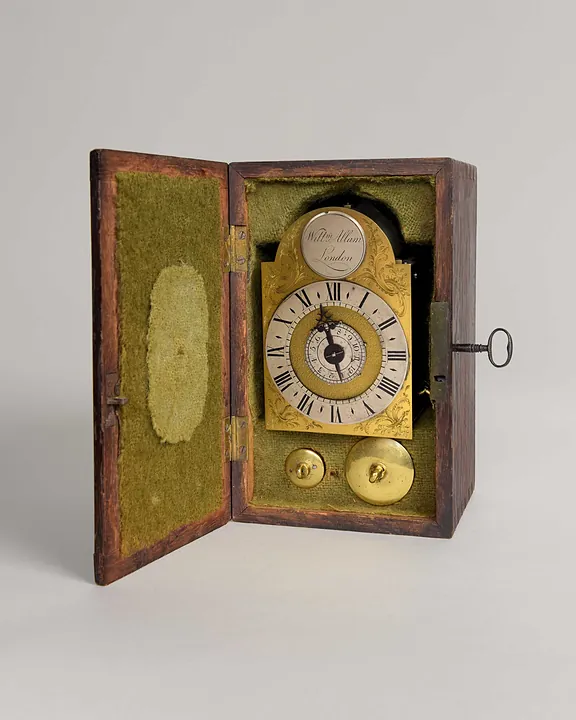
Clocks · c. 1750
Clock by William Allam, London, c. 1750
Howard Walwyn Fine Antique Clocks (dealer), London
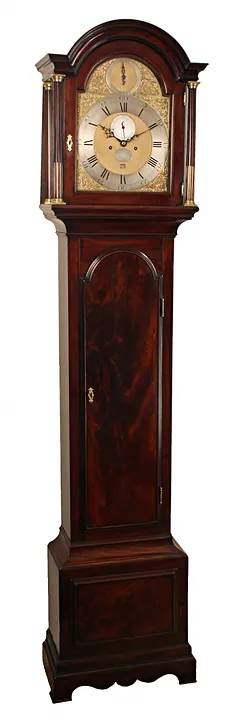
Clocks · c. 1760
London longcase clock by William Allam, c. 1760
P A Oxley (dealer), Wiltshire
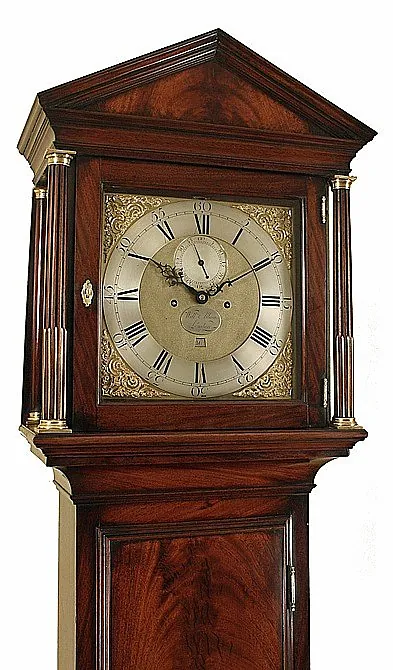
Clocks · c. 1760
London longcase clock by William Allam, c. 1760
P A Oxley (dealer), Wiltshire
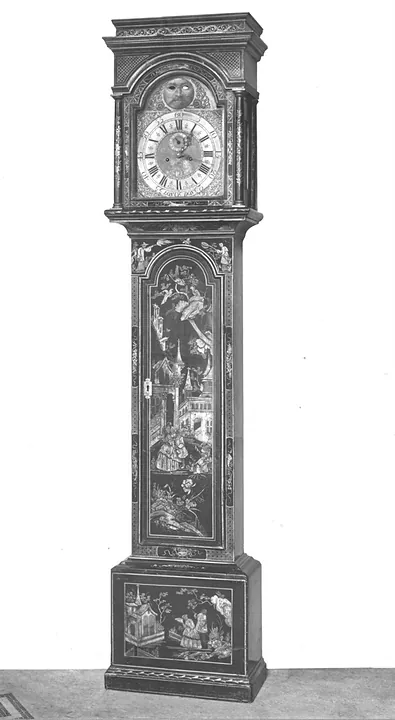
Clocks · 1740–1760
Longcase clock, English, 1740–1760, japanned wood, John Ellicott
Victoria and Albert Museum, London
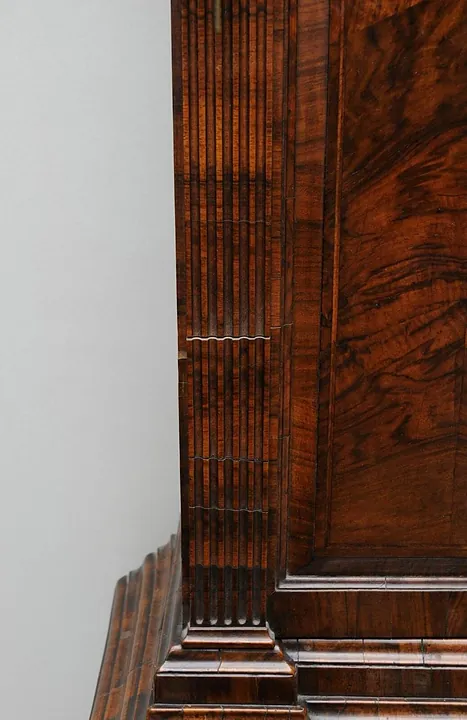
Clocks · c.1750
Long-case clock, English, ca. 1750, by Richard Peyton of Gloucester
Victoria and Albert Museum, London
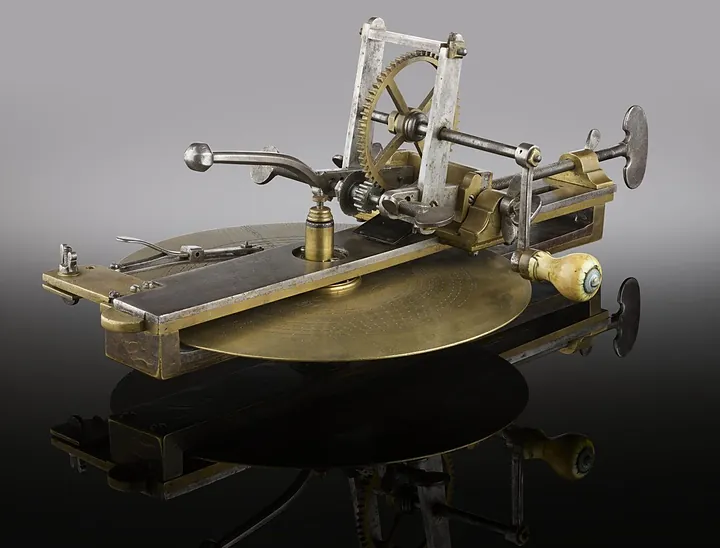
Clocks · 1751
Large wheel engine, signed and dated "John Tipping, Whildon Green, 1751".
Science Museum Group, London
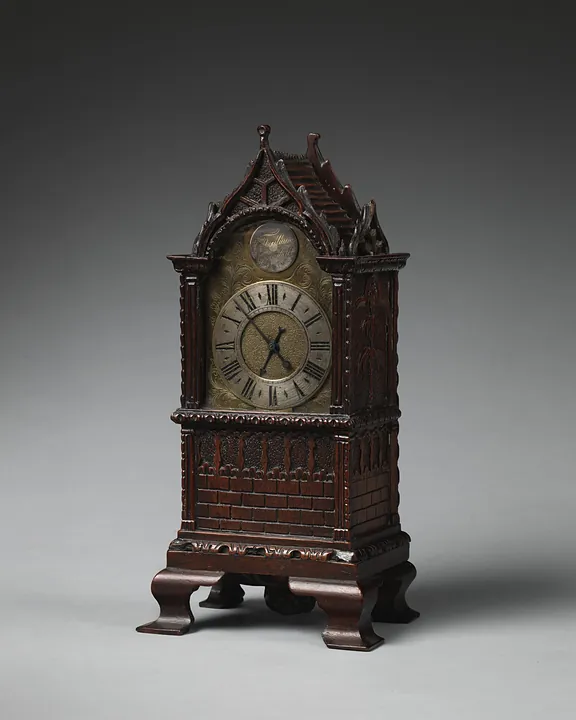
Clocks · 1755
Bracket clock by John Fordham, England, 1755
The Metropolitan Museum of Art, New York
Clocks · c. 1760
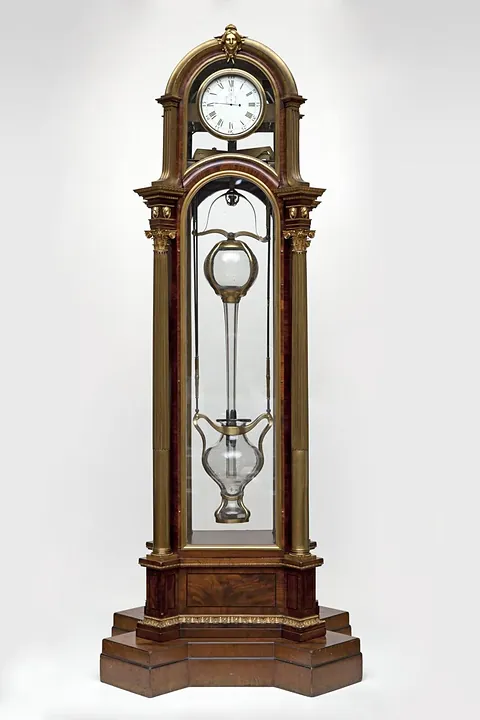
Longcase clock by James Cox, England, c. 1760
Victoria and Albert Museum, London