
Wristwatches · Wristwatch
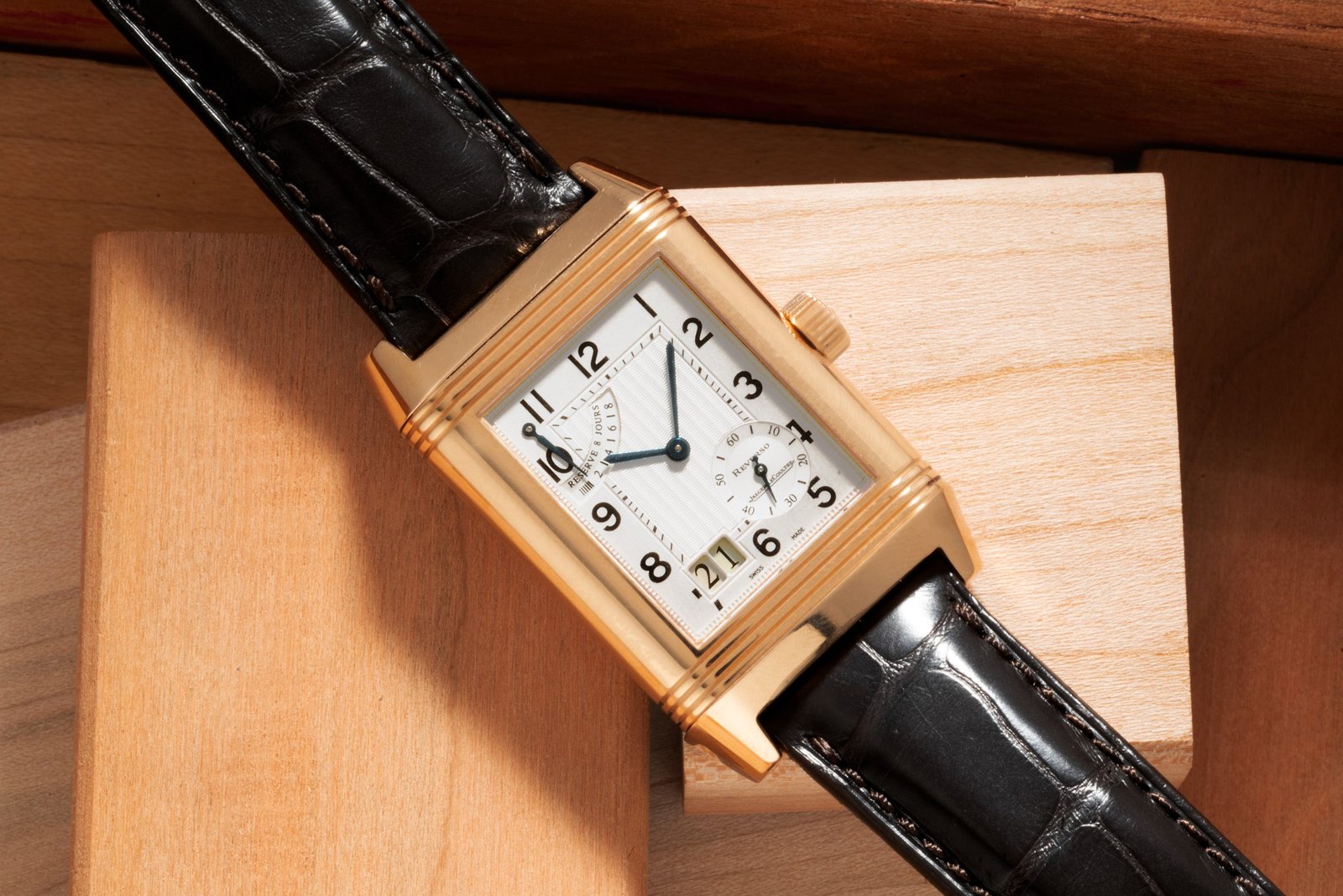
Jaeger-LeCoultre Reverso Grande Date, late 2000s
- Maker / attribution
- Jaeger LeCoultre (maker)
- Date
- late 2000s
- Historical period
- Mechanical Renaissance (1990 – 2010)
- Country of origin
- Unrecorded in source
- Object type
- Wristwatch
- Dimensions
- Case 29 mm
- Stock no.
- 40980059
- Credit line
- Dealer listing, Analog/Shift (40980059)
- Catalogue title (original)
- Jaeger-LeCoultre Reverso Grande Date (English)
View the source record (dealer listing) ↗ (opens another website in a new tab)Suggest a correction
Record summary
Catalogued by Analog/Shift (dealer), New York (stock number 40980059), this is a wristwatch by Jaeger LeCoultre, dated late 2000s. The Atlas places it in the Mechanical Renaissance period (1990 – 2010) of its Wristwatches collection. Recorded dimensions: Case 29 mm. The record is illustrated with 6 photographs.
Assembled from the source record's structured fields. Dates and attributions are given as the source states them; where a field is missing the Atlas leaves it blank rather than estimating.
Catalogue description
Dealer description — Analog/Shift
The Reverso is, in essence, one of the very first sports wristwatches. Despite its refined and elegant appearance, it combined utility with a sleek Art Deco exterior that has become an icon of horological design. But in the case of the Reverso, looks deceive. Though the model appears at first glance a dress watch, it owes its existence to the gentlemanly sport of polo. While touring India in the early 1930s, Swiss businessman César de Trey met a British polo player who'd just cracked the crystal of his watch on the field. De Trey returned to Switzerland with an idea already taken root in his head, which he then discussed with Jacques-David LeCoultre: What if a watch could be made with a case that could reverse? The reversible case, masterminded by designer Alfred Chauvot, was Jaeger-LeCoultre's solution to the problems polo players faced on the field. Once reversed, the delicate components of the case were protected from the shocks sustained while on horseback. No more would polo players crack the crystals or damage the dials of their watches. Chauvot took out a patent for the Reverso in March 1931. Produced chiefly in steel, Jaeger-LeCoultre also released the Reverso in gold, and decorated the case back with engravings or even miniature portraits. The Reverso we have here, a 'Grande Date' model, highlights JLC's manual winding Calibre 875 movement with a massive 8-day power reserve — visible via a sapphire exhibition caseback on the reverse side of the case. It's 29mm x 46mm rose gold case features sapphire crystals, a signed crown, a silver guilloché dial with black painted Arabic numerals, a power reserve indicator at the 10:30 position, a running seconds register at 4:30, a 'grande date' at 6:30, and a matching blued-steel sword handset. It comes fitted to a signed brown alligator strap with a signed rose gold deployant clasp. This piece from the late 2000s is not only one of the more unique executions of the famed Reverso that we've seen, but a stunning one to boot!
Historical context
Mechanical Renaissance (1990 – 2010)
Mechanical watches return as cultural objects; independent watchmaking flourishes.
Mechanical watches returned as cultural and luxury objects. Complications, tourbillons and new materials proliferated; independent watchmakers such as George Daniels, F.P. Journe and Philippe Dufour revived artisanal watchmaking; collecting vintage watches became a major field.
Read the period in the timelineMore wristwatches from this periodEarlier: Quartz Revolution
Atlas type guide
Wristwatches
Bracelet watches were worn by women from the early nineteenth century — Breguet made one for Caroline Murat, Queen of Naples, in 1810–12 — but the wristwatch only became a man's instrument with military use and aviation in the early twentieth century. Between the World Wars it overtook the pocket watch; the 1920s and 1930s brought rectangular Art Deco cases, water-resistant cases and the first automatic winding systems.
After 1945 the wristwatch became a carrier of identity — dress watches, sports and dive watches, chronographs, calendars — produced by Swiss, American, Japanese, German, Soviet and Chinese industries. The quartz revolution after 1969 and the mechanical renaissance since the 1990s, including the rise of independent watchmakers, complete the story.
What to look for
- The reference number (between the lugs or inside the case back) and serial number, the starting point for dating.
- The calibre: its maker and number are often stamped under the dial or on the bridge.
- Originality of dial, hands and crown — refinished ('redial') dials are common.
- Case material marks: 18K/750, 14K/585, stainless steel, gold-filled, plated.
Dating clues
- Wire-lug cases: before c. 1925.
- Water-resistant screw-down cases: from 1926.
- Quartz movements: from 1969; sapphire crystals widespread after c. 1980.
General guidance written by the Atlas editors about this kind of object. It is not a statement about this particular piece; for that, rely on the source record above and on physical examination.
Related records
Wristwatches · 1953–1956
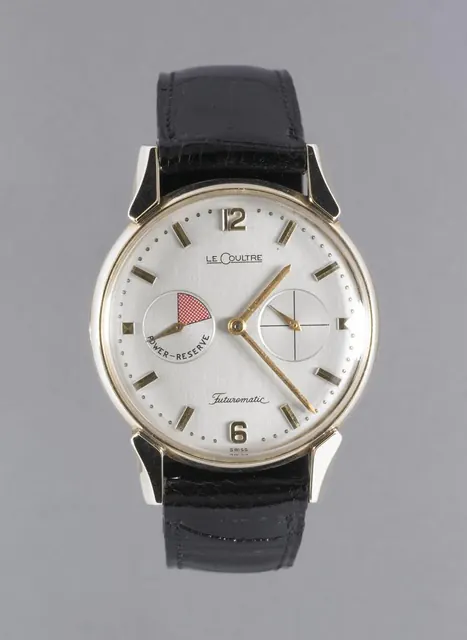
Automatic wristwatch with subsidiary seconds and power-reserve dial
British Museum
Wristwatches · mid 1960s
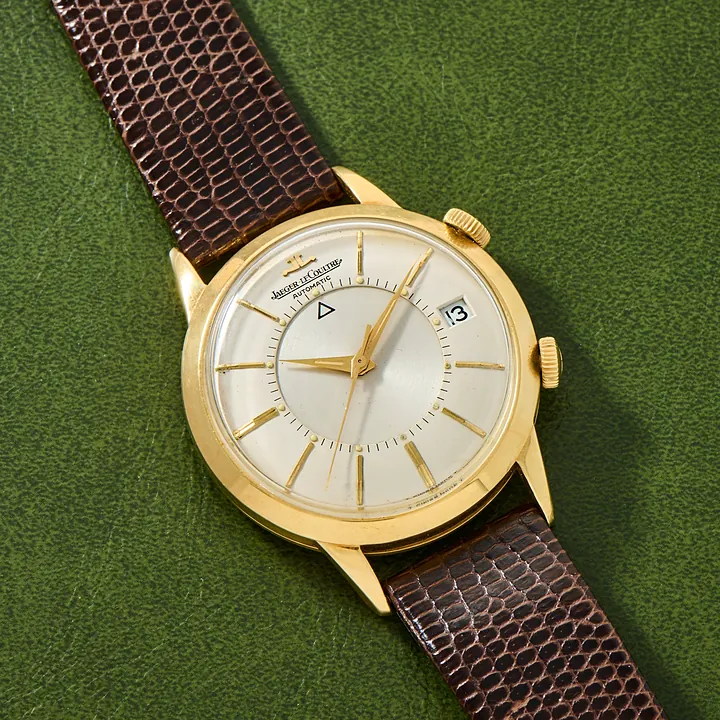
Jaeger-LeCoultre Memovox, mid 1960s
Analog/Shift (dealer), New York
Wristwatches · 1960
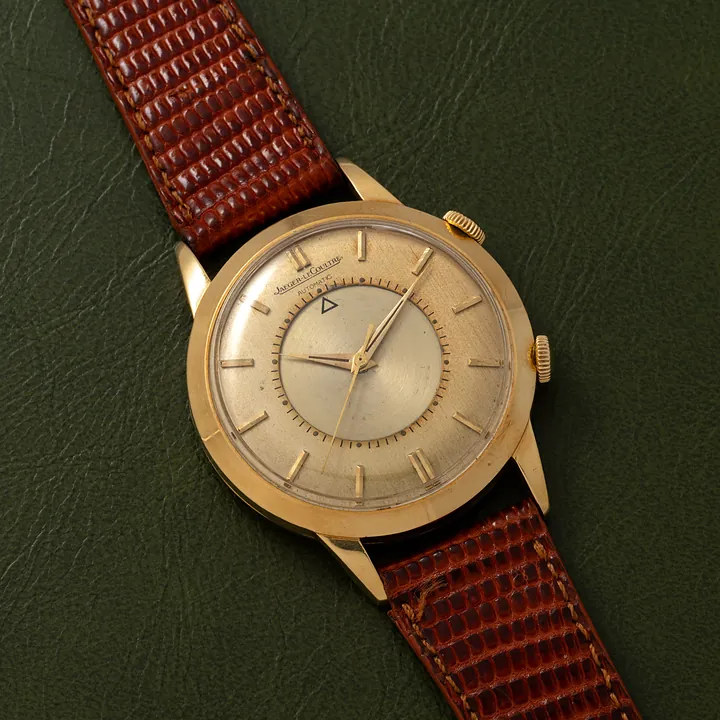
Jaeger-LeCoultre 'European Market' Memovox, 1960
Analog/Shift (dealer), New York
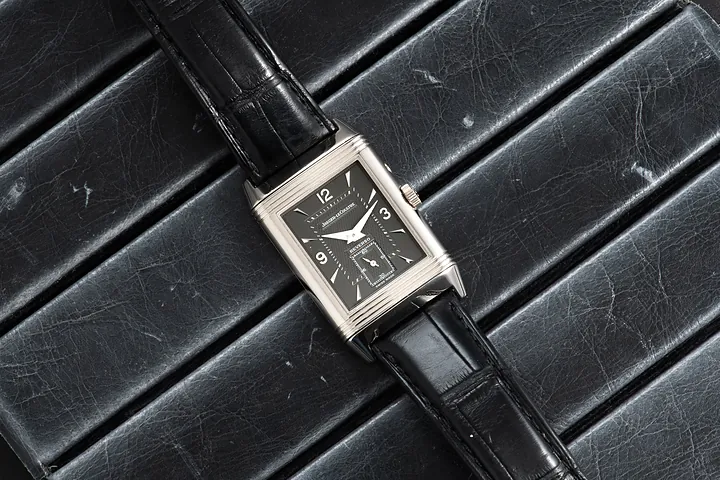
Wristwatches · 2010s
Jaeger-LeCoultre Reverso Duoface Day/Night, 2010s
Analog/Shift (dealer), New York
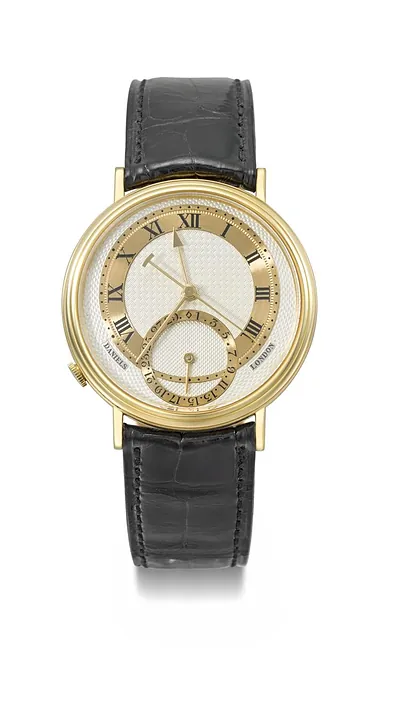
Wristwatches · 1999
'Millennium' co-axial wristwatch by George Daniels and Omega, England, 1999
Science Museum Group, London

Wristwatches · 2008
Wristwatch by Breitling?, 2008
Museum Rotterdam
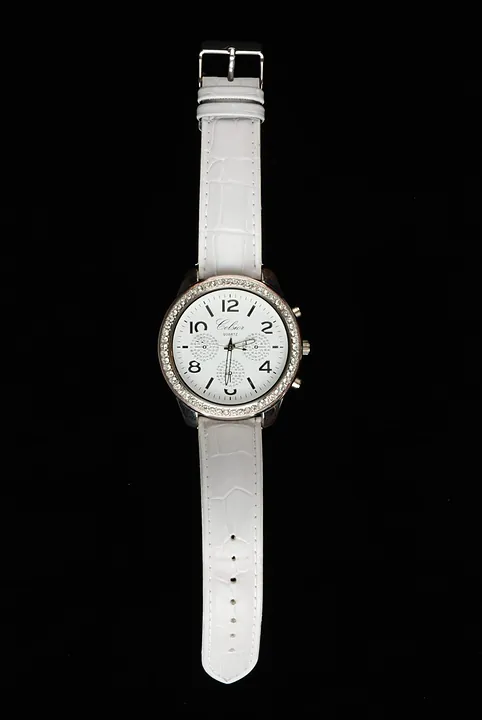
Wristwatches · 2008
Wristwatch by Celsior Quartz, 2008
Museum Rotterdam
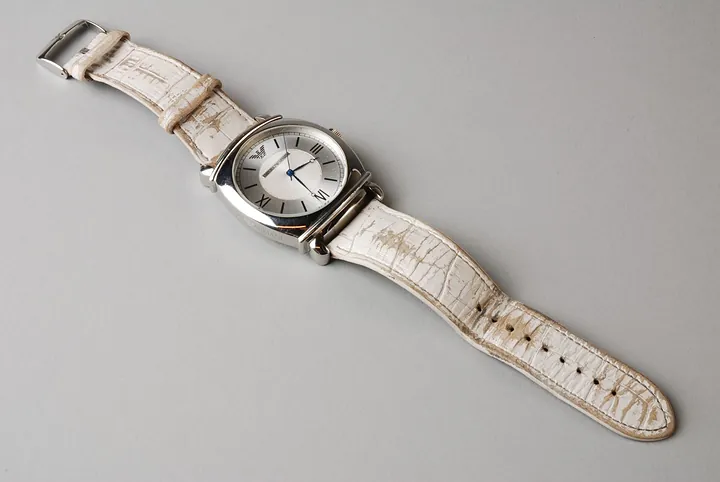
Wristwatches · 2008
Wristwatch possibly by Emporio Armani, 2008
Museum Rotterdam