
Clocks · Clock
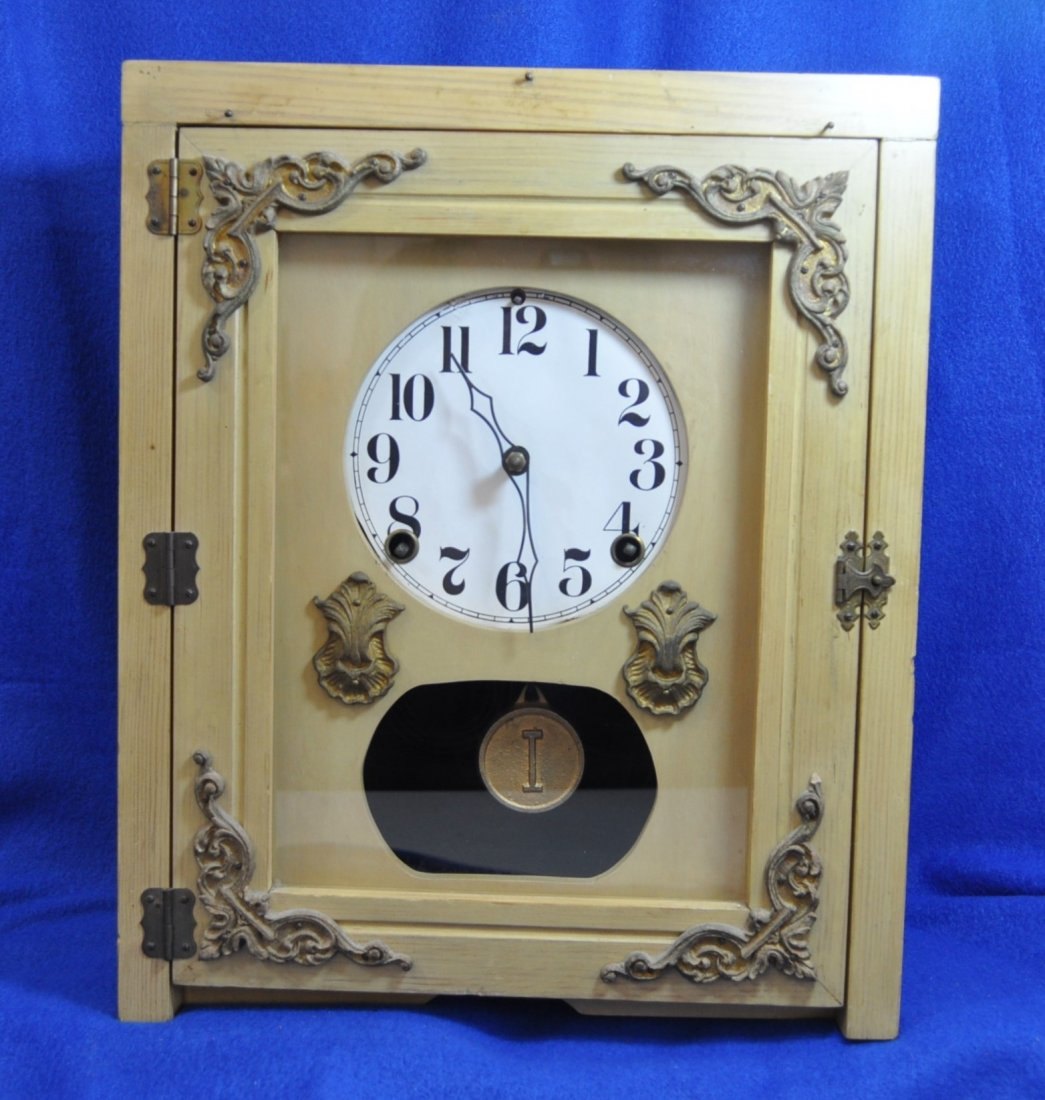
Ingraham 1950s Ornate Custom Cabinet Wall Clock Xt
- Maker / attribution
- INGRAHAM (maker)
- Date
- 1950s
- Historical period
- Modern Mechanical Horology (1945 – 1969)
- Country of origin
- United States
- Object type
- Clock
- Auction house
- LiveAuctioneers auction archive
- Lot
- Item 27313983
- Credit line
- Auction lot record: lot 222, ACCURATE ESTATE AUCTIONS VII $1 NR, Accurate Auctions (2014), via LiveAuctioneers
- Catalogue title (original)
- INGRAHAM 1950s ORNATE CUSTOM CABINET WALL CLOCK XT (English)
View the source record (auction lot) ↗ (opens another website in a new tab)Suggest a correction
Record summary
Catalogued by LiveAuctioneers auction archive (lot Item 27313983), this is a clock by INGRAHAM, made in United States, dated 1950s. The Atlas places it in the Modern Mechanical Horology period (1945 – 1969) of its Clocks collection. The record is illustrated with 4 photographs.
Assembled from the source record's structured fields. Dates and attributions are given as the source states them; where a field is missing the Atlas leaves it blank rather than estimating.
Catalogue description
Lot description — Accurate Auctions
On the block and taking bids is this one of a kind Ornate Custom Cabinet Wall Clock made by D. W. Johnson's Shop, circa Jan. 1956 Works by The E. Ingraham Co. Bristol Conn. - inside back door on clock. Weight: 7# 8oz Measurements: 10.75 x 5.5 x 13 , this area of Connecticut had many custom clock shops , this piece has a simple but ornate feel ...... The master behind Ingraham Clocks was Elias Ingraham (1805-1885). Elias, was born in Marlborough, Connecticut. He came to Bristol in 1828 to work for George Mitchell building clock cases. In 1830, Elias Ingraham, now a noted clock casemaker, began working for Chauncey and Lawson C. Ives. He made over five thousand clock cases for them over the next three years. As a group, Ingraham clocks, and especially the clocks made under a label bearing the Ingraham name up until 1885, refer to clocks made by several different companies.The firm of Brewster and Ingrahams clock company was formed in 1844 and operated until July 24, 1852. During this time Elias designed the Gothic clock case, with four columns. The E. and A. Ingrahams Company was then started and ran from 1852 to 1856; and then Elias Ingraham and Company from 1857 to 1860. Then from 1861 to 1880 the name E. Ingraham & Company was used. from 1881 to 1884, the company was know as The E. Ingraham & Company. Finally in 1885 it was incorporated as The E. Ingraham Company. This well-documented history and short time periods for each company make it easy to date the early Ingraham clocks based upon the label. Research Consulted: Discoverclocks.com
Historical context
Modern Mechanical Horology (1945 – 1969)
Tool watches for divers, pilots and astronauts; electric watches anticipate the electronic age.
Post-war clocks combined new materials and industrial design: plastic and metal cases, battery-powered transistor movements from the late 1950s, and design classics by George Nelson, Max Bill and others. The first caesium atomic clock (1955) moved the definition of time from astronomy to physics.
Read the period in the timelineMore clocks from this periodEarlier: Golden Age of Mechanical Watchmaking
Atlas type guide
Regulators, wall and Vienna clocks
A regulator is a precision pendulum clock used as a time standard in observatories, workshops and railway offices. Typical features are a deadbeat or Graham escapement, a temperature-compensated pendulum (mercury jar, gridiron or later invar), maintaining power and a regulator dial that separates hours, minutes and seconds. George Graham's deadbeat escapement (c. 1715) and his mercury pendulum, together with Harrison's gridiron, set the pattern for two centuries.
Wall clocks span a much wider range: the elegant Viennese Laterndluhr and Dachluhr of the Biedermeier period, the Dutch stoelklok and staartklok, English 'dial' clocks used in schools, offices and railway stations, and mass-produced spring and weight wall clocks from Germany (Gustav Becker, Junghans, Kienzle) and America.
What to look for
- Deadbeat escapement and compensated pendulum (gridiron rods, mercury jar or wood rod).
- A regulator dial with a large central minute hand and separate hour and seconds dials.
- Vienna regulators: glazed cases, slender pendulum, small weights, enamel two-piece dials.
- German factory trademarks stamped on the backplate (e.g. Gustav Becker anchor and crown, Junghans star).
Dating clues
- Graham-type deadbeat regulators: from c. 1720.
- Viennese Laterndluhr: c. 1800–1850.
- German factory 'Vienna-style' regulators: c. 1870–1930; Gustav Becker serial numbers allow close dating.
General guidance written by the Atlas editors about this kind of object. It is not a statement about this particular piece; for that, rely on the source record above and on physical examination.
Read next:Deadbeat escapementAnchor (recoil) escapementGrasshopper escapement
Related records
Clocks · c. 1850
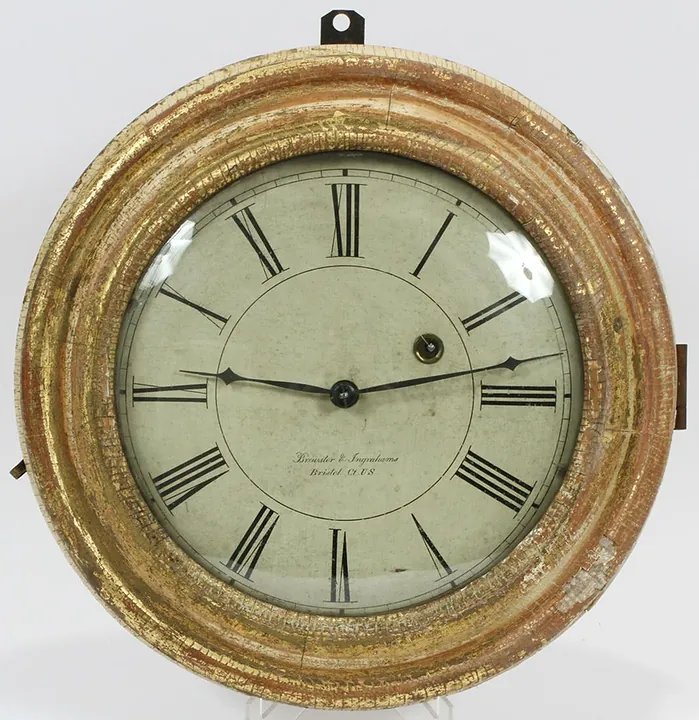
Brewster & Ingraham, Gallery Clock, c. 1850
LiveAuctioneers auction archive
Clocks · c. 1900
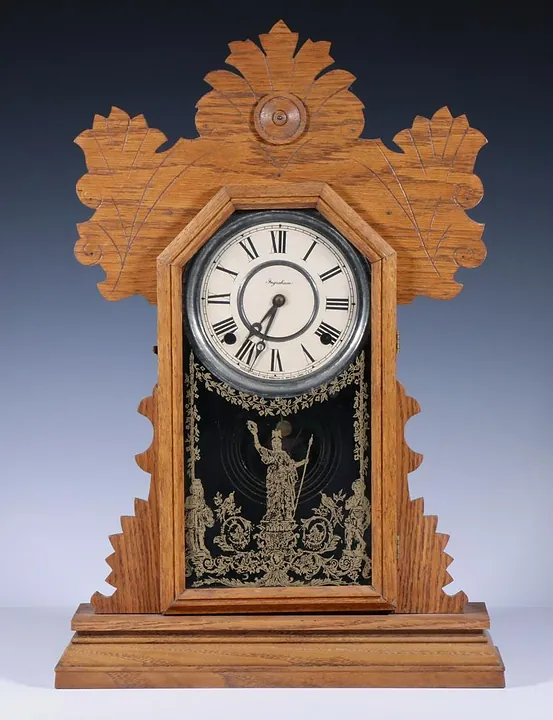
Oak Shelf Clock by Ingraham, c. 1900
LiveAuctioneers auction archive
Clocks · 1937; 1980
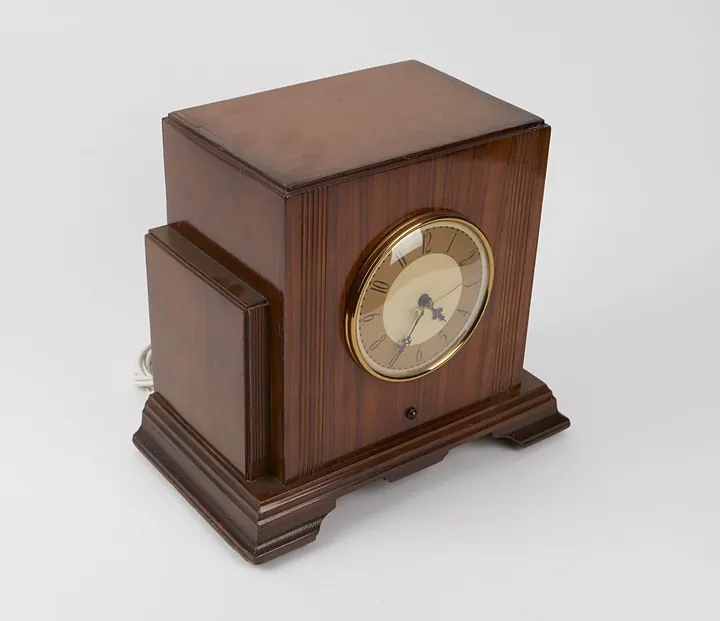
Clock by Bestone and Hammond, United States, 1937; 1980
Science Museum Group, London
Clocks · c. 1968
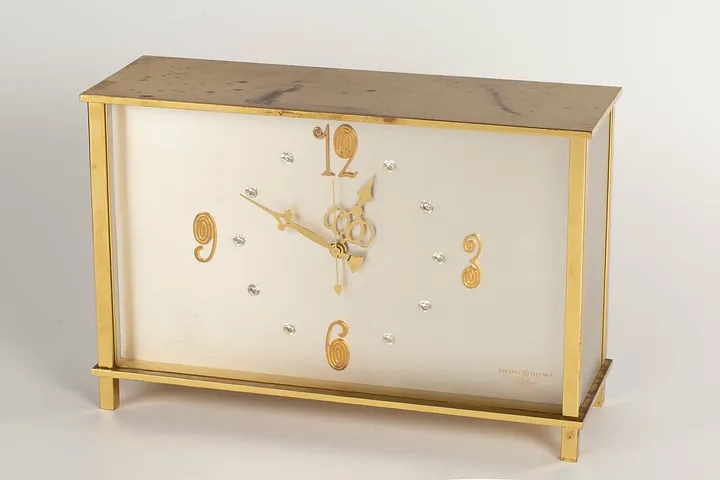
Table clock, United States, c. 1968
German Clock Museum
Clocks · c. 1960s
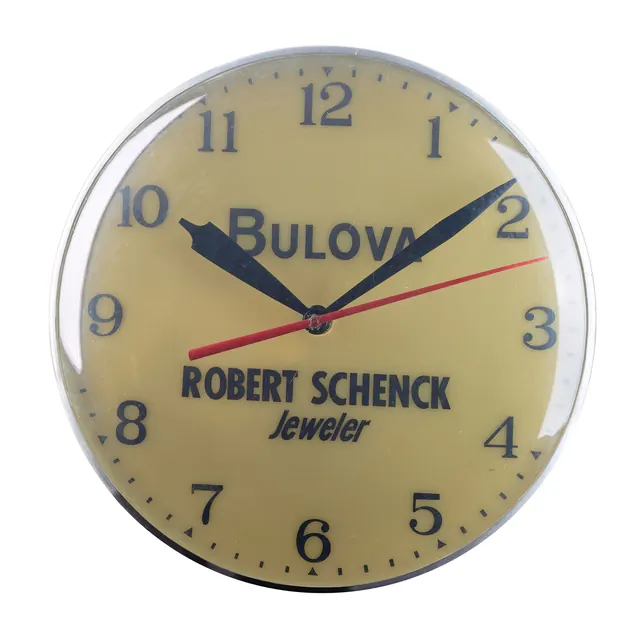
Bulova wall clock, Lighted Advertising Wall Clock for Robert Schenck Jeweler, circa 1960s
Antiquorum auction archive, Geneva
Clocks · designed 1947; manufactured by 1948–69
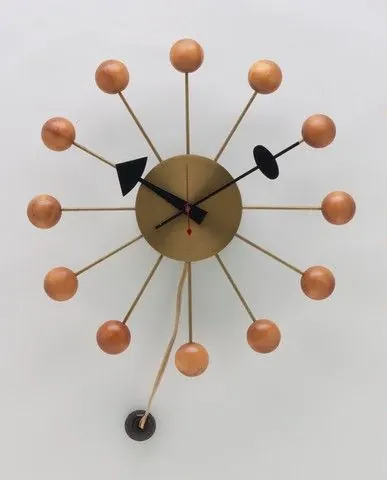
Ball Wall Clock, Model no. 4755 by George Nelson & Co., Inc
Yale University Art Gallery, New Haven
Clocks · c. 1960s
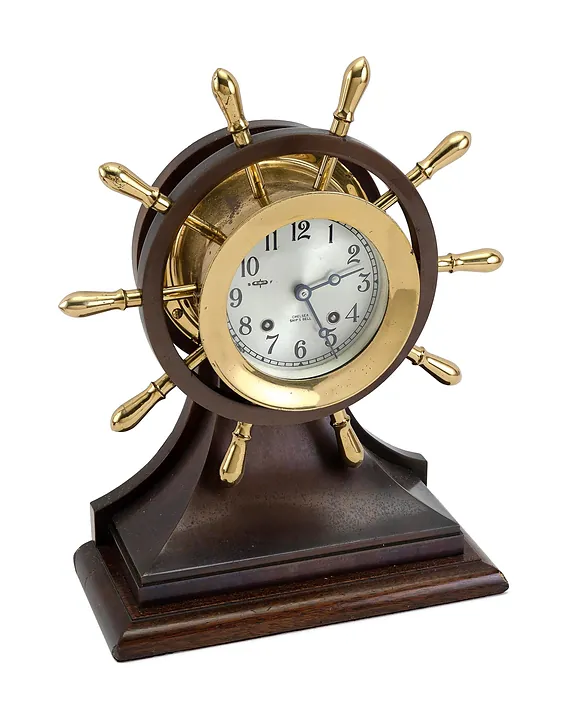
Chelsea Clock CO. "MARINER" SHIP's Bell Clock Boston, circa 1960s Dial
LiveAuctioneers auction archive
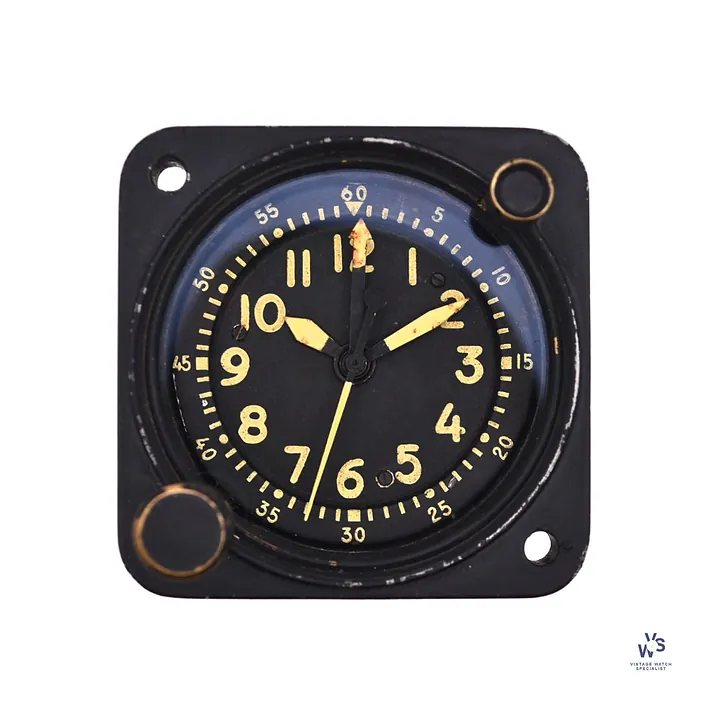
Clocks · c. 1960s
Waltham Aircraft Clock, ref. A-13A-1, circa 1960s
Vintage Watch Specialist (dealer), United Kingdom