
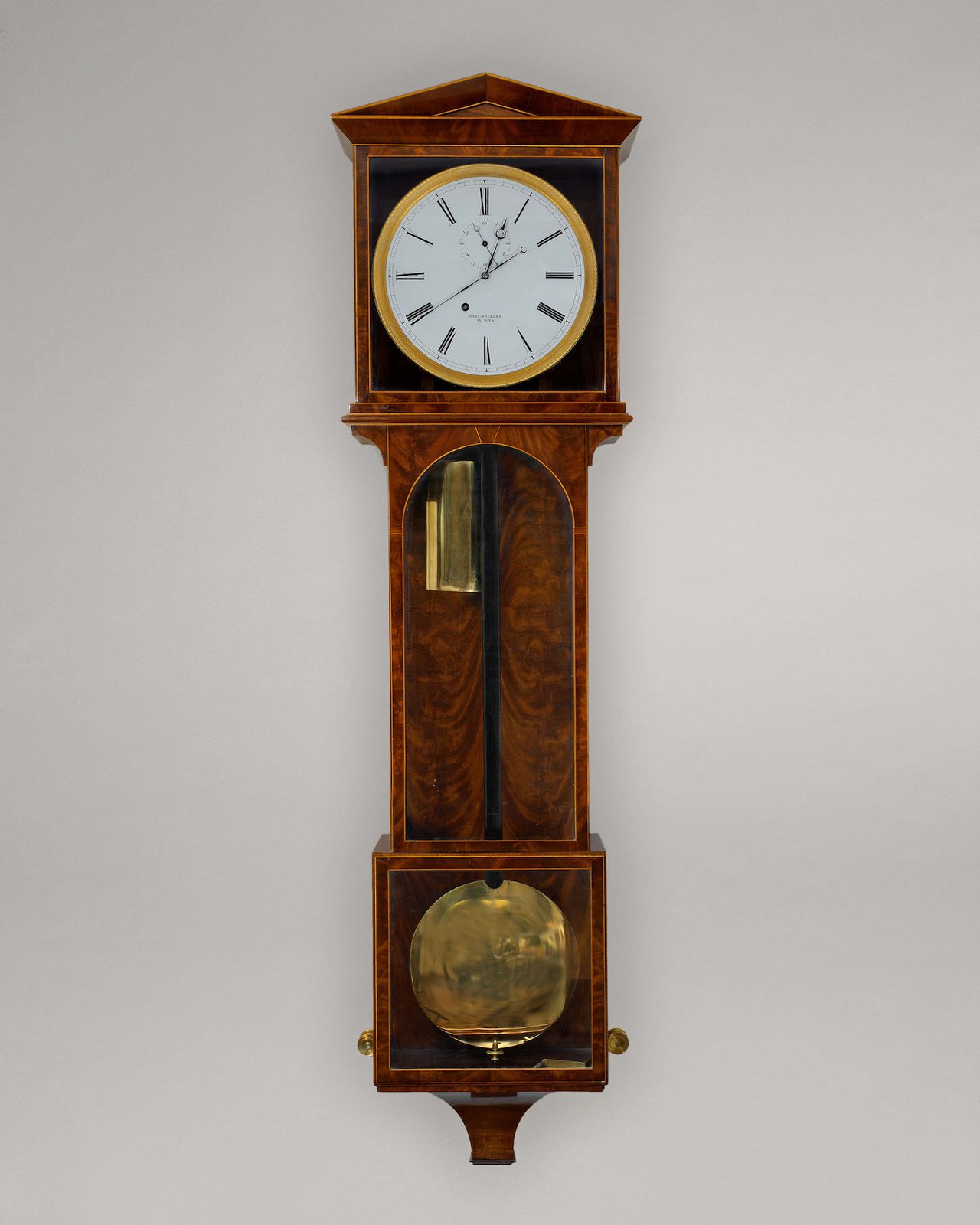
Clocks · Clock
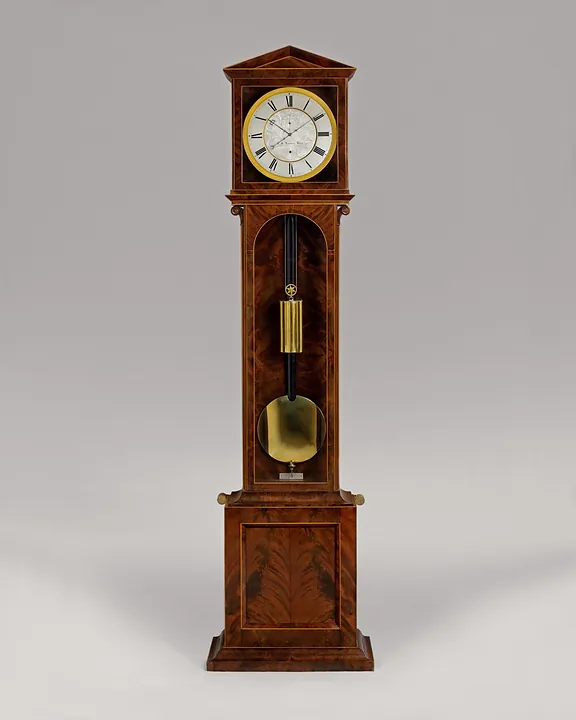
Ignaz Marenzeller in Wien, c. 1835
- Maker / attribution
- Unrecorded in source
- Date
- c. 1835
- Historical period
- Precision & Scientific Horology (1750 – 1850)
- Country of origin
- Austria
- Place
- Vienna
- Object type
- Clock
- Dimensions
- Height 145 cm
- Stock no.
- SKU 256
- Credit line
- Dealer listing, Howard Walwyn (SKU 256)
- Catalogue title (original)
- IGNAZ MARENZELLER IN WIEN (English)
View the source record (dealer listing) ↗ (opens another website in a new tab)Suggest a correction
Record summary
Catalogued by Howard Walwyn Fine Antique Clocks (dealer), London (stock number SKU 256), this is a clock, made in Vienna, Austria, dated c. 1835. The Atlas places it in the Precision & Scientific Horology period (1750 – 1850) of its Clocks collection. Recorded dimensions: Height 145 cm. The record is illustrated with 2 photographs.
Assembled from the source record's structured fields. Dates and attributions are given as the source states them; where a field is missing the Atlas leaves it blank rather than estimating.
Catalogue description
Dealer description — Howard Walwyn
A fine mahogany cased six month duration laterndluhr by this eminent imperial clockmaker. A rare and imposing mahogany cased Laterndluhr. The case with very finely figured mahogany veneers. It has the usual lift off hood with opening door and two lift out doors to the centre and bottom of the case. All of the glass apertures and top and bottom of the hood are nicely strung with boxwood. The clock has its normal under curved base with two stabilizing screws to the sides. The large 11 inch white enamel dial is signed for the maker Marenzeller in Wien and has a seconds hand below XII and nicely shaped blued steel hour and minute hands. It has a wide gilded bezel with fine engine turning. The movement is the clock’s finest feature. It has five wheels in the train, together with a very small diameter main barrel which protrudes out of the back of the movement. This enables it to have its six months duration. The plate separation is extremely narrow which is done to avoid flexing of the arbors when using a heavy weight for long duration. The wheel work is of the usual fine quality and the clock has end stops throughout the train, together with full glass enclosure to the movement to keep any dust out from the workings. The deadbeat escapement has depthing adjustment via a screw on the back cock and the pendulum has a regulator style suspension spring mounting. There is beat adjustment on the end of the crutch with the unusual feature of a square end to the adjustment arbor which is adjusted via a long purpose built key to enable easier adjustment from the side of the movement. The whole movement is of the finest quality. The heavy wood rod pendulum has a nicely turned and embellished adjusting nut and a blued steel pointer. The large brass cased weight is off set and runs down behind the pendulum. Height: 57 in (145 cm.) * The maker Ignaz Marenzeller was born in 1797 and died in 1877. He became a Master Clockmaker in 1831 and is noted as being a Royal/Imperial Clockmaker. This means that he would have made some clocks for the Imperial Family and perhaps was involved in repairs and restorations for them. Only the finest clockmakers had this accolade. Signed / Inscribed IGNAZ MARENZELLER IN WIEN
Historical context
Precision & Scientific Horology (1750 – 1850)
Harrison solves longitude; Mudge invents the lever; Breguet's Paris workshop defines the modern watch.
The age of the deadbeat escapement, compensated pendulums and observatory regulators. Domestic clocks spread through the middle classes: English longcase and bracket clocks, French gilt-bronze mantel clocks, Viennese Biedermeier wall clocks, Black Forest painted-shield clocks, and the first American shelf clocks.
Read the period in the timelineMore clocks from this periodEarlier: Early Modern Horology
Atlas type guide
Domestic clocks
A clock combines four systems: a source of power (falling weight, coiled spring, or later electricity), a gear train that divides time, an escapement and oscillator that regulate it (foliot, pendulum or balance), and an indicating system of dial and hands or a bell. Its history runs from the large iron weight-driven clocks of the late thirteenth century to Renaissance spring-driven table clocks, the pendulum revolution of 1656, the factory clocks of the nineteenth century and electric and quartz clocks of the twentieth.
Domestic clocks also reflect regional furniture and decorative traditions — English longcase and bracket clocks, French pendules, Viennese regulators, Black Forest and American shelf clocks — and therefore record changing tastes as much as technical progress.
What to look for
- How the clock is powered: weights, spring barrel, fusee, electric coil.
- The oscillator: foliot, short pendulum, long seconds pendulum or balance.
- Whether it strikes: hour only (count wheel) or hours and quarters (rack striking).
- The maker or retailer's name on dial and movement, and any factory trademarks.
- Signs of alteration — replaced dials, converted escapements, 'married' cases.
Dating clues
- Before 1656 clocks used foliots or balances; after, most domestic clocks have pendulums.
- Anchor escapements spread after c. 1670; minute hands became common at the same time.
- Factory production in America and Germany transformed prices after c. 1840.
General guidance written by the Atlas editors about this kind of object. It is not a statement about this particular piece; for that, rely on the source record above and on physical examination.
Related records
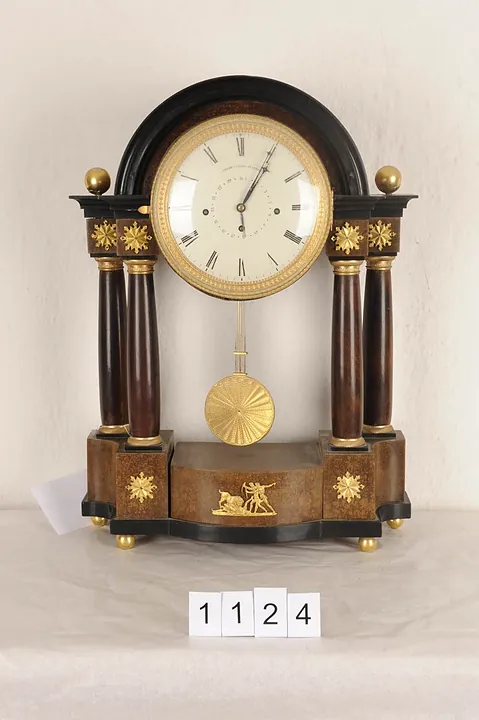
Clocks · 1814–1837
Table clock, Austria, 1814–1837
Treasury of Zwettl Abbey
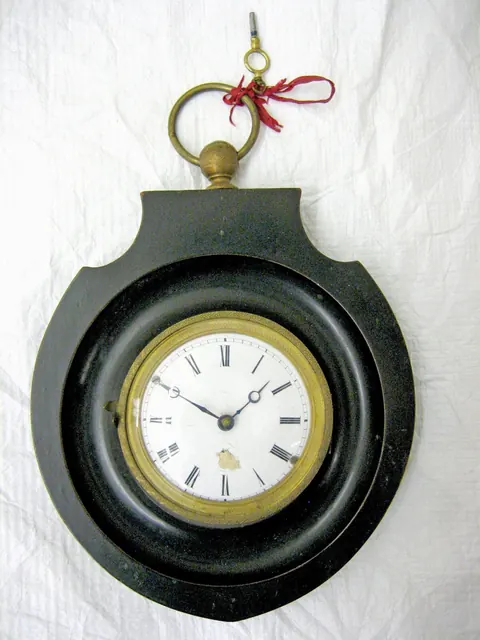
Clocks · c.1830
Clock, Austria, c.1830
Victoria and Albert Museum, London
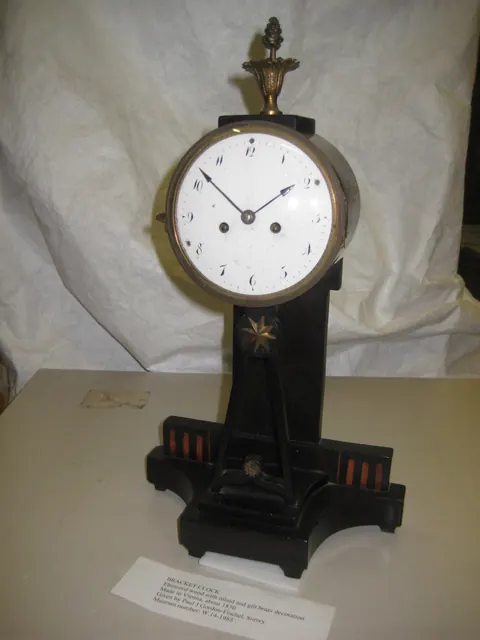
Clocks · c.1830
Clock, Austria, c.1830
Victoria and Albert Museum, London
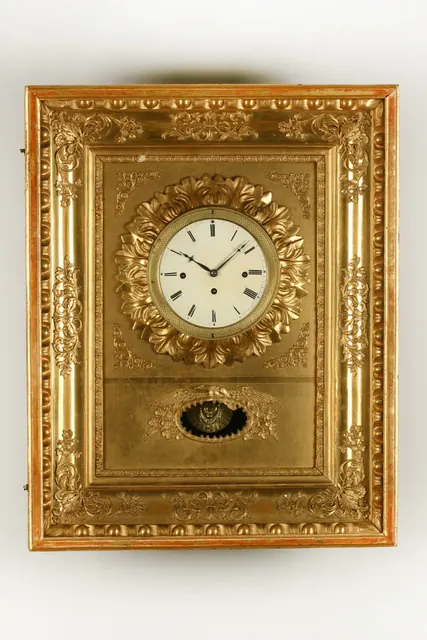
Clocks · c. 1840
Wall clock by Anton Olbrich, Austria, c. 1840
German Clock Museum
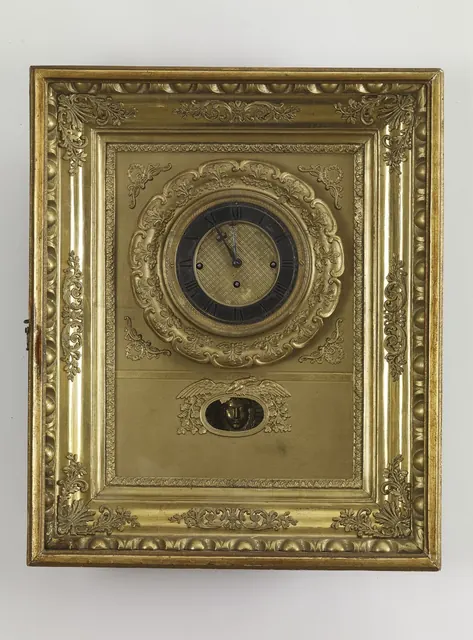
Clocks · 1820–1840
Wall clock, Austria, 1820–1840
Suomen kansallismuseo
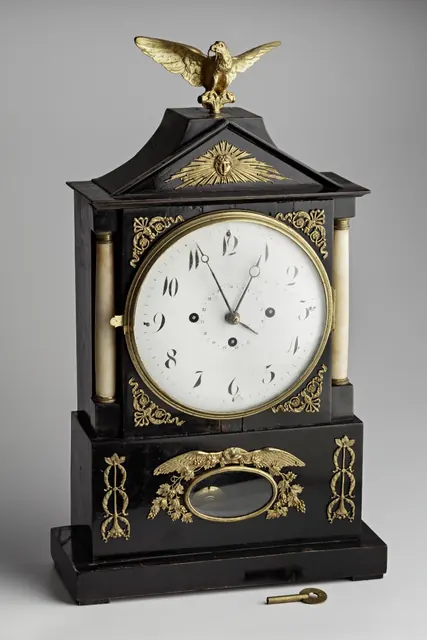
Clocks · 1831–1840
Table clock by Matthias Müller, Austria, 1831–1840
Suomen kansallismuseo
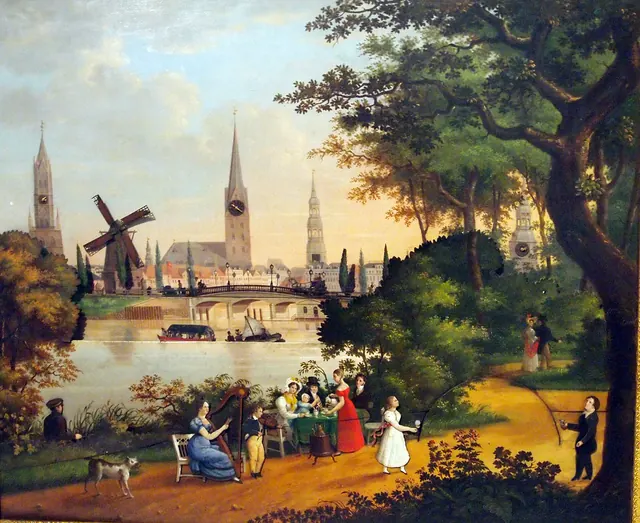
Clocks · 1830s
Picture clock with Alster panorama
Museum für Hamburgische Geschichte
Clocks · c. 1845
Longcase clock by Franz Maria Rannaz, Vienna, c. 1845
Howard Walwyn Fine Antique Clocks (dealer), London