
Wristwatches · Wristwatch
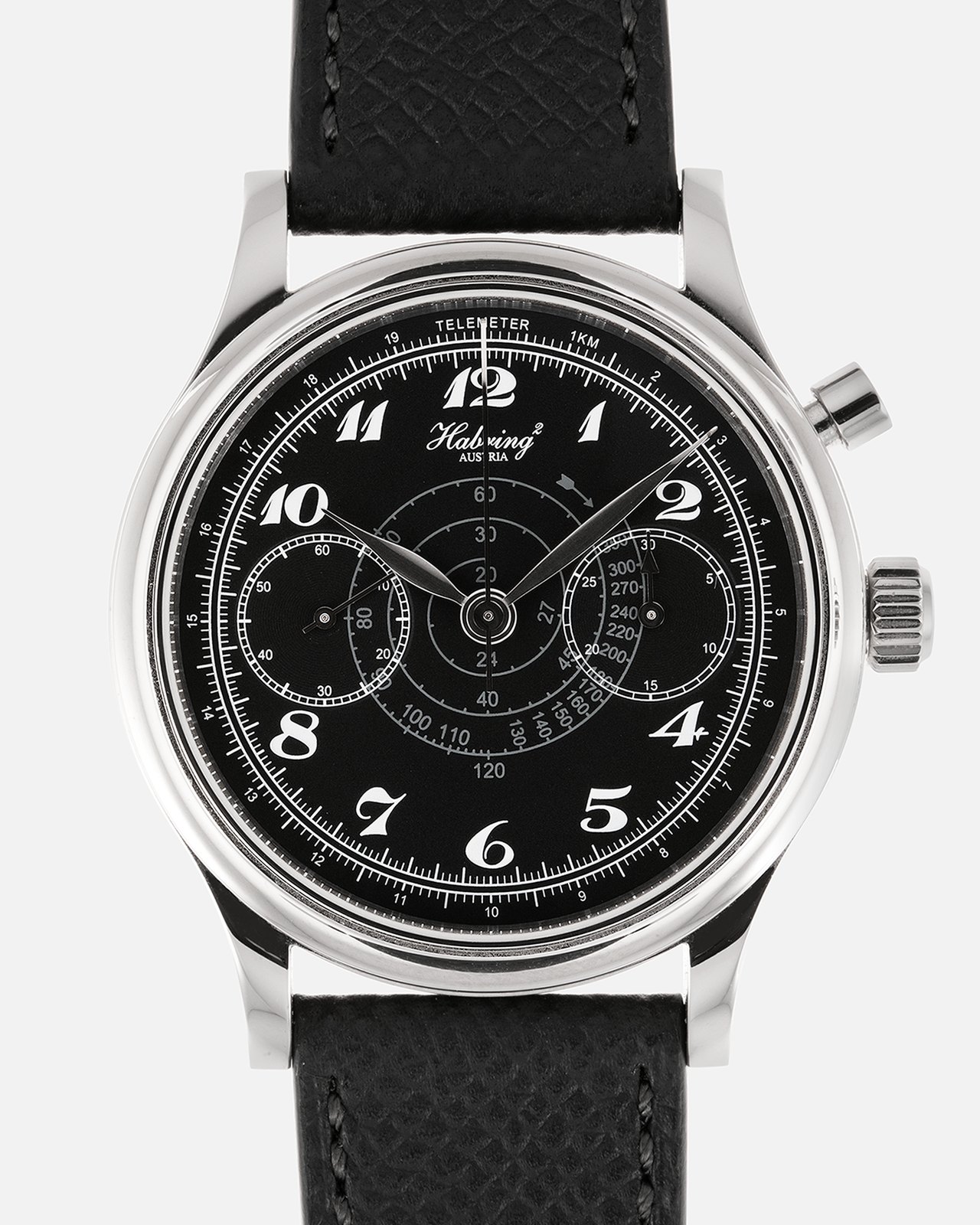
Habring Monopusher Chrono-Felix Custom, 2021
- Maker / attribution
- Habring² (maker)
- Date
- 2021
- Historical period
- Contemporary Horology (2010 – Present)
- Country of origin
- Austria
- Object type
- Wristwatch
- Dimensions
- Case 36.5 mm
- Stock no.
- Product 6785314226263
- Credit line
- Dealer listing, S.Song Watches (product 6785314226263)
- Catalogue title (original)
- Habring Monopusher Chrono-Felix Custom (English)
View the source record (dealer listing) ↗ (opens another website in a new tab)Suggest a correction
Record summary
Catalogued by S.Song Watches (dealer), Seattle (stock number Product 6785314226263), this is a wristwatch by Habring², made in Austria, dated 2021. The Atlas places it in the Contemporary Horology period (2010 – Present) of its Wristwatches collection. Recorded dimensions: Case 36.5 mm. The record is illustrated with 6 photographs.
Assembled from the source record's structured fields. Dates and attributions are given as the source states them; where a field is missing the Atlas leaves it blank rather than estimating.
Catalogue description
Dealer description — S.Song Watches
Among the myriad of watches produced over the years, there is one rare Habring2 that is arguably the most elusive and desirable among collectors, and it is almost similar to the watch we have on offer here today. Let us explain why. This particular piece right here is quite a special one. On first glance, one would assume that this is the Japan Shellman edition that was originally produced and retailed exclusively through a well-known Tokyo-based retailer – Shellman, to which only a total of 20 pieces were estimated to have been made in 36.5mm. However, this particular example we see here today is actually a customised contemporary Chrono-Felix in 38.5mm, it has been fitted with the same black dial and polished metal hands we see on the Shellman edition. Because of its extremely low production numbers (estimated at approximately 4 – 5 pieces only), it is a watch you rarely see available in the secondary market. Similar to the Shellman edition, this Chrono-Felix is also a monopusher. The monopusher chronograph is a complication long-revered among horological enthusiasts and collectors alike. With all of the chronograph functions being controlled via a single pusher, this would usually mean that a more complex mechanism is required in order to operate a watch with such functionality. This Chrono-Felix is housed in an appropriately-sized 38.5mm stainless steel case which has a stepped concave bezel and polished lugs. Looking at the custom-fitted dial, you will find key design cues from vintage chronographs of the 1940s (e.g. Longines, Patek Phillipe), such as the polished leaf hands and the beautiful Breguet numerals. It also features two sub-dials on the 9 and 3 o ‘clock positions, a telemeter scale on the outer perimeter of the dial, and a snail-shaped tachymeter scale at the center. The watch is powered by the proprietary hand-wound cal. A11C-H1, which derives from the robust and reliable Valjoux 7750. But crucially, Habring2 had modified the movement’s construction and design to a significant degree, which greatly improved its serviceability, technical qualities as well as its overall aesthetics. Ultimately, it was constructed by Habring2 to be far superior to the 7750 on several levels. Amongst other technical features, the 25-jeweled cal. A11C-H1 also boasts a respectable power reserve of 48 hours, a shock protection mechanism, and an anti-magnetic escapement with a Carl Haas hairspring that is of chronometer quality. Overall, this Chrono-Felix is an absolutely stunning watch from Habring2 featuring a great balance of complication, visual appeal, aesthetics, technical prowess, and collectability. The fact that it is fitted with a dial from one of the most sought-after Habring2 models makes it so much more compelling to own and wear.
Historical context
Contemporary Horology (2010 – Present)
Silicon components, connected watches, optical-lattice research clocks and a thriving independent scene.
Smartwatches became the world's best-selling watches, while mechanical watchmaking focuses on craft, innovation (silicon components, new escapements) and independent makers.
Read the period in the timelineMore wristwatches from this periodEarlier: Mechanical Renaissance
Atlas type guide
Wristwatches
Bracelet watches were worn by women from the early nineteenth century — Breguet made one for Caroline Murat, Queen of Naples, in 1810–12 — but the wristwatch only became a man's instrument with military use and aviation in the early twentieth century. Between the World Wars it overtook the pocket watch; the 1920s and 1930s brought rectangular Art Deco cases, water-resistant cases and the first automatic winding systems.
After 1945 the wristwatch became a carrier of identity — dress watches, sports and dive watches, chronographs, calendars — produced by Swiss, American, Japanese, German, Soviet and Chinese industries. The quartz revolution after 1969 and the mechanical renaissance since the 1990s, including the rise of independent watchmakers, complete the story.
What to look for
- The reference number (between the lugs or inside the case back) and serial number, the starting point for dating.
- The calibre: its maker and number are often stamped under the dial or on the bridge.
- Originality of dial, hands and crown — refinished ('redial') dials are common.
- Case material marks: 18K/750, 14K/585, stainless steel, gold-filled, plated.
Dating clues
- Wire-lug cases: before c. 1925.
- Water-resistant screw-down cases: from 1926.
- Quartz movements: from 1969; sapphire crystals widespread after c. 1980.
General guidance written by the Atlas editors about this kind of object. It is not a statement about this particular piece; for that, rely on the source record above and on physical examination.
Related records
Wristwatches · 2017
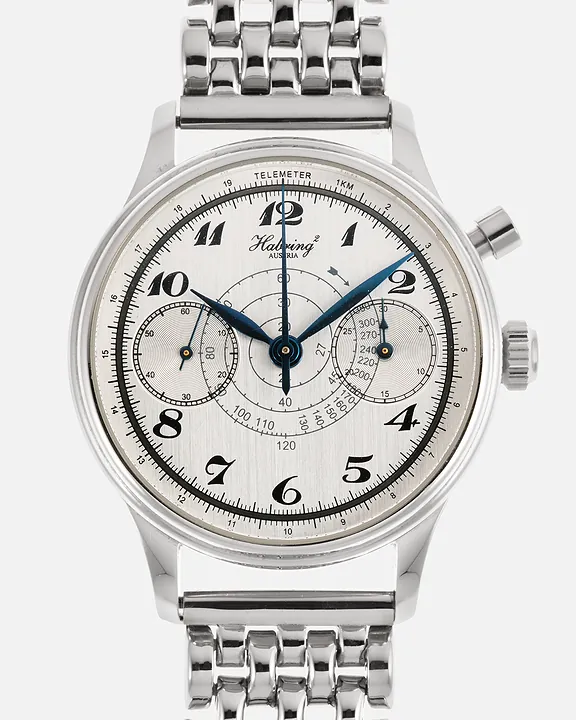
Habring Monopusher Chronograph Shellman Edition, 2017
S.Song Watches (dealer), Seattle
Wristwatches · 2020
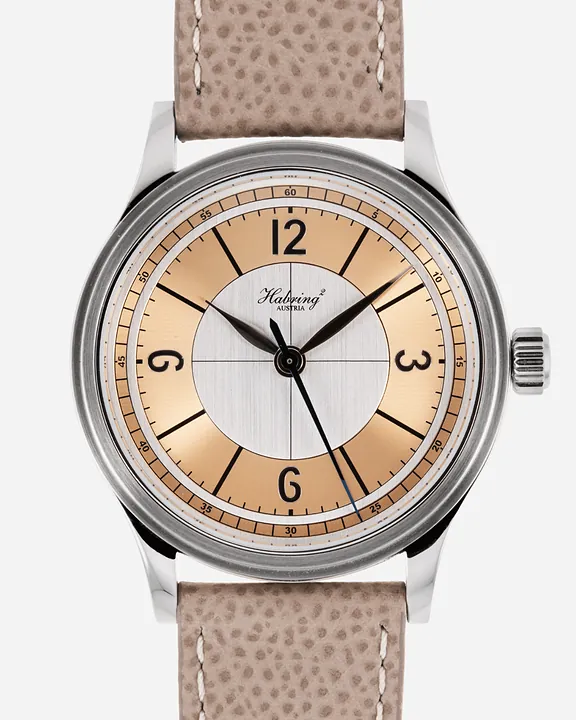
Habring Erwin LAB 02 Massena Lab, 2020
S.Song Watches (dealer), Seattle
Wristwatches · 2021
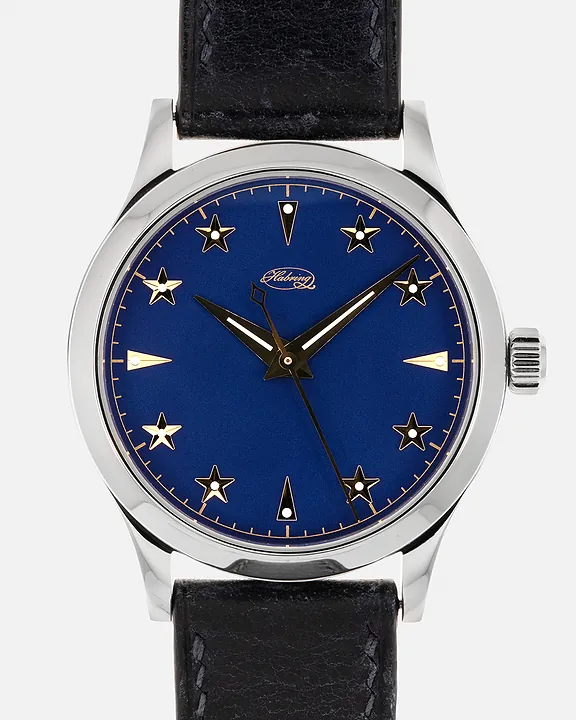
Habring Erwin Star SJX, 2021
S.Song Watches (dealer), Seattle
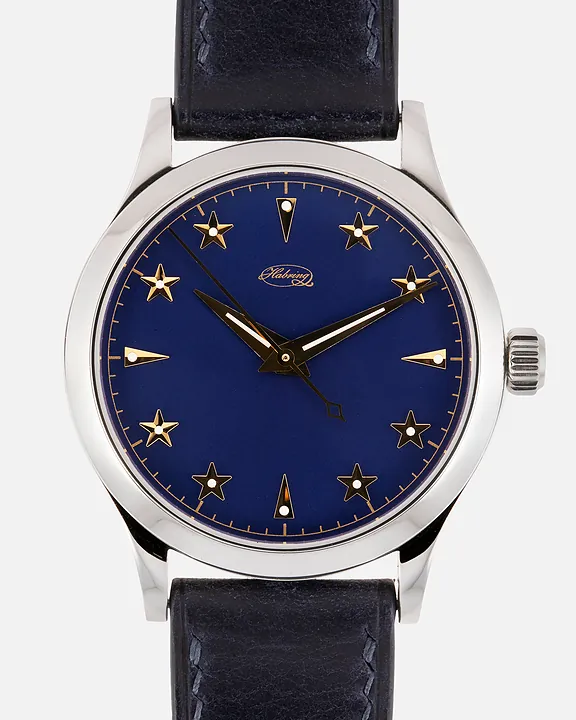
Wristwatches · 2021
Habring Erwin Star SJX, 2021
S.Song Watches (dealer), Seattle
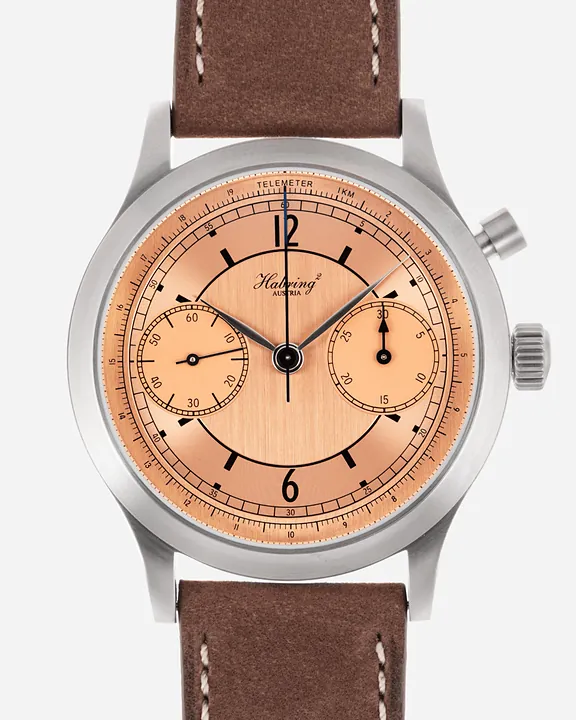
Wristwatches · 2021
Habring Montre de Souscription 1 Monochrome Monopusher, 2021
S.Song Watches (dealer), Seattle
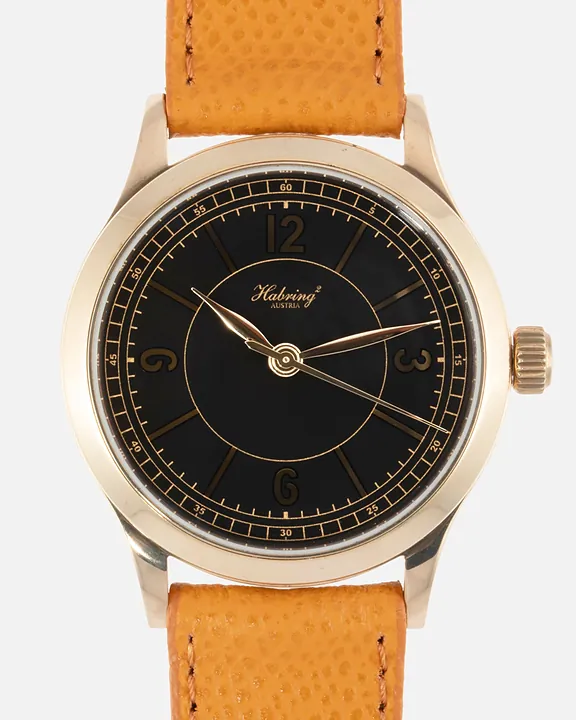
Wristwatches · 2018
Habring Erwin LAB 01 for Massena Lab, 2018
S.Song Watches (dealer), Seattle
Wristwatches · 2010
Wristwatch, 2010
Modemuseum Hasselt
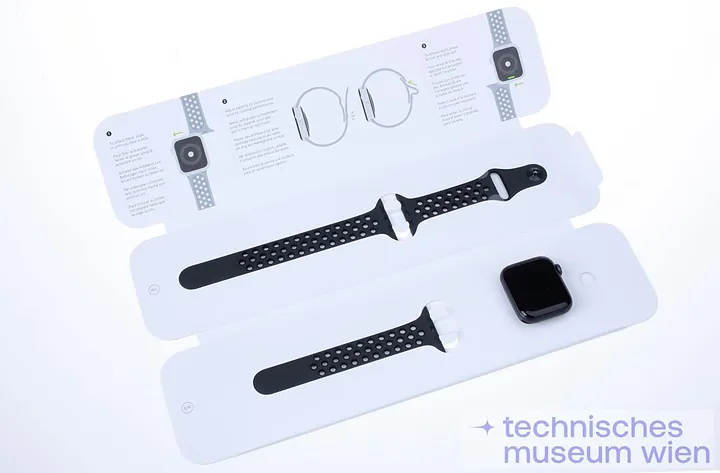
Wristwatches · 2018 (Series 4 released in September 2018; '1977' in the source is the model number A1977)
Apple Watch Series 4 (GPS, 40 mm, model A1977), 2018
Vienna Museum of Science and Technology