
Clocks · Longcase clock
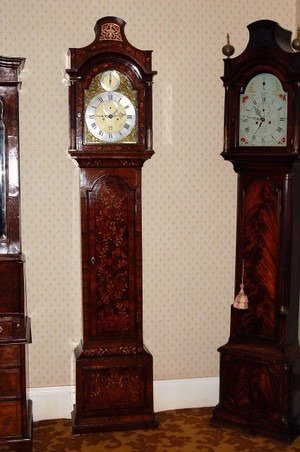
Grandfather Clock by Ellicott, London, c. 1765
- Maker / attribution
- Ellicott (maker)
- Date
- c. 1765
- Historical period
- Precision & Scientific Horology (1750 – 1850)
- Country of origin
- England
- Place
- London
- Object type
- Longcase clock
- Stock no.
- 296
- Credit line
- Dealer listing, Pendulum of Mayfair (296)
- Catalogue title (original)
- Antique Grandfather Clock by Ellicott – London C1765 (English)
View the source record (dealer listing) ↗ (opens another website in a new tab)Suggest a correction
Record summary
Catalogued by Pendulum of Mayfair (dealer), London (stock number 296), this is a longcase clock by Ellicott, made in London, England, dated c. 1765. The Atlas places it in the Precision & Scientific Horology period (1750 – 1850) of its Clocks collection. The record is illustrated with 6 photographs.
Assembled from the source record's structured fields. Dates and attributions are given as the source states them; where a field is missing the Atlas leaves it blank rather than estimating.
Catalogue description
Dealer description — Pendulum of Mayfair
An outstanding ‘8-day’ walnut veneered Longcase clock. |Featuring an arched brass dial by Ellicott of London. The dial showing chapter ring and spandrels. Also with seconds and calendar features & finely matted centre. The 5 pillar movement of outstanding quality with ‘dead-beat’ escapement. The going side running on a 3lb weight only! The cabinet of typical London design but made using fine figured walnut veneers. Outstanding inlays of various woods. One of the first clocks we have seen to be inlaid so profusely and so finely. Absolutely stunning example, the colour and patination are also superb. A real collector’s clock by an eminent clockmaker. Master of the Clockmaker’s Company. Clockmaker to King George III. Antique Grandfather Clocks
Historical context
Precision & Scientific Horology (1750 – 1850)
Harrison solves longitude; Mudge invents the lever; Breguet's Paris workshop defines the modern watch.
The age of the deadbeat escapement, compensated pendulums and observatory regulators. Domestic clocks spread through the middle classes: English longcase and bracket clocks, French gilt-bronze mantel clocks, Viennese Biedermeier wall clocks, Black Forest painted-shield clocks, and the first American shelf clocks.
Read the period in the timelineMore clocks from this periodEarlier: Early Modern Horology
Atlas type guide
Longcase (tall-case or grandfather) clocks
The longcase clock was born from two seventeenth-century innovations: Christiaan Huygens's pendulum (1656–57) and the anchor escapement (c. 1670). A long seconds pendulum, nearly a metre long, swings with a small arc, and enclosing it together with the driving weights in a tall wooden case protected the mechanism and created a new piece of furniture. London makers such as Ahasuerus Fromanteel, Thomas Tompion and Joseph Knibb set the pattern.
By the eighteenth century longcase clocks were made throughout Britain, the Netherlands, Scandinavia (the Swedish Mora clock), France (the Comtoise from the Franche-Comté), Germany and colonial America. Eight-day movements with two weights became standard in better clocks; thirty-hour clocks with one weight and a rope or chain were cheaper alternatives.
What to look for
- Winding holes in the dial: two (eight-day, going and striking) or none (thirty-hour, pulled up by a chain).
- Brass dials with applied chapter rings (earlier) versus painted iron 'white' dials (after c. 1770 in Britain).
- Moon-phase arches, date apertures, seconds dials and maker's name on the dial.
- Case woods and style: ebonised, walnut marquetry, lacquer, oak or mahogany; regional styles from London, Lancashire, Scotland or America.
- Whether the movement and dial match the case — 'marriages' are common.
Dating clues
- Square brass dials suggest c. 1670–1720; arched brass dials c. 1715–1790.
- Painted (white) dials were made by Birmingham dial-makers from about 1772.
- Comtoise clocks with repoussé pendulums are mostly nineteenth century.
General guidance written by the Atlas editors about this kind of object. It is not a statement about this particular piece; for that, rely on the source record above and on physical examination.
Read next:Anchor (recoil) escapementDeadbeat escapementAnchor escapement
Related records
Clocks · c. 1765–1770
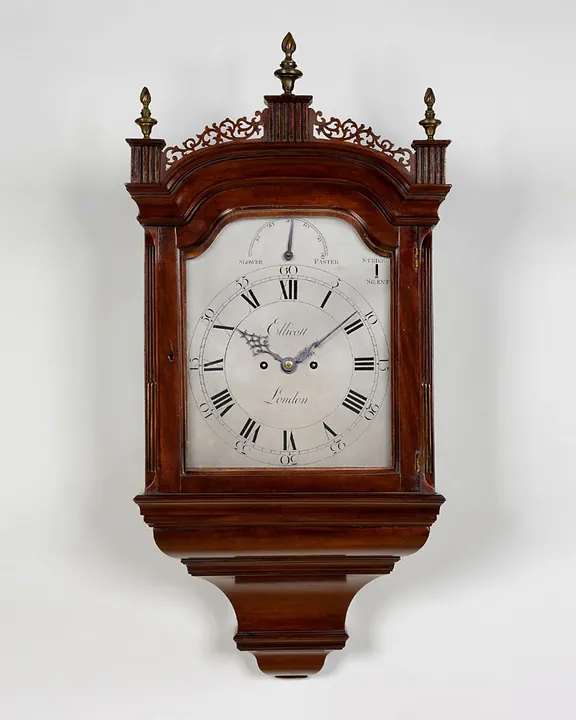
Wall clock by Ellicott, London, c. 1765–1770
Howard Walwyn Fine Antique Clocks (dealer), London
Clocks · 1760–1770
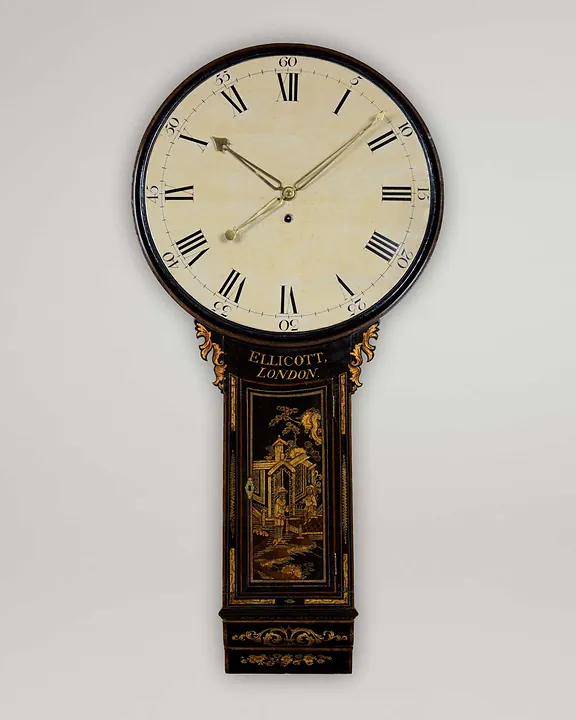
Tavern clock by Ellicott, London, 1760–1770
Howard Walwyn Fine Antique Clocks (dealer), London
Pocket Watches · 1851 (hallmarked London)
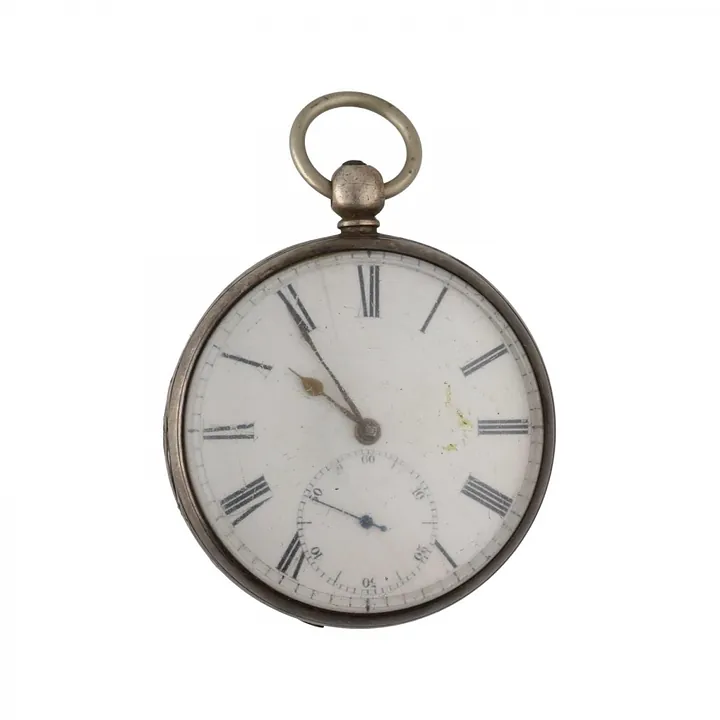
Silver fusee rack lever pocket watch by Ellicott, London, hallmarked London 1851
Gardiner Houlgate (auction house), Corsham
Clocks · 1740–1760
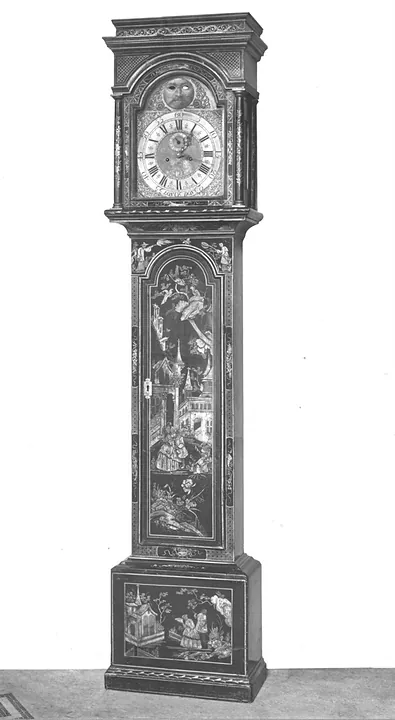
Longcase clock, English, 1740–1760, japanned wood, John Ellicott
Victoria and Albert Museum, London
Clocks · c.1750
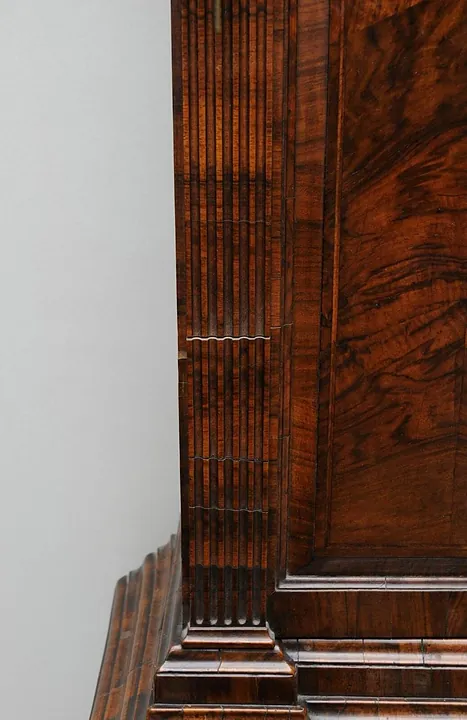
Long-case clock, English, ca. 1750, by Richard Peyton of Gloucester
Victoria and Albert Museum, London
Clocks · 1751
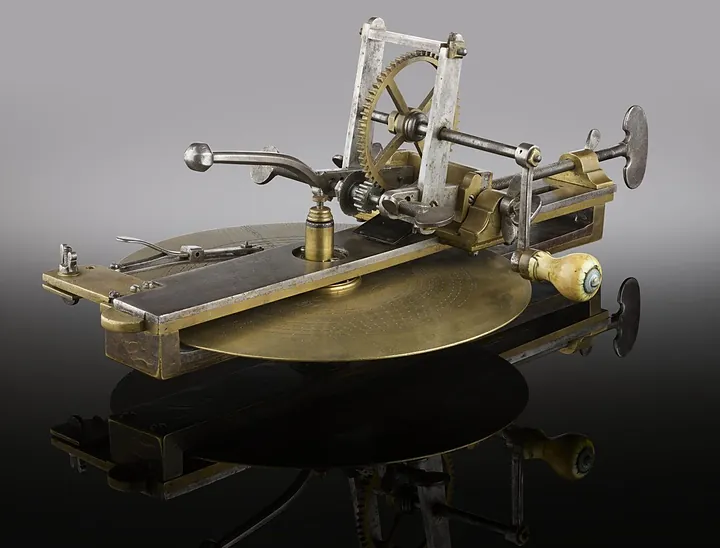
Large wheel engine, signed and dated "John Tipping, Whildon Green, 1751".
Science Museum Group, London
Clocks · 1755
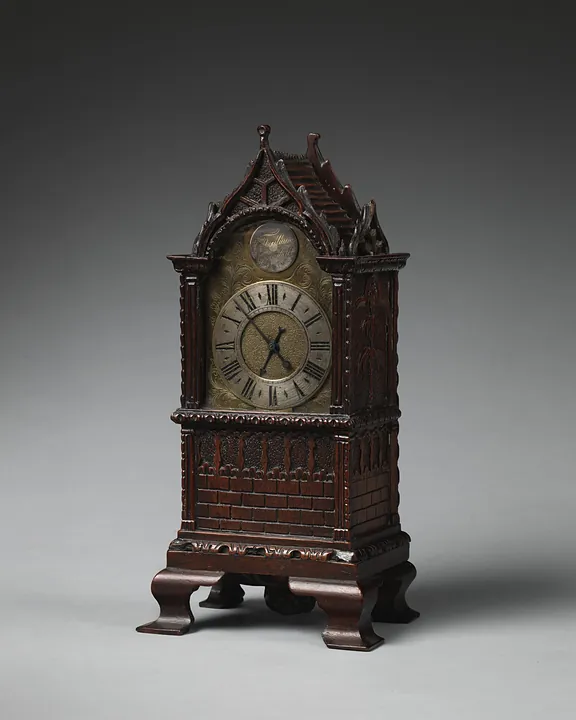
Bracket clock by John Fordham, England, 1755
The Metropolitan Museum of Art, New York
Clocks · c. 1760
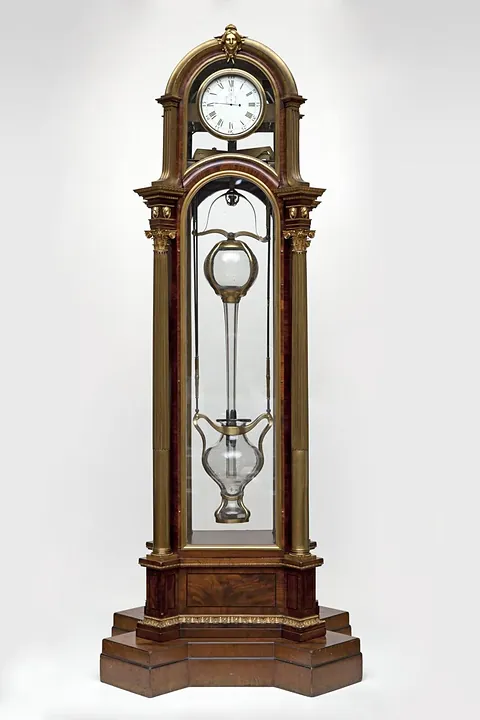
Longcase clock by James Cox, England, c. 1760
Victoria and Albert Museum, London