
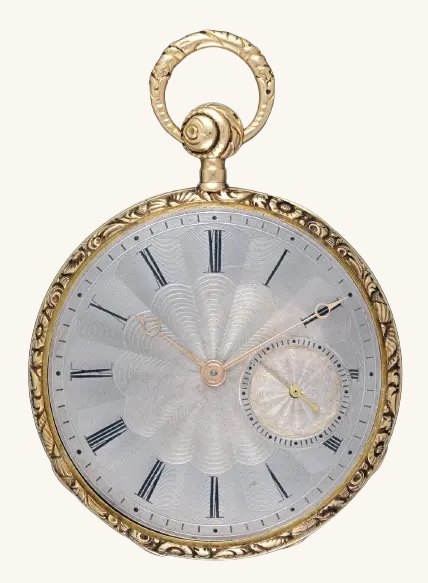
Pocket Watches · Pocket watch
Gold Quarter Repeater by Vachron & Constantin, c. 1840
- Maker / attribution
- Vacheron Constantin (maker)
- Date
- c. 1840
- Historical period
- Precision & Scientific Horology (1750 – 1850)
- Country of origin
- Switzerland
- Object type
- Pocket watch
- Materials / technique
- gold
- Dealer
- WatchMuseum.org shop
- Stock no.
- Product 6173
- Credit line
- Dealer listing, WatchMuseum.org shop (product 6173)
- Catalogue title (original)
- Gold Quarter Repeater by Vachron & Constantin (English)
View the source record (dealer listing) ↗ (opens another website in a new tab)Suggest a correction
Record summary
Catalogued by WatchMuseum.org shop (stock number Product 6173), this is a pocket watch by Vacheron Constantin, made in Switzerland, dated c. 1840. The Atlas places it in the Precision & Scientific Horology period (1750 – 1850) of its Pocket Watches collection. Materials and techniques recorded by the source: gold. The record is illustrated with 6 photographs.
Assembled from the source record's structured fields. Dates and attributions are given as the source states them; where a field is missing the Atlas leaves it blank rather than estimating.
Catalogue description
Dealer description — WatchMuseum.org shop
The “Gold Quarter Repeater by Vachron & Constantin – Circa 1840” is a stunning testament to the exquisite craftsmanship and timeless elegance of horological artistry from the mid-19th century. This extraordinary timepiece, crafted by the renowned Vachron & Constantin, embodies the pinnacle of watchmaking excellence of its era, featuring a sophisticated quarter repeater mechanism that chimes the hours and quarters on demand, a function highly prized by collectors and connoisseurs alike. Encased in luxurious gold, this watch not only serves as a precise instrument of timekeeping but also as a piece of wearable art, reflecting the opulence and grandeur of its historical period. Its intricate design and mechanical ingenuity are a tribute to the meticulous attention to detail and innovative spirit that defined Vachron & Constantin’s legacy. Owning this piece is akin to holding a piece of history, a relic from a time when watches were not merely functional devices but symbols of status and sophistication. Whether you are a seasoned collector or a lover of fine antiques, this Gold Quarter Repeater is sure to captivate and inspire, offering a glimpse into the rich heritage of watchmaking and the enduring allure of classic design. Presenting a remarkable timepiece from the mid 19th Century, this Swiss quarter repeating cylinder watch was crafted by Vacheron and Constantin. Housed in an exquisite engine turned open face case, this watch is a true collector’s item. The watch features a keywind gilt bar movement with a suspended going barrel and a plain cock with a blue steel regulator. It boasts a plain three arm gilt balance with a blue steel spiral hairspring. The polished steel cylinder and escape wheel add to its impeccable craftsmanship. An intriguing feature of this watch is its push pendant quarter repeating mechanism, which chimes on two polished steel gongs. The engine turned silver dial showcases Roman numerals and a subsidiary seconds offset at four o’clock. The elegant gold Breguet hands add a touch of sophistication. Encased in an 18 carat gold open face case, the watch is adorned with finely chased and engraved bezels, a push pendant, and a bow. The engine turned back features a vacant shield shaped cartouche, allowing for personalization. To wind and set the watch, simply use the signed gold cuvette which displays details of the movement. It also comes with an unusual gold key in the form of a mortice lock key. This exceptional timepiece is accompanied by a small horn presentation case, marked “E.L – 14 Feb 1882.” Given its excellent overall condition, with crisp engine turning, it is a rare find indeed. The fact that it was presented in a case marked with a date suggests that it may have been given as a Valentine’s Day gift. Don’t miss the opportunity to own this extraordinary piece of horological history from one of the most renowned watchmakers of the 19th Century. Signed Vacheron & Constantin Place of Origin: Geneve Date of Manufacture: Circa 1840 Diameter: 42 mm Condition: Good
Historical context
Precision & Scientific Horology (1750 – 1850)
Harrison solves longitude; Mudge invents the lever; Breguet's Paris workshop defines the modern watch.
From 1750 to 1850 the watch became a precision instrument. Mudge's lever escapement, the cylinder escapement, Lépine's thin bar calibre, Breguet's innovations (overcoil, tourbillon, perpétuelle) and the pocket chronometer of Arnold and Earnshaw all date from this period, while verge watches remained common in cheaper production.
Read the period in the timelineMore pocket watches from this periodEarlier: Early Modern Horology
Atlas type guide
Repeating watches
Before electric light, telling the time in the dark was a real problem. Repeating watches strike the time on demand when a slide or push-piece is operated: quarter repeaters sound hours and quarters, minute repeaters hours, quarters and minutes. Edward Barlow and Daniel Quare disputed the invention in London in the 1680s. Early repeaters struck on a bell inside the case; Abraham-Louis Breguet introduced the gong (a coiled steel wire) around 1780, allowing thinner watches.
Repeaters require a separate train with racks, snails and a governor to control the striking speed, and are among the most demanding complications to make and adjust. Swiss makers of the Vallée de Joux specialised in repeating ébauches in the nineteenth century.
What to look for
- A slide on the case band or a push-piece through the pendant.
- Gongs encircling the movement (after c. 1780) or a bell in the case (earlier); pierced case for sound.
- The racks, snails and governor visible under the dial or on the movement.
- Terms such as 'Minutes', 'Quarts' or 'Répétition' on the dial or cuvette.
Dating clues
- Bell-striking quarter repeaters: c. 1690–1800.
- Gong repeaters and dumb repeaters (striking on the case): after c. 1780.
- Minute repeaters became more common after c. 1830 with Vallée de Joux ébauches.
General guidance written by the Atlas editors about this kind of object. It is not a statement about this particular piece; for that, rely on the source record above and on physical examination.
Read next:Minute repeater
Related records
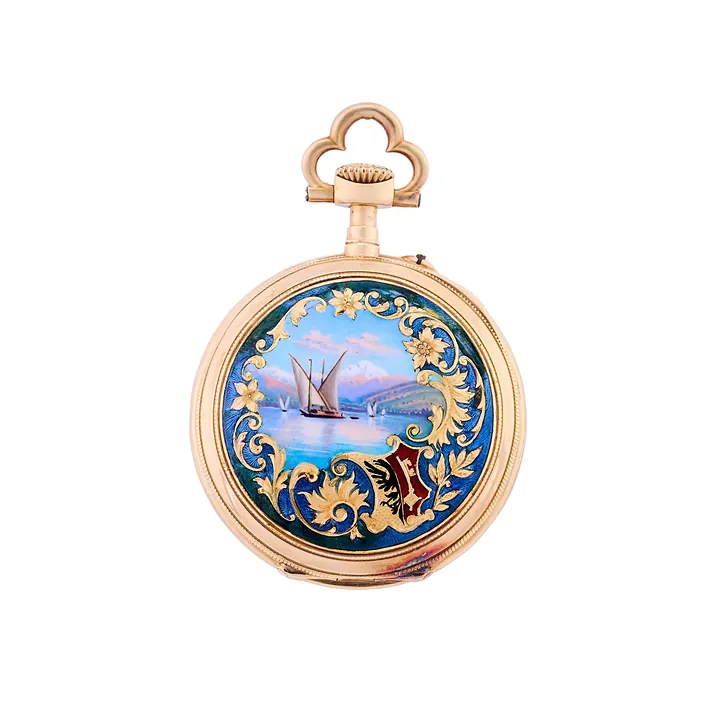
Pocket Watches · c. 1896
Vacheron Constantin “grand TIR de L’exposition Nationale, Genève 1896, c. 1896
Antiquorum auction archive, Geneva
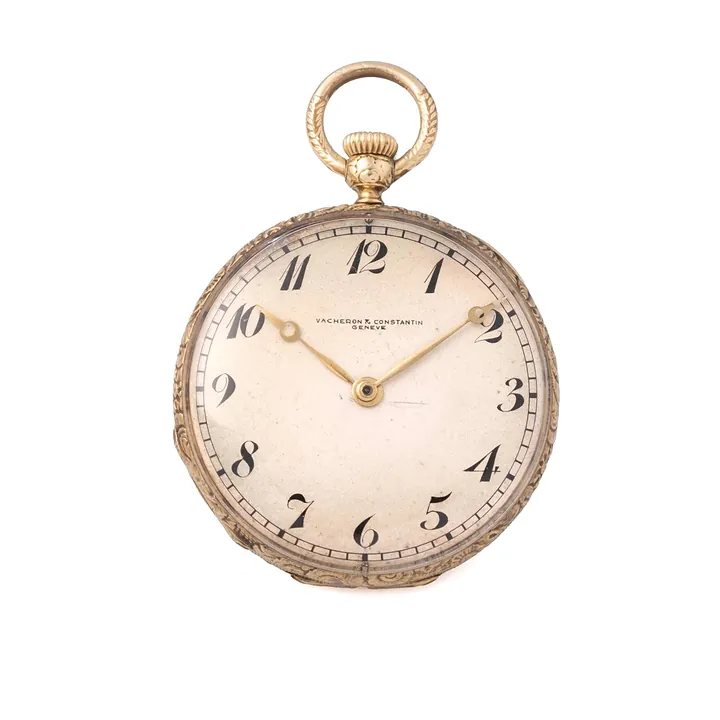
Pocket Watches · c. 1940
Vacheron Constantin pocket watch, ref. 345, c. 1940
Antiquorum auction archive, Geneva
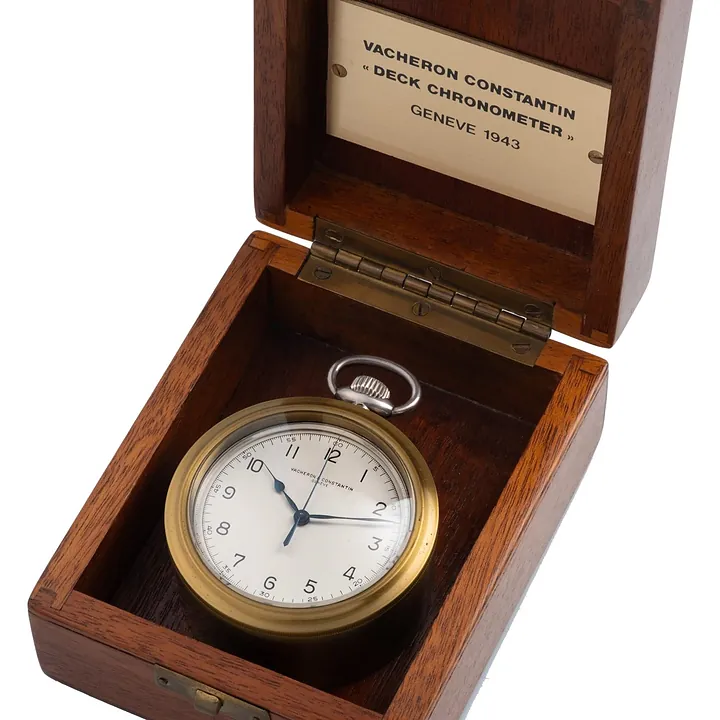
Pocket Watches · c. 1945
Vacheron Constantin pocket chronometer, c. 1945
Antiquorum auction archive, Geneva
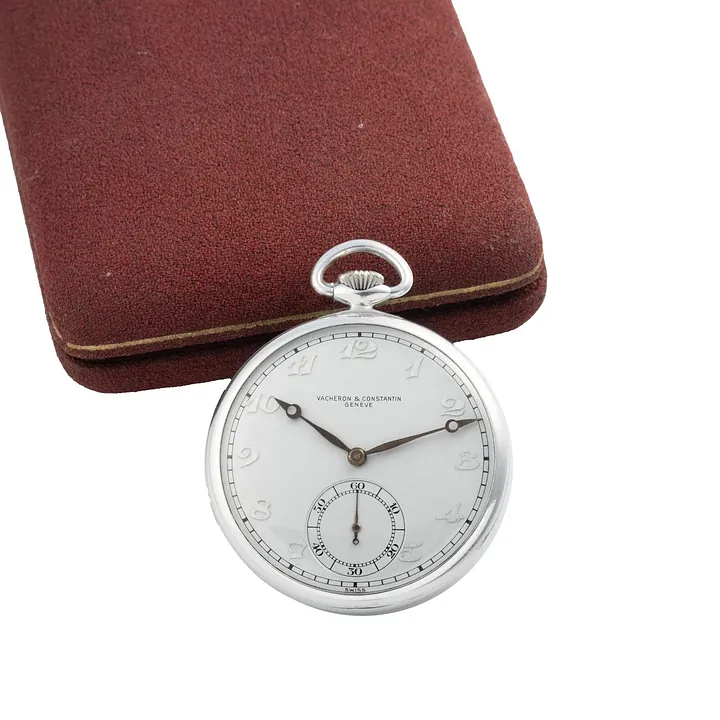
Pocket Watches · c. 1945
Vacheron Constantin watch, c. 1945
Antiquorum auction archive, Geneva
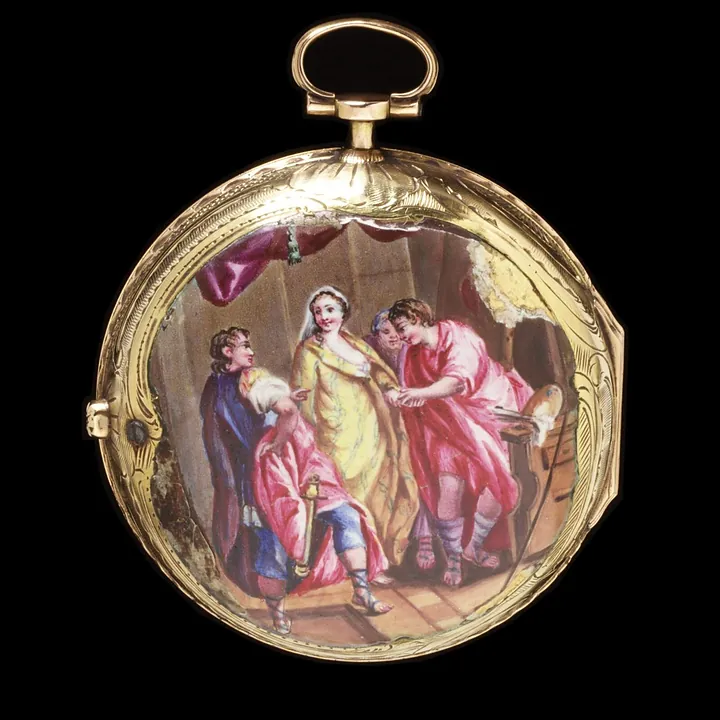
Pocket Watches · 1750-60
Watch by Noël Balthazard, Switzerland, 1750-60
Victoria and Albert Museum, London
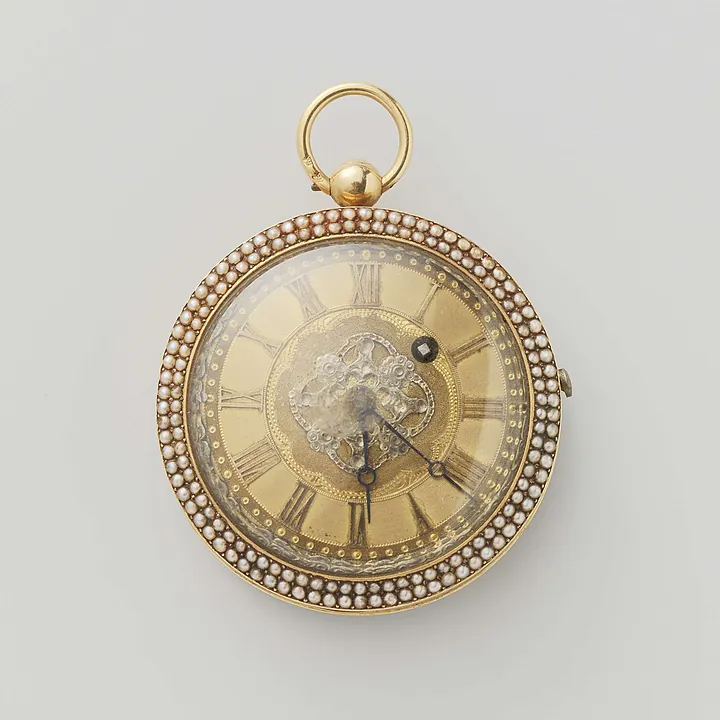
Pocket Watches · 1754
Pocket watch, Switzerland, 1754
Rijksmuseum
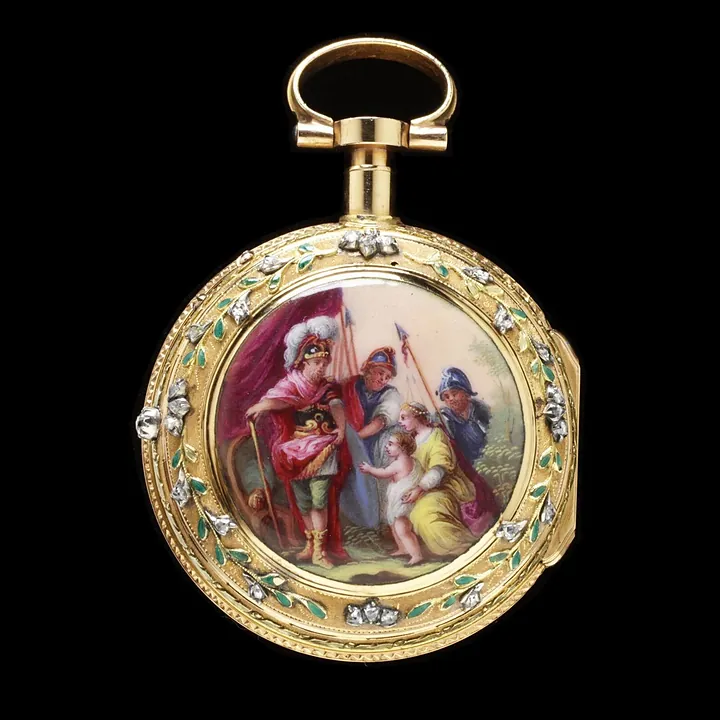
Pocket Watches · 1765-70
Watch and case by Jean Fazy, Switzerland, 1765-70
Victoria and Albert Museum, London
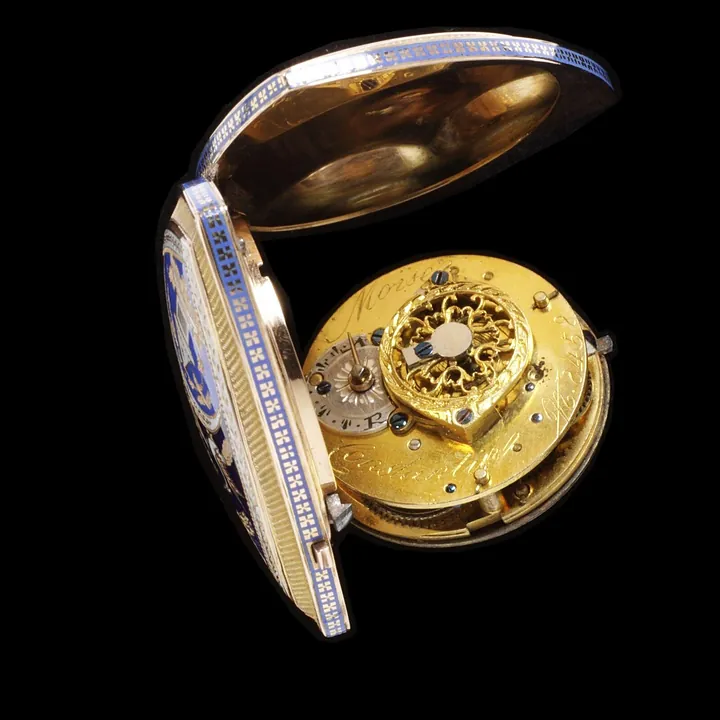
Pocket Watches · c.1790
Enamelled gold watch signed 'Moise Constantin', Geneva, c.1790
Victoria and Albert Museum, London