
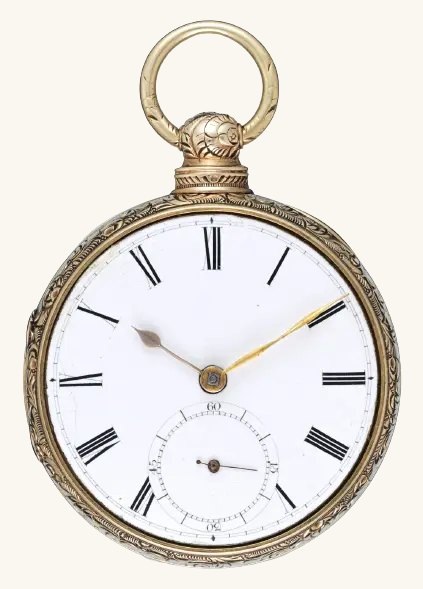
Pocket Watches · Pocket watch
Gold English Massey III Lever, c. 1830
- Maker / attribution
- Unrecorded in source
- Date
- c. 1830
- Historical period
- Precision & Scientific Horology (1750 – 1850)
- Country of origin
- England
- Object type
- Pocket watch
- Materials / technique
- gold
- Dealer
- WatchMuseum.org shop
- Stock no.
- Product 6136
- Credit line
- Dealer listing, WatchMuseum.org shop (product 6136)
- Catalogue title (original)
- Gold English Massey III Lever (English)
View the source record (dealer listing) ↗ (opens another website in a new tab)Suggest a correction
Record summary
Catalogued by WatchMuseum.org shop (stock number Product 6136), this is a pocket watch, made in England, dated c. 1830. The Atlas places it in the Precision & Scientific Horology period (1750 – 1850) of its Pocket Watches collection. Materials and techniques recorded by the source: gold. The record is illustrated with 6 photographs.
Assembled from the source record's structured fields. Dates and attributions are given as the source states them; where a field is missing the Atlas leaves it blank rather than estimating.
Catalogue description
Dealer description — WatchMuseum.org shop
Immerse yourself in the elegance of the early 19th century with the exquisite “Gold English Massey III Lever – Circa 1830,” a masterful representation of timeless craftsmanship and sophistication. This remarkable pocket watch embodies the pinnacle of horological artistry from a bygone era, capturing the essence of English watchmaking excellence. Its design is a testament to the intricate skill and dedication of the artisans who meticulously crafted each component. The watch features the renowned Massey type three-lever movement, a hallmark of precision and reliability that was revolutionary in its time. Encased in a resplendent gold exterior, this piece not only serves as a functional timekeeping instrument but also as a luxurious accessory that exudes opulence and refinement. The gold casing, with its warm, lustrous glow, adds a touch of grandeur, making it a standout piece in any collection. This pocket watch is not merely an accessory; it is a historical artifact that tells a story of innovation and elegance, offering a glimpse into the rich heritage of 19th-century English watchmaking. Whether you are a seasoned collector or a connoisseur of fine timepieces, the ”Gold English Massey III Lever – Circa 1830″ is a treasure that promises to captivate and inspire, embodying the enduring allure of a classic era. This is a stunning early 19th-century English Massey type three-lever pocket watch. It comes in a beautiful gold open face case, which adds to its elegance and charm. The watch features a full plate gilt keywind fusee movement, with a dust cover that has been delicately pierced to reveal the intricacies of the cock and polished barrel setup. The cock is engraved with the word “Patent” and the foot, adding to its unique design. The watch also includes a diamond endstone and a blue steel Bosley regulator, adding a touch of sophistication. The plain three-arm polished steel balance and blue steel spiral hairspring ensure accurate timekeeping. The large screwed-in Liverpool window jewelling is present in all the pivots, except the center, including the fusee. This adds to the watch’s durability and longevity. The Massey type three-lever escapement is another notable feature of this watch, offering smooth and precise movement. Additionally, there is a lateral steel lever that can be used to stop the watch under the front bezel, providing convenience and ease of use. The white enamel dial features Roman numerals, a subsidiary seconds dial, and elegant gilt hands. The decorative 18-carat gold open face case is beautifully chased and engraved, with intricate detailing on the middle, bezels, pendant, and bow. The engine-turned back features a captivating vacant cartouche at the center, adding to its visual appeal. The maker’s mark “F & F” and a corresponding number can be found on the case, matching the markings on the movement. Overall, this early 19th-century English Massey pocket watch is a true work of art, showcasing exceptional craftsmanship and attention to detail. Its exquisite design, combined with its high-quality movement, makes it a valuable and desirable timepiece. Signed J Edwards Place of Origin: Liverpool Date of Manufacture: Circa1830 Diameter: 49 mm Depth:11 mm Condition: Good
Historical context
Precision & Scientific Horology (1750 – 1850)
Harrison solves longitude; Mudge invents the lever; Breguet's Paris workshop defines the modern watch.
From 1750 to 1850 the watch became a precision instrument. Mudge's lever escapement, the cylinder escapement, Lépine's thin bar calibre, Breguet's innovations (overcoil, tourbillon, perpétuelle) and the pocket chronometer of Arnold and Earnshaw all date from this period, while verge watches remained common in cheaper production.
Read the period in the timelineMore pocket watches from this periodEarlier: Early Modern Horology
Atlas type guide
Pocket watches
The pocket watch was the dominant personal timekeeper from the late seventeenth century until the First World War. Its development tracks the history of the escapement: verge watches with fusees until the late eighteenth century; Thomas Mudge's lever escapement (c. 1755) and the cylinder escapement popularised by George Graham and later by Swiss makers; and the Swiss and English lever watches of the nineteenth century. Lépine's bar-bridge calibre and keyless winding made watches thinner and easier to use.
Industrialisation transformed the trade: American factories such as Waltham (from 1850) and Elgin produced interchangeable parts by machine, and Swiss makers responded with their own mechanisation after the 1876 Philadelphia Exhibition. By 1900 a reliable watch was affordable to millions; the finest makers continued to produce complications and precision watches.
What to look for
- The escapement: verge (crown wheel), cylinder, duplex, English or Swiss lever.
- Key winding (a square arbor in dial or back) or keyless crown winding.
- Signatures and serial numbers on the movement, dial and inside case back.
- Hallmarks, case maker's marks and gold or silver standards stamped in the case.
- Dial material: enamel, silver, gold, later printed metal.
Dating clues
- Verge watches dominate before c. 1800; cylinder watches c. 1770–1900; lever watches after c. 1820.
- Keyless winding: increasingly common after c. 1860.
- Manufacturer serial number lists exist for Waltham, Elgin, Longines, Omega, Patek Philippe and others.
General guidance written by the Atlas editors about this kind of object. It is not a statement about this particular piece; for that, rely on the source record above and on physical examination.
Read next:Verge escapementIdentification Centre
Related records
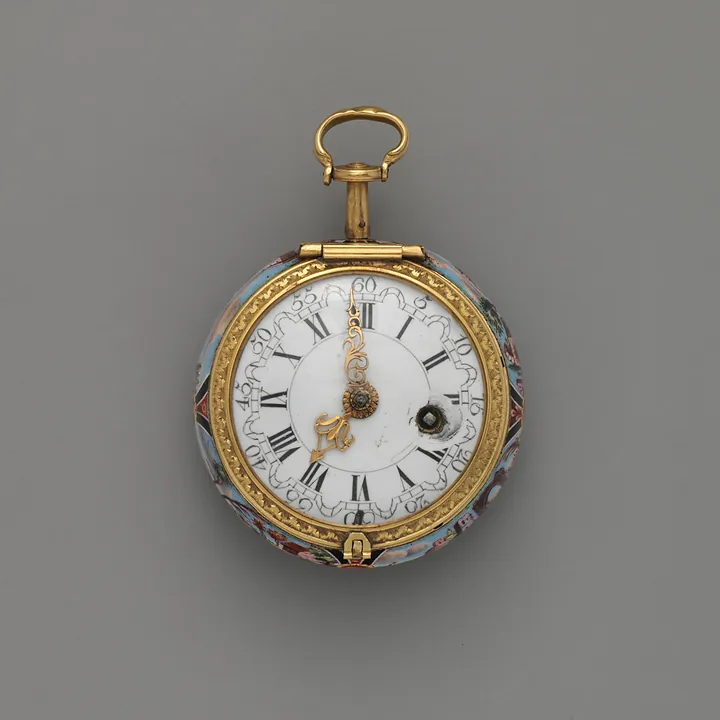
Pocket Watches · c. 1740–60
Watch by Charles Cabrier II, England, c. 1740–60 (The Met 17.190.1458)
The Metropolitan Museum of Art, New York
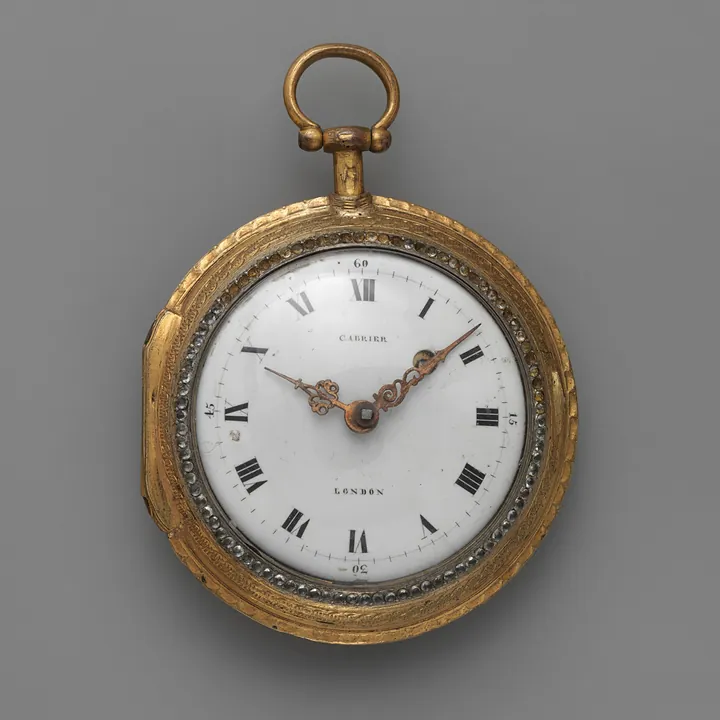
Pocket Watches · c. 1740–60
Watch by Charles Cabrier II, England, c. 1740–60 (The Met 17.190.1461)
The Metropolitan Museum of Art, New York
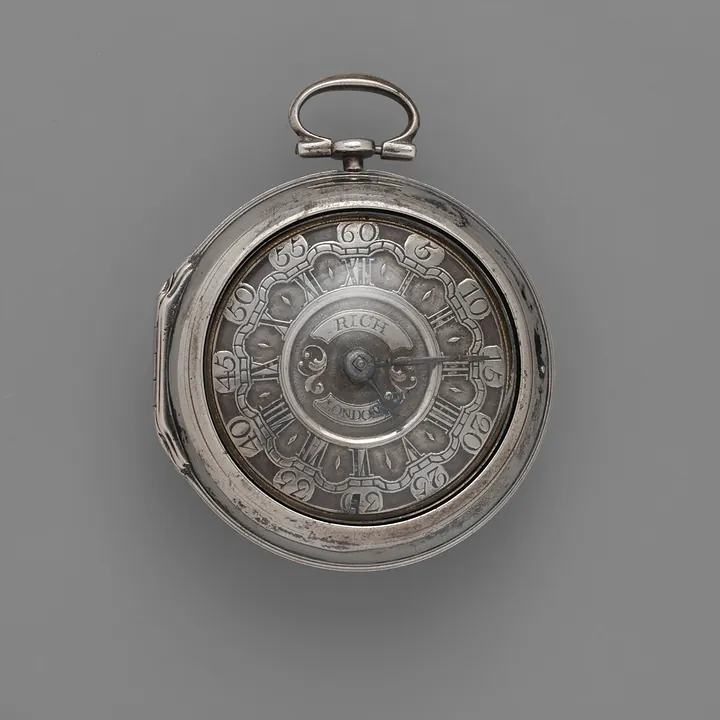
Pocket Watches · c. 1751–52
Watch by John Rich, England, c. 1751–52
The Metropolitan Museum of Art, New York
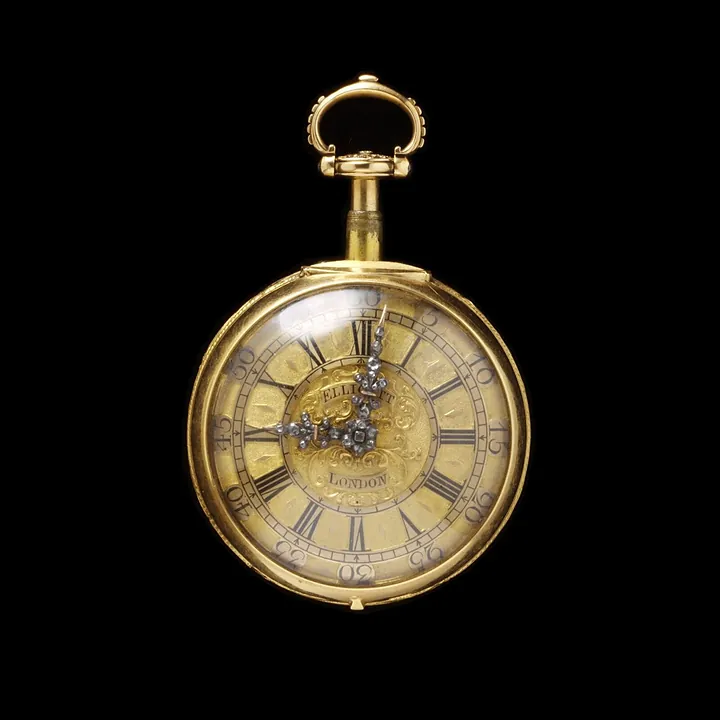
Pocket Watches · c. 1753
Gold watch, signed 'Jno. Ellicott, London, 3719', the inner case pierced and engraved, with a casemaker's mark 'JB', London, about 1753
Victoria and Albert Museum, London
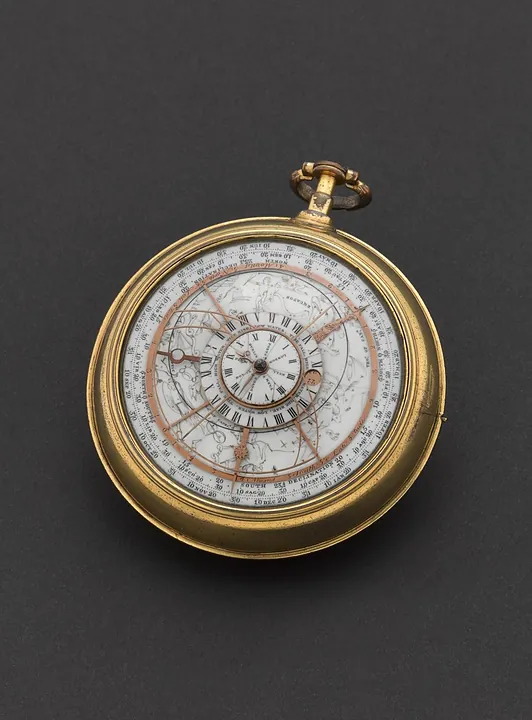
Pocket Watches · 1750–1810
Astronomical watch by George Margetts No.3043 in pair case, 1750–1810
Science Museum Group, London
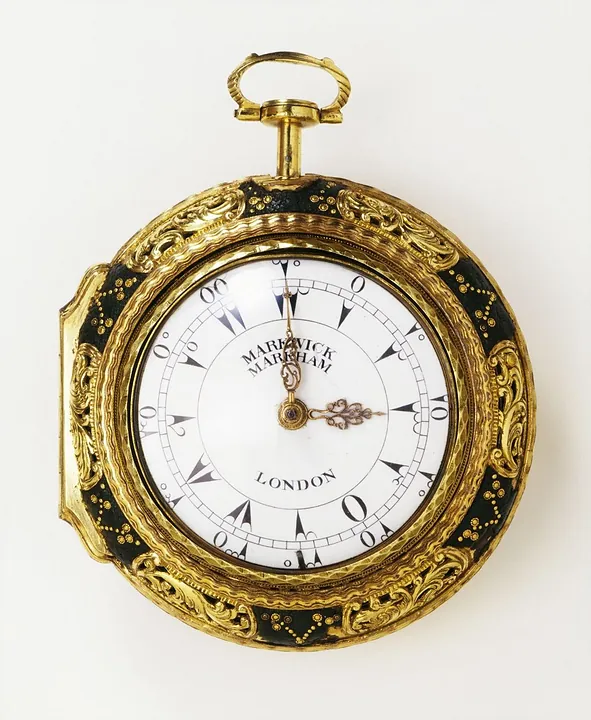
Pocket Watches · 1750–1775
Watch made for the Turkish market
Victoria and Albert Museum, London
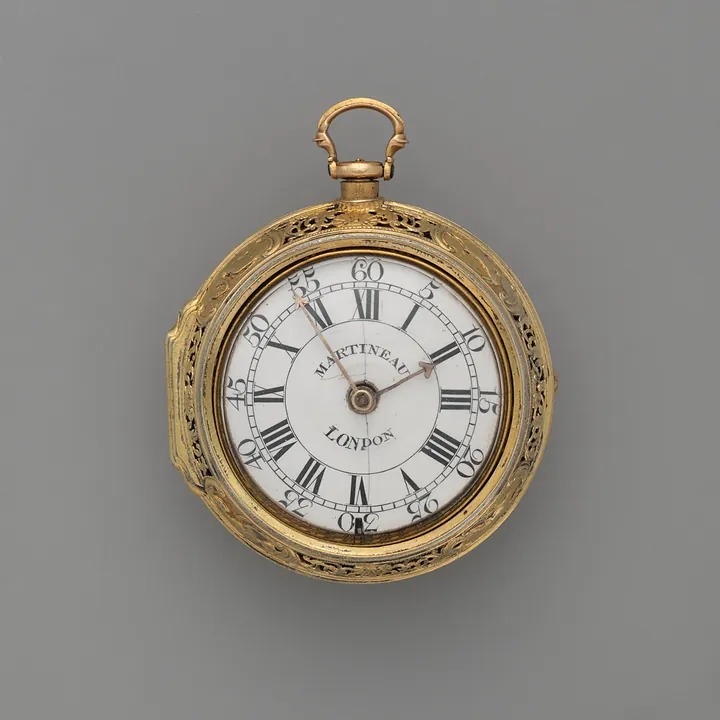
Pocket Watches · c. 1760
Clock-watch by Sr. Joseph Martineau, England, c. 1760
The Metropolitan Museum of Art, New York
Pocket Watches · c. 1760
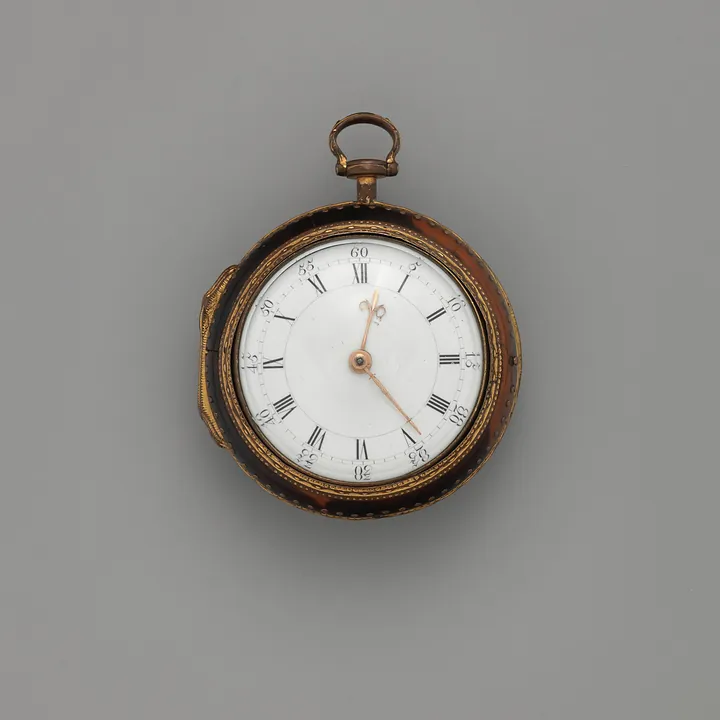
Watch by John Ellicott, England, c. 1760
The Metropolitan Museum of Art, New York