
Pocket Watches · Calendar watch with moon phase
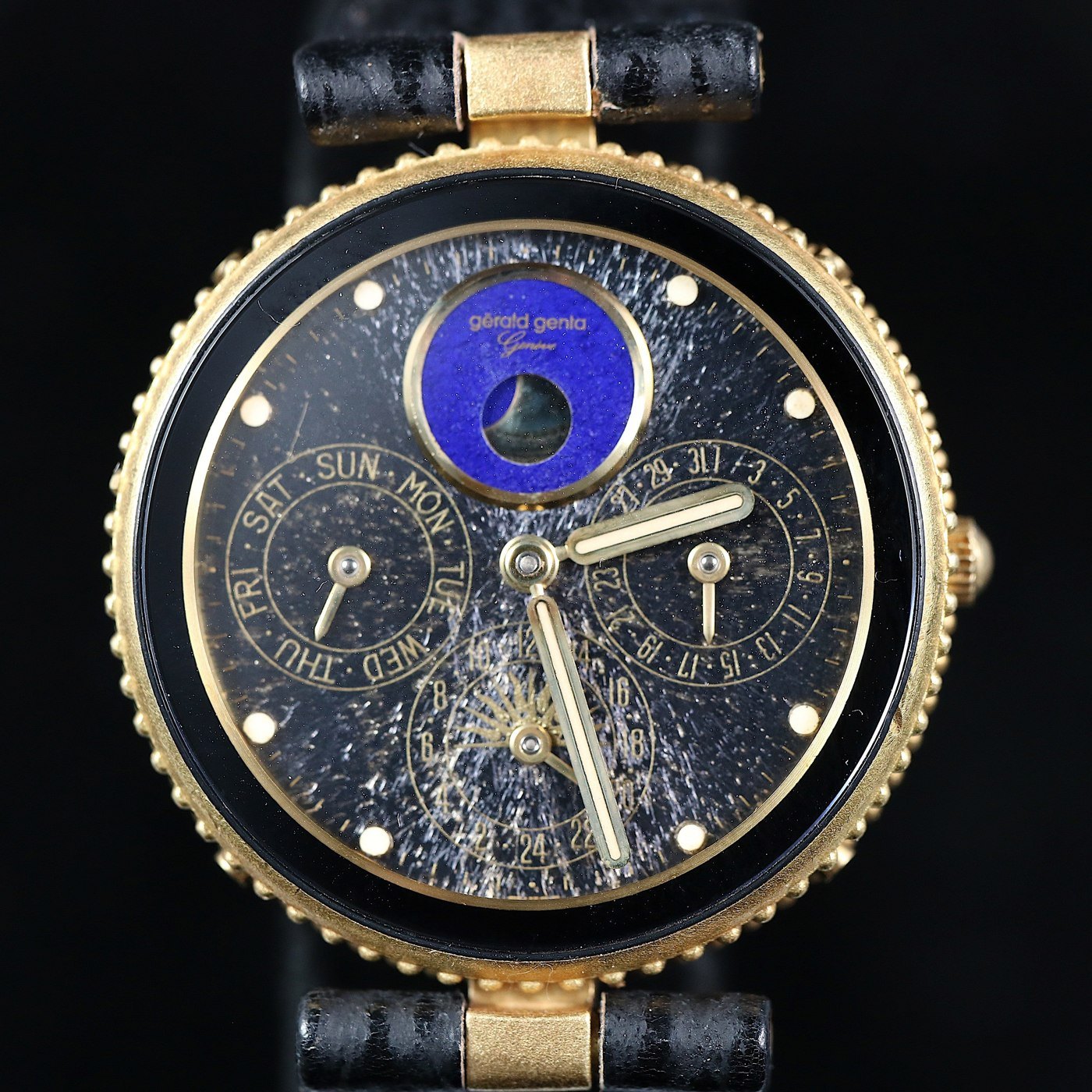
Gerald Genta Gefica Calendar Moon
- Maker / attribution
- Gerald Genta (source attribution)
- Date
- 1990s
- Historical period
- Mechanical Renaissance (1990 – 2010)
- Country of origin
- Switzerland
- Object type
- Calendar watch with moon phase
- Materials / technique
- 18K yellow gold
- Holding institution
- Laurent Fine Watches
- Accession / object no.
- Gerald-Genta-Gefica-18K-V-09-21-2026
- Credit line
- Laurent Fine Watches
- Catalogue title (original)
- ساعت مچی Gerald Genta مدل Gefica Calendar Moon از طلای ۱۸ عیار (English)
View the source record ↗ (opens another website in a new tab)Suggest a correction
Record summary
Held and catalogued by Laurent Fine Watches (object number Gerald-Genta-Gefica-18K-V-09-21-2026), this is a calendar watch with moon phase attributed to Gerald Genta, made in Switzerland, dated 1990s. The Atlas places it in the Mechanical Renaissance period (1990 – 2010) of its Pocket Watches collection. Materials and techniques recorded by the source: 18K yellow gold. The record is illustrated with 1 photograph.
Assembled from the source record's structured fields. Dates and attributions are given as the source states them; where a field is missing the Atlas leaves it blank rather than estimating.
Catalogue description
Original object description
Manufactured in the 1990s, this Gerald Genta Gefica Calendar Moon wristwatch is fashioned from 18K yellow gold, measuring 33 mm in diameter (excluding the winding crown) and 44 mm from lug to lug. The round case features a coin-style or beaded border along the bezel. Engraved on the exterior caseback are the model designation 'Gefica', reference 'G 2940', and serial number '38265', while the case interior bears stamps confirming gold purity, reference, and maker. A dark granular dial displays luminous stick hands alongside luminous dot indices. Complications appear across four sub-dials: an aperture at 12 o'clock reveals a moon phase against a blue disc inscribed 'gerald genta' and 'Genève', flanked by a date register at 3 o'clock, a GMT display at 6 o'clock, and a day dial at 9 o'clock. The functions are operated by an internal 10-jewel quartz movement, Gerald Genta caliber 606. The watch is worn on a black Gerald Genta strap with a signed 18K yellow gold buckle. Auction house documentation classifies the piece as being in good condition and confirms that original papers and packaging are not present.
Inscriptions & marks
38265
Historical context
Mechanical Renaissance (1990 – 2010)
Mechanical watches return as cultural objects; independent watchmaking flourishes.
Collectors' interest in antique pocket watches grew, and a few houses made new pocket watches with grand complications as technical showpieces.
Read the period in the timelineMore pocket watches from this periodEarlier: Quartz Revolution
Atlas type guide
Calendar, moon-phase and perpetual calendar watches
Calendar complications range from a simple date to the perpetual calendar, which automatically allows for months of different lengths and leap years until 2100. Pocket watches with perpetual calendars were made in the eighteenth and nineteenth centuries; Patek Philippe made the first perpetual calendar wristwatch in 1925, and series production followed in 1941. The annual calendar (Patek Philippe, 1996) needs correction only once a year.
Moon-phase displays use a disc with two moons and 59 teeth advanced daily, approximating the 29.5-day lunation; more precise trains reduce the error to one day in over a century.
What to look for
- Apertures or subsidiary dials for day, date, month and leap year.
- Moon disc under a 'bosom' shaped aperture.
- Recessed correctors on the case band for setting the calendar.
Dating clues
- Triple-date wristwatches: popular c. 1940–1955.
- Perpetual calendar wristwatches: from 1925 (unique) and 1941 (series).
General guidance written by the Atlas editors about this kind of object. It is not a statement about this particular piece; for that, rely on the source record above and on physical examination.
Related records
Wristwatches · 1990s
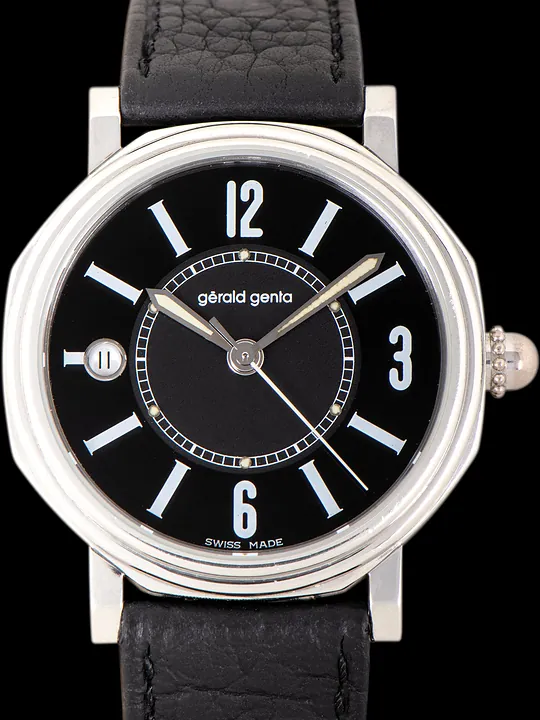
Gerald Genta Octo (Ref. G35587) Black Dial, 1990s
Craft & Tailored (dealer), Los Angeles
Wristwatches · c. 1990s
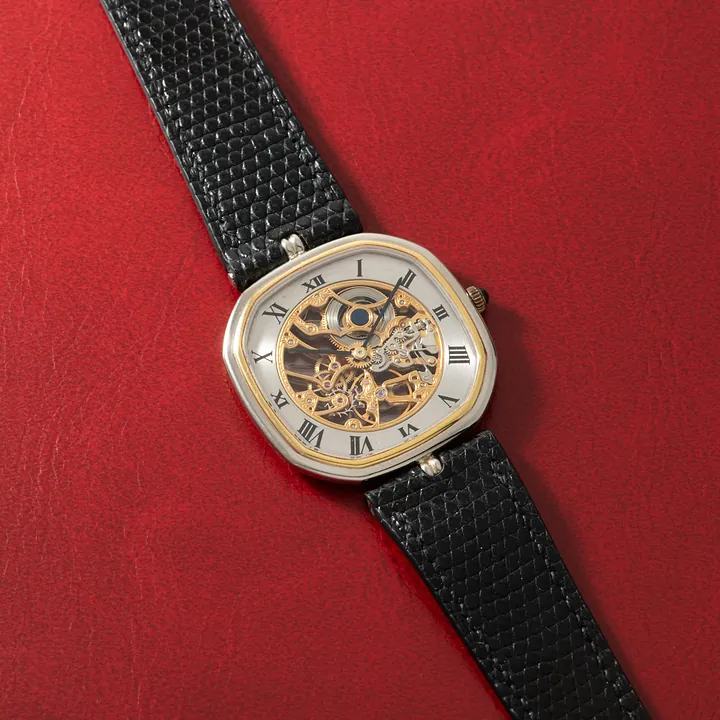
Gérald Genta Octagonal 'Cushion' Skeleton, c. 1990s
Analog/Shift (dealer), New York
Wristwatches · early 2000s
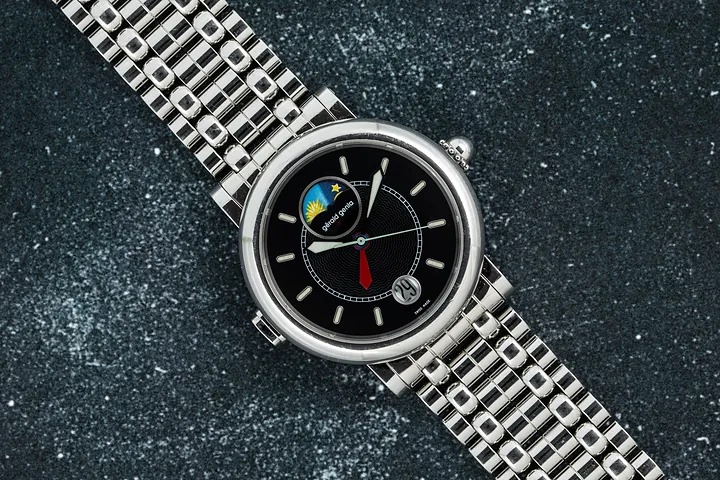
Gerald Genta Night & Day, early 2000s
Analog/Shift (dealer), New York
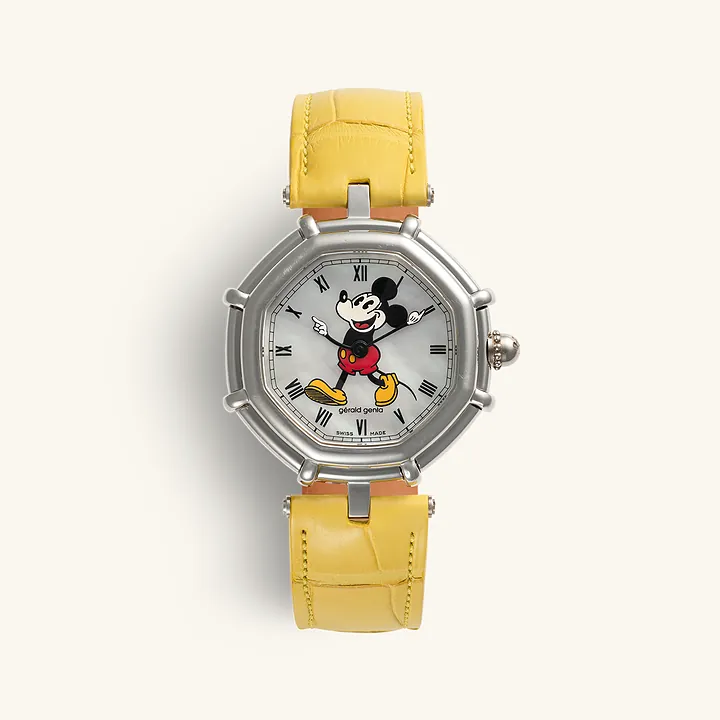
Wristwatches · 1990s
Gerald Genta Disney Automatic, ref. G.3487.7, 1990s
Watches of Knightsbridge (dealer), London
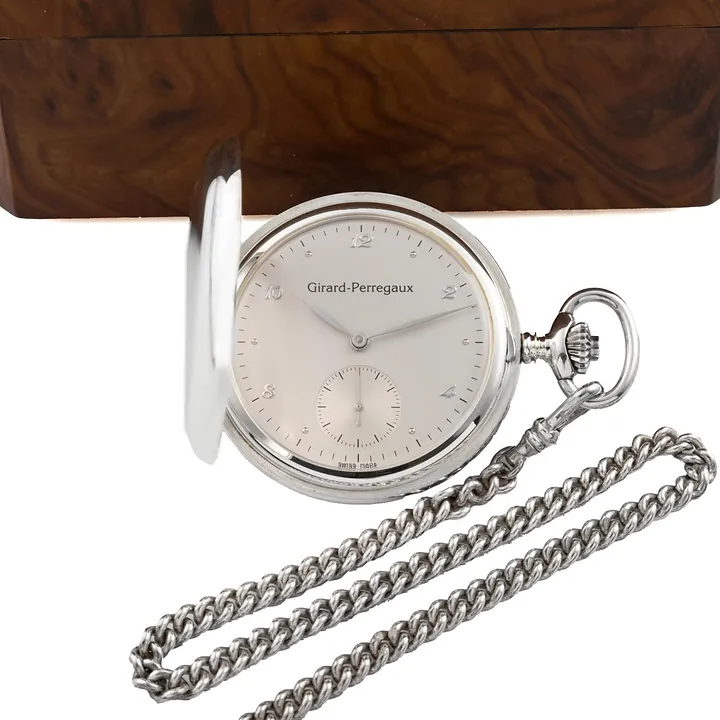
Pocket Watches · c. 1998
Girard Perregaux pocket watch, c. 1998
Antiquorum auction archive, Geneva
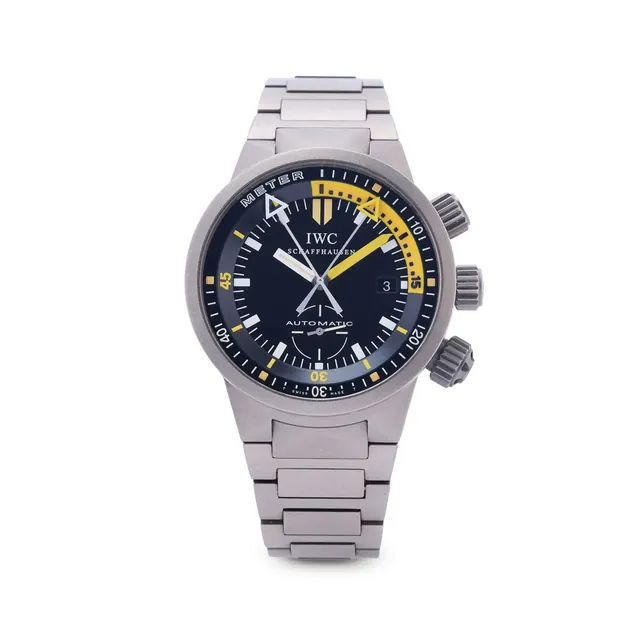
Pocket Watches · c. 2000s
IWC pocket watch, ref. 3527, Deep One Diver's Watch, circa 2000s
Antiquorum auction archive, Geneva
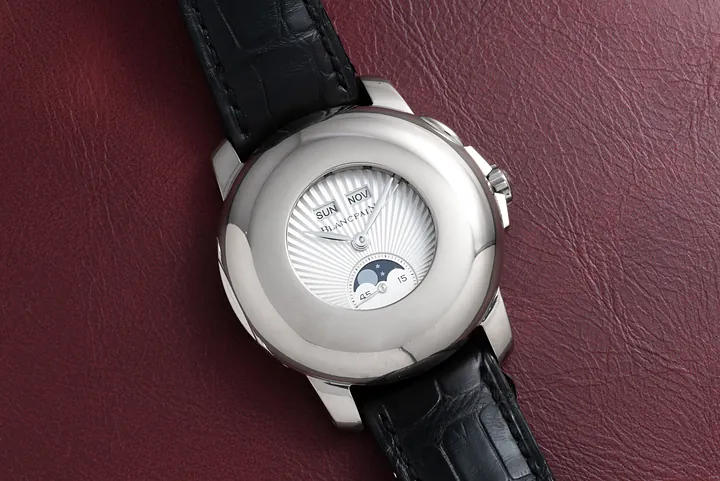
Pocket Watches · c. 1990
Blancpain Half Hunter Complete Calendar Moonphase LE, c. 1990
Analog/Shift (dealer), New York
Pocket Watches · 2007
Rolex Pro Hunter Seadweller Reference 16600 Black DLC Coated, 2007
Bulang & Sons (dealer), Copenhagen