
Pocket Watches · Pocket watch
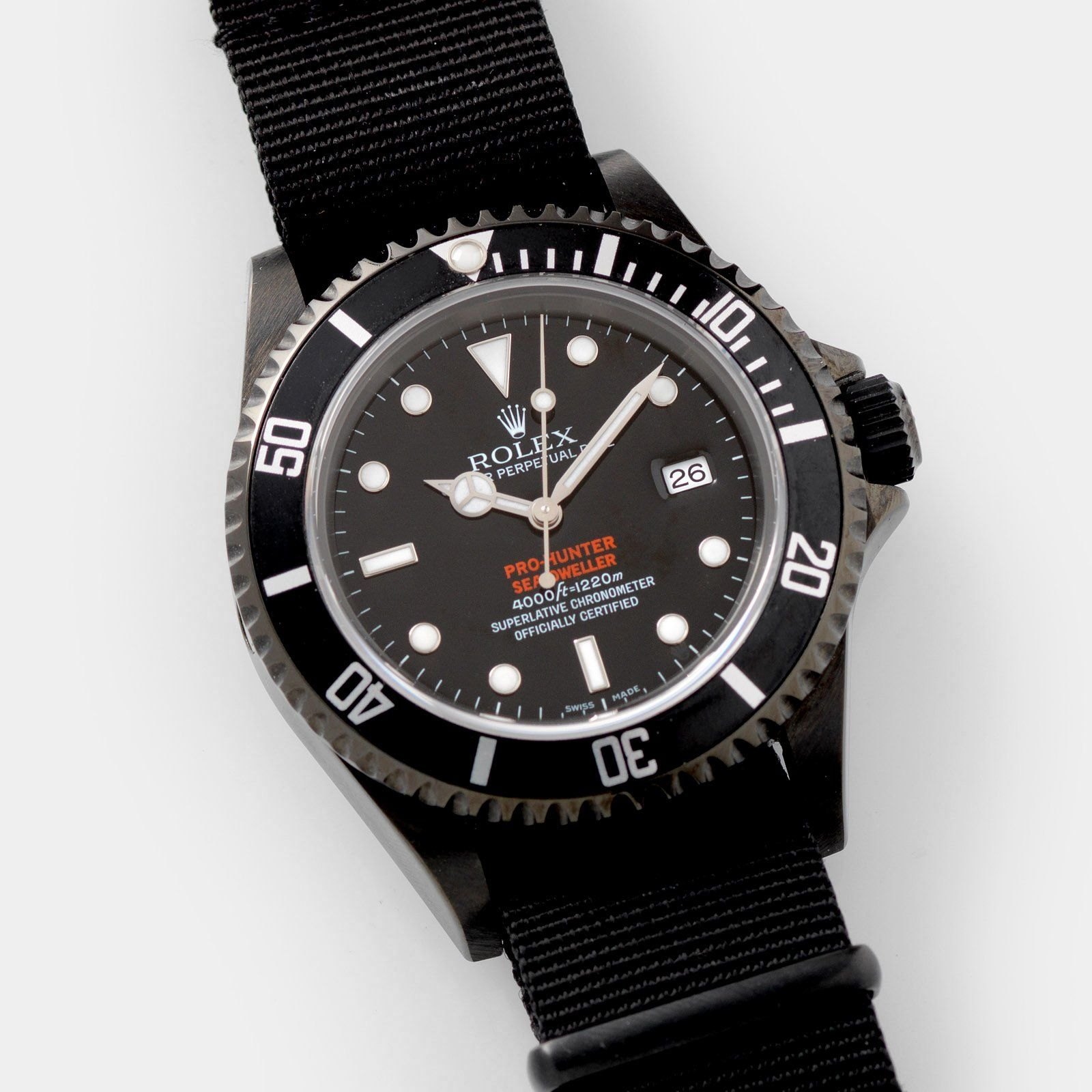
Rolex Pro Hunter Seadweller Reference 16600 Black DLC Coated, 2007
- Maker / attribution
- Rolex (maker)
- Date
- 2007
- Historical period
- Mechanical Renaissance (1990 – 2010)
- Country of origin
- Switzerland
- Object type
- Pocket watch
- Dimensions
- Case 40 mm
- Stock no.
- W-880
- Credit line
- Dealer listing, Bulang & Sons (W-880)
- Catalogue title (original)
- Rolex Pro Hunter Seadweller Reference 16600 Black DLC Coated (English)
View the source record (dealer listing) ↗ (opens another website in a new tab)Suggest a correction
Record summary
Catalogued by Bulang & Sons (dealer), Copenhagen (stock number W-880), this is a pocket watch by Rolex, made in Switzerland, dated 2007. The Atlas places it in the Mechanical Renaissance period (1990 – 2010) of its Pocket Watches collection. Recorded dimensions: Case 40 mm. The record is illustrated with 6 photographs.
Assembled from the source record's structured fields. Dates and attributions are given as the source states them; where a field is missing the Atlas leaves it blank rather than estimating.
Catalogue description
Dealer description — Bulang & Sons
Back in Black… There was a time when it was common for third-party customizers to black coat Rolex sports watches. One of the leading brands to do this was Pro Hunter and they were and are regarded as one of the leading companies in this field. We are offering a Seadweller reference 16600 that has had a number of high-quality modifications to turn it into the beast that it is! The case, bezel and crown have been given a gloss black DLC (diamond like carbon) coating and the watch has had solid fixed spring bars added, which means the watch has to be worn on a Single Pass -style strap. The dial has two red lines that read ‘Pro Hunter Sea Dweller’. The caseback features an additional engraving ‘046’. This is a cool watch with a stealthy appearance. The watch has been fully serviced by our watchmaker. Specifications - Reference 16600 T - M240xxx serial dating to 2007 - 40mm steel case with helium escape valve - Pro Hunter series black DLC coating - 046 caseback engraving - ‘Double Red’ Dial - Fixed spring bars - Fully serviced by our watchmaker - Includes a handmade single leather watch pouch
Historical context
Mechanical Renaissance (1990 – 2010)
Mechanical watches return as cultural objects; independent watchmaking flourishes.
Collectors' interest in antique pocket watches grew, and a few houses made new pocket watches with grand complications as technical showpieces.
Read the period in the timelineMore pocket watches from this periodEarlier: Quartz Revolution
Atlas type guide
Hunter, half-hunter and open-face watches
In the nineteenth century the pocket watch case settled into a few standard forms. The hunter (French savonnette) has a hinged front lid protecting the crystal — reputedly for riders who could not risk broken glass — and is opened by pressing the crown or a push-piece. The half-hunter has a small window in the lid so the hands can be read when closed. The open-face (lépine) watch has no front cover, with the crown at 12; hunters normally carry the crown at 3.
Case types also changed with winding: key-wound watches gave way to keyless (stem-wound) mechanisms after Adrien Philippe's and others' designs of the 1840s, with pendant setting or lever setting.
What to look for
- Crown position relative to the seconds dial: at 3 for hunters, at 12 for open-face watches.
- Spring-loaded front cover with a push-piece in the pendant.
- Half-hunter chapter ring enamelled on the lid.
- Key holes in the inner dome (cuvette) versus keyless winding.
Dating clues
- Keyless winding spread after c. 1850 and became standard by c. 1890.
- English hallmarks inside gold and silver cases give the year of assay.
General guidance written by the Atlas editors about this kind of object. It is not a statement about this particular piece; for that, rely on the source record above and on physical examination.
Read next:Detached lever escapement
Related records

Movements & Components · c. 1970s
Rolex watch movement, c. 1970s
Antiquorum auction archive, Geneva

Pocket Watches · 1982
Fake Rolex watch, gold coloured metal, possibly made in Taiwan, 1982; part of a casual outfit, UK, 1982-84.
Victoria and Albert Museum, London

Wristwatches · c. 1920s
Rolex wristwatch, c. 1920s
Antiquorum auction archive, Geneva

Wristwatches · c. 1920s
Rolex wristwatch, ref. 6194, c. 1920s
Antiquorum auction archive, Geneva
Pocket Watches · 1991
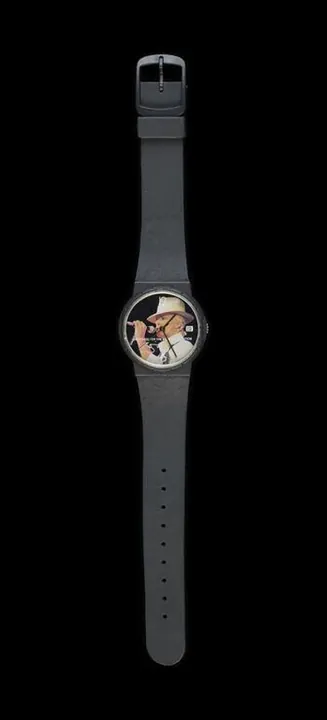
Limited edition watch designed by Eta relating to David Bowie's Serious Moonlight live tour, 1991
Victoria and Albert Museum, London
Pocket Watches · c. 1998
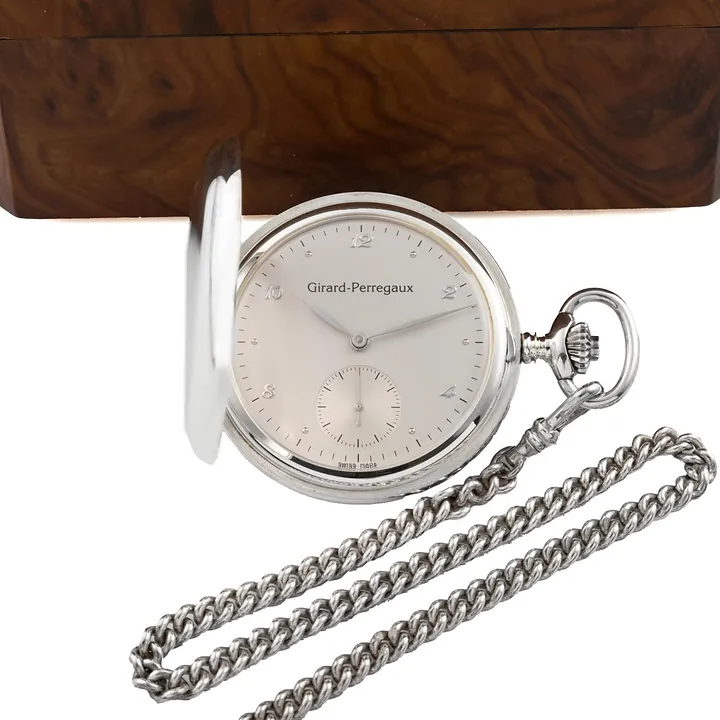
Girard Perregaux pocket watch, c. 1998
Antiquorum auction archive, Geneva
Pocket Watches · c. 2000s
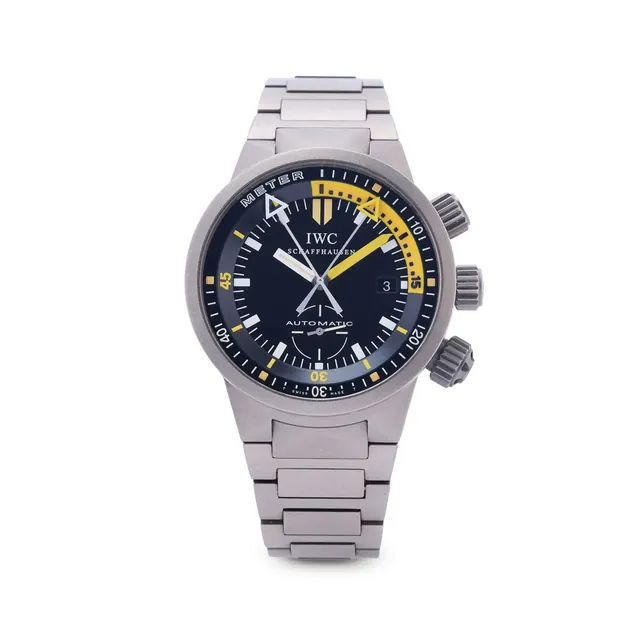
IWC pocket watch, ref. 3527, Deep One Diver's Watch, circa 2000s
Antiquorum auction archive, Geneva
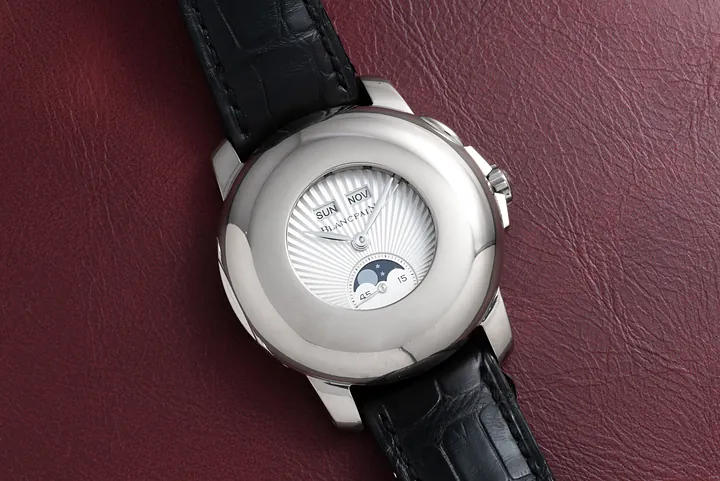
Pocket Watches · c. 1990
Blancpain Half Hunter Complete Calendar Moonphase LE, c. 1990
Analog/Shift (dealer), New York