
Clocks · Bracket clock
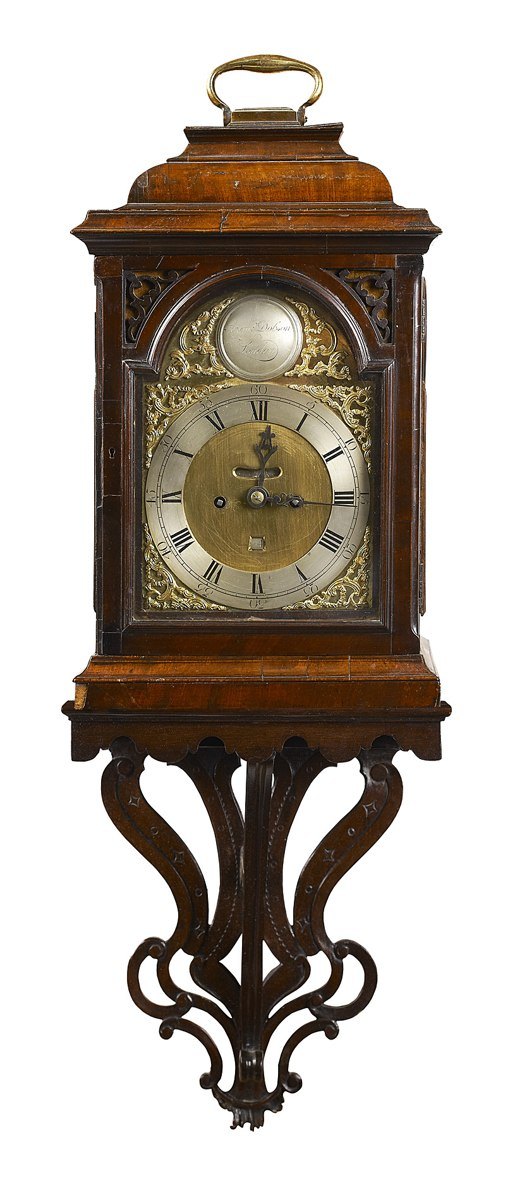
George II Mahogany Bracket Clock and Bracket by Arlander Dobson
- Maker / attribution
- Arlander Dobson (source attribution)
- Date
- c. 1750
- Historical period
- Precision & Scientific Horology (1750 – 1850)
- Country of origin
- England
- Place
- London
- Object type
- Bracket clock
- Auction house
- Lyon & Turnbull
- Lot
- 40
- Credit line
- Lyon & Turnbull
- Catalogue title (original)
- GEORGE II MAHOGANY BRACKET CLOCK AND BRACKET ARLANDER DOBSON, LONDON, CIRCA 1750 | 28 September 2011 (English)
View the source record (auction lot) ↗ (opens another website in a new tab)Suggest a correction
Record summary
Catalogued by Lyon & Turnbull (lot 40), this is a bracket clock attributed to Arlander Dobson, made in London, England, dated c. 1750. The Atlas places it in the Precision & Scientific Horology period (1750 – 1850) of its Clocks collection. The record is illustrated with 1 photograph.
Assembled from the source record's structured fields. Dates and attributions are given as the source states them; where a field is missing the Atlas leaves it blank rather than estimating.
Catalogue description
Original object description
Crafted in London circa 1750 and attributed to Arlander Dobson, this George II bracket clock is accompanied by an associated mahogany bracket. The case is constructed of mahogany with an inverted bell top and brass carrying handle, glazed and fret-cut openings along the flanks and rear, and a front glass door. Its arched brass dial incorporates pierced corner spandrels, two winding holes, a mock pendulum aperture, a square date window, and a silvered chapter ring with Roman hours and Arabic five-minute divisions, over which an arched boss is signed 'Arland Dobson/ London'. The movement strikes on a bell and features a foliate-engraved brass backplate. The corresponding openwork bracket includes a side-fitted drawer, an undulating apron, and scrolled brackets with pierced rear elements terminating in a carved foliate finial.
Historical context
Precision & Scientific Horology (1750 – 1850)
Harrison solves longitude; Mudge invents the lever; Breguet's Paris workshop defines the modern watch.
The age of the deadbeat escapement, compensated pendulums and observatory regulators. Domestic clocks spread through the middle classes: English longcase and bracket clocks, French gilt-bronze mantel clocks, Viennese Biedermeier wall clocks, Black Forest painted-shield clocks, and the first American shelf clocks.
Read the period in the timelineMore clocks from this periodEarlier: Early Modern Horology
Atlas type guide
Bracket, table and spring-driven clocks
Spring-driven clocks freed timekeeping from the hanging weight. The coiled mainspring, documented from the fifteenth century, made portable table clocks possible; to even out its declining force, makers used the fusee, a conical pulley connected to the barrel by a gut line or chain. Renaissance table clocks from Augsburg and Nuremberg — drum-shaped, square or tower-shaped in gilt brass — were luxury scientific objects, often with astronomical dials and alarms.
After the pendulum, English makers developed the bracket clock: a wooden case with a carrying handle, a short pendulum with a verge escapement, and often repeating work to sound the hours on demand at night. Later examples use the anchor escapement. In the nineteenth century, 'table clock' became a broad term for spring clocks of every nationality.
What to look for
- A fusee in the movement (cone-shaped pulley) and the type of line — gut or chain.
- Verge escapement with a short bob pendulum, often with a decoratively engraved backplate.
- Repeat cords or buttons that make the clock strike again on demand.
- Gilt-brass engraved cases and horizontal dials on Renaissance pieces.
- Case shapes: inverted bell, bell top, break-arch, lancet or balloon.
Dating clues
- Drum and tower table clocks: c. 1520–1650.
- Ebony veneered English bracket clocks with verge escapements: c. 1670–1800.
- Engraved backplates were usual on English clocks until c. 1800, then generally plain.
General guidance written by the Atlas editors about this kind of object. It is not a statement about this particular piece; for that, rely on the source record above and on physical examination.
Related records
Pocket Watches · 1625–1640
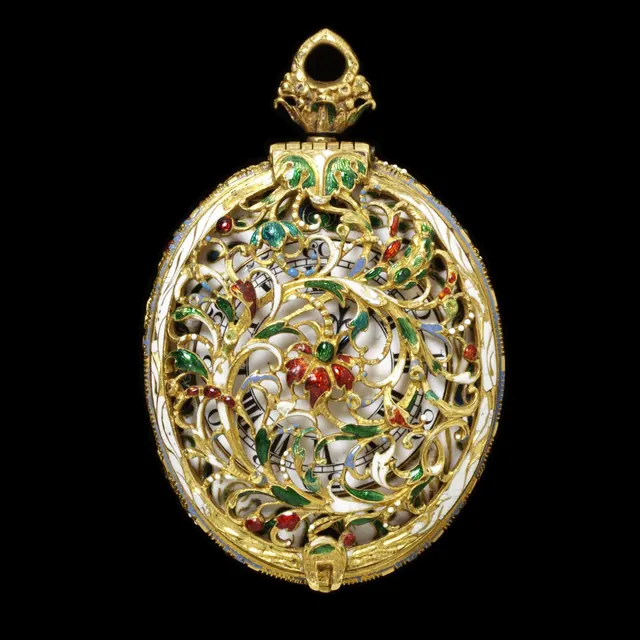
Watch and pair case by Arlander Dobson, England, 1625–1640
Victoria and Albert Museum, London
Clocks · 1740–1760
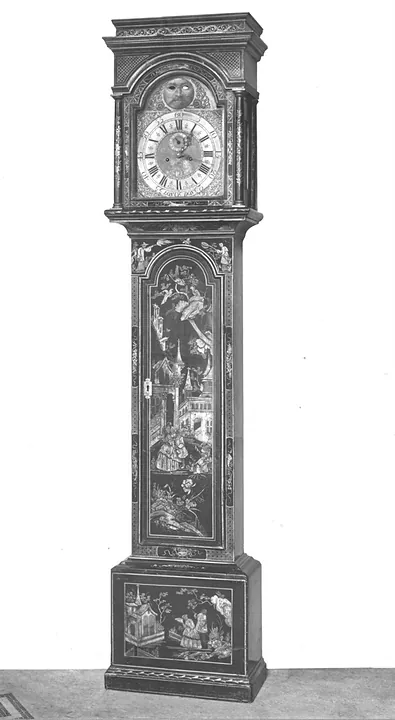
Longcase clock, English, 1740–1760, japanned wood, John Ellicott
Victoria and Albert Museum, London
Clocks · c.1750
Long-case clock, English, ca. 1750, by Richard Peyton of Gloucester
Victoria and Albert Museum, London
Clocks · 1751
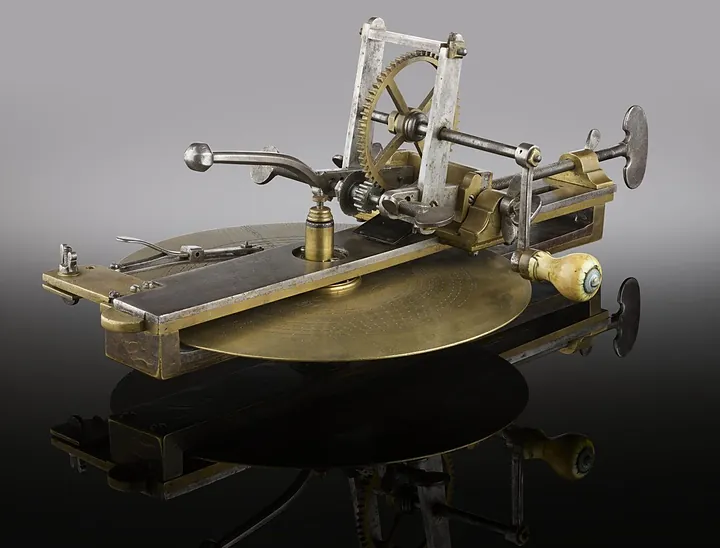
Large wheel engine, signed and dated "John Tipping, Whildon Green, 1751".
Science Museum Group, London
Clocks · 1755
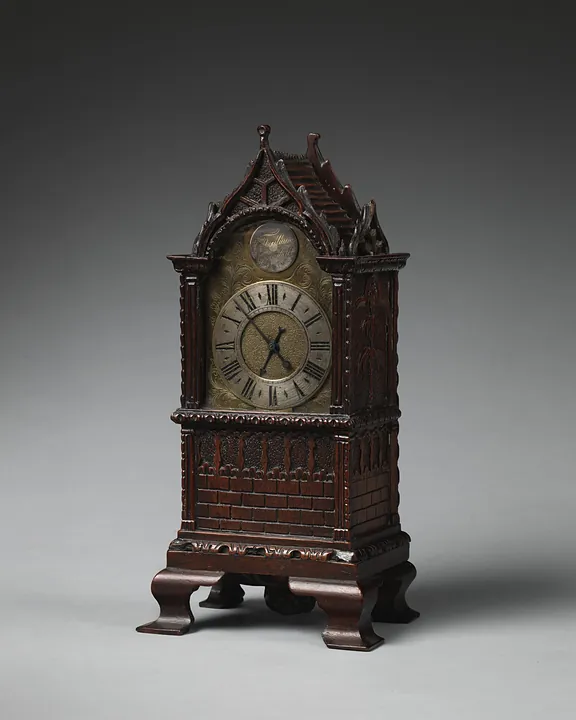
Bracket clock by John Fordham, England, 1755
The Metropolitan Museum of Art, New York
Clocks · c. 1760
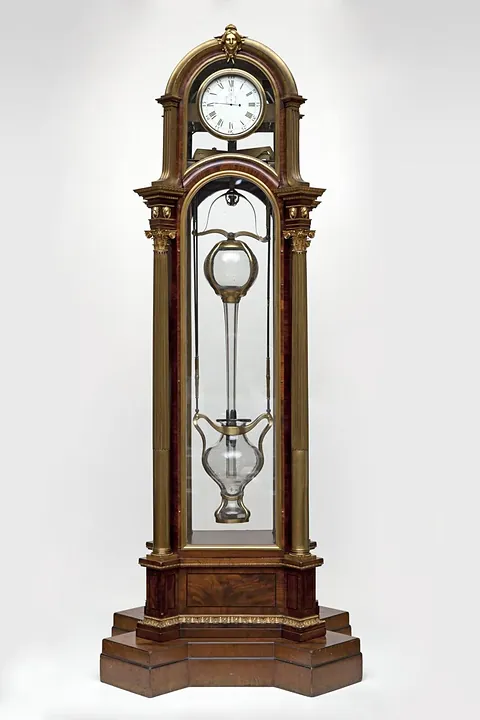
Longcase clock by James Cox, England, c. 1760
Victoria and Albert Museum, London
Clocks · 1766
Clock by Alexander Cumming, England, 1766
Science Museum Group, London
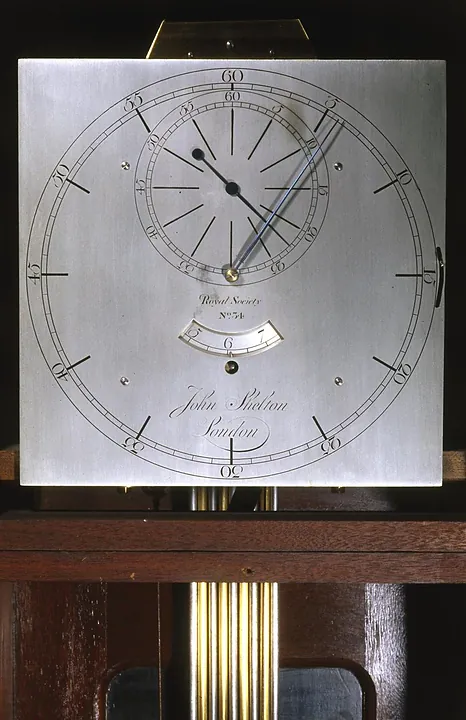
Clocks · 1768–1769
Regulator clock by John Shelton, England, 1768–1769
Science Museum Group, London