
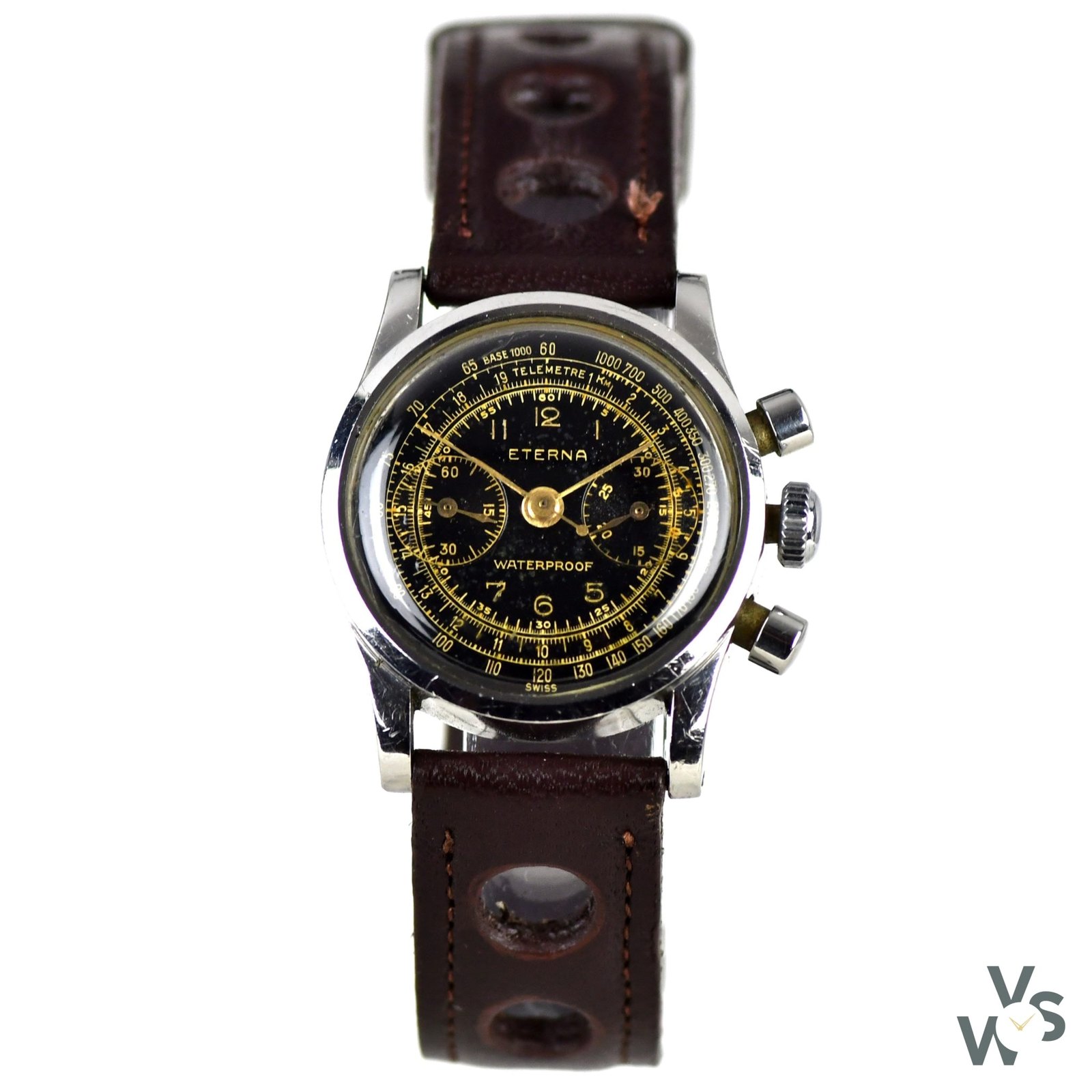
Wristwatches · Wristwatch
Eterna 'Baby' Chronograph, Clamshell Case, Calibre Valjoux 69, Gilt Gloss Dial, circa 1940s
- Maker / attribution
- Eterna (maker)
- Date
- c. 1940s
- Historical period
- Golden Age of Mechanical Watchmaking (1900 – 1945)
- Country of origin
- Switzerland
- Object type
- Wristwatch
- Dimensions
- Case 30 mm
- Stock no.
- vws1512
- Credit line
- Dealer listing, Vintage Watch Specialist (vws1512)
- Catalogue title (original)
- Eterna 'Baby' Chronograph - Clamshell Case - c.1940s - Rare Calibre Valjoux 69 - Rare Gilt Gloss Dial (English)
View the source record (dealer listing) ↗ (opens another website in a new tab)Suggest a correction
Record summary
Catalogued by Vintage Watch Specialist (dealer), United Kingdom (stock number vws1512), this is a wristwatch by Eterna, made in Switzerland, dated c. 1940s. The Atlas places it in the Golden Age of Mechanical Watchmaking period (1900 – 1945) of its Wristwatches collection. Recorded dimensions: Case 30 mm. The record is illustrated with 6 photographs.
Assembled from the source record's structured fields. Dates and attributions are given as the source states them; where a field is missing the Atlas leaves it blank rather than estimating.
Catalogue description
Dealer description — Vintage Watch Specialist
We Are Sorry But This Watch Is Now Sold - If However You Are Looking To Buy Or Sell Something Similar Then Please Email Sales@Vintagewatchspecialist.Com Or Whatsapp/Call +44 7831 454658. Thanks Clamshell Case - Eterna 'Baby' Pilot's Chronograph - Rare Valjoux 69 Chronograph Movement (the most compact chronograph movement ever designed). If you're in the market for a watch that speaks volumes but packed into a small package, look no further. Eterna traces its roots back to 1856 when Josef Girard established the business is Grenchen on November 7 th . Well respected in the collector community for their fine chronograph watches and time only pieces Eterna has numerous accolades to their name. In 1908 they filed a patent for the worlds first wrist alarm clock, in 1930 they designed the smallest production wristwatch with “baguette” movement and in 1962 produced the worlds thinnest mens watch with an automatic movement and date window with the “Eterna-Matic 3000 Dato” to name just a few achievements. The present watch is an incredible gilt dial “Baby” chronograph with dual sub dial configuration with “big eyes”. The gilt dial is remarkable and is a true delight, the stainless steel case has a tasteful and subtle patina to it which is in line with age and only adds to the charm of the watch. The protruding pump chronograph pushers look outstanding and further add to the watches appeal on wrist by making the watch feel more substantial. The large sub dials round off a dial that is already exciting with the craftsmanship and detail of the dial being a marvel in design. Inside this true collectors piece beats the legendary Valjoux 69 movement which is a highly desirable movement and often seen in pieces of this nature. What's on offer Although the size may not indicate, the watch wears bigger than the diameter would suggest. A wonderful way to wear the watch would be on a nice beads of rice bracelet or bamboo style bracelet which would further enhance the package. The pump pushers and crown create a nice presence which adds to the appeal and enhance the watch. The gilt on the dial is sharp and legible with a lovely patina elegantly scattered lightly across the dial. For the collector who wants to further enhance a collection and is looking for that perfect “Baby” chronograph from a revered brand and substantial movement, this is the watch for you. Additional information: Made from Case: Stainless steel. Dial: Black, twin chronograph registers. Crystal: Plexiglass Bracelet: Dark brown leather band. Technical specifications Winding: Manual. Movement type: Manual winding. Calibre: Valjoux 69 Jewels: 17 Power reserve: 42 hours Waterproof: No. Purchase details Condition: Very good, with signs of light wear. Model reference: 'Baby' Chrono Year of issue: c.1940s Guarantee Sold with a 12-month guarantee. Dimensions Width (excluding crown): 30mm Lug width: 16mm Wrist size: Adjustable.
Historical context
Golden Age of Mechanical Watchmaking (1900 – 1945)
The wristwatch displaces the pocket watch; waterproof cases, self-winding and grand complications.
The wristwatch overtook the pocket watch. Military use in the First World War, aviation, water-resistant cases (1926), automatic winding (1923–31), rectangular Art Deco designs and early chronographs and calendars defined the period.
Read the period in the timelineMore wristwatches from this periodEarlier: Industrial Revolution
Atlas type guide
Chronographs and split-seconds watches
A chronograph is a watch with an additional seconds hand that can be started, stopped and returned to zero independently of the timekeeping. Louis Moinet built an early example in 1816 and Nicolas Rieussec a recording 'chronographe' in 1821; Adolphe Nicole's heart-shaped reset cam (patented 1862) made the modern return-to-zero possible. Split-seconds (rattrapante) chronographs add a second hand that can be stopped for intermediate times; flyback chronographs restart instantly.
Chronographs were essential tools for doctors (pulsometer scales), artillery (telemeter), engineers and sport. In wristwatches, Valjoux, Venus, Lemania and later the automatic chronographs of 1969 (Zenith El Primero, the Chronomatic Calibre 11 group and Seiko 6139) are milestones.
What to look for
- Push-pieces on the case band or a single button in the crown (monopusher).
- Subsidiary registers for minutes and hours; tachymeter, telemeter or pulsometer scales.
- Column wheel versus cam control visible in the movement.
- Calibre markings of specialist makers (Valjoux, Lemania, Venus, Landeron).
Dating clues
- Pocket chronographs with heart cam reset: after 1862.
- Wrist chronographs: from c. 1910; two-button designs from the 1930s.
- Automatic chronographs: from 1969.
General guidance written by the Atlas editors about this kind of object. It is not a statement about this particular piece; for that, rely on the source record above and on physical examination.
Read next:Flyback chronographChronograph
Related records

Wristwatches · 1945
Wristwatch by Eterna, 1945
Museum Rotterdam
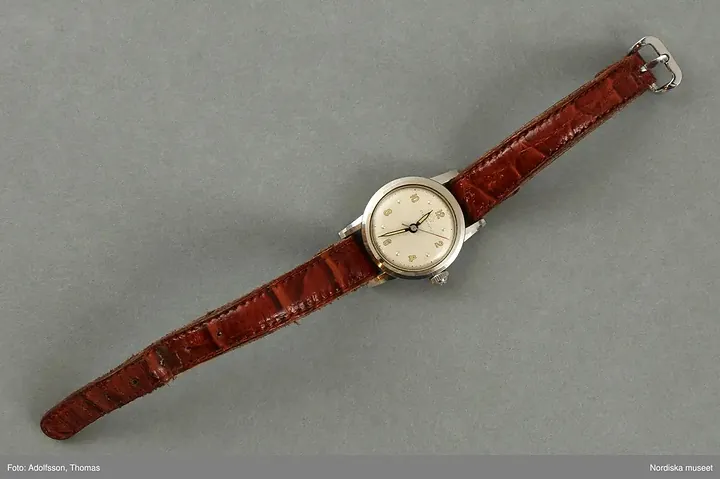
Wristwatches · 1900–1999
Wristwatch by Eterna, Sweden, 1900–1999
Nordic Museum Foundation
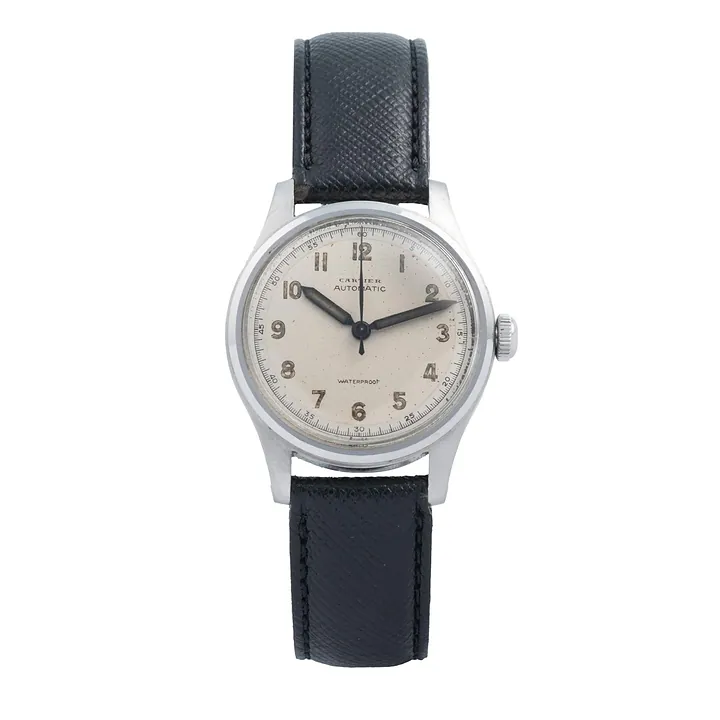
Wristwatches · c. 1930s
Eterna wristwatch, c. 1930s
Antiquorum auction archive, Geneva
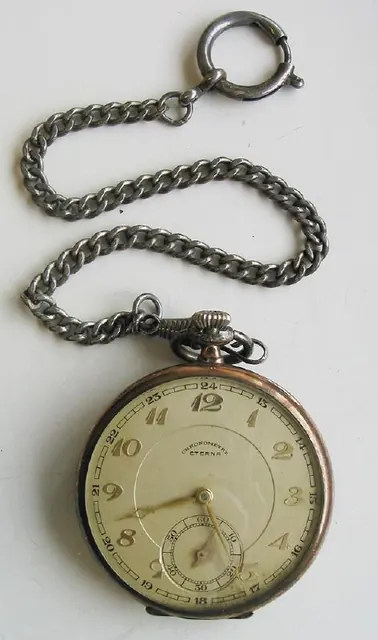
Pocket Watches · 1934
Pocket watch by Eterna, Switzerland, 1934
Turun kaupunginmuseo

Wristwatches · 1931
Rolex 'Oyster Perpetual' rotor self-winding wrist-watch, lever escapement, in steel case with glass in back, Montres Rolex SA, Geneva, Switzerland, 1931
Science Museum Group, London

Wristwatches · 1900–1999
Wristwatch by Certina, Switzerland, 1900–1999
Nordic Museum Foundation

Wristwatches · 1900–1999
Wristwatch by Omega, Västerås, 1900–1999
Nordic Museum Foundation

Wristwatches · 1900–1999
Wristwatch by Universal, Switzerland, 1900–1999
Nordic Museum Foundation