
Pocket Watches · Pocket watch
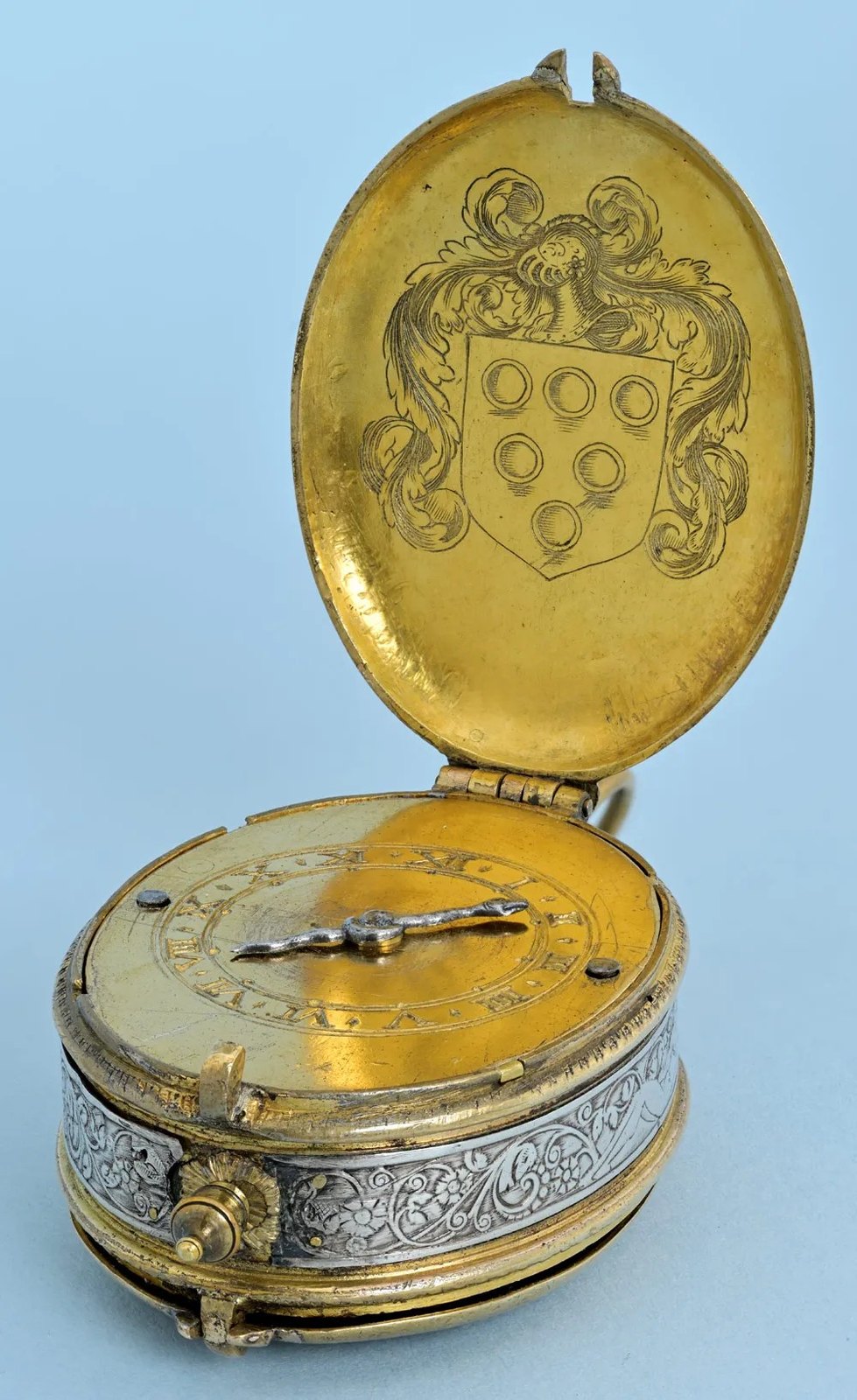
Early Oval French Verge, circa 1630
- Maker / attribution
- Unrecorded in source
- Date
- c. 1630
- Historical period
- Early Modern Horology (1600 – 1750)
- Country of origin
- France
- Object type
- Pocket watch
- Stock no.
- A11001
- Credit line
- Dealer listing, Pieces of Time (A11001)
- Catalogue title (original)
- Early Oval French Verge (English)
View the source record (dealer listing) ↗ (opens another website in a new tab)Suggest a correction
Record summary
Catalogued by Pieces of Time (dealer), London (stock number A11001), this is a pocket watch, made in France, dated c. 1630. The Atlas places it in the Early Modern Horology period (1600 – 1750) of its Pocket Watches collection. The record is illustrated with 6 photographs.
Assembled from the source record's structured fields. Dates and attributions are given as the source states them; where a field is missing the Atlas leaves it blank rather than estimating.
Catalogue description
Dealer description — Pieces of Time
A rare early 17 th Century French pre-balance spring verge in a gilt and silver oval case. Deep full plate fire gilt movement with slender square baluster pillars. Fusee and gut with gilt barrel ratchet and elaborate click between the plates. Small pierced and engraved cock secured by a screw. Plain gilt dial engraved with Roman numerals, fine single blue steel hand in the form of a serpent. Four tabs on the dial locate it in the case and secured by two springs and latches at nine and three o’clock. Drum shaped gilt oval case, fixed pendant and ring bow, turned finial at six o’clock. The sides of the case with a band of applied silver engraved with foliage and reclining figures. Plain hinged gilt oval covers, gilding worn from the exterior surfaces. Inside the front cover a well preserved engraving of the Medici Family coat of arms.
Historical context
Early Modern Horology (1600 – 1750)
Huygens' pendulum and balance spring transform accuracy; English makers develop the anchor and deadbeat escapements.
The balance spring (c. 1675) improved watches dramatically and introduced the minute hand. English pair-cased verge watches with pierced balance cocks and French oignons were typical; enamel painting at Blois and Geneva, and the repeating watch (1680s), made watches objects of great refinement.
Read the period in the timelineMore pocket watches from this periodEarlier: Renaissance Horology
Atlas type guide
Verge and pair-cased watches
After Christiaan Huygens and Robert Hooke applied the balance spring around 1675, the verge watch became a reasonably reliable timekeeper and the minute hand became standard. Through the eighteenth century the typical English watch was a pair-cased verge: a fusee movement with a pierced, engraved balance cock, housed in an inner case and a separate protective outer case, often of repoussé gold, shagreen, tortoiseshell or enamel.
French watches of the same period were thicker 'oignons', later replaced by elegant thinner watches following Jean-Antoine Lépine's bar-bridge calibre of c. 1770. Dutch, Swiss and German makers supplied international markets, and verge watches were made until the mid-nineteenth century as cheaper alternatives to the cylinder and lever.
What to look for
- The pierced balance cock on the backplate: winged (continental) or with a foot (English); its style dates the watch.
- Fusee and chain visible through the movement; key winding through the dial (early) or case back.
- Hallmarks inside English silver or gold cases, which give a date letter.
- Maker's name and serial number engraved on the backplate; watch papers inside outer cases.
- Enamel dials (after c. 1720) versus earlier champlevé metal dials.
Dating clues
- Champlevé dials: c. 1680–1730; white enamel dials thereafter.
- English case hallmarks give the year of assay to within a year.
- Verge watches persisted in cheap production until c. 1850.
General guidance written by the Atlas editors about this kind of object. It is not a statement about this particular piece; for that, rely on the source record above and on physical examination.
Read next:Verge escapement
Related records
Pocket Watches · c. 1600
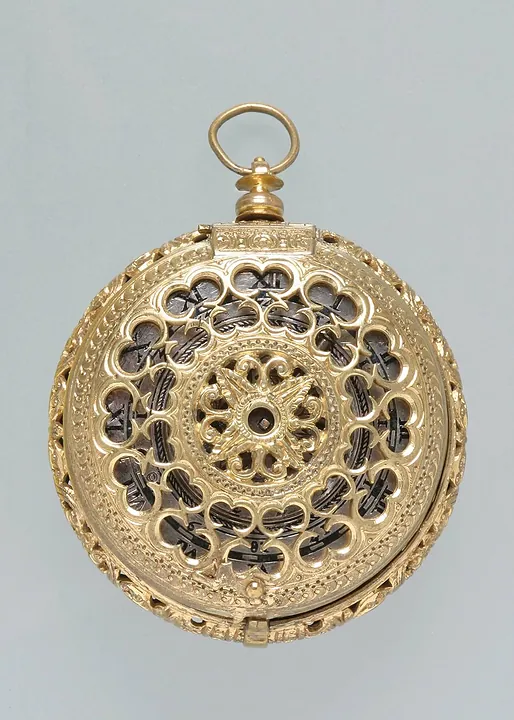
Pocket watch by Hans Reinboldt, France, c. 1600
German Clock Museum
Pocket Watches · 1600
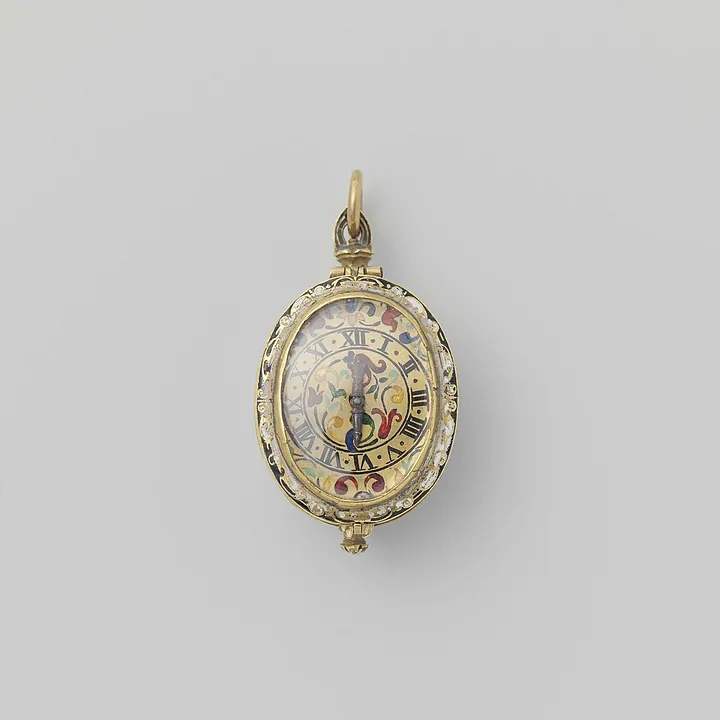
Pocket watch, France, 1600
Rijksmuseum
Pocket Watches · first quarter of 17th century
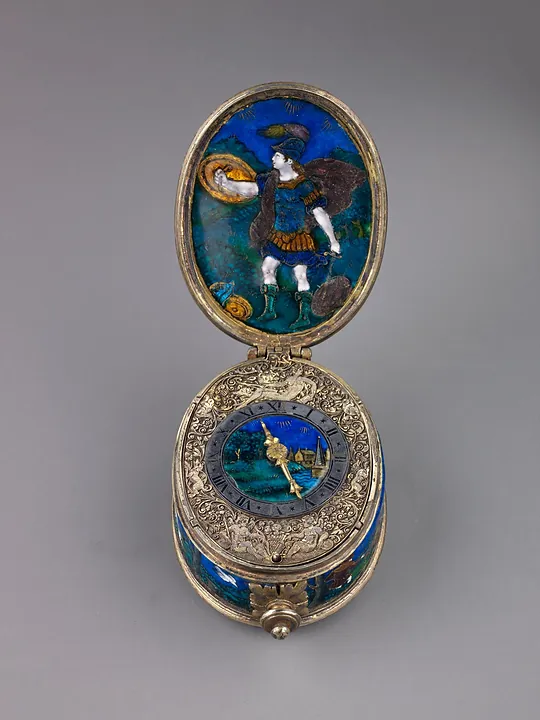
Watch by Suzanne de Court, France, first quarter of 17th century
The Metropolitan Museum of Art, New York
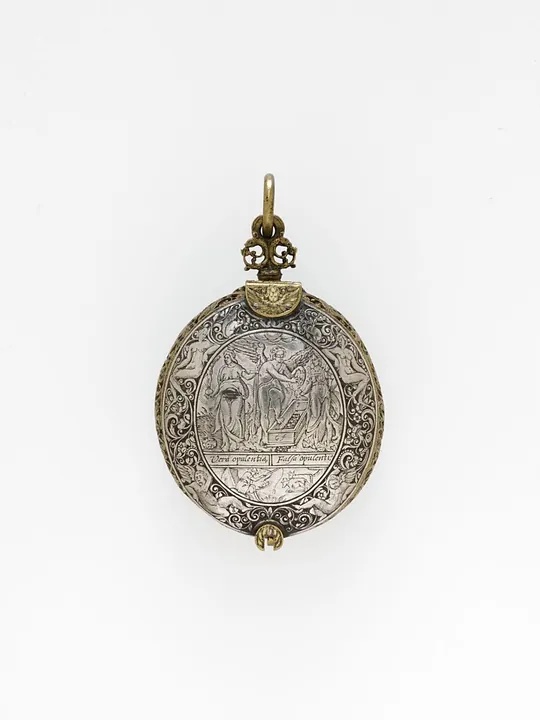
Pocket Watches · early 17th century
Watch of engraved and pierced silver and gilt brass, signed 'Noel Hubert A Rouen', France, early 17th century
Victoria and Albert Museum, London
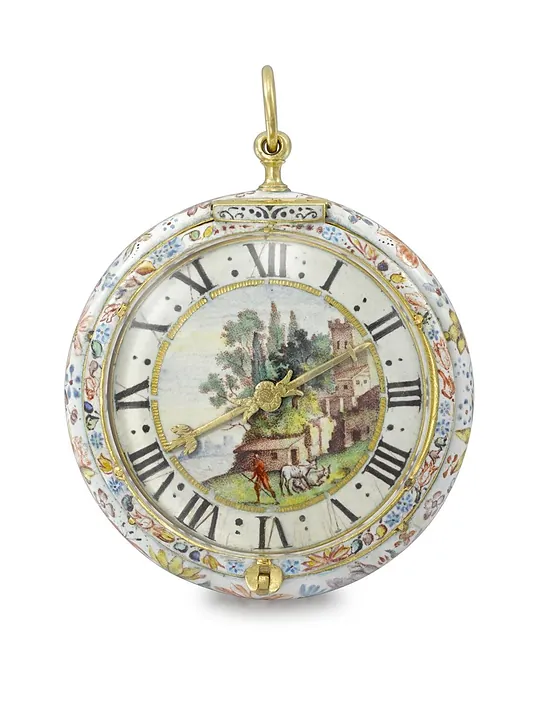
Pocket Watches · 1601–1700
Pocket watch by D Margotin, France, 1601–1700
Science Museum Group, London
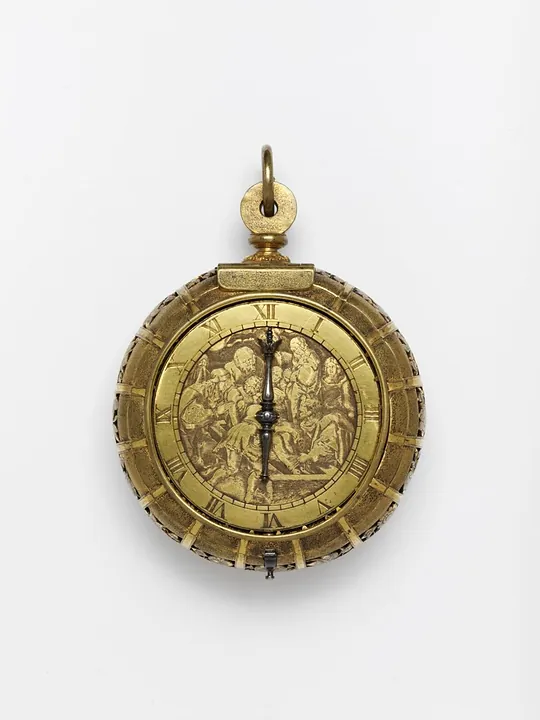
Pocket Watches · 1630
Carriage watch with gilt brass case and engraved dial by Nicolas Lemaindre, Blois, 1630
Victoria and Albert Museum, London
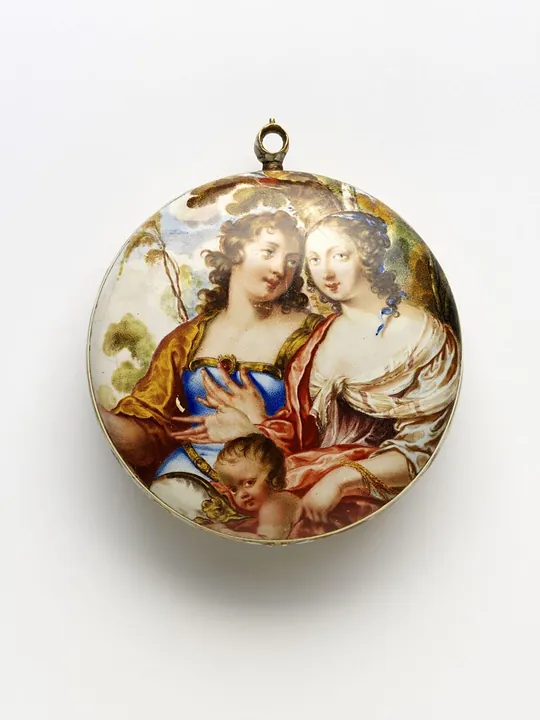
Pocket Watches · 1640–1660
Watch by Jan Bernardus Vrythoff, France, 1640–1660
Victoria and Albert Museum, London
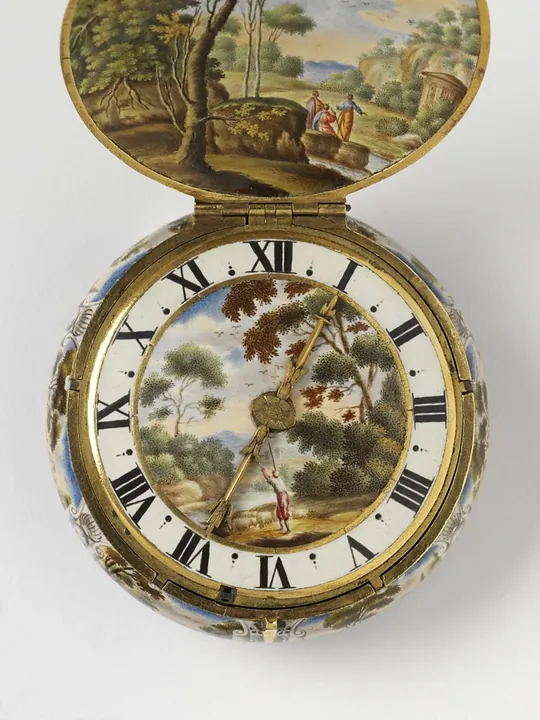
Pocket Watches · 1640–1650
Watch with enamelled gold case depicting Faith, Hope and Charity, made by Nicolas Bernard, Paris, 1640–1650
Victoria and Albert Museum, London