
Clocks · Lantern clock
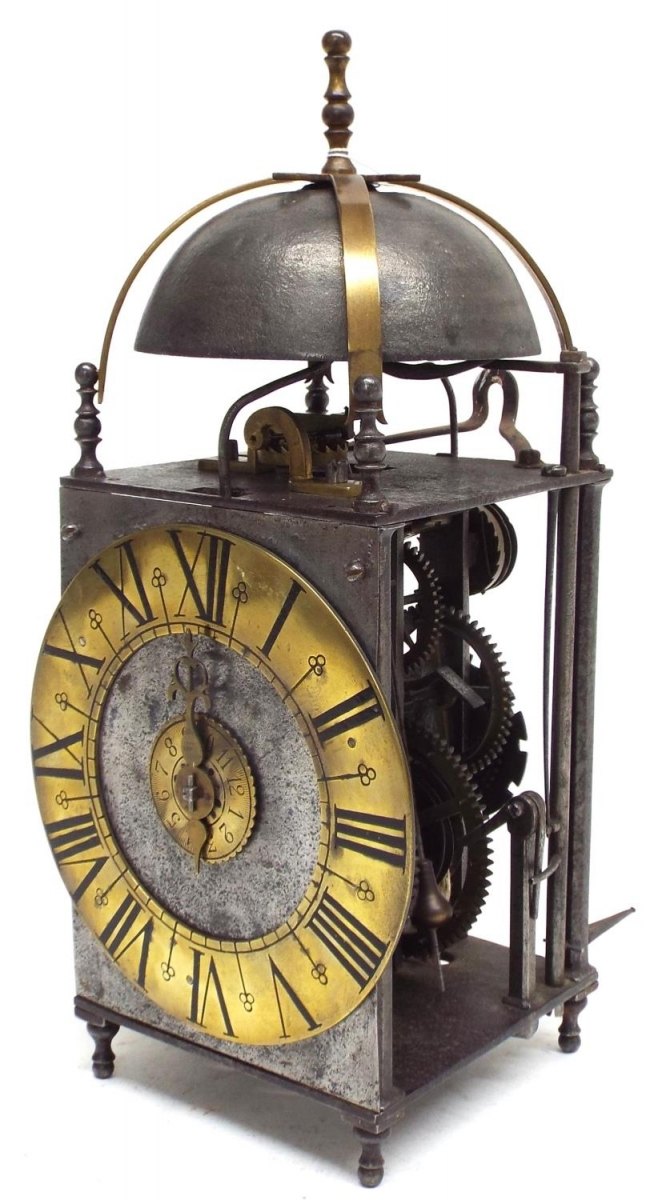
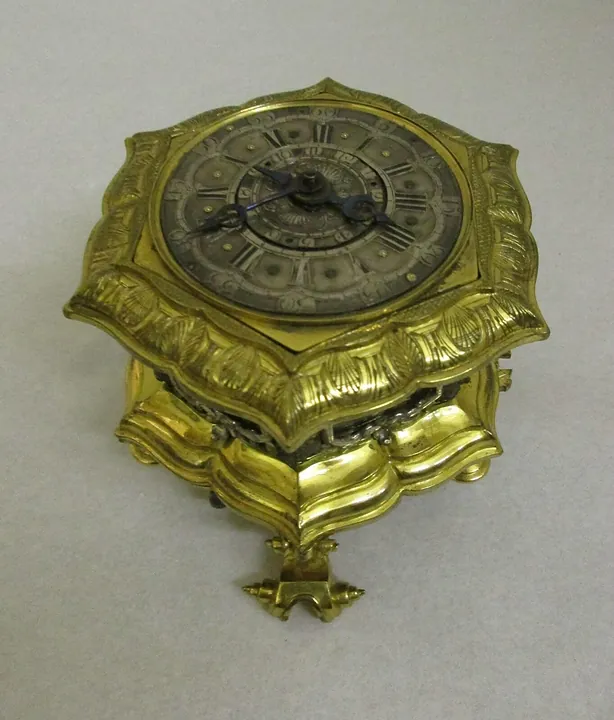
Early 18th century iron cased verge hook and spike lantern clock with alarm
- Maker / attribution
- Unrecorded in source
- Date
- early 18th century
- Historical period
- Early Modern Horology (1600 – 1750)
- Country of origin
- Unrecorded in source
- Object type
- Lantern clock
- Dimensions
- Height 14 in (36 cm)
- Auction house
- Gardiner Houlgate (auction house), Corsham
- Lot
- Sale 15, lot 1341
- Credit line
- Auction lot record: lot 1341, Fine Clocks, Gardiner Houlgate (22nd October 2020)
- Catalogue title (original)
- Interesting early 18th century iron cased verge hook and spike lantern clock with alarm, the 6.5" brass chapter ring enclosing a subsidiary alarm dial with single brass hand, the movement with central (English)
View the source record (auction lot) ↗ (opens another website in a new tab)Suggest a correction
Record summary
Catalogued by Gardiner Houlgate (auction house), Corsham (lot Sale 15, lot 1341), this is a lantern clock, dated early 18th century. The Atlas places it in the Early Modern Horology period (1600 – 1750) of its Clocks collection. Recorded dimensions: Height 14 in (36 cm). The record is illustrated with 1 photograph.
Assembled from the source record's structured fields. Dates and attributions are given as the source states them; where a field is missing the Atlas leaves it blank rather than estimating.
Catalogue description
Lot description — Gardiner Houlgate
Interesting early 18th century iron cased verge hook and spike lantern clock with alarm, the 6.5" brass chapter ring enclosing a subsidiary alarm dial with single brass hand, the movement with central pendulum and outside countwheel surmounted by strapwork, bell and finial, 14" high (pendulum, weights and continuous winding rope)
Historical context
Early Modern Horology (1600 – 1750)
Huygens' pendulum and balance spring transform accuracy; English makers develop the anchor and deadbeat escapements.
Huygens's pendulum (1656–57) improved clock accuracy from about a quarter of an hour to under a minute a day. The anchor escapement (c. 1670) and the long seconds pendulum created the longcase clock; London makers such as Fromanteel, Knibb, Tompion and Quare led European clockmaking, and French makers created the Boulle pendule.
Read the period in the timelineMore clocks from this periodEarlier: Renaissance Horology
Atlas type guide
Lantern, chamber and Gothic clocks
Domestic weight-driven clocks were made in southern Germany, Switzerland, Italy and Flanders from the fifteenth century. These 'Gothic' or chamber clocks have an open iron frame with corner posts, a verge escapement controlled by a foliot or balance wheel, and often an alarm or hour striking on a bell mounted above.
In England the lantern clock appeared around 1600: a brass posted-frame clock with a bell on top under decorative frets, hung on a hook or set on a wall bracket. After about 1658 many were converted to pendulum control, so originality of the escapement is a key question for any surviving example.
What to look for
- Iron (continental) or brass (English) posted frames with turned corner pillars and finials.
- A single hour hand — minute hands are rare before the pendulum era.
- Evidence of conversion: plugged holes, replaced escapement wheels or later pendulums.
- Fret designs and engraving on the dial centre, which help date English lantern clocks.
Dating clues
- Continental Gothic chamber clocks: c. 1450–1650.
- English lantern clocks: c. 1600–1720, with provincial examples later.
- Short 'bob' pendulum conversions after 1658; long pendulums with anchor escapement after c. 1670.
General guidance written by the Atlas editors about this kind of object. It is not a statement about this particular piece; for that, rely on the source record above and on physical examination.
Read next:FoliotAnchor (recoil) escapement
Related records
Clocks · Early 17th century
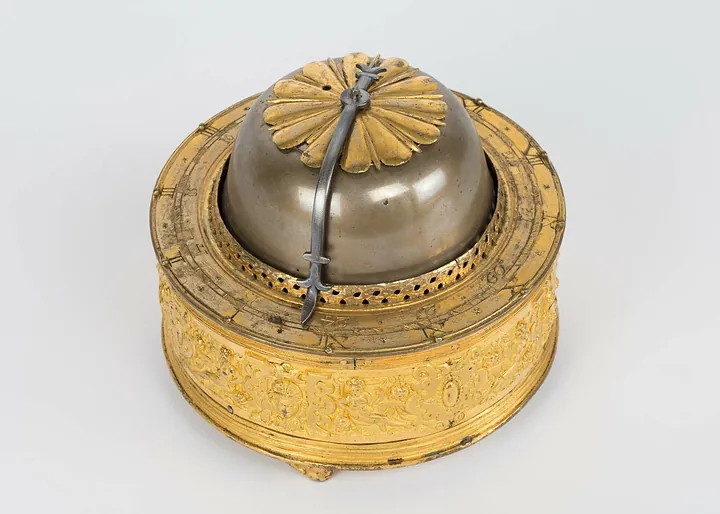
Table clock, probably Denmark, early 17th century
German Clock Museum
Clocks · 1590–1610
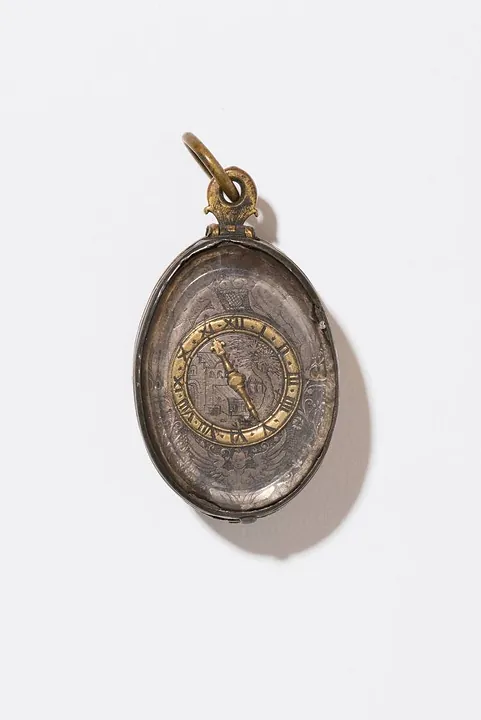
Clock, France, 1590–1610
MAK – Museum of Applied Arts
Clocks · c. 1600
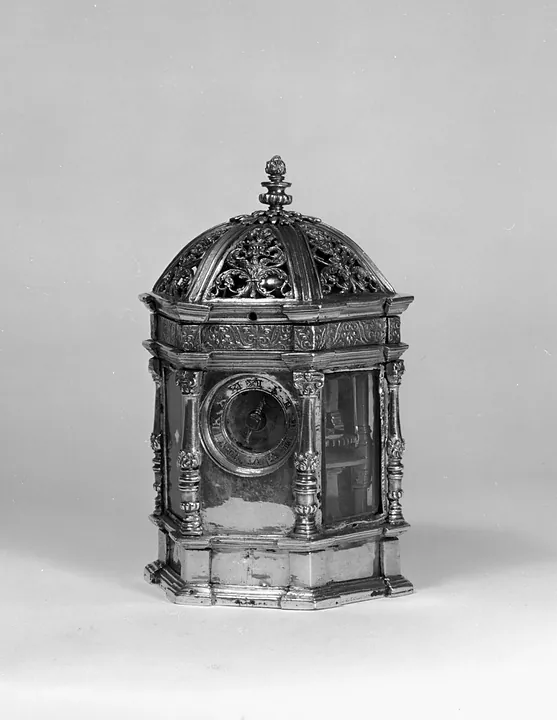
Table Clock, sheet brass, engraved, pierced and gilt, Paris, ca.1600, signed 'B(?) Pichard, à Paris'
Victoria and Albert Museum, London
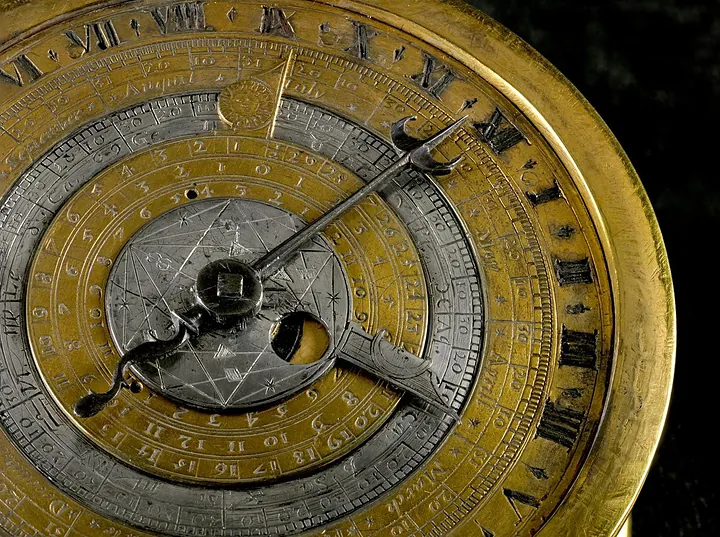
Clocks · 1598–1603
Circular table-clock with calendrical and lunar indications made by Nicholas Vallin in London between 1598 and 1603.
Science Museum Group, London
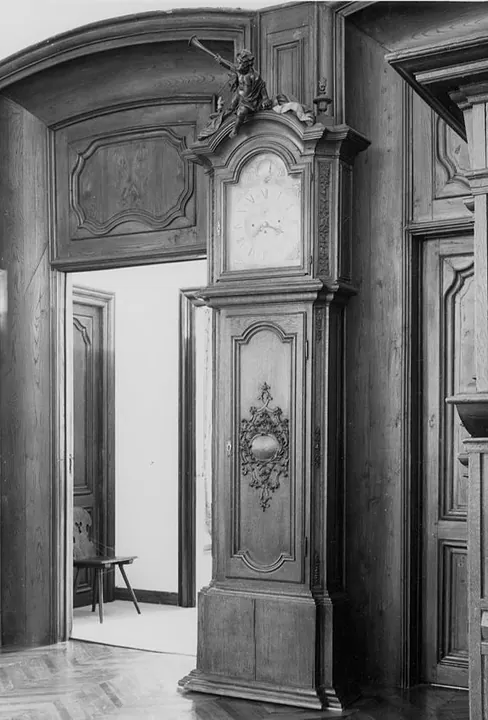
Clocks · 1600–1699
Clock by Joannes Volcker, Belgium, 1600–1699 (no. AP_10156031)
Royal Institute for Cultural Heritage
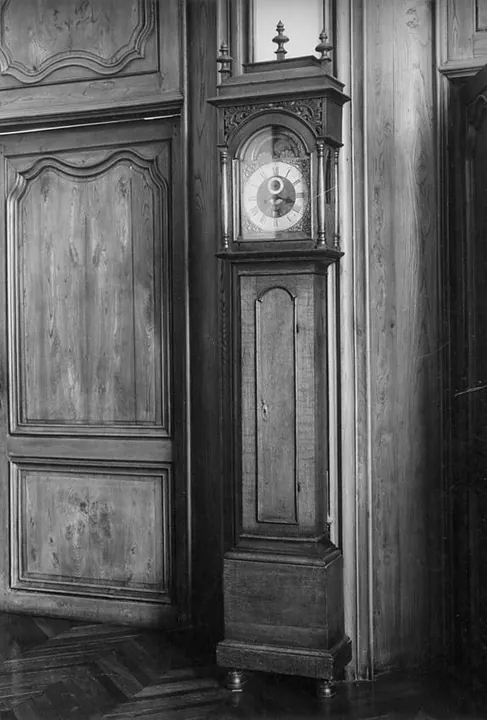
Clocks · 1600–1699
Clock by Joannes Volcker, Belgium, 1600–1699 (no. AP_10156032)
Royal Institute for Cultural Heritage
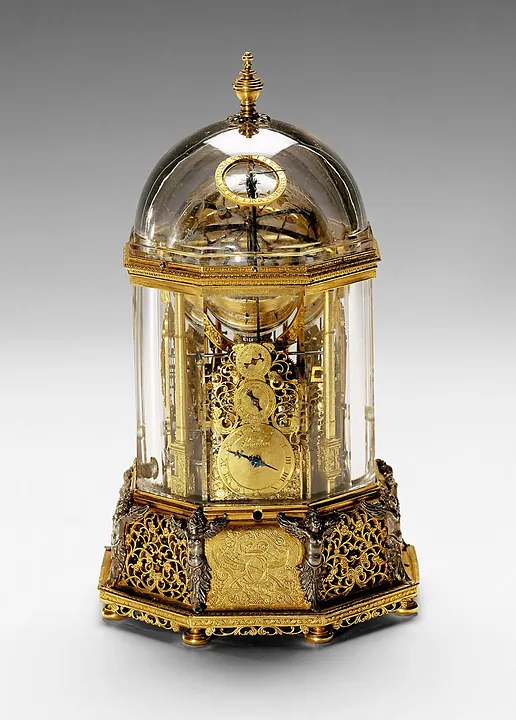
Clocks · 1600–1699
Clock attributed to Jobst Bürgi, Czech Republic, 1600–1699
Fine Arts Museum Vienna
Clocks · 1600–1700
Clock, Germany, 1600–1700
Victoria and Albert Museum, London