
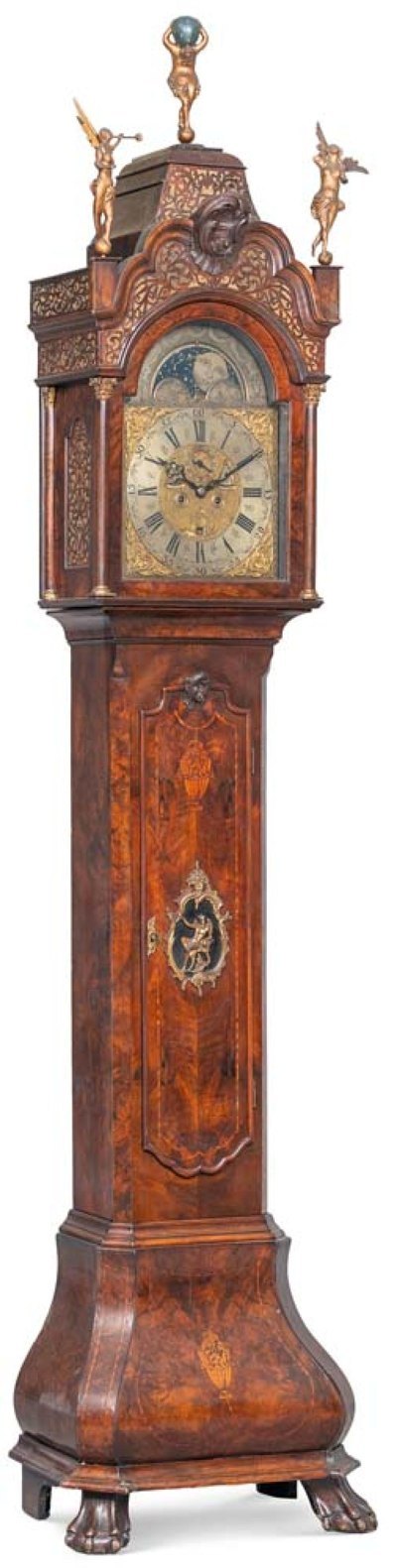
Clocks · Floor clock
Dutch 18th-century floor clock
- Maker / attribution
- Rutgerds v. Meus (source attribution)
- Date
- 18th century
- Historical period
- Early Modern Horology (1600 – 1750)
- Country of origin
- Netherlands
- Object type
- Floor clock
- Materials / technique
- Pine, walnut, walnut root, bronze, gilded wood
- Dimensions
- 290 x 68 x 37 cm
- Auction house
- Nagyhazi Gallery and Auction House (via Invaluable)
- Lot
- 847
- Credit line
- Nagyhazi Gallery and Auction House (via Invaluable)
- Catalogue title (original)
- Floor clock (English)
View the source record (auction lot) ↗ (opens another website in a new tab)Suggest a correction
Record summary
Catalogued by Nagyhazi Gallery and Auction House (via Invaluable) (lot 847), this is a floor clock attributed to Rutgerds v. Meus, made in Netherlands, dated 18th century. The Atlas places it in the Early Modern Horology period (1600 – 1750) of its Clocks collection. Materials and techniques recorded by the source: Pine, walnut, walnut root, bronze, gilded wood. Recorded dimensions: 290 x 68 x 37 cm. The record is illustrated with 1 photograph.
Assembled from the source record's structured fields. Dates and attributions are given as the source states them; where a field is missing the Atlas leaves it blank rather than estimating.
Catalogue description
Original object description
Dating to the 18th century, this Dutch tallcase floor clock stands 290 cm high, 68 cm wide, and 37 cm deep. Its construction relies on a pine core veneered in walnut and walnut root, embellished with intricate marquetry and carved accents, the entire case resting upon carved lion-paw feet. Carved and gilded wooden figures surmount the pediment, depicting Atlas bearing the celestial sphere between a pair of trumpeting angels, while the trunk door features an applied cast-bronze figure of Kronos. The chiseled and engraved bronze dial displays time via Arabic alongside Roman numerals and features an integrated sun-and-moon display within its upper register. Inscribed with the name of Amsterdam horologist Rutgerds v. Meus, the mechanism is powered by twin weights and a pendulum, providing a double-striking function. Both a winding key and a case key accompany the lot. When catalogued as Lot 847 at Budapest's Nagyhazi Gallery and Auction House in Hungary, the running timekeeper was cited as incomplete and in need of restoration.
Historical context
Early Modern Horology (1600 – 1750)
Huygens' pendulum and balance spring transform accuracy; English makers develop the anchor and deadbeat escapements.
Huygens's pendulum (1656–57) improved clock accuracy from about a quarter of an hour to under a minute a day. The anchor escapement (c. 1670) and the long seconds pendulum created the longcase clock; London makers such as Fromanteel, Knibb, Tompion and Quare led European clockmaking, and French makers created the Boulle pendule.
Read the period in the timelineMore clocks from this periodEarlier: Renaissance Horology
Atlas type guide
Longcase (tall-case or grandfather) clocks
The longcase clock was born from two seventeenth-century innovations: Christiaan Huygens's pendulum (1656–57) and the anchor escapement (c. 1670). A long seconds pendulum, nearly a metre long, swings with a small arc, and enclosing it together with the driving weights in a tall wooden case protected the mechanism and created a new piece of furniture. London makers such as Ahasuerus Fromanteel, Thomas Tompion and Joseph Knibb set the pattern.
By the eighteenth century longcase clocks were made throughout Britain, the Netherlands, Scandinavia (the Swedish Mora clock), France (the Comtoise from the Franche-Comté), Germany and colonial America. Eight-day movements with two weights became standard in better clocks; thirty-hour clocks with one weight and a rope or chain were cheaper alternatives.
What to look for
- Winding holes in the dial: two (eight-day, going and striking) or none (thirty-hour, pulled up by a chain).
- Brass dials with applied chapter rings (earlier) versus painted iron 'white' dials (after c. 1770 in Britain).
- Moon-phase arches, date apertures, seconds dials and maker's name on the dial.
- Case woods and style: ebonised, walnut marquetry, lacquer, oak or mahogany; regional styles from London, Lancashire, Scotland or America.
- Whether the movement and dial match the case — 'marriages' are common.
Dating clues
- Square brass dials suggest c. 1670–1720; arched brass dials c. 1715–1790.
- Painted (white) dials were made by Birmingham dial-makers from about 1772.
- Comtoise clocks with repoussé pendulums are mostly nineteenth century.
General guidance written by the Atlas editors about this kind of object. It is not a statement about this particular piece; for that, rely on the source record above and on physical examination.
Read next:Anchor (recoil) escapementDeadbeat escapementAnchor escapement
Related records
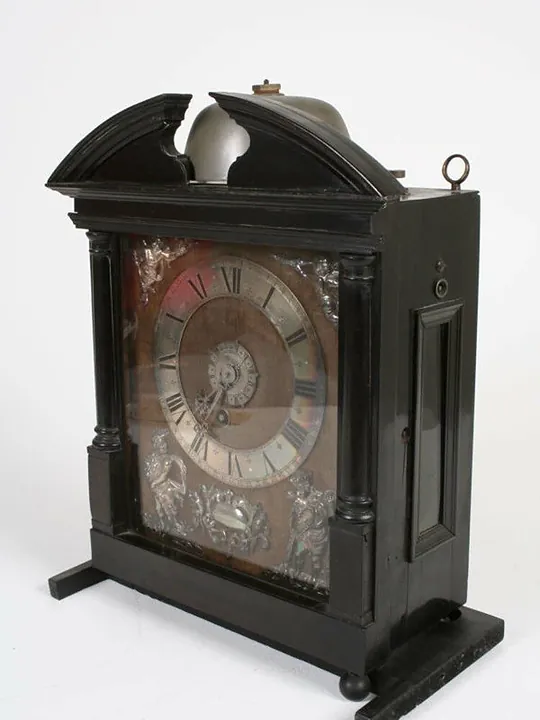
Clocks · 1650
Clock by J.J. van Leeuwaarden, Netherlands, 1650
City Museum Zutphen
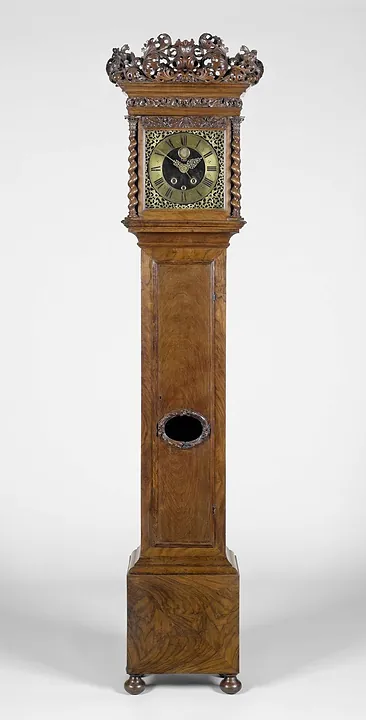
Clocks · 1680
Longcase clock, Netherlands, 1680
Rijksmuseum
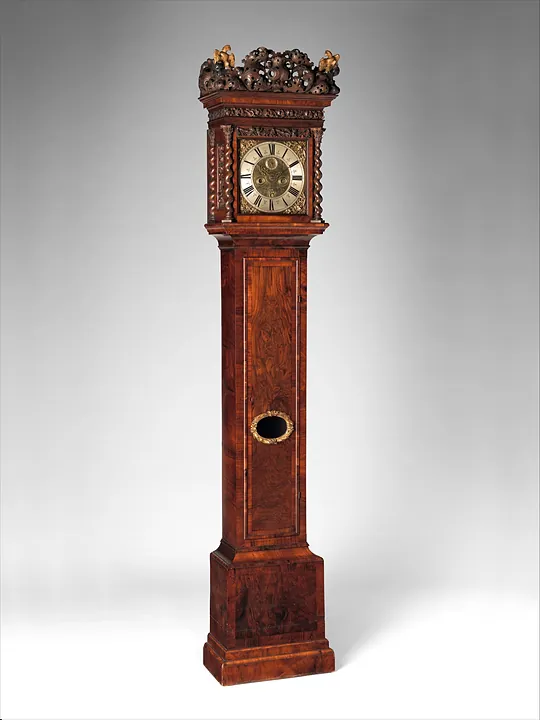
Clocks · c. 1690–94
Longcase clock, movement by Ahasuerus II Fromanteel, Netherlands, c. 1690–94
The Metropolitan Museum of Art, New York
Clocks · 1715
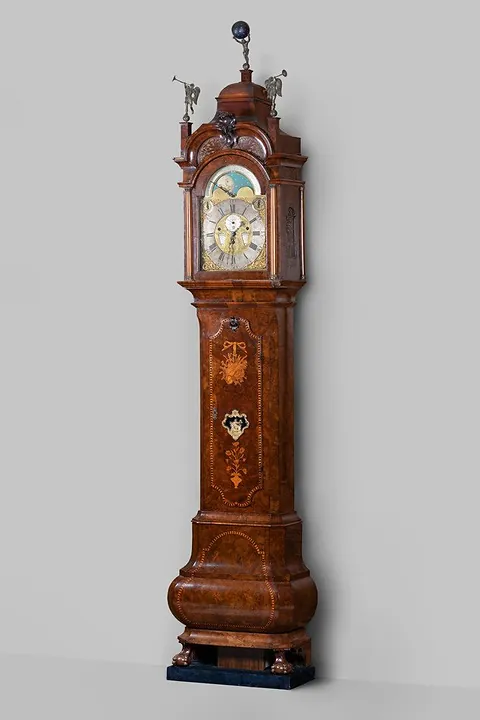
Longcase clock by Paulus Bramer, Netherlands, 1715
Geldersch Landschap & Kasteelen
Clocks · 1715–1725
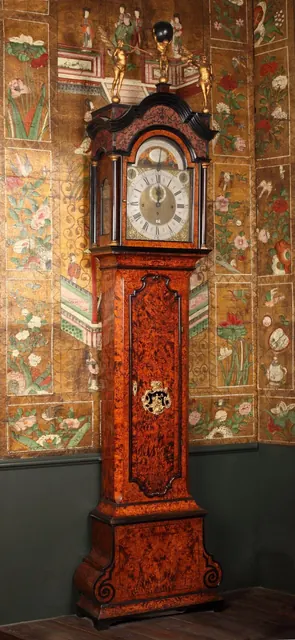
Longcase clock by Roger Dunster, Netherlands, 1715–1725
Victoria and Albert Museum, London
Clocks · c.1715 - c.1725
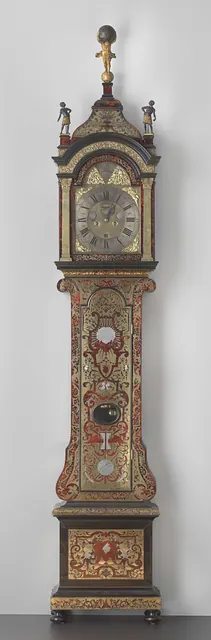
Longcase clock
Rijksmuseum
Clocks · c.1730 - c.1750
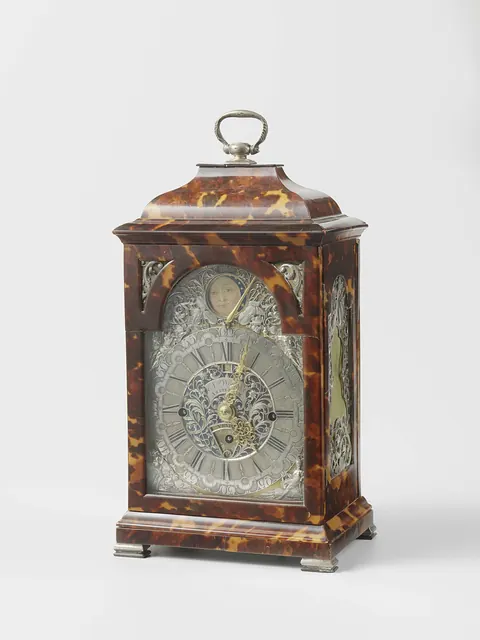
Mechanical clock, Netherlands, c.1730 - c.1750
Rijksmuseum
Clocks · c.1700 - c.1725
Furniture, Netherlands, c.1700 - c.1725
Rijksmuseum