Clocks · Clock
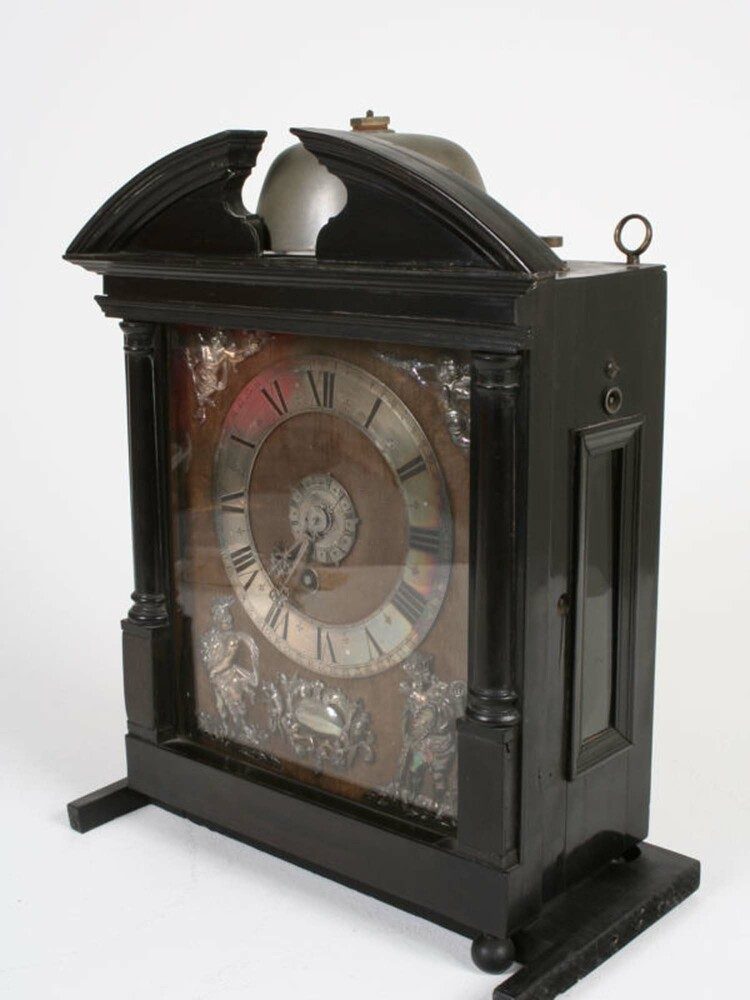
Clock by J.J. van Leeuwaarden, Netherlands, 1650
- Maker / attribution
- J.J. van Leeuwaarden (creator)
- Date
- 1650
- Historical period
- Early Modern Horology (1600 – 1750)
- Country of origin
- Netherlands
- Object type
- Clock
- Holding institution
- City Museum Zutphen
- Accession / object no.
- resource_document_collectiegelderland_NTIJ76Z4QVBJQUHZBMZVLB6U6WDMA32WKV2W5MPCQN64CMQGDCOA
- Catalogue title (original)
- Haags klokje (Dutch)
Record summary
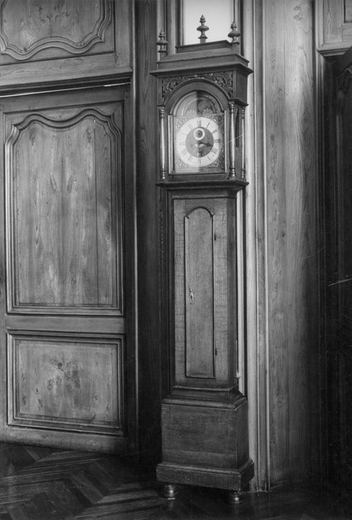
Held and catalogued by City Museum Zutphen (object number resource_document_collectiegelderland_NTIJ76Z4QVBJQUHZBMZVLB6U6WDMA32WKV2W5MPCQN64CMQGDCOA), this is a clock by J.J. van Leeuwaarden, made in Netherlands, dated 1650. The Atlas places it in the Early Modern Horology period (1600 – 1750) of its Clocks collection. The record is illustrated with 1 photograph.
Assembled from the source record's structured fields. Dates and attributions are given as the source states them; where a field is missing the Atlas leaves it blank rather than estimating.
Catalogue description
Catalogue description from City Museum Zutphen (Dutch)
Haags klokje uit circa 1685 met kast van eikenhout, ebben gefineerd, hangend aan twee messing ogen of staande op vier gedraaide bolvormige houten pootjes. Aan weerszijden van het glasdeurtje bevinden zich twee rechte pilasters van ebbenhout. Het kastje wordt aan de bovenkant bekroond door een gebogen onderbroken timpaan. Achter de gescharnierde wijzerplaat bevindt zich het achterpaneel van het kastje met daarop een noten gefineerde ster. De wijzerplaat is bekleed met bruin fluweel. De hoekornamenten en het los scharnierend naamschildje zijn van zilver, gedreven en geciseleerd. De hoekornamenten stellen de vier elementen voor: vuur, wind, water en aarde. De cijferring is van zilver met zwart ingelakte Romeinse uurcijfers, aan de buitenrand bevinden zich minutenstreepjes met Arabische minuutcijfers. De wijzers zijn ook van zilver, uitgezaagd en gegraveerd met symetrische bladrankmotieven. In het centrum van de cijfers bevindt zich de zilveren wekkerschijf. Het messing uurwerk heeft een gaand werk met horizontale spillegang met losse slinger en draadophanging en cycloïde boogjes (uitvinding Christiaan Huygens). Gaand- en slagwerk worden aangedreven door één veerton met dubbele tandkrans. Het wekkermechanisme bevindt zich los van het uurwerk rechtsboven in de kast. Vervaardiger: J.J. van Loeuwaarden [Leeuwaarden] Amsterdam.
Shown in the original language of the source catalogue. An editor-reviewed English translation has not yet been published; we do not publish machine translations as authoritative text.
Historical context
Early Modern Horology (1600 – 1750)
Huygens' pendulum and balance spring transform accuracy; English makers develop the anchor and deadbeat escapements.
Huygens's pendulum (1656–57) improved clock accuracy from about a quarter of an hour to under a minute a day. The anchor escapement (c. 1670) and the long seconds pendulum created the longcase clock; London makers such as Fromanteel, Knibb, Tompion and Quare led European clockmaking, and French makers created the Boulle pendule.
Read the period in the timelineMore clocks from this periodEarlier: Renaissance Horology
Atlas type guide
Domestic clocks
A clock combines four systems: a source of power (falling weight, coiled spring, or later electricity), a gear train that divides time, an escapement and oscillator that regulate it (foliot, pendulum or balance), and an indicating system of dial and hands or a bell. Its history runs from the large iron weight-driven clocks of the late thirteenth century to Renaissance spring-driven table clocks, the pendulum revolution of 1656, the factory clocks of the nineteenth century and electric and quartz clocks of the twentieth.
Domestic clocks also reflect regional furniture and decorative traditions — English longcase and bracket clocks, French pendules, Viennese regulators, Black Forest and American shelf clocks — and therefore record changing tastes as much as technical progress.
What to look for
- How the clock is powered: weights, spring barrel, fusee, electric coil.
- The oscillator: foliot, short pendulum, long seconds pendulum or balance.
- Whether it strikes: hour only (count wheel) or hours and quarters (rack striking).
- The maker or retailer's name on dial and movement, and any factory trademarks.
- Signs of alteration — replaced dials, converted escapements, 'married' cases.
Dating clues
- Before 1656 clocks used foliots or balances; after, most domestic clocks have pendulums.
- Anchor escapements spread after c. 1670; minute hands became common at the same time.
- Factory production in America and Germany transformed prices after c. 1840.
General guidance written by the Atlas editors about this kind of object. It is not a statement about this particular piece; for that, rely on the source record above and on physical examination.
Read next:Anchor (recoil) escapementFoliot
Related records
Clocks · 1550–1650
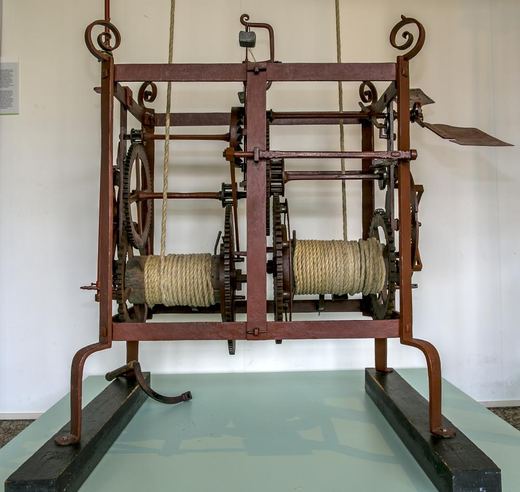
Turret clock, Netherlands, 1550–1650
Museum Klok & Peel
Clocks · 1680
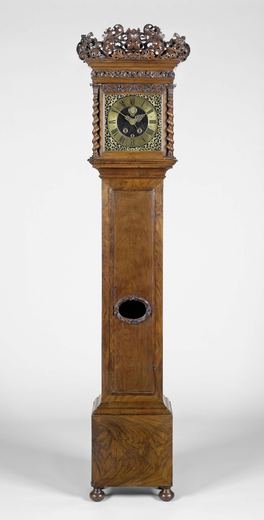
Longcase clock, Netherlands, 1680
Rijksmuseum
Clocks · 1715
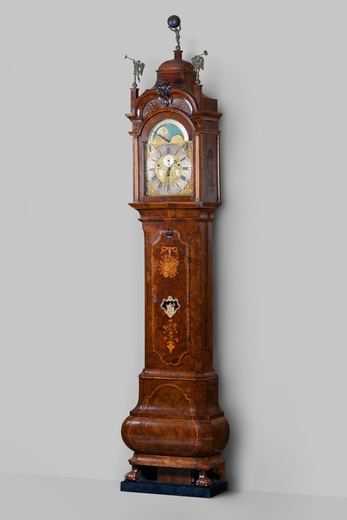
Longcase clock by Paulus Bramer, Netherlands, 1715
Geldersch Landschap & Kasteelen
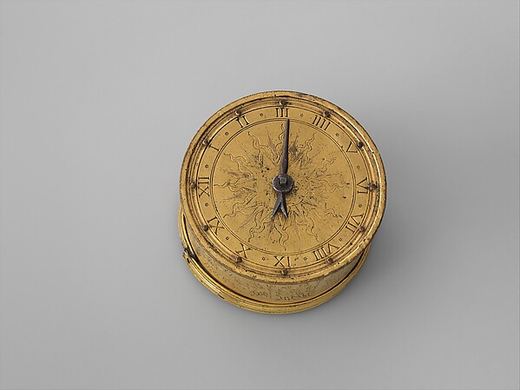
Clocks · case 1554, movement ca. 1680
Table clock by Caspar Behaim (Chasparus Bohemus), Austria, case 1554, movement ca. 1680
The Metropolitan Museum of Art, New York
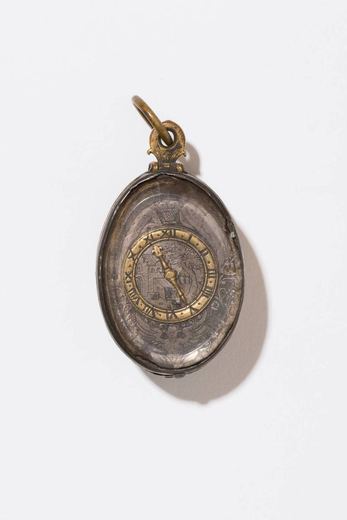
Clocks · 1590–1610
Clock, France, 1590–1610
MAK – Museum of Applied Arts
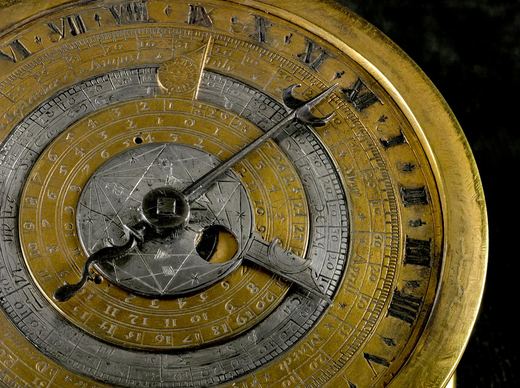
Clocks · 1598-1603
Circular table-clock with calendrical and lunar indications made by Nicholas Vallin in London between 1598 and 1603.
Science Museum Group, London
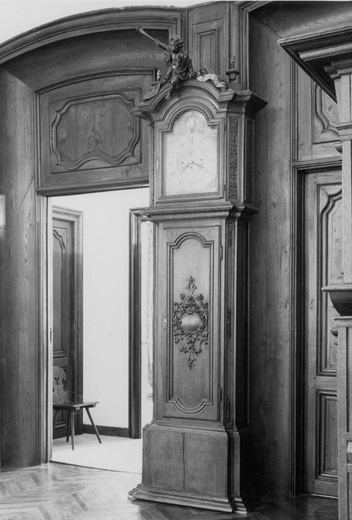
Clocks · 1600–1699
Clock by Joannes Volcker, Belgium, 1600–1699 (Royal Institute for Cultural Heritage AP_10156031)
Royal Institute for Cultural Heritage
Clocks · 1600–1699
Clock by Joannes Volcker, Belgium, 1600–1699 (Royal Institute for Cultural Heritage AP_10156032)
Royal Institute for Cultural Heritage