
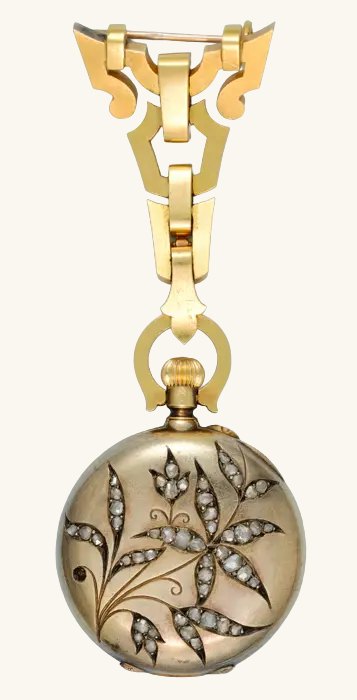
Pocket Watches · Pocket watch
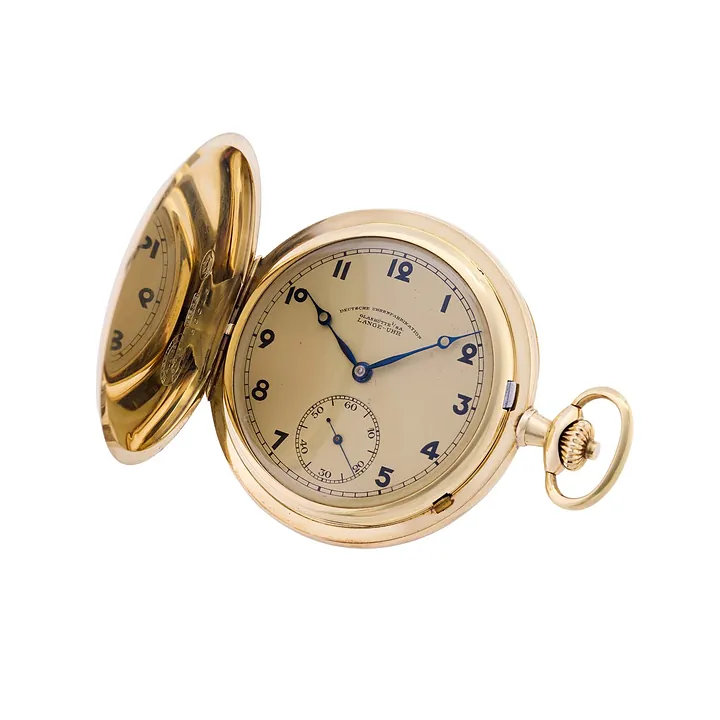
Diamond Set Gold Half Hunter Pendant Watch, c. 1900
- Maker / attribution
- Unrecorded in source
- Date
- c. 1900
- Historical period
- Golden Age of Mechanical Watchmaking (1900 – 1945)
- Country of origin
- Unrecorded in source
- Object type
- Pocket watch
- Materials / technique
- gold, diamond
- Dealer
- WatchMuseum.org shop
- Stock no.
- Product 6357
- Credit line
- Dealer listing, WatchMuseum.org shop (product 6357)
- Catalogue title (original)
- Diamond Set Gold Half Hunter Pendant Watch (English)
View the source record (dealer listing) ↗ (opens another website in a new tab)Suggest a correction
Record summary
Catalogued by WatchMuseum.org shop (stock number Product 6357), this is a pocket watch, dated c. 1900. The Atlas places it in the Golden Age of Mechanical Watchmaking period (1900 – 1945) of its Pocket Watches collection. Materials and techniques recorded by the source: gold, diamond. The record is illustrated with 5 photographs.
Assembled from the source record's structured fields. Dates and attributions are given as the source states them; where a field is missing the Atlas leaves it blank rather than estimating.
Catalogue description
Dealer description — WatchMuseum.org shop
The Diamond Set Gold Half Hunter Pendant Watch, dating back to circa 1900, is an exquisite testament to the artistry and craftsmanship of the late 19th century. Originating from Paris and signed by Johannel Bd. de la Madelaine, this remarkable timepiece embodies the elegance and sophistication of its era. Its intricate design features a stunning diamond-set gold half hunter case that captivates with its opulent floral pattern, while the front cover’s circular aperture and blue enamel chapter ring add a touch of regal refinement. The watch’s keyless mechanism is powered by a gilt bar movement, complete with a going barrel and steel wolf’s teeth winding work, ensuring precision and reliability. The plain cock with a polished steel regulator, along with the three-arm gilt balance and blue steel spiral hairspring, highlights the meticulous attention to detail in its construction. Both the cylinder and escape wheel are crafted from steel, further enhancing the watch’s durability and performance. The white enamel dial, adorned with Roman and Arabic numerals, is elegantly paired with gilt hands, creating a harmonious blend of functionality and style. Measuring 30 mm in diameter, this pendant watch is complemented by a heavy gold fob, adding an extra layer of luxury to its already impressive design. This timeless piece not only serves as a functional accessory but also as a cherished artifact that reflects the rich heritage and masterful craftsmanship of its time. This exquisite French cylinder watch from the late 19th century features a stunning diamond set gold half hunter case. The watch is keyless with a gilt bar movement, including a going barrel and steel wolf’s teeth winding work. The plain cock has a polished steel regulator, and the balance is a three-arm gilt balance with a blue steel spiral hairspring. The cylinder and escape wheel are both made of steel. The white enamel dial showcases Roman and Arabic numerals, complemented by elegant gilt hands. The watch is housed in a small gold half hunter case, featuring a back adorned with a beautiful floral pattern of diamonds. The front cover boasts a circular aperture and a blue enamel chapter ring, with a signed cuvette completing the design. This timepiece also comes with a heavy gold fob, adding an extra touch of opulence. Signed Johannel Bd. de la Madelaine Place of Origin: Paris Date of Manufacture: Circa 1900 Diameter :30 mm
Historical context
Golden Age of Mechanical Watchmaking (1900 – 1945)
The wristwatch displaces the pocket watch; waterproof cases, self-winding and grand complications.
The pocket watch reached technical maturity and then began to give way to the wristwatch after the First World War. Complicated watches for collectors such as Henry Graves Jr. and James Ward Packard, railroad watches, and slim Art Deco dress watches are characteristic.
Read the period in the timelineMore pocket watches from this periodEarlier: Industrial Revolution
Atlas type guide
Early spring-driven watches
Portable spring-driven timepieces appeared in southern Germany, France and Italy in the early sixteenth century; Peter Henlein of Nuremberg is traditionally credited, although the historical record is complex. These early watches were worn as pendants or carried, had iron or brass movements with a verge escapement and a foliot or small balance, and used a stackfreed or fusee to equalise spring force. They indicated hours only and were notoriously inaccurate.
From the later sixteenth century watches were made in Blois, Paris, Geneva, London and Augsburg in oval, octagonal, cruciform, skull and other 'form' cases of rock crystal, gilt brass, silver and enamel. They were jewellery and status objects as much as timekeepers.
What to look for
- A single hour hand and often a touch-pin hour ring for feeling the time.
- Stackfreed (a cam and spring) instead of a fusee on German watches.
- Pierced and engraved cocks over the balance, fine gut fusee lines.
- Rock-crystal, enamelled or engraved form cases.
Dating clues
- Drum-shaped German watches: c. 1530–1580.
- Oval and form watches: c. 1580–1650.
- Before c. 1675 there is no balance spring; watches can vary by many minutes a day.
General guidance written by the Atlas editors about this kind of object. It is not a statement about this particular piece; for that, rely on the source record above and on physical examination.
Related records
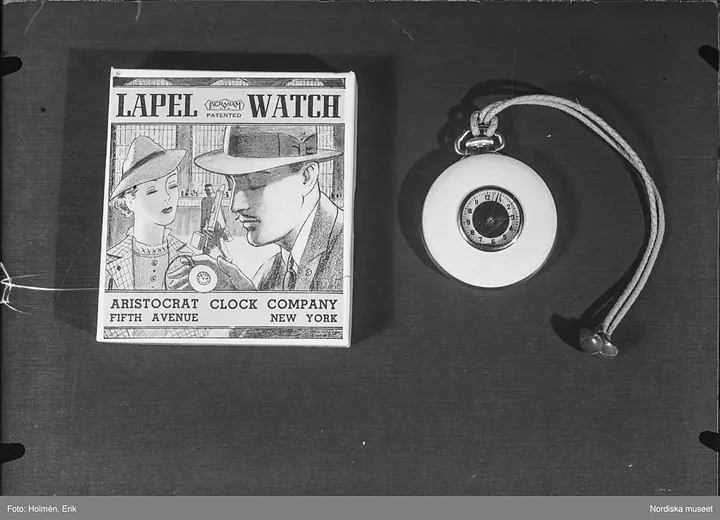
Pocket Watches · 1900–1999
Lapel watch by Erik Holmén, 1900–1999
Nordic Museum Foundation
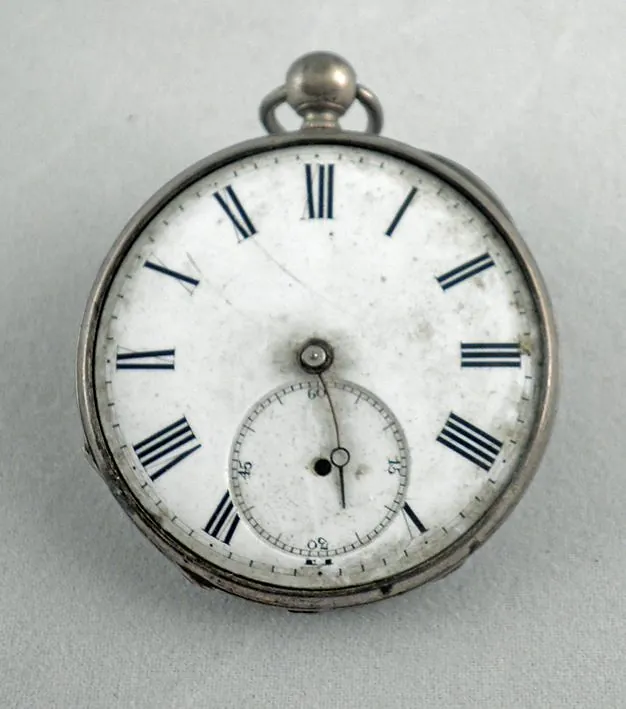
Pocket Watches · 1873–1930
Pocket watch, Lilla Malma socken, 1873–1930
Sörmland Museum
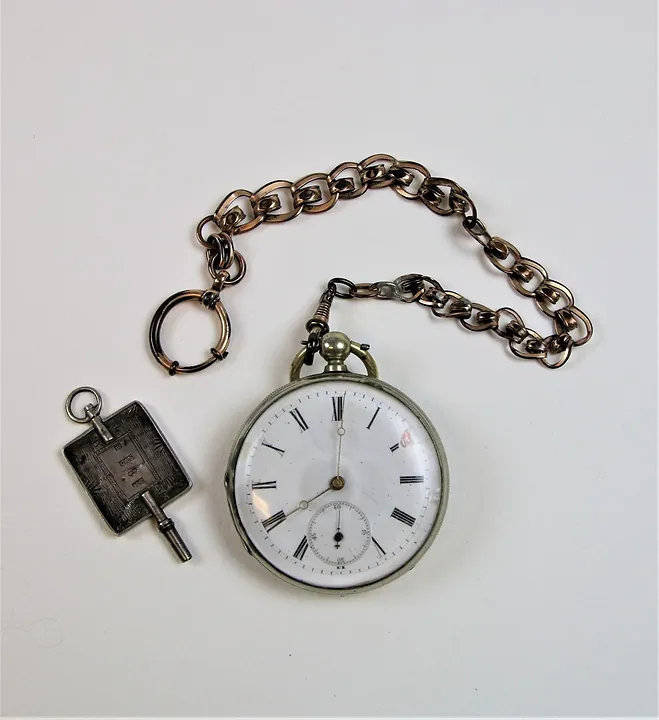
Pocket Watches · 1880–1920
Pocket watch, Sweden, 1880–1920
Sörmland Museum
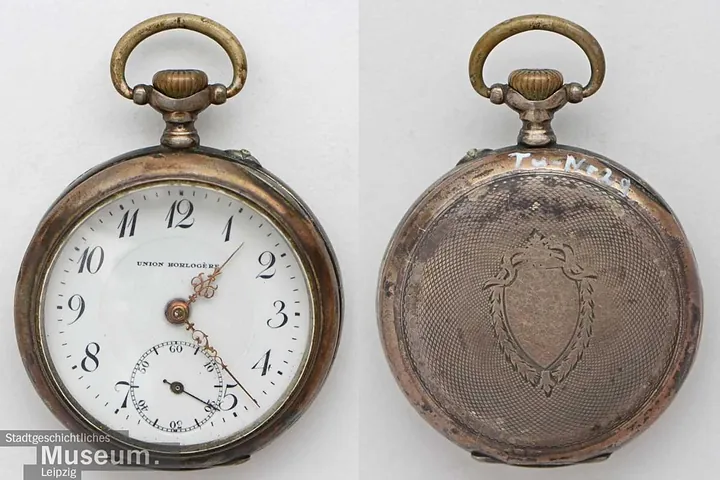
Pocket Watches · 1890–1910
Pocket watch by Union Horlogère, France, 1890–1910
Museum of City History Leipzig
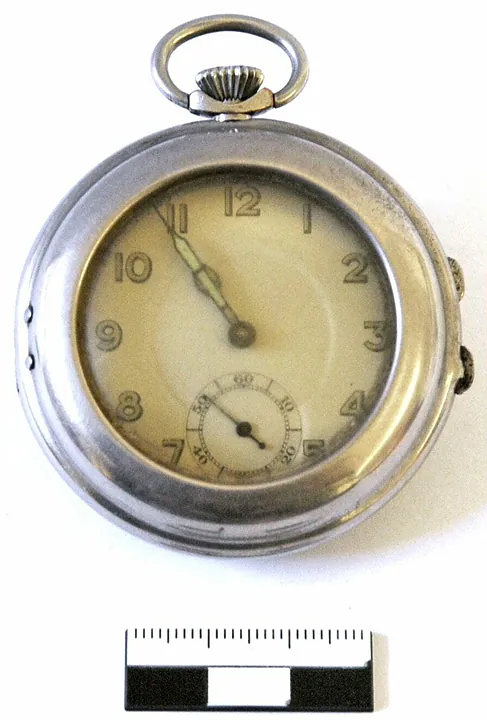
Pocket Watches · 1891–1945
Pocket watch, Germany, 1891–1945
Montanhistorisches Dokumentationszentrum
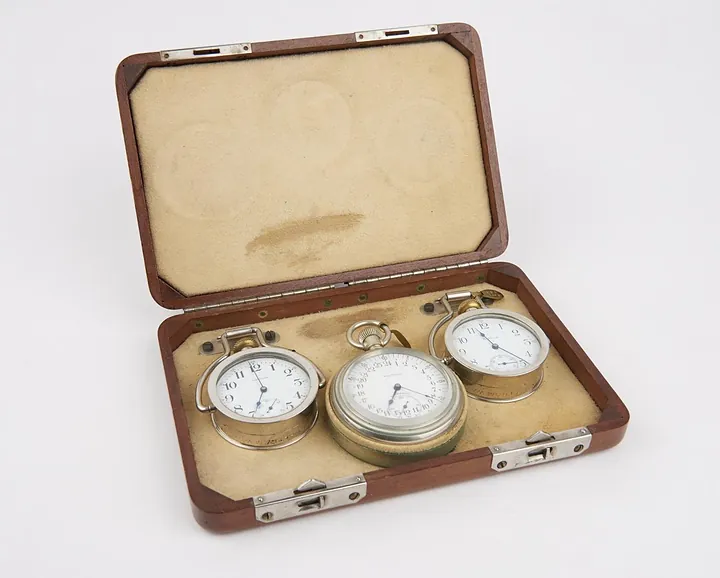
Pocket Watches · c. 1900
Pocket watch by American Waltham Watch Company, United States, c. 1900
Science Museum Group, London
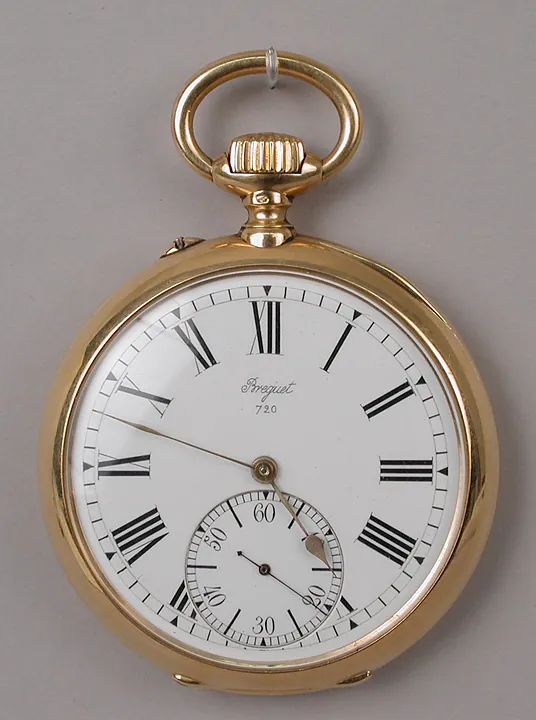
Pocket Watches · c. 1900
Pocket watch by Firm of Breguet et Fils, France, c. 1900
The Metropolitan Museum of Art, New York
Pocket Watches · c. 1900
A.Lange & Söhne pocket watch, c. 1900
Antiquorum auction archive, Geneva