
Clocks · Longcase clock
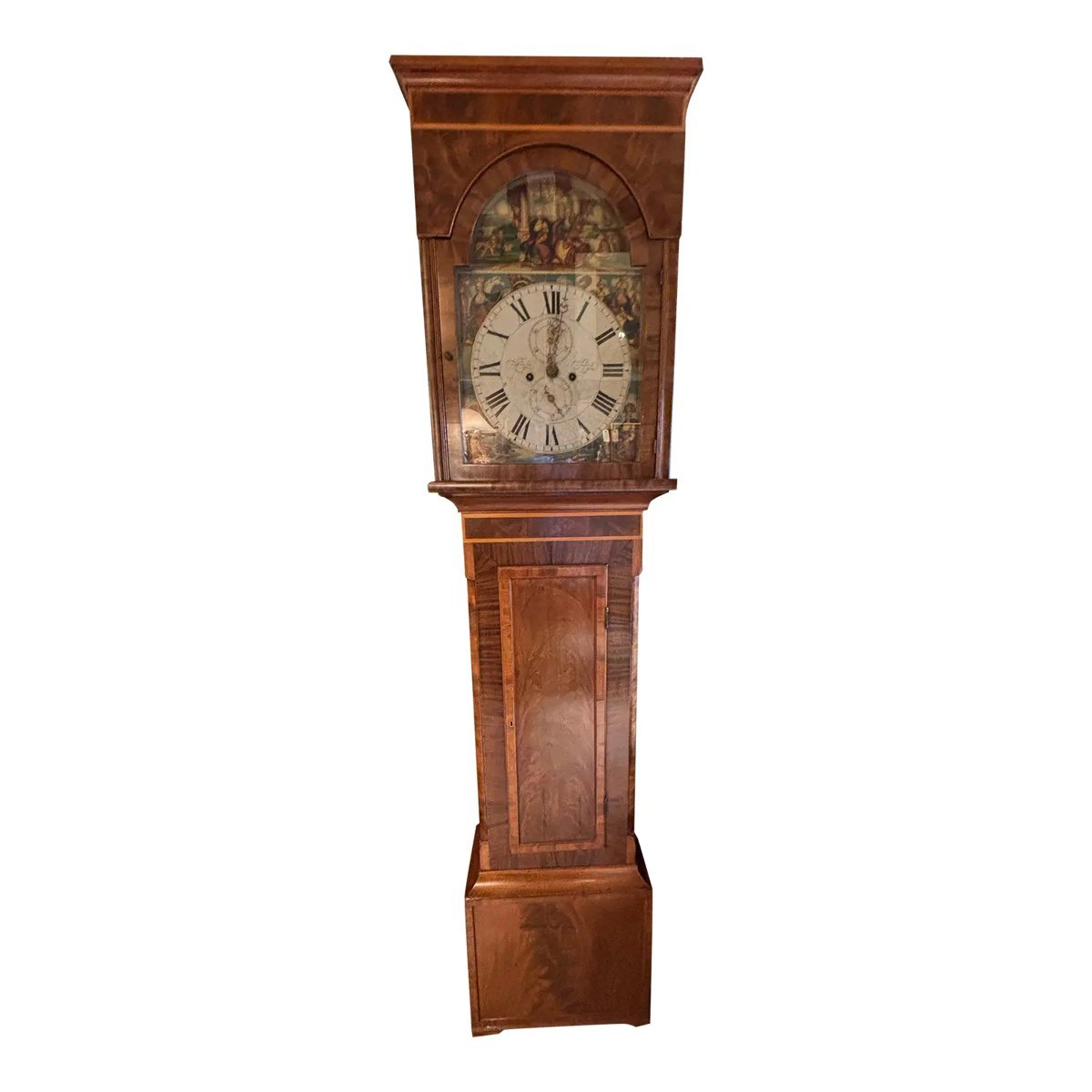
David Wilson Scottish Mahogany Longcase Clock
- Maker / attribution
- David Wilson (source attribution)
- Date
- c. 1860
- Historical period
- Industrial Revolution (1850 – 1900)
- Country of origin
- United Kingdom
- Object type
- Longcase clock
- Dimensions
- 82\"H × 19\"W × 10\"D
- Holding institution
- Chairish / J.G. Antiquary Co.
- Accession / object no.
- 36714129
- Credit line
- Chairish / J.G. Antiquary Co.
- Catalogue title (original)
- Antique Scottish Mahogany Grandfather Longcase Clock by David Wilson, Stewarton, C. 1860 [Lc] | Chairish (English)
View the source record ↗ (opens another website in a new tab)Suggest a correction
Record summary
Held and catalogued by Chairish / J.G. Antiquary Co. (object number 36714129), this is a longcase clock attributed to David Wilson, made in United Kingdom, dated c. 1860. The Atlas places it in the Industrial Revolution period (1850 – 1900) of its Clocks collection. Recorded dimensions: 82\"H × 19\"W × 10\"D. The record is illustrated with 1 photograph.
Assembled from the source record's structured fields. Dates and attributions are given as the source states them; where a field is missing the Atlas leaves it blank rather than estimating.
Catalogue description
Original object description
Dated by the seller to circa 1860, this Scottish grandfather clock is constructed of mahogany and retains a painted dial bearing the signature of David Wilson of Stewarton. The dial's arched upper reserve portrays two crowned female figures, while the spandrels at the corners present allegories of Europe, Asia, Africa, and America. Pierced hands sweep across the white dial face, which displays a network of fine cracks alongside Roman numerals, calendar indicators, and a seconds register. The housing features an architectural flat-topped hood with molded arches, linear inlay, and a paneled waist door, holding a two-weight striking movement governed by a pendulum, which the vendor reports to be running.
Original object description
Crafted from mahogany in the Scottish tradition, this tall clock case is designed with an architectural hood, stringing inlay, and a paneled trunk door. The overall measurements of the structure are 82 inches in height, 19 inches in width, and 10 inches in depth.
Original object description
The painted dial, bearing the signature of Stewarton maker David Wilson, is executed on a white ground with an arched lunette depicting two crowned figures, complemented by corner spandrels allegorically representing America, Africa, Asia, and Europe. The dial shows Roman hour markers, calendar indications, and an auxiliary seconds track, all set on a painted finish displaying age-related craquelure.
Original object description
A two-weight movement with pendulum strike drives the clock, with the seller affirming that it remains functional. While the principal description indicates Scottish origin circa 1860, repository records list the place of production as the United States. The clock is described as being in very good antique condition, with noted surface craquelure and light handling wear.
Historical context
Industrial Revolution (1850 – 1900)
American interchangeable-parts manufacture; railroad time standards; Swiss and German factory systems.
Factory production transformed the clock into an everyday object. American makers (Seth Thomas, Ansonia, Waterbury) and German factories (Junghans, Gustav Becker, Lenzkirch) sold millions of shelf, wall and alarm clocks worldwide; France produced standardised Paris movements and carriage clocks; electric time distribution began.
Read the period in the timelineMore clocks from this periodEarlier: Precision & Scientific Horology
Atlas type guide
Longcase (tall-case or grandfather) clocks
The longcase clock was born from two seventeenth-century innovations: Christiaan Huygens's pendulum (1656–57) and the anchor escapement (c. 1670). A long seconds pendulum, nearly a metre long, swings with a small arc, and enclosing it together with the driving weights in a tall wooden case protected the mechanism and created a new piece of furniture. London makers such as Ahasuerus Fromanteel, Thomas Tompion and Joseph Knibb set the pattern.
By the eighteenth century longcase clocks were made throughout Britain, the Netherlands, Scandinavia (the Swedish Mora clock), France (the Comtoise from the Franche-Comté), Germany and colonial America. Eight-day movements with two weights became standard in better clocks; thirty-hour clocks with one weight and a rope or chain were cheaper alternatives.
What to look for
- Winding holes in the dial: two (eight-day, going and striking) or none (thirty-hour, pulled up by a chain).
- Brass dials with applied chapter rings (earlier) versus painted iron 'white' dials (after c. 1770 in Britain).
- Moon-phase arches, date apertures, seconds dials and maker's name on the dial.
- Case woods and style: ebonised, walnut marquetry, lacquer, oak or mahogany; regional styles from London, Lancashire, Scotland or America.
- Whether the movement and dial match the case — 'marriages' are common.
Dating clues
- Square brass dials suggest c. 1670–1720; arched brass dials c. 1715–1790.
- Painted (white) dials were made by Birmingham dial-makers from about 1772.
- Comtoise clocks with repoussé pendulums are mostly nineteenth century.
General guidance written by the Atlas editors about this kind of object. It is not a statement about this particular piece; for that, rely on the source record above and on physical examination.
Read next:Anchor (recoil) escapementDeadbeat escapementAnchor escapement
Related records
Clocks · c. 1859
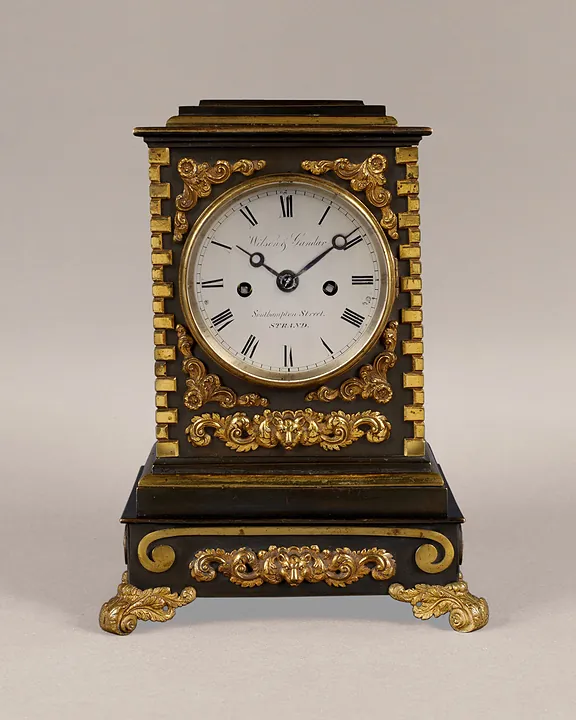
Clock by Wilson & Gandar, Southampton Street, Strand, c. 1859
Howard Walwyn Fine Antique Clocks (dealer), London
Clocks · c. 1870
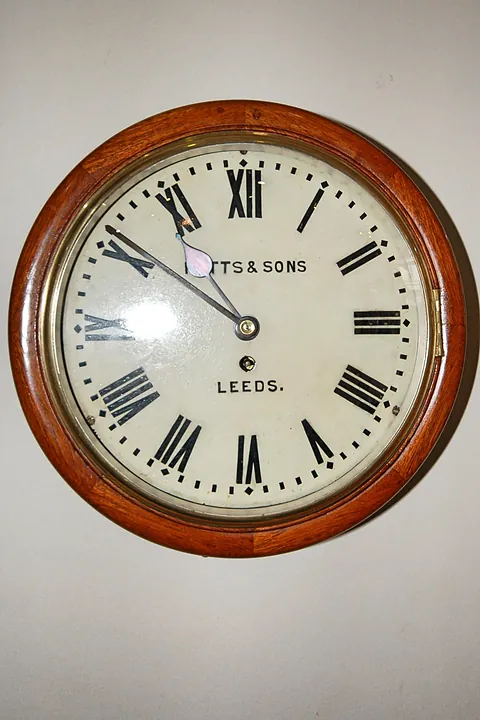
Wall Clock by Potts & Sons, Leeds, c. 1870
Pendulum of Mayfair (dealer), London
Clocks · c. 1880
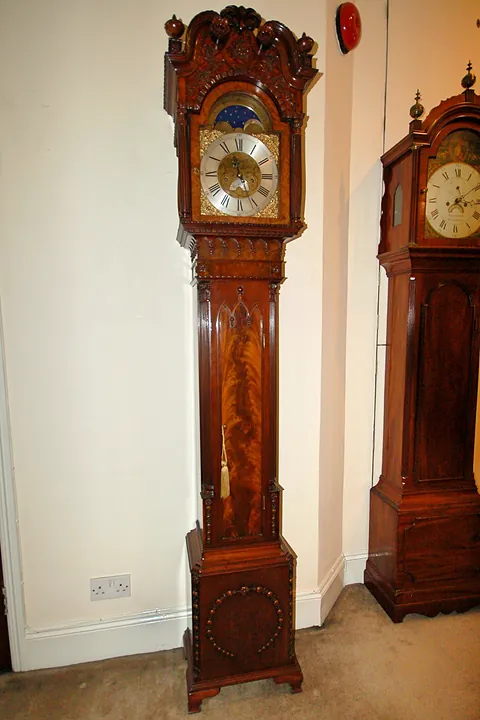
Grandfather Clock by Lowe & Sons, Chester, c. 1880
Pendulum of Mayfair (dealer), London
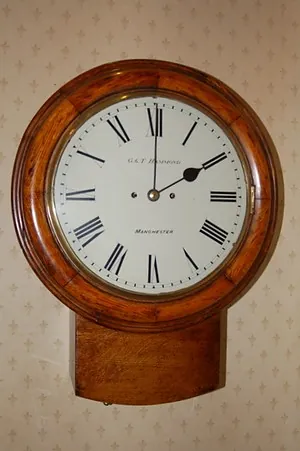
Clocks · c. 1880
G and T Hammond, Manchester, c. 1880
Pendulum of Mayfair (dealer), London
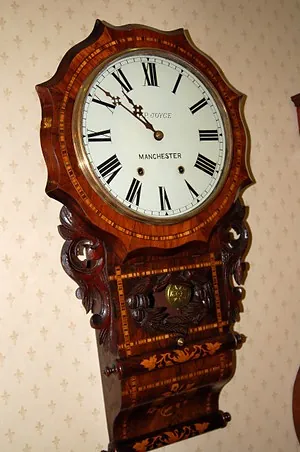
Clocks · c. 1880
American Wall Clock retailed by T P Joyce, Manchester, c. 1880
Pendulum of Mayfair (dealer), London
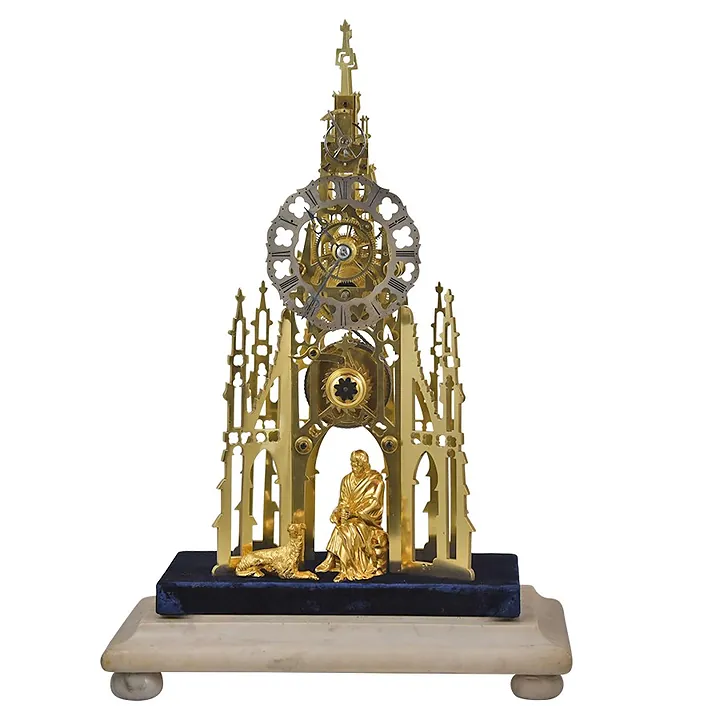
Clocks · c. 1870
English Sir Walter Scott Memorial Skeleton Clock
Renaissance Antiques
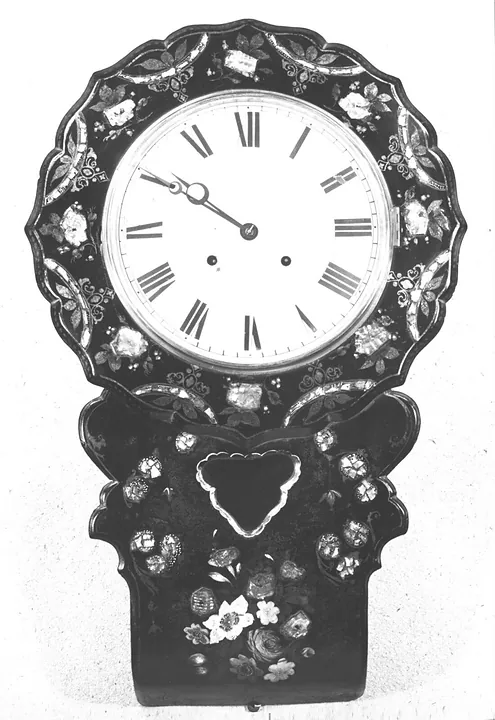
Clocks · 1830–1870
Wall clock in a papier mâché case with painted decoration. English, mid 19th century.
Victoria and Albert Museum, London
Clocks · 1840–1900
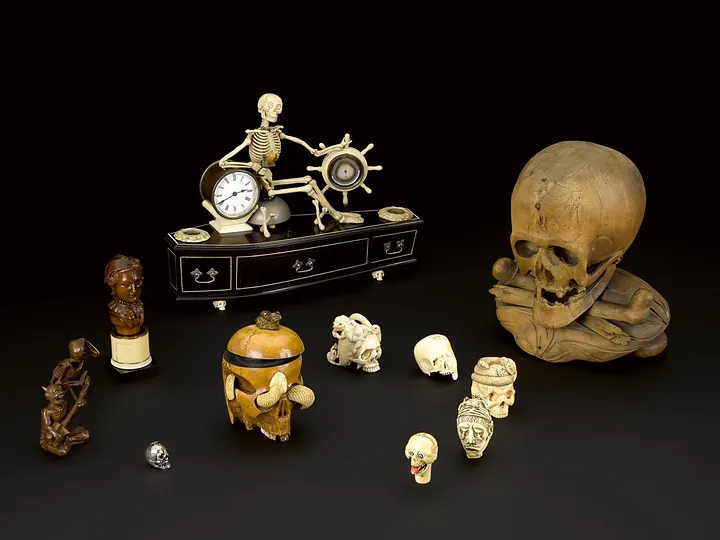
Alarm clock, mounted on model of coffin with skeleton, probably English, 1840–1900
Science Museum Group, London