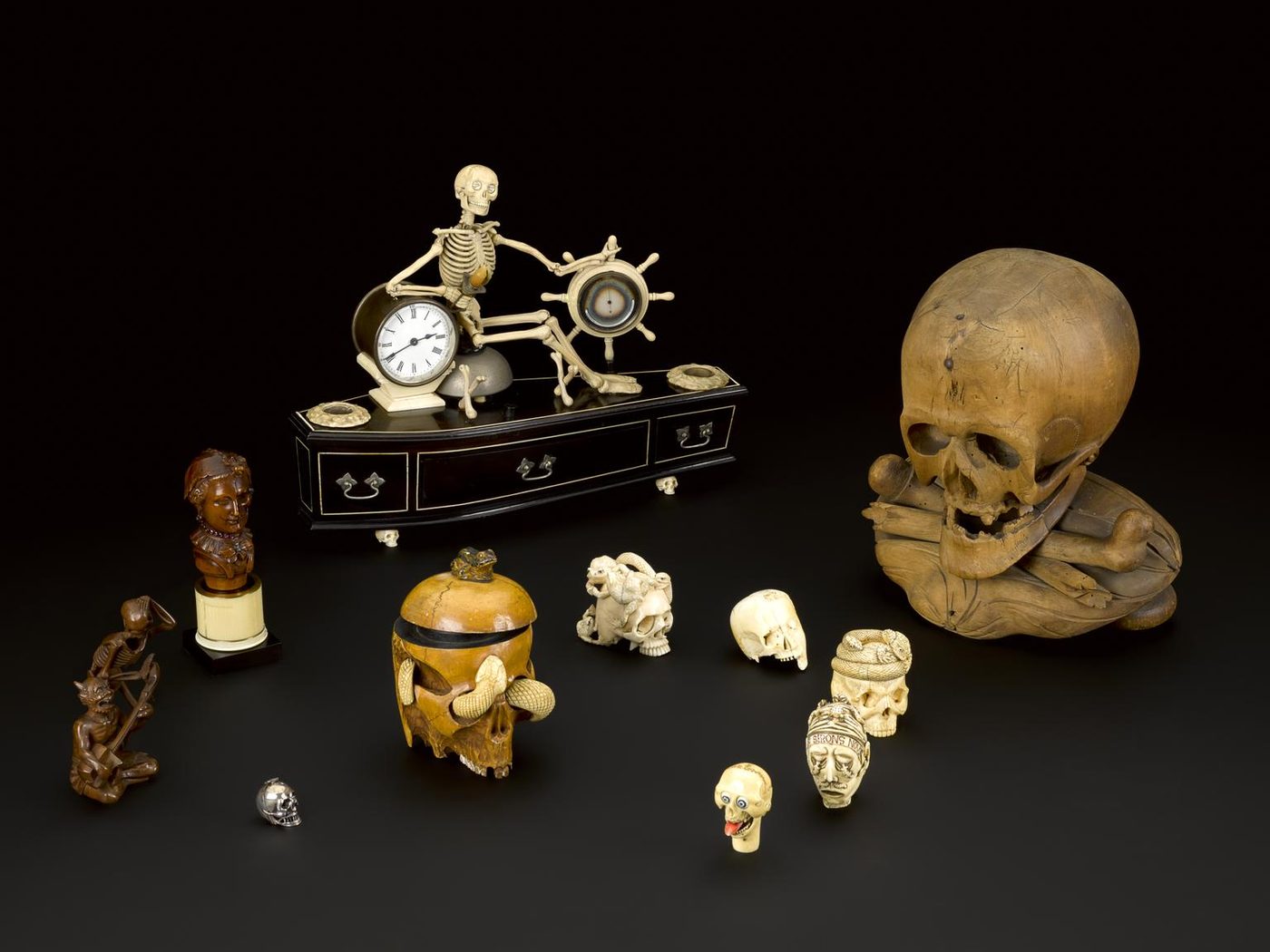
Clocks · Clock; coffin; skeleton
Alarm clock, mounted on model of coffin with skeleton, probably English, 1840-1900
- Maker / attribution
- Unrecorded in source
- Date
- 1840-1900
- Historical period
- Industrial Revolution (1850 – 1900)
- Country of origin
- England
- Place
- England, United Kingdom, England
- Object type
- Clock; coffin; skeleton
- Dimensions
- overall: 260 mm x 350 mm x 110 mm, 2.17 kg
- Holding institution
- Science Museum Group, London
- Accession / object no.
- A113335
- Credit line
- Loan, Wellcome Trust
- Catalogue title (original)
- Alarm clock
Record summary
Held and catalogued by Science Museum Group, London (object number A113335), this is a clock; coffin; skeleton, made in England, United Kingdom, England, dated 1840-1900. The Atlas places it in the Industrial Revolution period (1850 – 1900) of its Clocks collection. Recorded dimensions: overall: 260 mm x 350 mm x 110 mm, 2.17 kg. The record is illustrated with 4 photographs.
Assembled from the source record's structured fields. Dates and attributions are given as the source states them; where a field is missing the Atlas leaves it blank rather than estimating.
Catalogue description
Science Museum Group description
This elaborate alarm clock is a ‘memento mori’, probably of English origin. Memento mori translates from Latin as ‘Remember you must die’ and such objects were literally meant as reminders of death, to prompt people to think about the shortness of life and the inevitability of death. The clock is in the form of a coffin with an ivory skeleton reclining on top. This rests upon the bell and one hand holds a sand timer and a candle. The coffin also sits upon four ivory skulls. These symbols are typical of memento mori. The skeleton’s other hand rests upon a ship’s wheel, inside of which is a small thermometer and barometer. Two wells are at each end of the coffin, presumably to hold candles. It appears that when the alarm bell chimed, a small card running up the skeleton’s spinal column retracted to make the jaw open and the eyes roll.
Inscriptions & marks
;
Historical context
Industrial Revolution (1850 – 1900)
American interchangeable-parts manufacture; railroad time standards; Swiss and German factory systems.
Factory production transformed the clock into an everyday object. American makers (Seth Thomas, Ansonia, Waterbury) and German factories (Junghans, Gustav Becker, Lenzkirch) sold millions of shelf, wall and alarm clocks worldwide; France produced standardised Paris movements and carriage clocks; electric time distribution began.
Read the period in the timelineMore clocks from this periodEarlier: Precision & Scientific Horology
Atlas type guide
Skeleton clocks
A skeleton clock displays its movement: the plates are pierced to a minimum so that wheels, escapement and fusee can be seen, usually under a glass dome. French makers produced fine skeleton clocks in the late eighteenth century; in Victorian England they became popular showpieces, with frames in the shapes of cathedrals and famous buildings.
What to look for
- Pierced brass plates in scroll or architectural shapes.
- A glass dome and wooden or marble base.
- Fusee movements and sometimes passing strike on a bell.
Dating clues
- French skeleton clocks: c. 1780–1830.
- English cathedral-style skeleton clocks: c. 1840–1890.
General guidance written by the Atlas editors about this kind of object. It is not a statement about this particular piece; for that, rely on the source record above and on physical examination.
Read next:FuseeAnchor (recoil) escapement
Related records
Clocks · 1830-1870
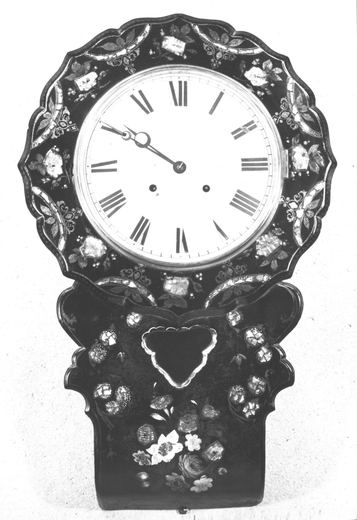
Wall clock in a papier mâché case with painted decoration. English, mid 19th century.
Victoria and Albert Museum, London
Clocks · 1840-1880
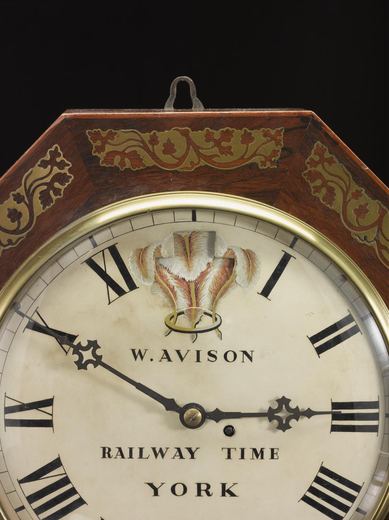
Wall Clock in octagonal case with Prince of Wales Feathers above makers name "W. Avison, Railway Time, York", made by William Avison, England, 1840-1880.
Science Museum Group, London
Clocks · 1843-1884
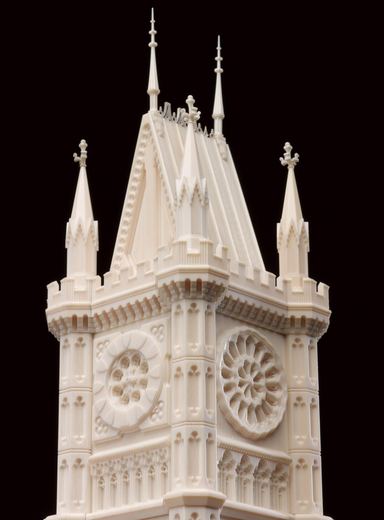
One ivory gothic clock tower & travelling case, by Holtzapffel and Company, London, England, 1843-1884
Science Museum Group, London
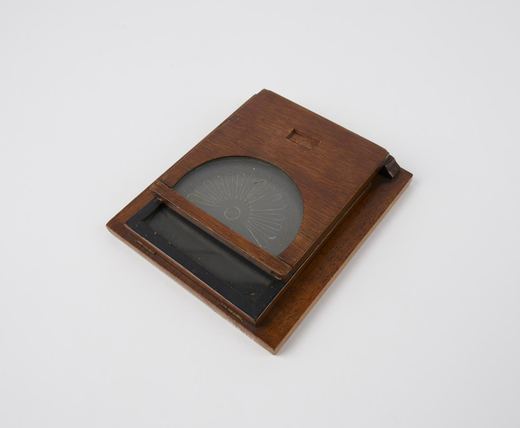
Clocks · 1845-1855
Clock by Darker, W. H., England, 1845-1855
Science Museum Group, London
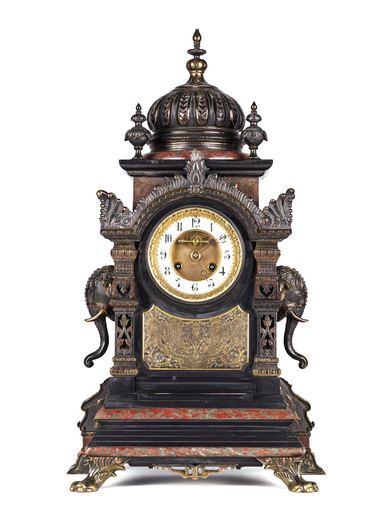
Clocks · 1845-1855
Clock, England, 1845-1855
Science Museum Group, London
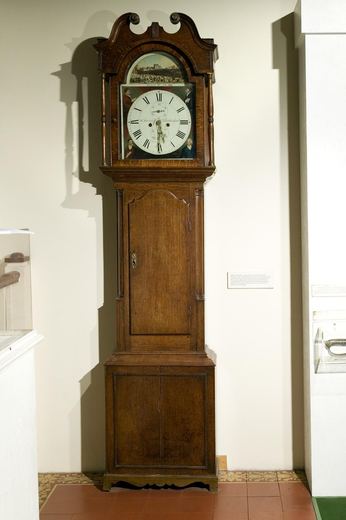
Clocks · 1845-1855
Longcase clock commemorating the Peterloo Massacre of 1819, made by W. Stancliffe, Barkisland.
Science Museum Group, London
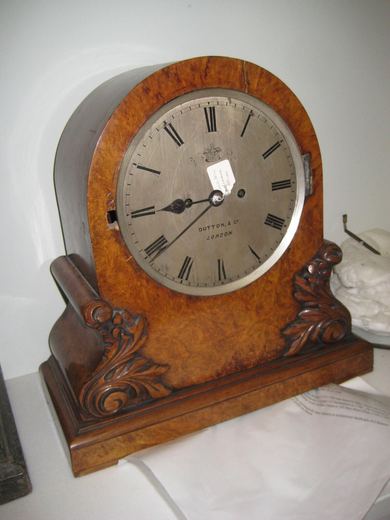
Clocks · 1850-1900
Case veneered in burr walnut, with arched top; from the early furnishings of the V&A
Victoria and Albert Museum, London
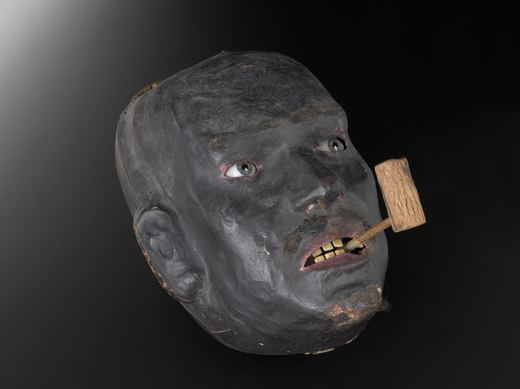
Clocks · 1850-1865
Jack the Smoking Head, sales automaton, maker unknown, London, 1850-1865.
Science Museum Group, London