
Clocks · Clock
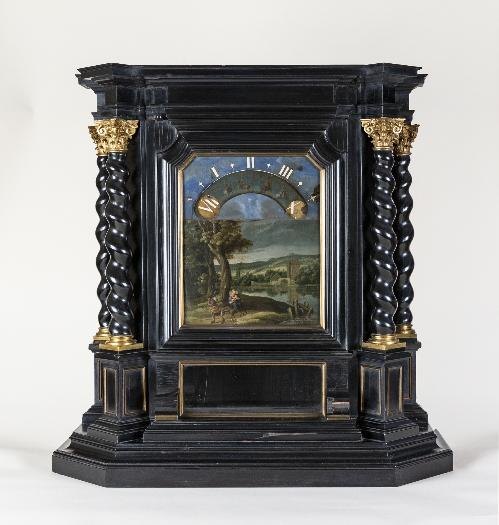
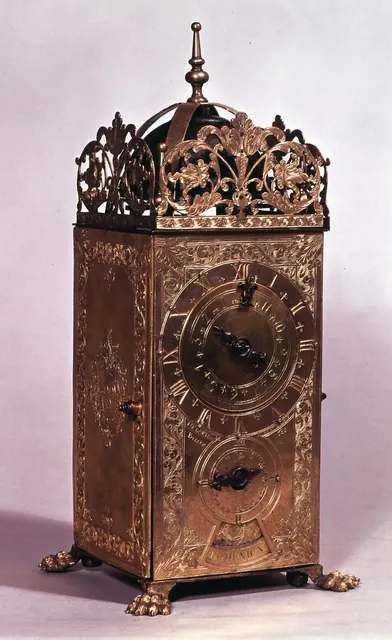
Clock by Giuseppe de Lellis, Italy, 1678
- Maker / attribution
- Giuseppe de Lellis (Maker)
- Date
- 1678
- Historical period
- Early Modern Horology (1600 – 1750)
- Country of origin
- Italy
- Place
- Roma
- Object type
- Clock
- Materials / technique
- Madera de ébano Madera de cedro Bronce Barniz Vidrio Cobre Pigmento Aglutinante Latón Hierro
- Dimensions
- Altura = 74 cm Anchura = 69 cm Profundidad = 28 cmEsfera de reloj: Anchura = 26 cm Altura = 31 cm
- Holding institution
- National Museum of Decorative Arts
- Accession / object no.
- pages_Main_idt_2034_inventary_CE02037_table_FMUS_museum_MNAD
- Credit line
- National Museum of Decorative Arts
- Catalogue title (original)
- Reloj de sobremesa (Spanish)
View the source record ↗ (opens another website in a new tab)Suggest a correction
Record summary
Held and catalogued by National Museum of Decorative Arts (object number pages_Main_idt_2034_inventary_CE02037_table_FMUS_museum_MNAD), this is a clock by Giuseppe de Lellis, made in Roma, Italy, dated 1678. The Atlas places it in the Early Modern Horology period (1600 – 1750) of its Clocks collection. Materials and techniques recorded by the source: Madera de ébano Madera de cedro Bronce Barniz Vidrio Cobre Pigmento Aglutinante Latón Hierro. Recorded dimensions: Altura = 74 cm Anchura = 69 cm Profundidad = 28 cmEsfera de reloj: Anchura = 26 cm Altura = 31 cm. The record is illustrated with 1 photograph.
Assembled from the source record's structured fields. Dates and attributions are given as the source states them; where a field is missing the Atlas leaves it blank rather than estimating.
Catalogue description
Catalogue description from National Museum of Decorative Arts
Reloj de sobremesa de tipo de noche. Su caja tiene forma de altar o retablo con una base trapezoidal y está hecha con madera ebonizada. Cuenta con un zócalo con acanaladuras, que en su centro tiene un cristal, sobre el que se elevan cuatro cubículos pequeños. Encima de estos se levantan cuatro columnas salomónicas con basas y capitales corintios de bronce dorado. Entre ellas se enmarca el dial dorado y la esfera del reloj, que es tipo rectangular. Tras ello, aparece un friso, también con acanaladuras, pero sin más ornamentación, aunque existe una apertura superior que hace la función de chimenea. Su esfera está realizada en chapa de cobre pintada con temática religiosa. Por un lado, en la parte inferior se ha representado la escena de la huida a Egipto; mientras que en su parte superior aparece otra chapa pintada con motivos celestiales. En este caso, en el centro hay un arco de medio punto que se compone como la apertura para indicar la hora. En el borde superior, las perforaciones de número romanos (I, II y III) indican los cuartos de hora y los símbolos en forma de estrella los medios cuartos de hora. El disco que se encuentra por la apertura deja visualizar, a través de dos orificios en sus laterales, dos números romanos que están calados y que van cambiando por el movimiento de la maquinaria. Para acceder a la maquinaria, se debe presionar sobre el pulsador, ubicado a la derecha del marco de la esfera, siendo el movimiento de derecha a izquierda del vano. Así, se descubre la parte trasera, conformada por un disco giratorio mayor en el que se disponen tres discos de menor tamaño con los números romanos para indicar la hora (uno con las cifras III, VI, IX y XII; otra con I, IIII, VII y X; y la última con II, V, VIII y XI), cada uno con un hueco para visualizar dichos números. Su máquina es de un solo tren con escape silencioso y posee una inscripción en su platina. Carece -con casi total seguridad- del péndulo corto y de una palanca o manivela para la toma de cuerda. Tras la máquina, en la caja del reloj, aparecen dos baldas: en la superior se colocaría una lámpara de aceite o vela; y la inferior seguramente sea un añadido a posteriori, debido a que chocaría con el péndulo corto de la maquinaria.
Shown in the original language of the source catalogue. An editor-reviewed English translation has not yet been published; we do not publish machine translations as authoritative text.
Historical context
Early Modern Horology (1600 – 1750)
Huygens' pendulum and balance spring transform accuracy; English makers develop the anchor and deadbeat escapements.
Huygens's pendulum (1656–57) improved clock accuracy from about a quarter of an hour to under a minute a day. The anchor escapement (c. 1670) and the long seconds pendulum created the longcase clock; London makers such as Fromanteel, Knibb, Tompion and Quare led European clockmaking, and French makers created the Boulle pendule.
Read the period in the timelineMore clocks from this periodEarlier: Renaissance Horology
Atlas type guide
Domestic clocks
A clock combines four systems: a source of power (falling weight, coiled spring, or later electricity), a gear train that divides time, an escapement and oscillator that regulate it (foliot, pendulum or balance), and an indicating system of dial and hands or a bell. Its history runs from the large iron weight-driven clocks of the late thirteenth century to Renaissance spring-driven table clocks, the pendulum revolution of 1656, the factory clocks of the nineteenth century and electric and quartz clocks of the twentieth.
Domestic clocks also reflect regional furniture and decorative traditions — English longcase and bracket clocks, French pendules, Viennese regulators, Black Forest and American shelf clocks — and therefore record changing tastes as much as technical progress.
What to look for
- How the clock is powered: weights, spring barrel, fusee, electric coil.
- The oscillator: foliot, short pendulum, long seconds pendulum or balance.
- Whether it strikes: hour only (count wheel) or hours and quarters (rack striking).
- The maker or retailer's name on dial and movement, and any factory trademarks.
- Signs of alteration — replaced dials, converted escapements, 'married' cases.
Dating clues
- Before 1656 clocks used foliots or balances; after, most domestic clocks have pendulums.
- Anchor escapements spread after c. 1670; minute hands became common at the same time.
- Factory production in America and Germany transformed prices after c. 1840.
General guidance written by the Atlas editors about this kind of object. It is not a statement about this particular piece; for that, rely on the source record above and on physical examination.
Related records
Clocks · 1680–1690
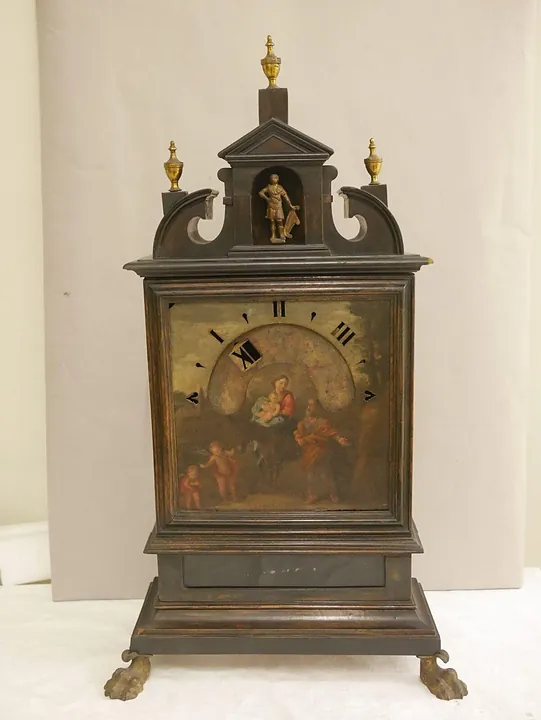
Bracket clock, Italian, 1680–1690,"Petrus Thomas Campanus Romae".
Victoria and Albert Museum, London
Clocks · 1704–1705
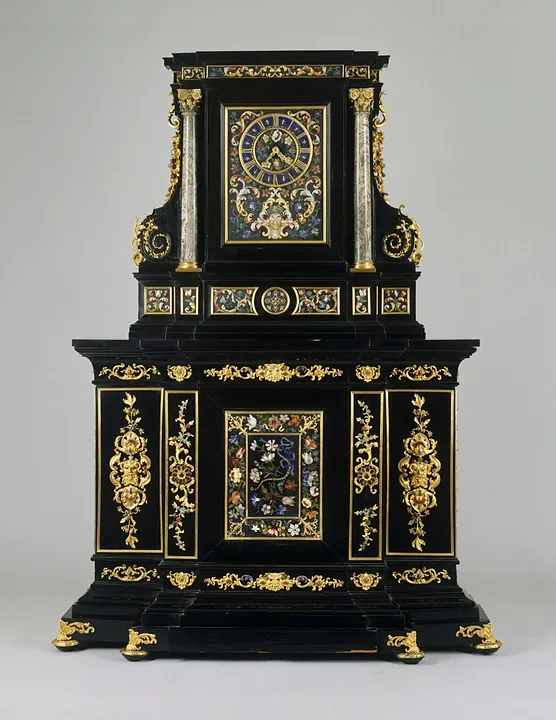
Florentine court cabinet and clock by Giovanni Battista Foggini, Italy, 1704–1705
Victoria and Albert Museum, London
Clocks · 17th century
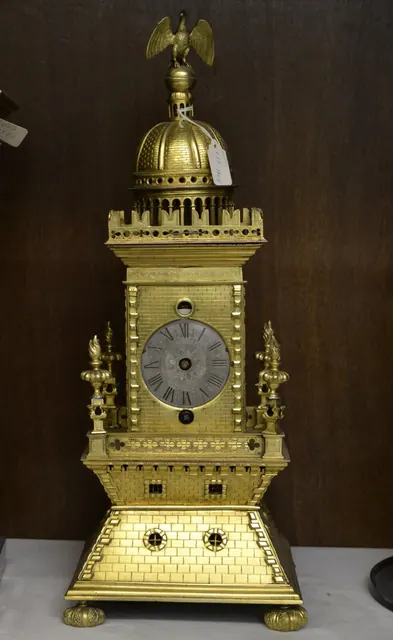
Clock, Italy, 17th century
Victoria and Albert Museum, London
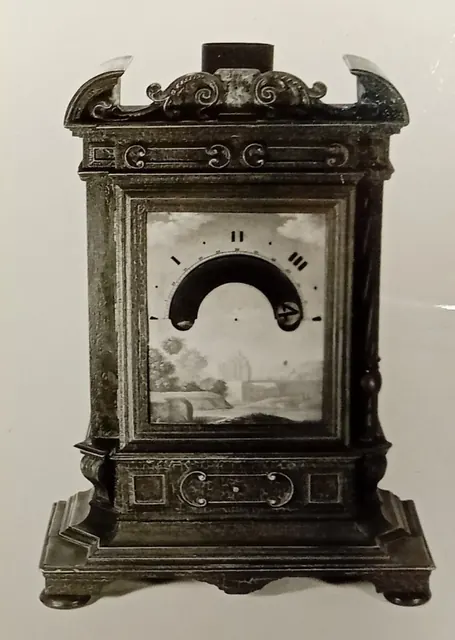
Clocks · late 1600s-first half of the 1700s
Table clock, Italy, late 1600s-first half of the 1700s
Suomen kansallismuseo
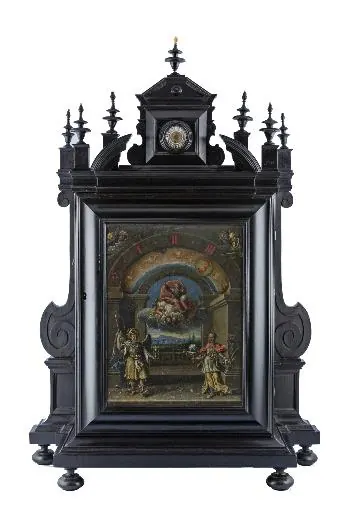
Clocks · Reloj de sobremesa:c. 1690Reloj de bolsillo:1701–1775
Clock by Reloj de colgar: Coquerel, Jean, Italy, Reloj de sobremesa:1690[ca]Reloj de bols
National Museum of Decorative Arts
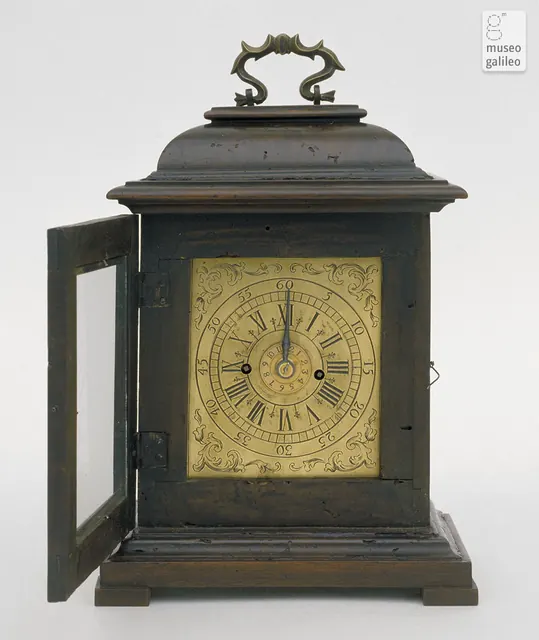
Clocks · early 18th century
Mantel clock, Italy, early 18th century
Museo Galileo, Florence
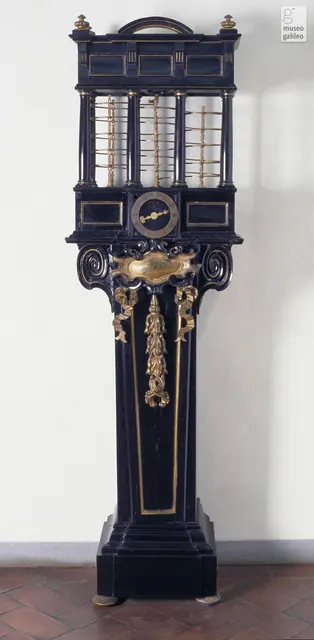
Clocks · c. 1660-1680
"Perpetual motion" clock, Italy, c. 1660-1680
Museo Galileo, Florence
Clocks · 1685
Wall bracket clock by Giovanni Baptista de Albertis
British Museum