
Clocks · Clock
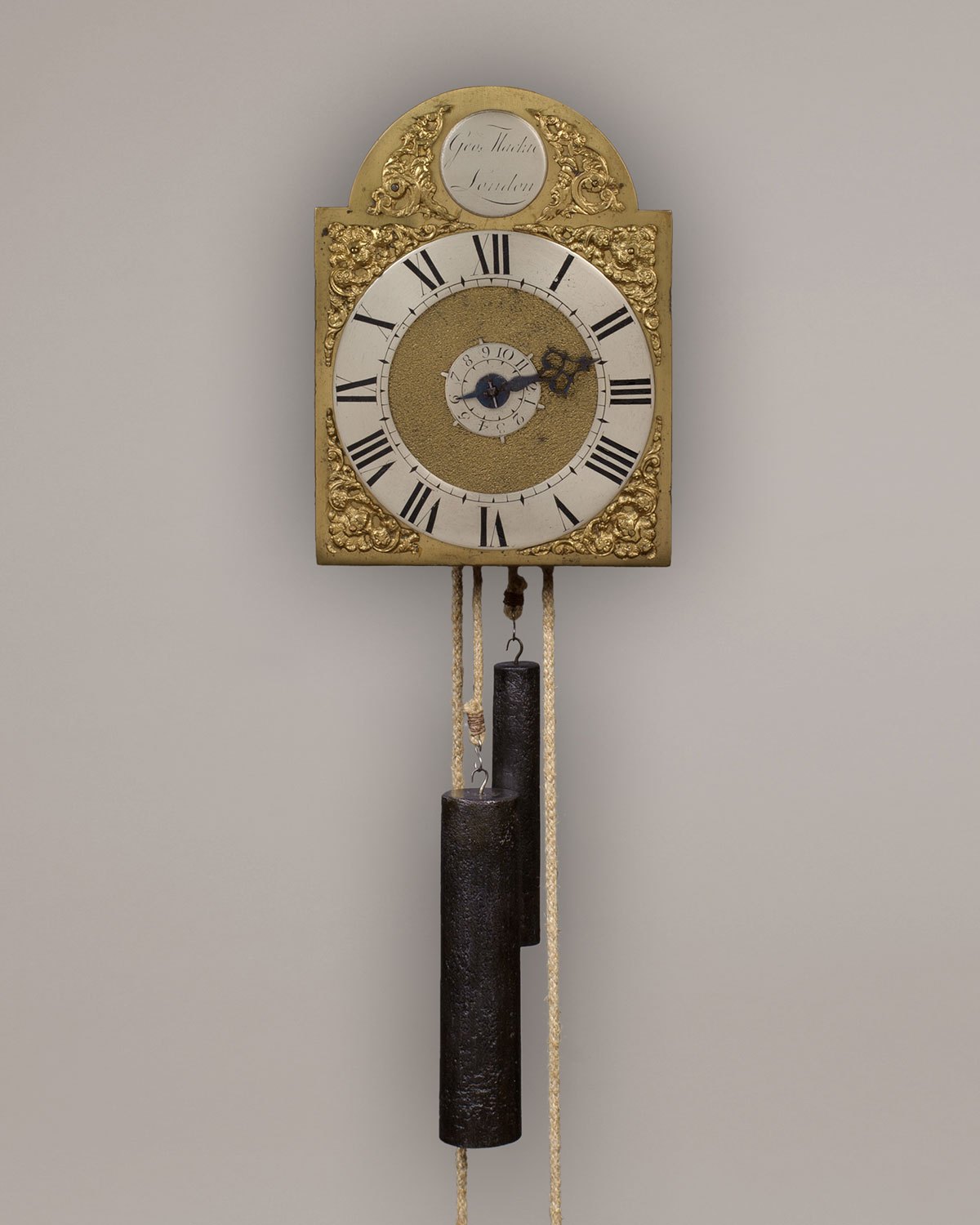
Clock by George Mackie, London, c. 1785
- Maker / attribution
- George Mackie (maker)
- Date
- c. 1785
- Historical period
- Precision & Scientific Horology (1750 – 1850)
- Country of origin
- England
- Place
- London
- Object type
- Clock
- Stock no.
- SKU 304
- Credit line
- Dealer listing, Howard Walwyn (SKU 304)
- Catalogue title (original)
- GEORGE MACKIE. A late George III period pantry alarm timepiece of small size (English)
View the source record (dealer listing) ↗ (opens another website in a new tab)Suggest a correction
Record summary
Catalogued by Howard Walwyn Fine Antique Clocks (dealer), London (stock number SKU 304), this is a clock by George Mackie, made in London, England, dated c. 1785. The Atlas places it in the Precision & Scientific Horology period (1750 – 1850) of its Clocks collection. The record is illustrated with 2 photographs.
Assembled from the source record's structured fields. Dates and attributions are given as the source states them; where a field is missing the Atlas leaves it blank rather than estimating.
Catalogue description
Dealer description — Howard Walwyn
A good late George III period pantry alarm timepiece of small size. The arched brass dial with matted centre and alarm disc is signed on a raised silvered dial in the arch. It has a pierced iron hand and elaborately cast foliate corner spandrels. The movement with verge escapement has the original alarm train mounted on the inside of the backplate. The hanging plate is formed by an extension of the top plate. Height : 7 in (17.75 cm) Width : 5 in (10.5 cm) Depth : 4 ½ in (11.5 cm) * George Mackie is recorded on page 501 of Brian Loomes’ Clockmakers of the World: 21 st Century Edition . He was active in London between 1784 and 1811. HW4809
Historical context
Precision & Scientific Horology (1750 – 1850)
Harrison solves longitude; Mudge invents the lever; Breguet's Paris workshop defines the modern watch.
The age of the deadbeat escapement, compensated pendulums and observatory regulators. Domestic clocks spread through the middle classes: English longcase and bracket clocks, French gilt-bronze mantel clocks, Viennese Biedermeier wall clocks, Black Forest painted-shield clocks, and the first American shelf clocks.
Read the period in the timelineMore clocks from this periodEarlier: Early Modern Horology
Atlas type guide
Alarm clocks
Alarm work is among the oldest clock functions: monastic clocks woke monks for night prayers, and Renaissance table clocks often carried an alarm disc set by a pin. A separate spring or weight is released at the set time and drives a hammer against a bell. Some early alarms also lit a candle by striking a flint — the 'tinder pistol' alarm.
The cheap, mass-produced alarm clock arrived in the second half of the nineteenth century. American firms such as Seth Thomas and Westclox (the 'Big Ben' of 1910) and German makers such as Junghans and Kienzle made millions of drum-shaped alarms with pin-pallet escapements. Electric, quartz and digital alarm clocks followed in the twentieth century.
What to look for
- A separate alarm-setting dial or disc and an extra winding key.
- Twin bells on top (common after c. 1920) or a bell enclosed in the base.
- Pin-pallet escapements in inexpensive factory alarms.
- Trademarks and patent dates on dial or back.
Dating clues
- Renaissance alarm table clocks: sixteenth to seventeenth centuries.
- Drum alarm clocks: from the 1870s.
- Luminous dials with radium paint: c. 1910–1960.
General guidance written by the Atlas editors about this kind of object. It is not a statement about this particular piece; for that, rely on the source record above and on physical examination.
Read next:Anchor (recoil) escapement
Related records
Clocks · 1740–1760
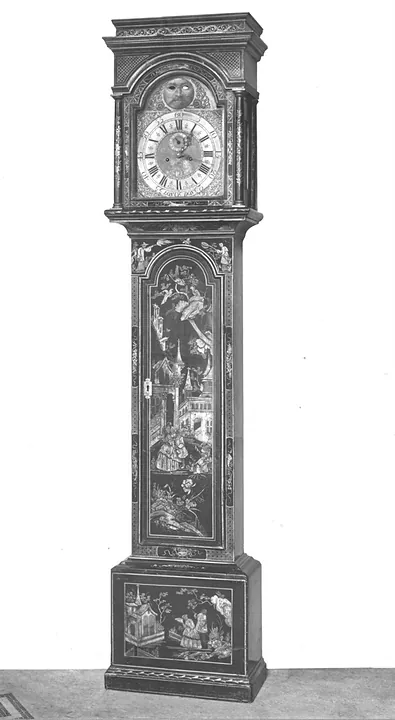
Longcase clock, English, 1740–1760, japanned wood, John Ellicott
Victoria and Albert Museum, London
Clocks · c.1750
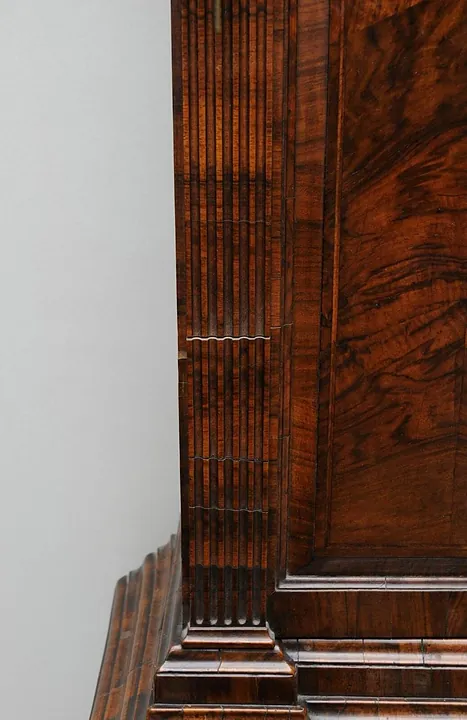
Long-case clock, English, ca. 1750, by Richard Peyton of Gloucester
Victoria and Albert Museum, London
Clocks · 1751
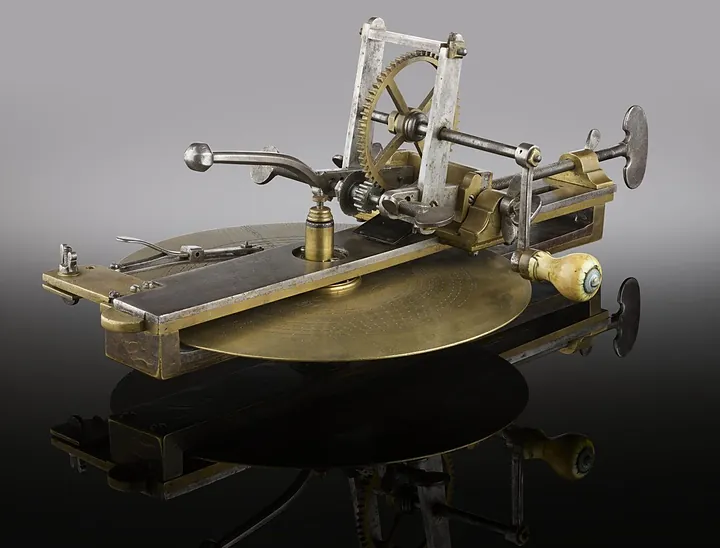
Large wheel engine, signed and dated "John Tipping, Whildon Green, 1751".
Science Museum Group, London
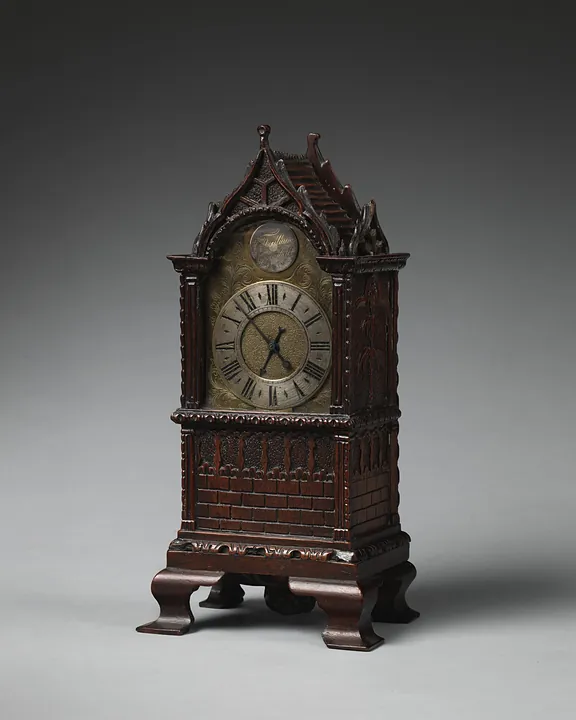
Clocks · 1755
Bracket clock by John Fordham, England, 1755
The Metropolitan Museum of Art, New York
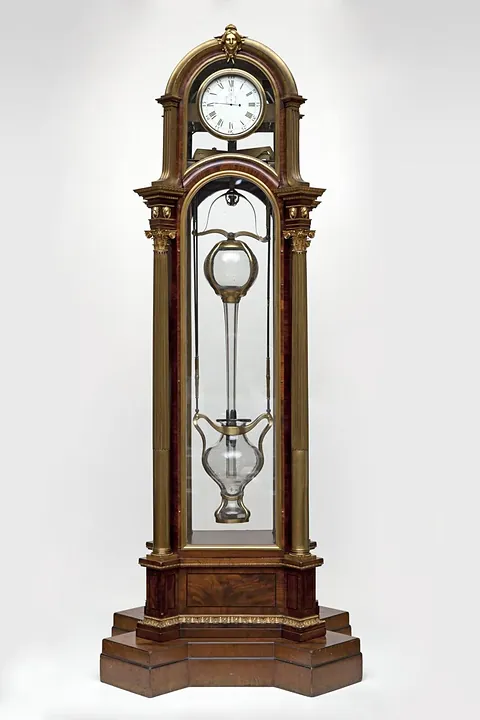
Clocks · c. 1760
Longcase clock by James Cox, England, c. 1760
Victoria and Albert Museum, London
Clocks · 1766
Clock by Alexander Cumming, England, 1766
Science Museum Group, London
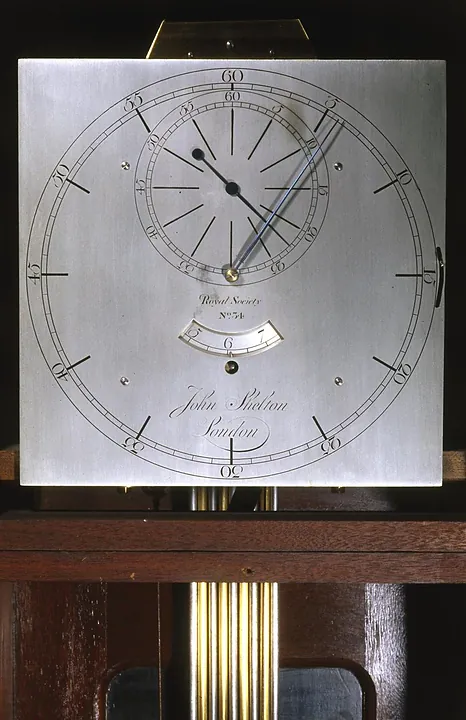
Clocks · 1768–1769
Regulator clock by John Shelton, England, 1768–1769
Science Museum Group, London
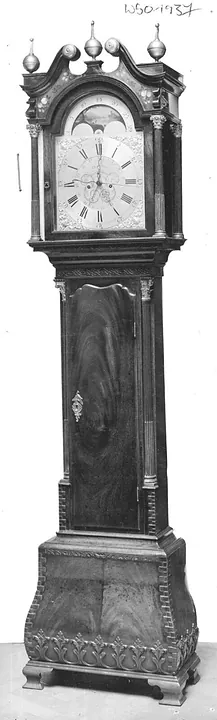
Clocks · c. 1775
Longcase clock, England, c. 1775
Victoria and Albert Museum, London