
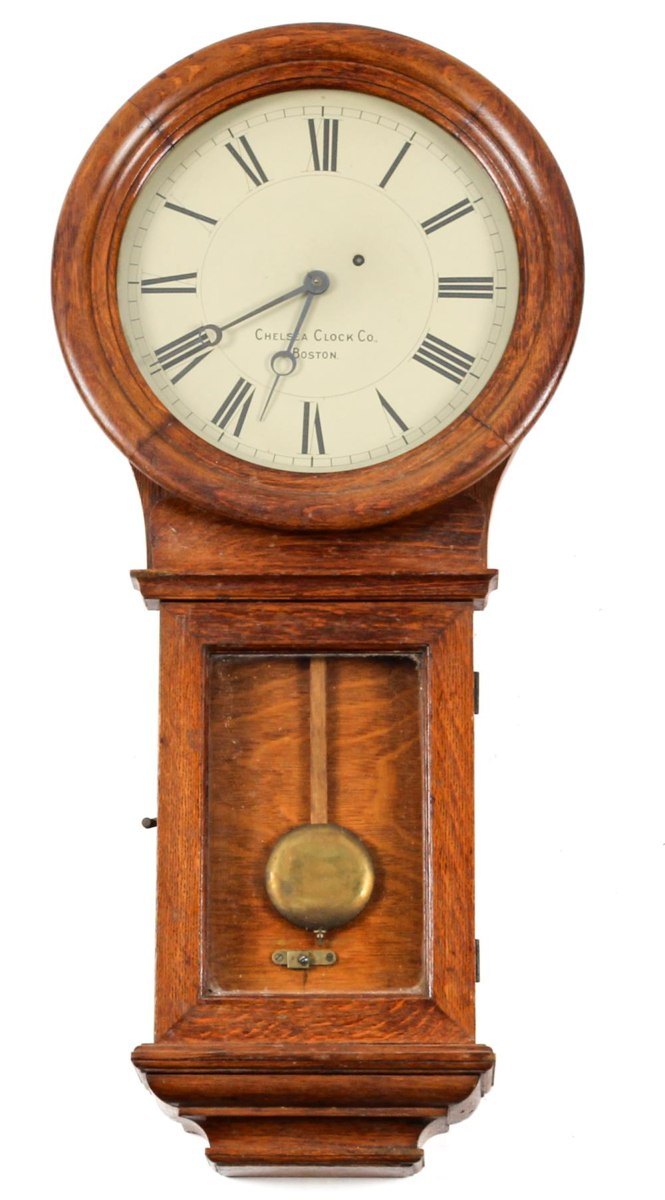
Clocks · Regulator wall clock
Chelsea Clock Company No. 1 Pendulum Clock
- Maker / attribution
- Chelsea Clock Company (source attribution)
- Date
- Early to mid 20th century
- Historical period
- Modern Mechanical Horology (1945 – 1969)
- Country of origin
- United States
- Object type
- Regulator wall clock
- Materials / technique
- Oak wood
- Dimensions
- 34\" x 16\" x 5.5\"
- Auction house
- Hoch LTD.
- Lot
- 64
- Credit line
- Hoch LTD.
- Catalogue title (original)
- Sold at Auction: Chelsea Clock Company Antique Pendulum Wall Clock (English)
View the source record (auction lot) ↗ (opens another website in a new tab)Suggest a correction
Record summary
Catalogued by Hoch LTD. (lot 64), this is a regulator wall clock attributed to Chelsea Clock Company, made in United States, dated Early to mid 20th century. The Atlas places it in the Modern Mechanical Horology period (1945 – 1969) of its Clocks collection. Materials and techniques recorded by the source: Oak wood. Recorded dimensions: 34\" x 16\" x 5.5\". The record is illustrated with 1 photograph.
Assembled from the source record's structured fields. Dates and attributions are given as the source states them; where a field is missing the Atlas leaves it blank rather than estimating.
Catalogue description
Original object description
Attributed to the Chelsea Clock Company of Boston, Massachusetts, and dating from the early to mid-20th century, this wall regulator corresponds to the maker's No. 1 Pendulum model. The oak housing measures 34 by 16 by 5.5 inches and features brass fittings, a rounded upper molding around the bezel, and a rectangular drop trunk with a glass pane displaying the wooden pendulum rod and circular brass bob, despite an auction designation calling it an octagonal regulator. Signed "CHELSEA CLOCK CO. BOSTON" below the hand arbor, the white dial is marked with black Roman numerals, spade hands, and a single winding hole situated near 2 o'clock. Its provenance traces to a private collection located in Princeton, New Jersey, lacking further factory paperwork or ownership records. The timepiece was offered untested, with no views or descriptions provided for the internal works, suspension spring, or inner case.
Historical context
Modern Mechanical Horology (1945 – 1969)
Tool watches for divers, pilots and astronauts; electric watches anticipate the electronic age.
Post-war clocks combined new materials and industrial design: plastic and metal cases, battery-powered transistor movements from the late 1950s, and design classics by George Nelson, Max Bill and others. The first caesium atomic clock (1955) moved the definition of time from astronomy to physics.
Read the period in the timelineMore clocks from this periodEarlier: Golden Age of Mechanical Watchmaking
Atlas type guide
Regulators, wall and Vienna clocks
A regulator is a precision pendulum clock used as a time standard in observatories, workshops and railway offices. Typical features are a deadbeat or Graham escapement, a temperature-compensated pendulum (mercury jar, gridiron or later invar), maintaining power and a regulator dial that separates hours, minutes and seconds. George Graham's deadbeat escapement (c. 1715) and his mercury pendulum, together with Harrison's gridiron, set the pattern for two centuries.
Wall clocks span a much wider range: the elegant Viennese Laterndluhr and Dachluhr of the Biedermeier period, the Dutch stoelklok and staartklok, English 'dial' clocks used in schools, offices and railway stations, and mass-produced spring and weight wall clocks from Germany (Gustav Becker, Junghans, Kienzle) and America.
What to look for
- Deadbeat escapement and compensated pendulum (gridiron rods, mercury jar or wood rod).
- A regulator dial with a large central minute hand and separate hour and seconds dials.
- Vienna regulators: glazed cases, slender pendulum, small weights, enamel two-piece dials.
- German factory trademarks stamped on the backplate (e.g. Gustav Becker anchor and crown, Junghans star).
Dating clues
- Graham-type deadbeat regulators: from c. 1720.
- Viennese Laterndluhr: c. 1800–1850.
- German factory 'Vienna-style' regulators: c. 1870–1930; Gustav Becker serial numbers allow close dating.
General guidance written by the Atlas editors about this kind of object. It is not a statement about this particular piece; for that, rely on the source record above and on physical examination.
Read next:Deadbeat escapementAnchor (recoil) escapementGrasshopper escapement
Related records
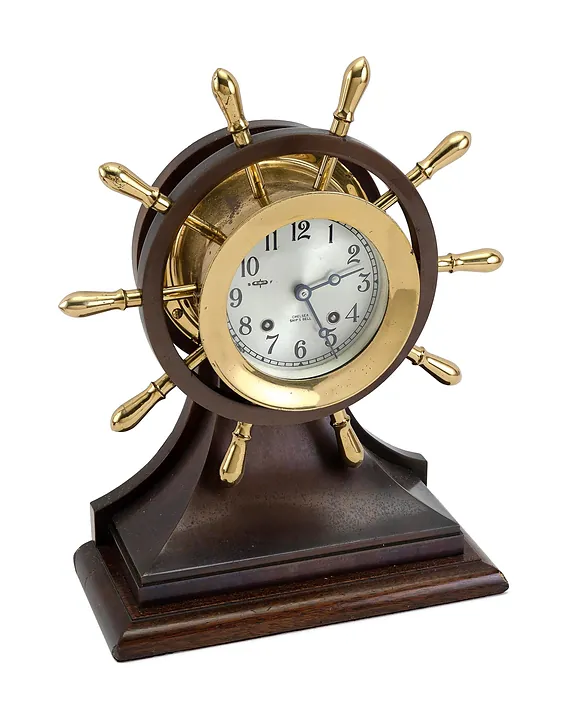
Clocks · c. 1960s
Chelsea Clock CO. "MARINER" SHIP's Bell Clock Boston, circa 1960s Dial
LiveAuctioneers auction archive
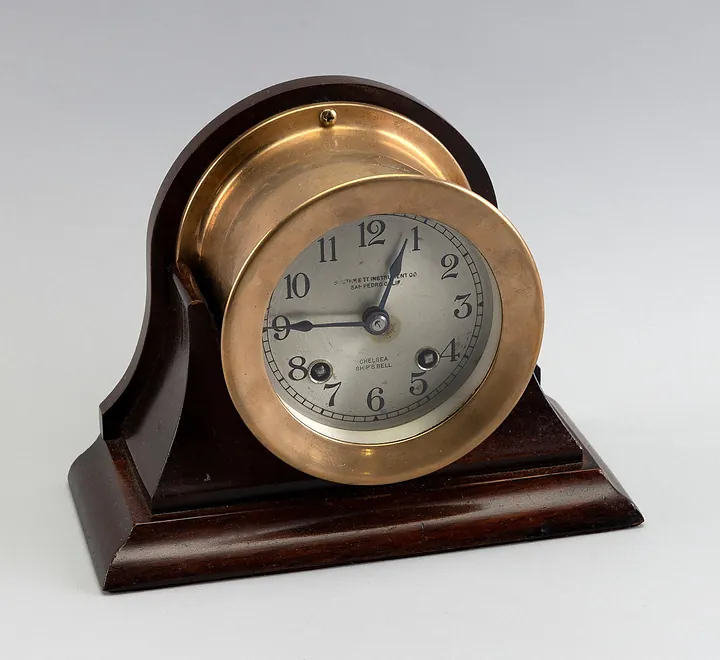
Clocks · c. 1935
Chelsea Clock CO. SHIP's Bell Clock ON STAND Boston, circa 1935
LiveAuctioneers auction archive
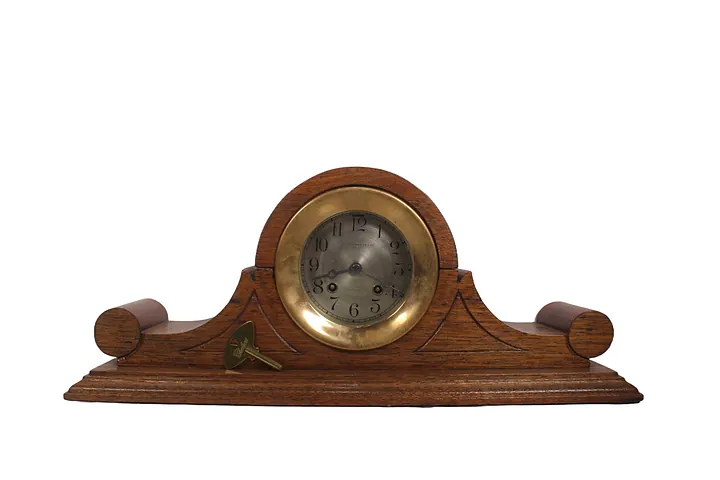
Clocks · c. 1920
Chelsea Striking Ships Bell Clock, circa 1920
LiveAuctioneers auction archive
Clocks · c. 1927
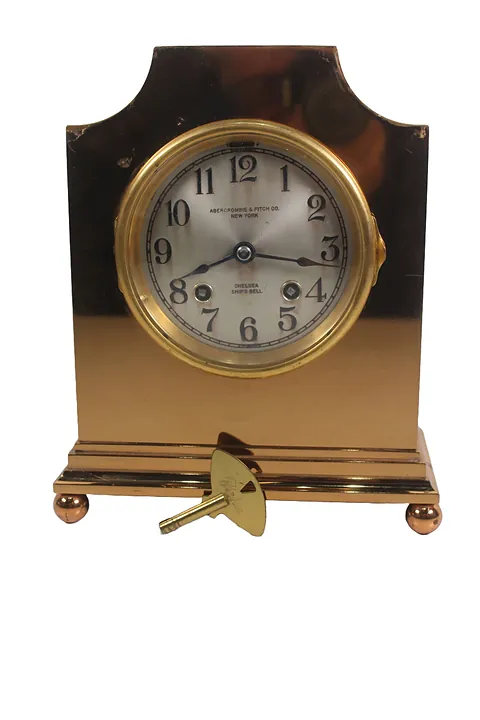
Chelsea Cabinet no. 19 Ships Bell Clock, circa 1927
LiveAuctioneers auction archive
Clocks · 1937; 1980
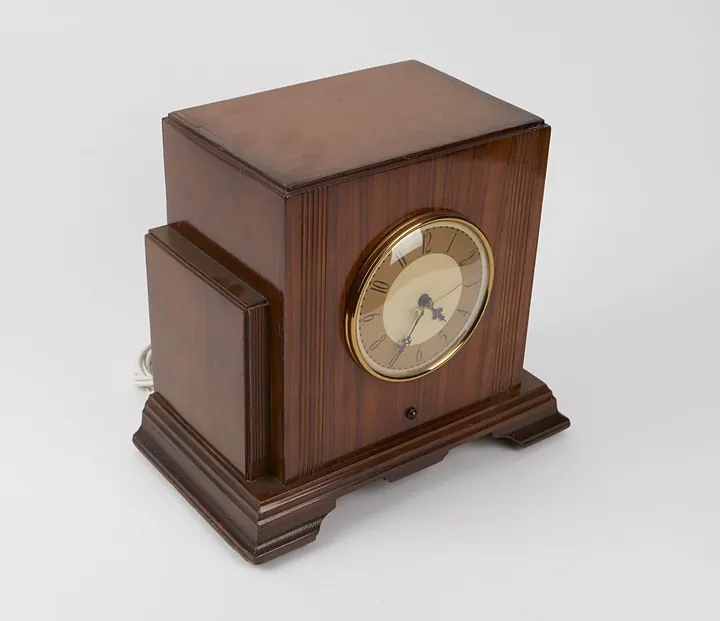
Clock by Bestone and Hammond, United States, 1937; 1980
Science Museum Group, London
Clocks · c. 1968
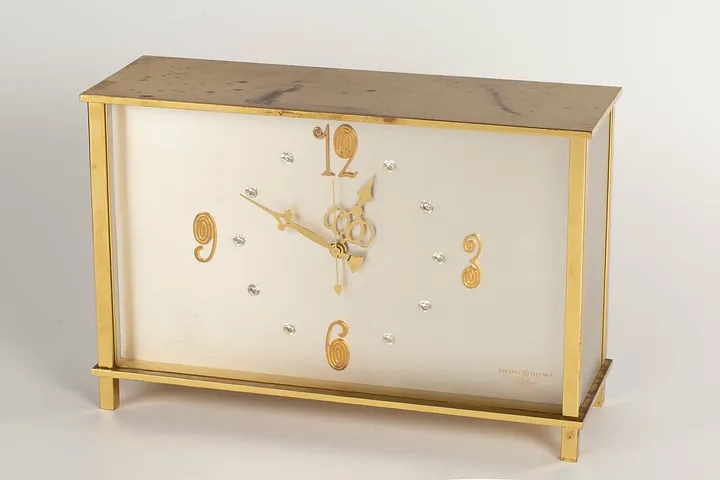
Table clock, United States, c. 1968
German Clock Museum
Clocks · c. 1960s
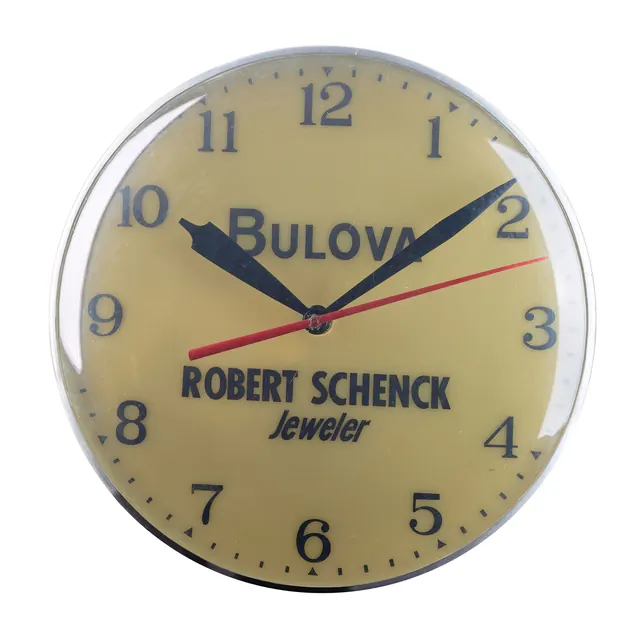
Bulova wall clock, Lighted Advertising Wall Clock for Robert Schenck Jeweler, circa 1960s
Antiquorum auction archive, Geneva
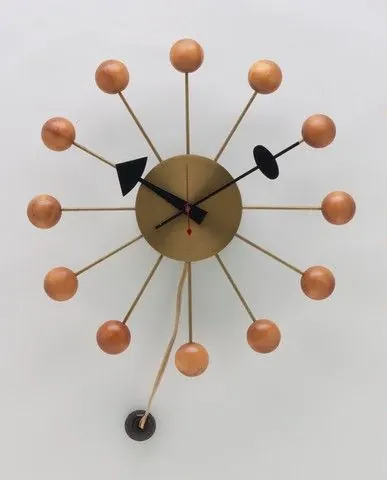
Clocks · designed 1947; manufactured by 1948–69
Ball Wall Clock, Model no. 4755 by George Nelson & Co., Inc
Yale University Art Gallery, New Haven