
Wristwatches · Wristwatch
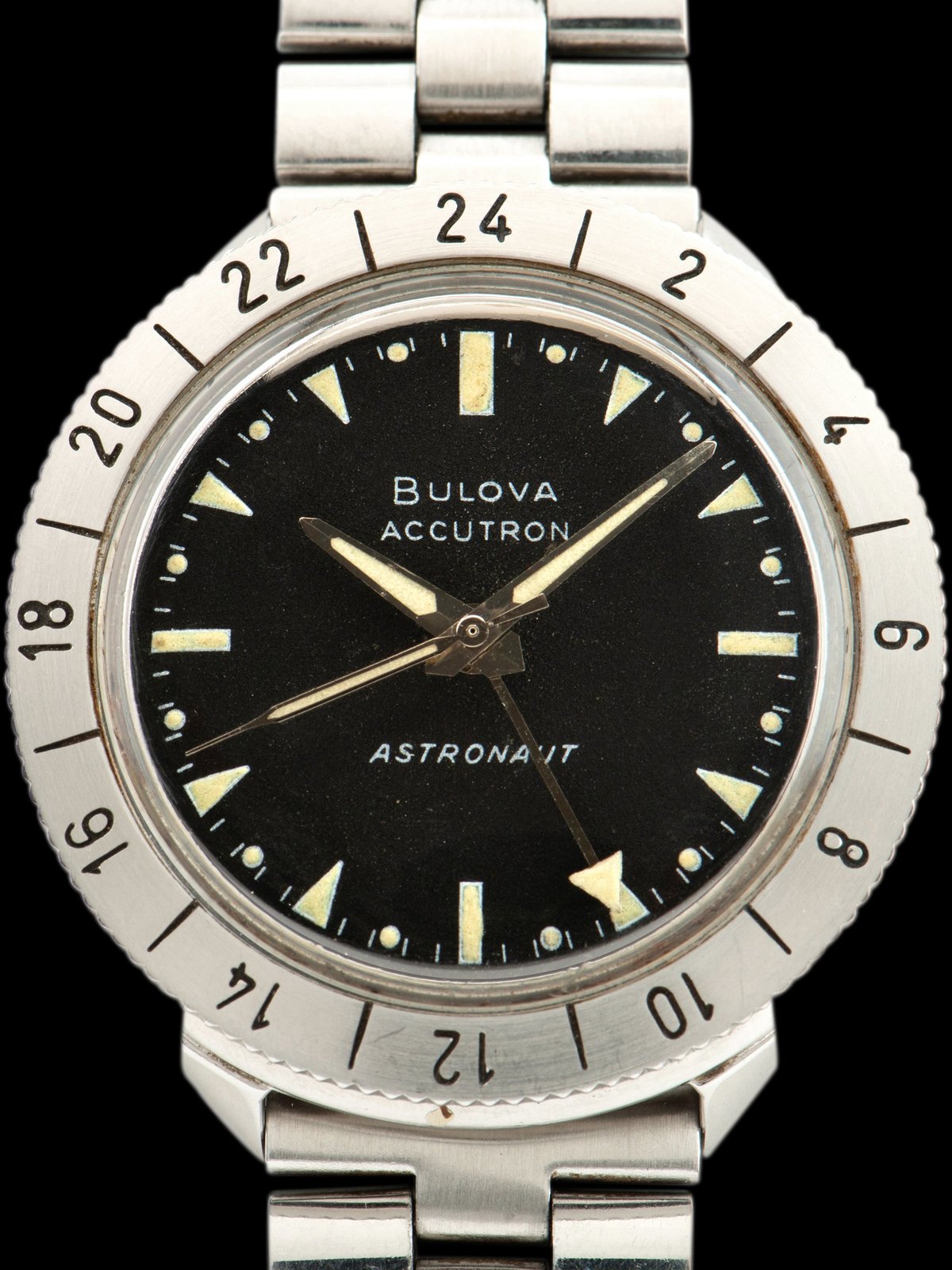
Bulova Accutron Astronaut GMT, 1969
- Maker / attribution
- Bulova (maker)
- Date
- 1969
- Historical period
- Quartz Revolution (1969 – 1990)
- Country of origin
- United States
- Object type
- Wristwatch
- Stock no.
- BLVAAGMT-3
- Credit line
- Dealer listing, Craft & Tailored (BLVAAGMT-3)
- Catalogue title (original)
- 1969 Bulova Accutron Astronaut GMT (English)
View the source record (dealer listing) ↗ (opens another website in a new tab)Suggest a correction
Record summary
Catalogued by Craft & Tailored (dealer), Los Angeles (stock number BLVAAGMT-3), this is a wristwatch by Bulova, made in United States, dated 1969. The Atlas places it in the Quartz Revolution period (1969 – 1990) of its Wristwatches collection. The record is illustrated with 6 photographs.
Assembled from the source record's structured fields. Dates and attributions are given as the source states them; where a field is missing the Atlas leaves it blank rather than estimating.
Catalogue description
Dealer description — Craft & Tailored
Instead of waxing poetic about mid-century Bulova or the nearly unprecedented technological leap of the Accutron (which we could do), let us just give you an excerpt from a letter. A certain letter written to Bulova by Lt. Colonel Frank Murray explaining the until then totally unknown relation of the Accutron Astronaut GMT to the CIA and its A-12 supersonic spy plane. The environmental conditions inside the cockpit saw temperatures as high as 140° at the end of cruise legs when the fuel remaining was insufficient to provide the needed heatsink for the air-conditioning system. Ordinary wristwatches worn by the pilots on the outside of their pressure suits were not holding up to these temperatures. A decision was made to try a unique type of watch in this setting. The Bulova Accutron Astronaut model held up to testing, so the CIA decided to furnish the Bulova watch to the CIA pilots flying the A-12." Quite the seal of approval. SPECS Stock # BLVAAGMT-3 Brand Bulova Accutron Style Astronaut Model N/A Serial M9 Size Men's Material Stainless Steel Dial Matte Black Millimeters 38 Bracelet Bulova Accutron Bracelet CASE & BRACELET The 38-millimeter case is made of stainless steel and is in remarkably sharp condition. The watch features fantastic, aggressive lugs, short and angled, almost pincer-like. They grasp small end pieces connected to the original steel bracelet with an Accutron signed clasp. The watch also wears a 24-hour rotatable bezel in stainless steel with black inlaid numbers and indices. DIAL & HANDS The dial of the Accutron Astronaut is an appropriate deep black with a busy but beautiful assortment of marker shapes. The mix of triangle, rectangle, and circle creates a design that not only tells the time but is also in service to the triangle-tipped GMT hand. By including small dot markers in between the hour markers, Bulova made it even easier to tell the second time zone hour at a glance. ACCESSORIES None. The watch is operating perfectly and keeping excellent time, and just received a new battery.
Historical context
Quartz Revolution (1969 – 1990)
Seiko's Astron begins mass quartz timekeeping; traditional industries contract sharply.
Quartz and digital watches transformed the market after 1969. Swiss employment collapsed, Japanese and Hong Kong production soared, and the Swatch (1983) helped the Swiss industry recover; mechanical watches survived as luxury goods.
Read the period in the timelineMore wristwatches from this periodEarlier: Modern Mechanical Horology
Atlas type guide
Military, pilot and travel watches
The wristwatch owes much of its adoption by men to warfare and aviation. Wristlets — small pocket watches soldered with lugs and worn on a strap — were used in colonial campaigns and became standard equipment in the First World War, with protective grilles over the crystal ('shrapnel guards'). Louis Cartier's Santos (1904), designed for the aviator Alberto Santos-Dumont, is often cited as an early purpose-made pilot's watch.
In the Second World War governments specified watches in detail: the German B-Uhr observation watches, the American A-11, and the British 'W.W.W.' (the 'Dirty Dozen' set of 1945). After the war, jet travel brought GMT and world-time watches, which show two or more time zones at once — Louis Cottier's world-time mechanism and the Rolex GMT-Master (1955) are examples.
What to look for
- Military markings on the case back: broad arrow, issue numbers, 'W.W.W.', 'A.T.P.'
- High-legibility black dials with luminous Arabic numerals; oversized crowns for gloved hands.
- 24-hour hands and rotating 24-hour bezels or city rings on GMT/world-time watches.
- Wire lugs on early wristlets converted from pocket watches.
Dating clues
- Wire-lug wristlets: c. 1900–1925.
- Military specifications of the Second World War: 1939–1945.
- GMT and world-time wristwatches: mainly after 1950.
General guidance written by the Atlas editors about this kind of object. It is not a statement about this particular piece; for that, rely on the source record above and on physical examination.
Related records
Wristwatches · c. 1969
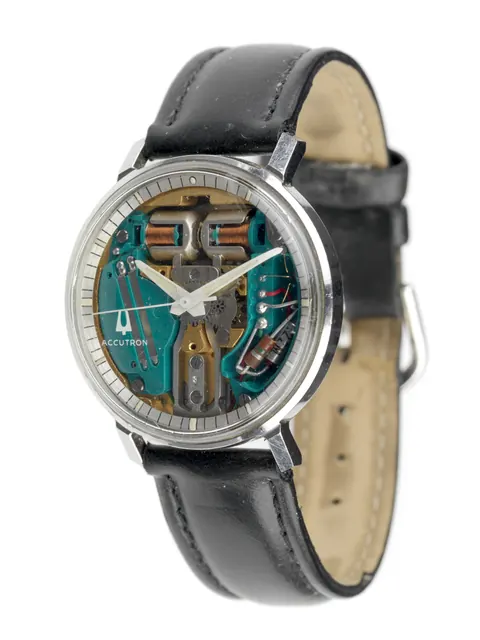
Bulova 'Accutron' tuning-fork wristwatch by Bulova
Royal Museums Greenwich
Wristwatches · c. 1965
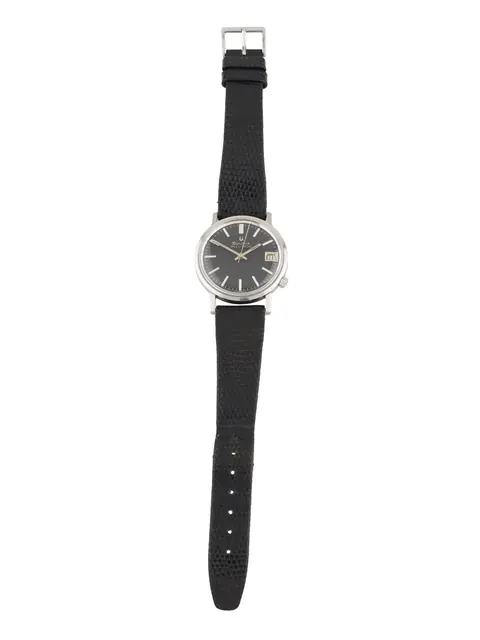
Wristwatch Accutron by Knud Geelmuyden Bull
Royal Museums Greenwich
Clocks · c. 1960s
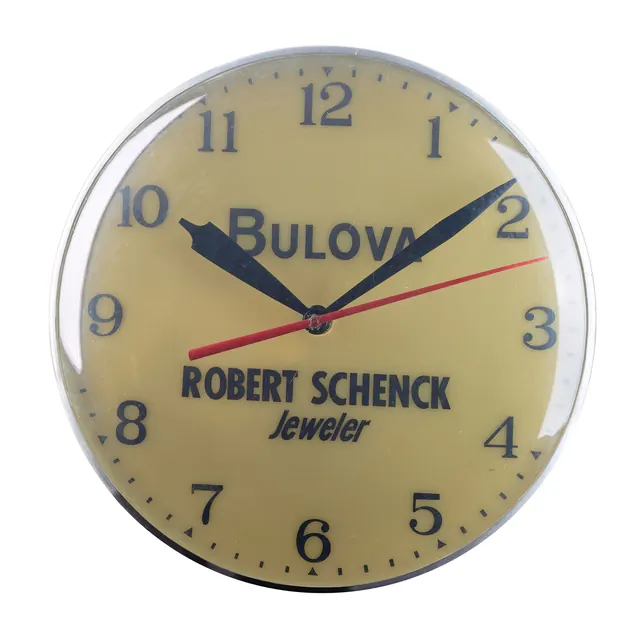
Bulova wall clock, Lighted Advertising Wall Clock for Robert Schenck Jeweler, circa 1960s
Antiquorum auction archive, Geneva
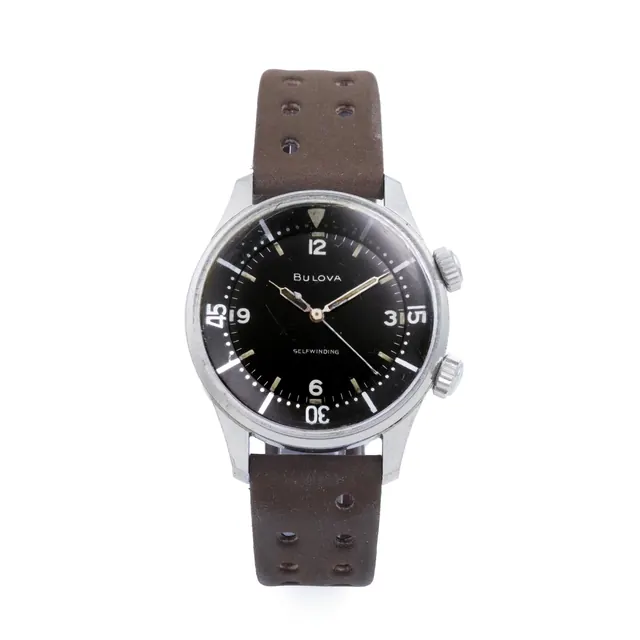
Wristwatches · 1963
Bulova wristwatch, ref. 314, Diver Super Compressor, 1963
Antiquorum auction archive, Geneva
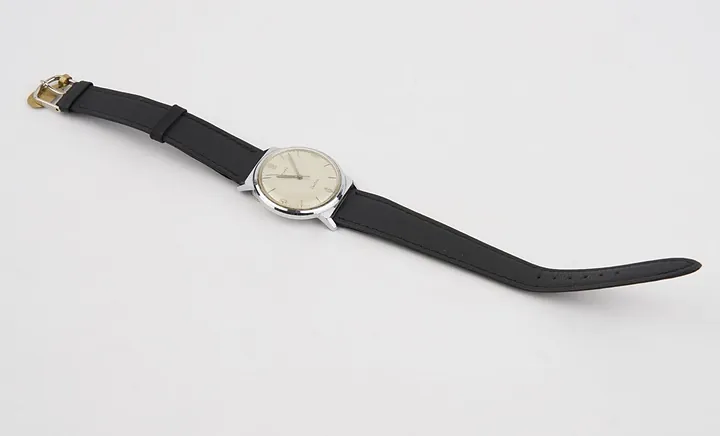
Wristwatches · 1949–1992
Timex `Electric' wristwatch, with electrically operated balance wheel mechanism, United States, 1949–1992
Science Museum Group, London
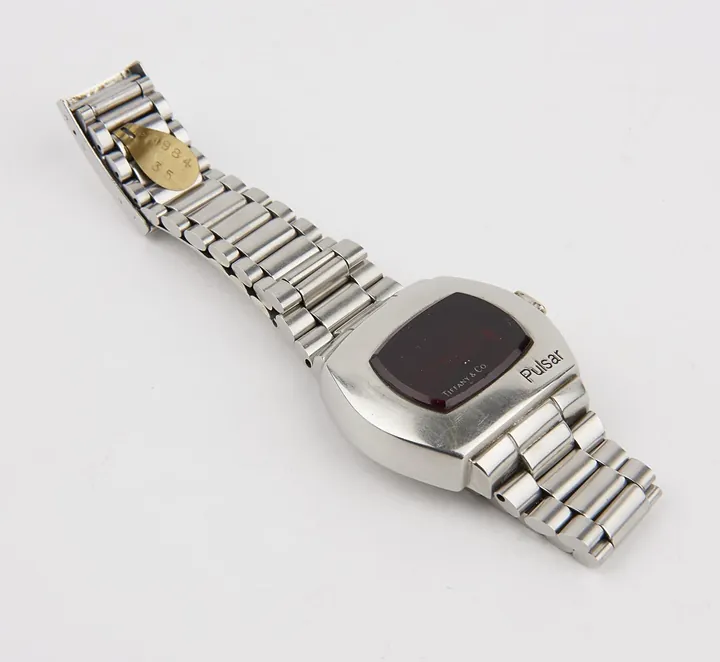
Wristwatches · 1972
Wristwatch by Hamilton Watch Company and Electro-Data Inc, United States, 1972
Science Museum Group, London
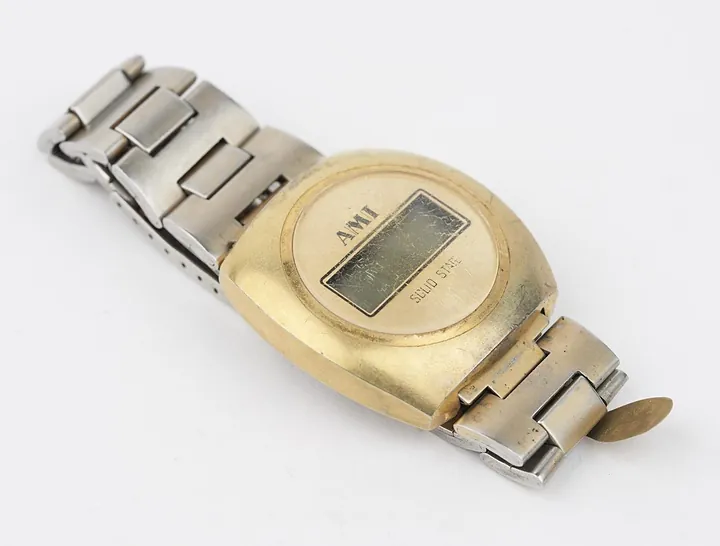
Wristwatches · 1973–1974
Quartz watch with liquid crystal digital display, made by American Microsystems Inc. (AMI) . 1973/74
Science Museum Group, London
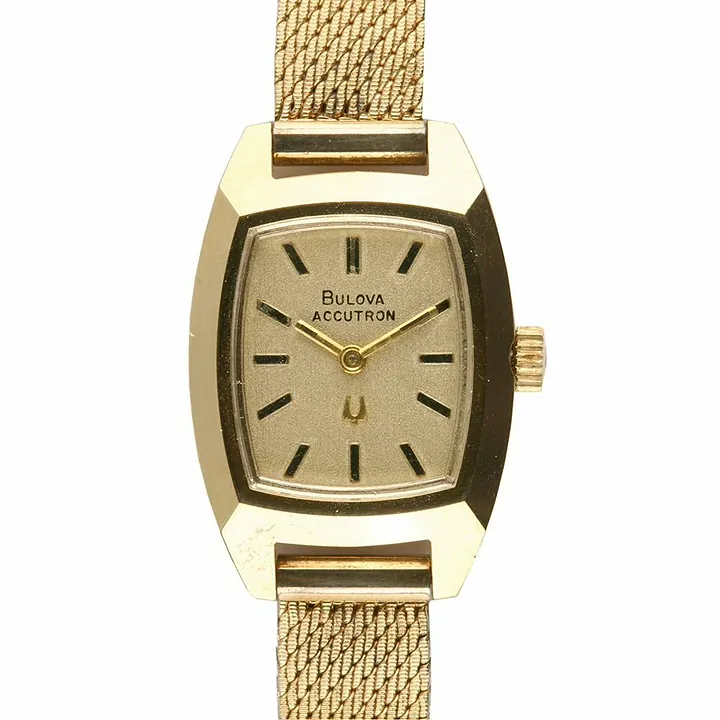
Wristwatches · c. 1973
Wristwatch by Josef Bulova, United States, c. 1973
German Clock Museum