
Clocks · Skeleton clock
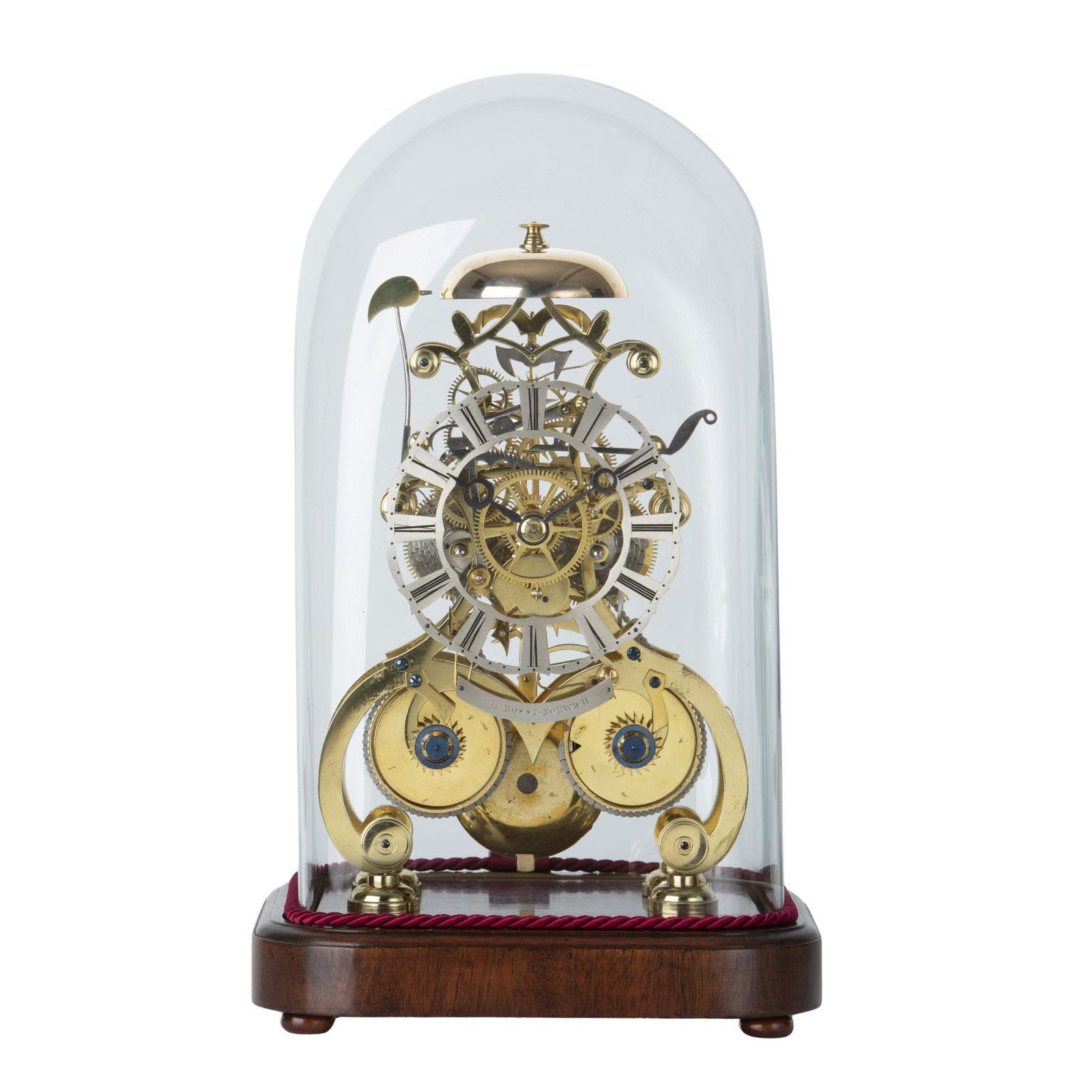
Brass striking skeleton clock
- Maker / attribution
- Unrecorded in source
- Date
- c. 1840
- Historical period
- Precision & Scientific Horology (1750 – 1850)
- Country of origin
- England
- Object type
- Skeleton clock
- Materials / technique
- brass
- Dimensions
- Height 33 cm
- Stock no.
- Product 3294
- Credit line
- Dealer listing, The Antique Clock Company (product 3294)
- Catalogue title (original)
- A BEAUTIFUL BRASS STRIKING SKELETON CLOCK (English)
View the source record (dealer listing) ↗ (opens another website in a new tab)Suggest a correction
Record summary
Catalogued by The Antique Clock Company (dealer), Dorset (stock number Product 3294), this is a skeleton clock, made in England, dated c. 1840. The Atlas places it in the Precision & Scientific Horology period (1750 – 1850) of its Clocks collection. Materials and techniques recorded by the source: brass. Recorded dimensions: Height 33 cm. The record is illustrated with 2 photographs.
Assembled from the source record's structured fields. Dates and attributions are given as the source states them; where a field is missing the Atlas leaves it blank rather than estimating.
Catalogue description
Dealer description — The Antique Clock Company
This exceptional 8-day brass skeleton clock by Edwards of Stourbridge, retailed by George Rossi of Norwich, is a fine example of craftsmanship and elegance. The clock features a striking twin chain fusee movement, expertly designed with pierced scrolling plates joined by six double-screwed pillars, demonstrating high-quality construction typical of Edwards’ clocks. The silvered chapter ring, marked with Roman numerals, bears a cartouche signed “G. Rossi Norwich” and is complemented by beautifully blued steel hands. Its intricate mechanism includes six-crossed train wheels, an anchor escapement, and a rack-strike with a trip repeat on a bell, ensuring reliable timekeeping and striking. Complete with a pendulum, winding key, mahogany veneered plinth, and protective glass dome, this timepiece offers a stunning display of traditional horology, ideal for collectors and enthusiasts alike. Height: 13” / (33cm) excluding dome Width: 9 ½“ / (24cm) Depth: 8 ¾” / (22 cm)
Provenance
Private collection, UK
Historical context
Precision & Scientific Horology (1750 – 1850)
Harrison solves longitude; Mudge invents the lever; Breguet's Paris workshop defines the modern watch.
The age of the deadbeat escapement, compensated pendulums and observatory regulators. Domestic clocks spread through the middle classes: English longcase and bracket clocks, French gilt-bronze mantel clocks, Viennese Biedermeier wall clocks, Black Forest painted-shield clocks, and the first American shelf clocks.
Read the period in the timelineMore clocks from this periodEarlier: Early Modern Horology
Atlas type guide
Skeleton clocks
A skeleton clock displays its movement: the plates are pierced to a minimum so that wheels, escapement and fusee can be seen, usually under a glass dome. French makers produced fine skeleton clocks in the late eighteenth century; in Victorian England they became popular showpieces, with frames in the shapes of cathedrals and famous buildings.
What to look for
- Pierced brass plates in scroll or architectural shapes.
- A glass dome and wooden or marble base.
- Fusee movements and sometimes passing strike on a bell.
Dating clues
- French skeleton clocks: c. 1780–1830.
- English cathedral-style skeleton clocks: c. 1840–1890.
General guidance written by the Atlas editors about this kind of object. It is not a statement about this particular piece; for that, rely on the source record above and on physical examination.
Related records
Clocks · 1740–1760
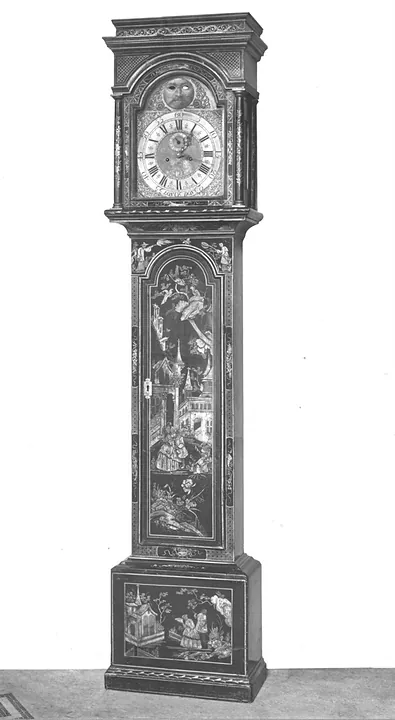
Longcase clock, English, 1740–1760, japanned wood, John Ellicott
Victoria and Albert Museum, London
Clocks · c.1750
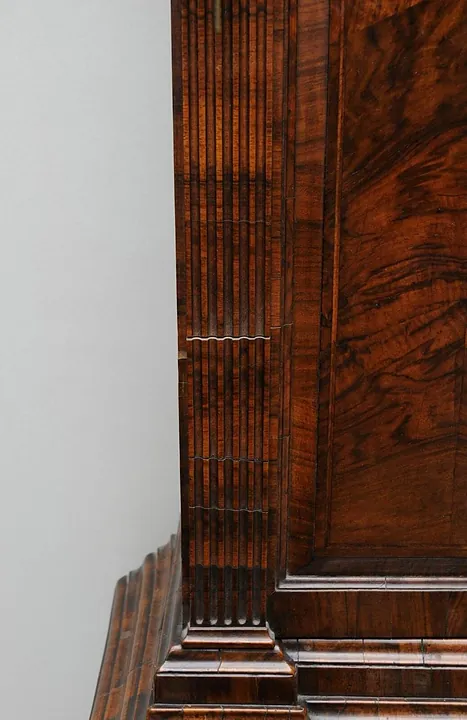
Long-case clock, English, ca. 1750, by Richard Peyton of Gloucester
Victoria and Albert Museum, London
Clocks · 1751
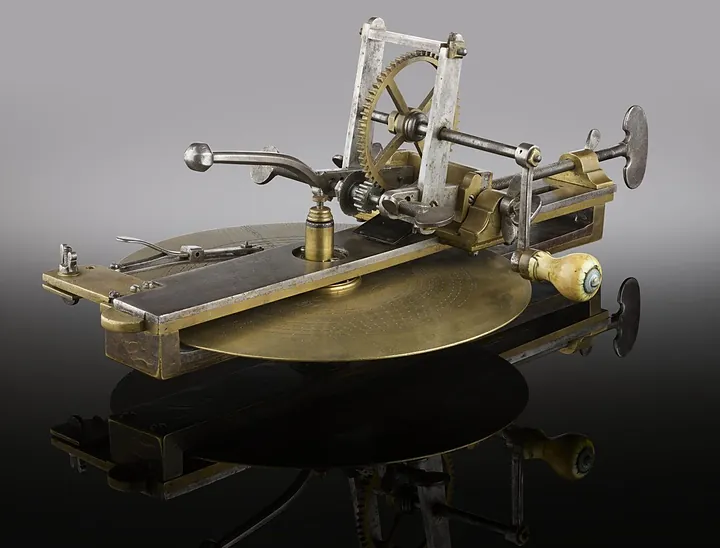
Large wheel engine, signed and dated "John Tipping, Whildon Green, 1751".
Science Museum Group, London
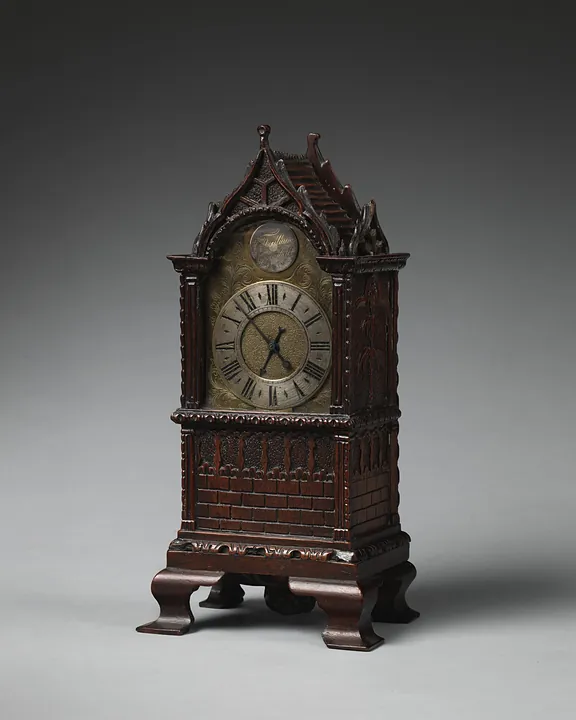
Clocks · 1755
Bracket clock by John Fordham, England, 1755
The Metropolitan Museum of Art, New York
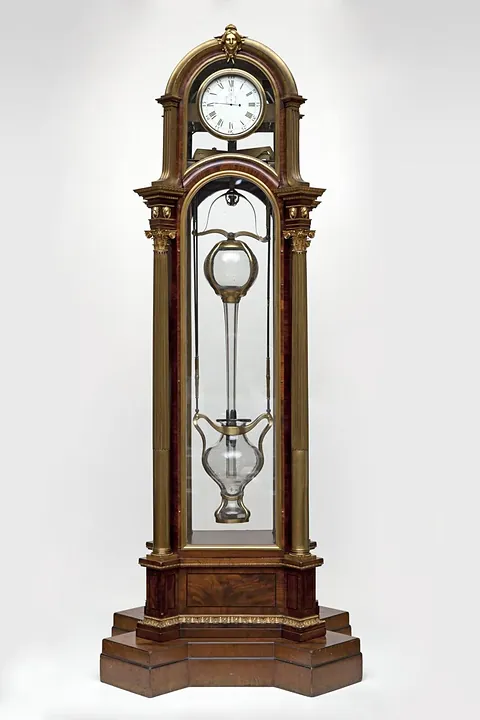
Clocks · c. 1760
Longcase clock by James Cox, England, c. 1760
Victoria and Albert Museum, London
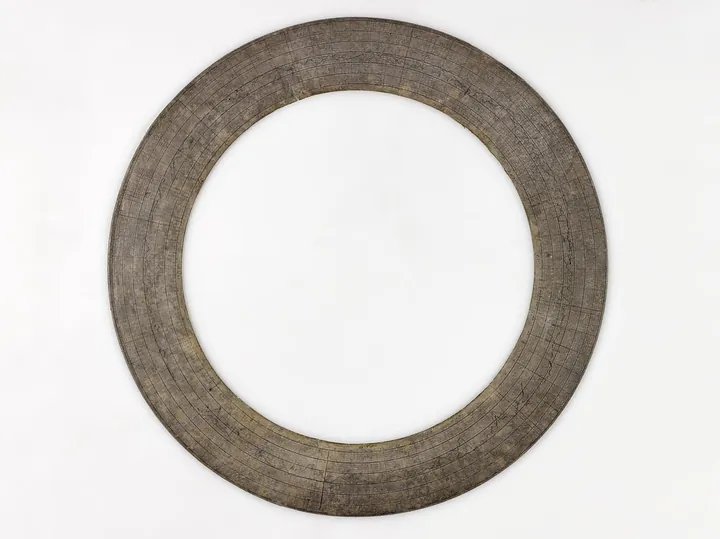
Clocks · 1766
Clock by Alexander Cumming, England, 1766
Science Museum Group, London
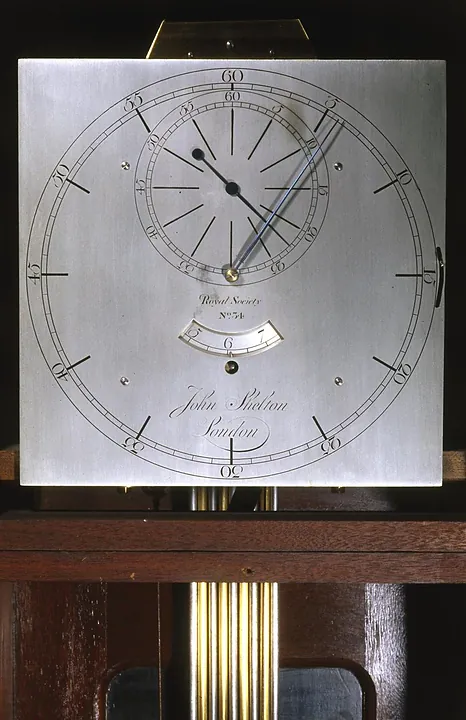
Clocks · 1768–1769
Regulator clock by John Shelton, England, 1768–1769
Science Museum Group, London
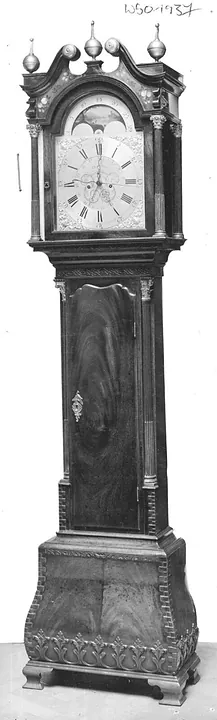
Clocks · c. 1775
Longcase clock, England, c. 1775
Victoria and Albert Museum, London