
Clocks · Bracket clock
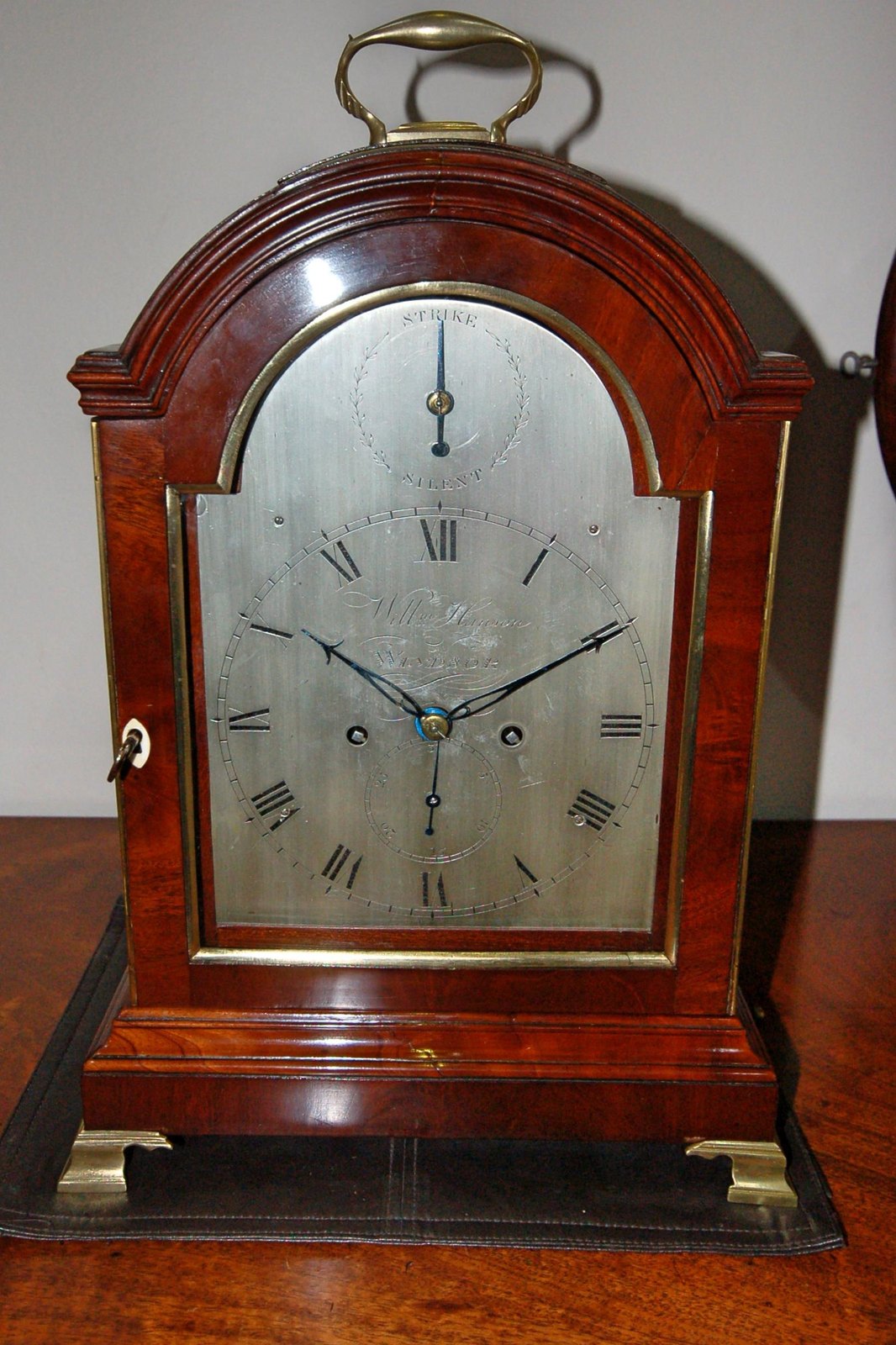
Bracket Clock by William Hanson, Windsor, c. 1800
- Maker / attribution
- William Hanson (maker)
- Date
- c. 1800
- Historical period
- Precision & Scientific Horology (1750 – 1850)
- Country of origin
- United Kingdom
- Place
- Windsor
- Object type
- Bracket clock
- Stock no.
- 1218
- Credit line
- Dealer listing, Pendulum of Mayfair (1218)
- Catalogue title (original)
- Antique Bracket Clock by William Hanson – Windsor C1800 (English)
View the source record (dealer listing) ↗ (opens another website in a new tab)Suggest a correction
Record summary
Catalogued by Pendulum of Mayfair (dealer), London (stock number 1218), this is a bracket clock by William Hanson, made in Windsor, United Kingdom, dated c. 1800. The Atlas places it in the Precision & Scientific Horology period (1750 – 1850) of its Clocks collection. The record is illustrated with 5 photographs.
Assembled from the source record's structured fields. Dates and attributions are given as the source states them; where a field is missing the Atlas leaves it blank rather than estimating.
Catalogue description
Dealer description — Pendulum of Mayfair
A superb sympathetically restored George III mahogany arched silvered dial pad-top twin fusee bell strike bracket clock. The brass 7″ silvered dial signed William Hanson Windsor, who is a highly regarded clockmaker from the 18th and early 19th century. The lovely quality double fusee 8 day movement striking the hours on a single bell. The back-plate engraved with the makers name. Movement with anchor recoil escapement. The silvered dial with strike/silent feature to the arch and a calendar to the dial centre. The dial engraved with Roman Numerals. Fantastic quality cabinet with brass ‘fish-scale’ frets to the side. Brass moulding to the front door sides and to the single pad to the top. A brass carrying handle also to the top and the clock standing on OG brass bracket feet.
Historical context
Precision & Scientific Horology (1750 – 1850)
Harrison solves longitude; Mudge invents the lever; Breguet's Paris workshop defines the modern watch.
The age of the deadbeat escapement, compensated pendulums and observatory regulators. Domestic clocks spread through the middle classes: English longcase and bracket clocks, French gilt-bronze mantel clocks, Viennese Biedermeier wall clocks, Black Forest painted-shield clocks, and the first American shelf clocks.
Read the period in the timelineMore clocks from this periodEarlier: Early Modern Horology
Atlas type guide
Bracket, table and spring-driven clocks
Spring-driven clocks freed timekeeping from the hanging weight. The coiled mainspring, documented from the fifteenth century, made portable table clocks possible; to even out its declining force, makers used the fusee, a conical pulley connected to the barrel by a gut line or chain. Renaissance table clocks from Augsburg and Nuremberg — drum-shaped, square or tower-shaped in gilt brass — were luxury scientific objects, often with astronomical dials and alarms.
After the pendulum, English makers developed the bracket clock: a wooden case with a carrying handle, a short pendulum with a verge escapement, and often repeating work to sound the hours on demand at night. Later examples use the anchor escapement. In the nineteenth century, 'table clock' became a broad term for spring clocks of every nationality.
What to look for
- A fusee in the movement (cone-shaped pulley) and the type of line — gut or chain.
- Verge escapement with a short bob pendulum, often with a decoratively engraved backplate.
- Repeat cords or buttons that make the clock strike again on demand.
- Gilt-brass engraved cases and horizontal dials on Renaissance pieces.
- Case shapes: inverted bell, bell top, break-arch, lancet or balloon.
Dating clues
- Drum and tower table clocks: c. 1520–1650.
- Ebony veneered English bracket clocks with verge escapements: c. 1670–1800.
- Engraved backplates were usual on English clocks until c. 1800, then generally plain.
General guidance written by the Atlas editors about this kind of object. It is not a statement about this particular piece; for that, rely on the source record above and on physical examination.
Read next:Verge escapement
Related records
Clocks · 1798
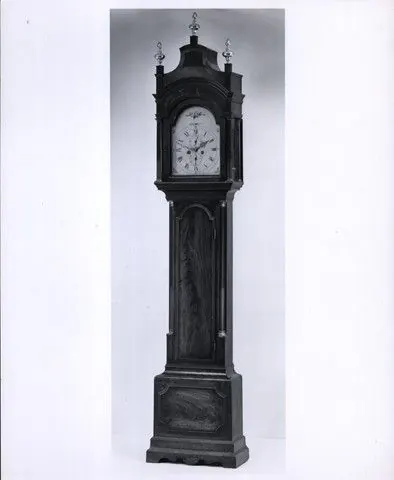
Tall Case Clock
Yale University Art Gallery, New Haven
Clocks · c. 1800
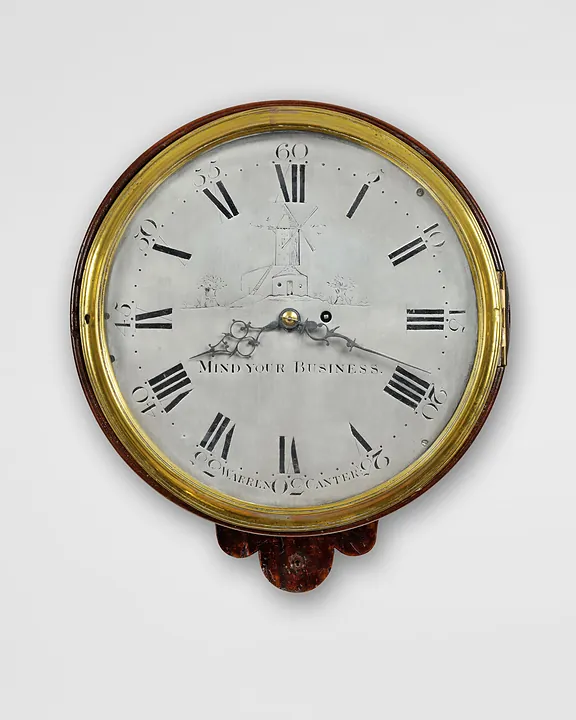
Wall clock by Warren, Canterbury, c. 1800
Howard Walwyn Fine Antique Clocks (dealer), London
Clocks · c. 1800
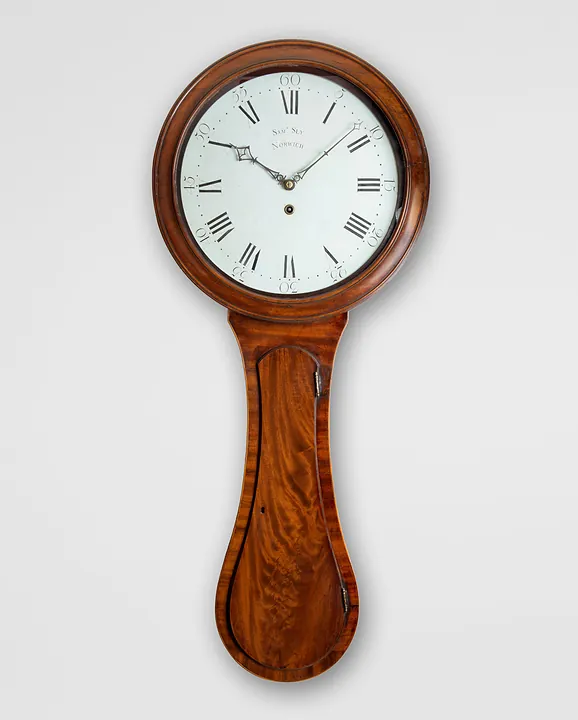
Clock by Samuel Sly, Norwich, c. 1800
Howard Walwyn Fine Antique Clocks (dealer), London
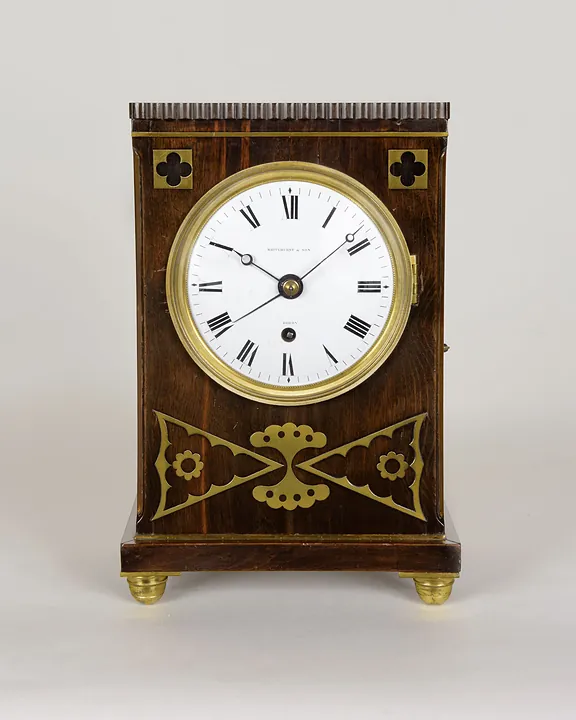
Clocks · c. 1840–1845
Bracket clock by Whitehurst & Son, Derby, c. 1840–1845
Howard Walwyn Fine Antique Clocks (dealer), London
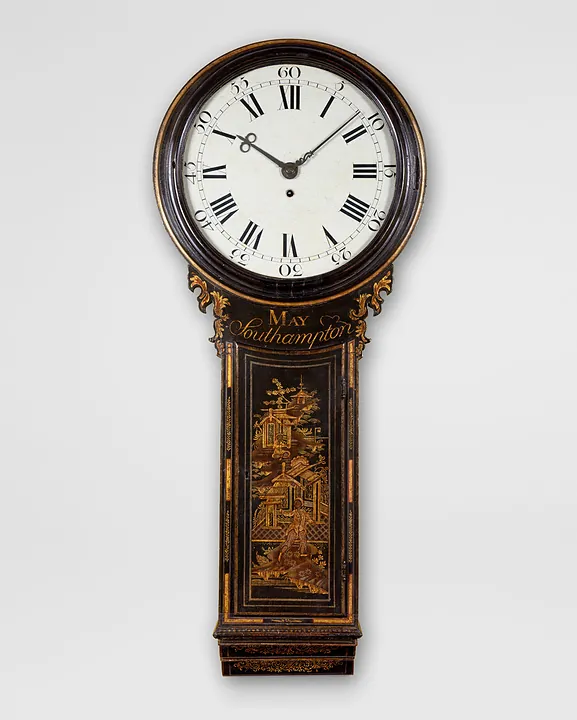
Clocks · 1775
Tavern clock by John May, Southampton, 1775
Howard Walwyn Fine Antique Clocks (dealer), London
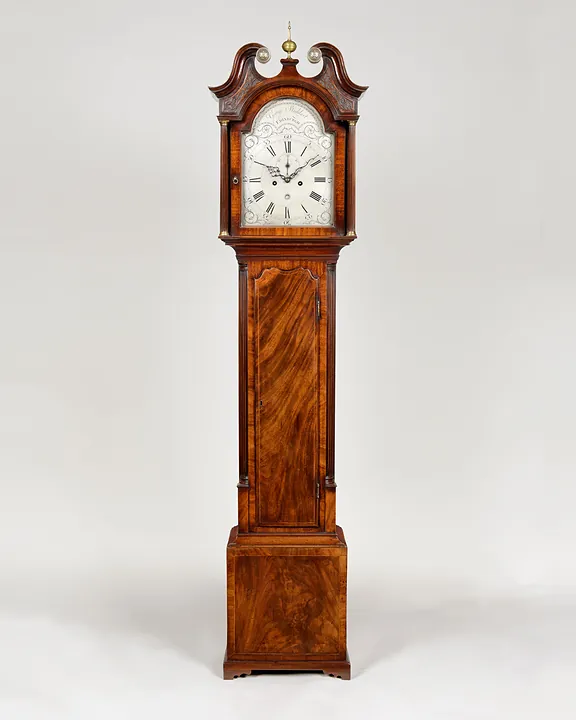
Clocks · c. 1795
Longcase clock by George Stoddart, c. 1795
Howard Walwyn Fine Antique Clocks (dealer), London
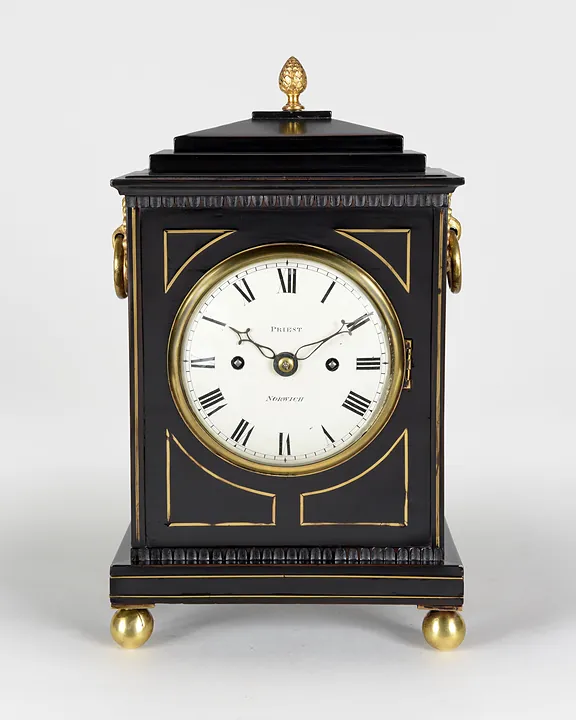
Clocks · c. 1830–1835
Bracket clock by Priest, Norwich, c. 1830–1835
Howard Walwyn Fine Antique Clocks (dealer), London
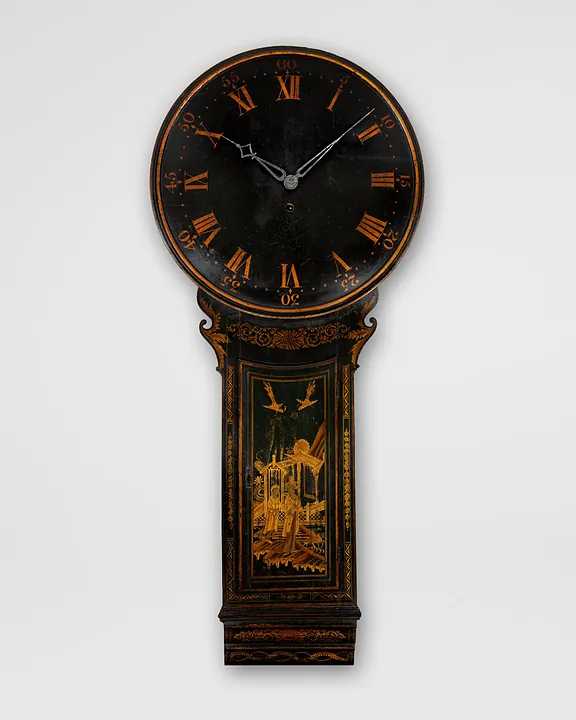
Clocks · c. 1785
Clock by Thomas Smoult, Newcastle, c. 1785
Howard Walwyn Fine Antique Clocks (dealer), London