
Clocks · Desk clock
Boucheron Minute Repeating Desk Clock
- Maker / attribution
- Boucheron (source attribution)
- Date
- c. 1900
- Historical period
- Golden Age of Mechanical Watchmaking (1900 – 1945)
- Country of origin
- France
- Object type
- Desk clock
- Holding institution
- Antiquorum
- Accession / object no.
- 370
- Credit line
- Antiquorum
- Catalogue title (original)
- Boucheron Minute Repeating Desk Clock\nBoucheron, Paris, case No. 679614. Made circa 1900.\nFine and rare, silver, minute-repeating, 8-day going, keyless\ndesk clock. (English)
View the source record ↗ (opens another website in a new tab)Suggest a correction
Record summary
Held and catalogued by Antiquorum (object number 370), this is a desk clock attributed to Boucheron, made in France, dated c. 1900. The Atlas places it in the Golden Age of Mechanical Watchmaking period (1900 – 1945) of its Clocks collection. The record is illustrated with 1 photograph.
Assembled from the source record's structured fields. Dates and attributions are given as the source states them; where a field is missing the Atlas leaves it blank rather than estimating.
Catalogue description
Original object description
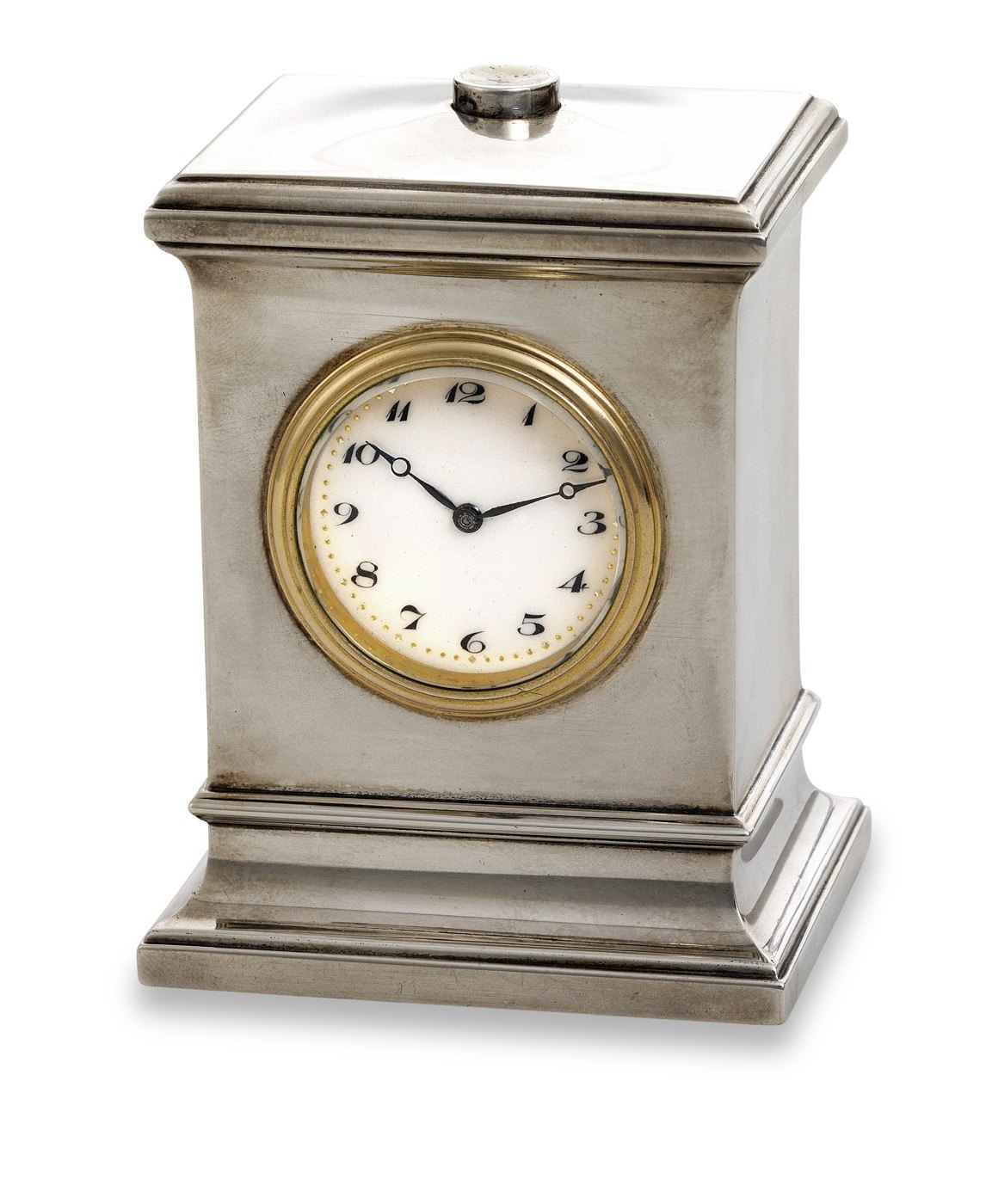
Classified as a desk clock originating from France around 1900, this keyless timepiece by Boucheron features an eight-day duration alongside a minute-repeating complication. Its rectangular silver case stands 90 mm in height, spans 68 mm across, and extends 55 mm in depth, characterized by a polished finish, flared mouldings along both the cornice and plinth, and a silver-gilt bezel framing the display. The white enamel dial, bearing the signature of Boucheron, is laid out with Breguet numerals and gilt minute dots, read by blued steel Breguet hands. Operating within is a Swiss 15-jewel movement enclosed by rectangular frosted-gilt plates. The mechanism integrates a straight-line lever escapement, a bimetallic compensation balance, a blued Breguet overcoil hairspring, and a centrifugal governor governing the repeater train. Striking on gongs is engaged through a depressible button positioned on the case top, whereas timing regulation is managed from beneath the base.
Case and Dial
Conforming to desk clock proportions, the rectangular silver exterior measures 90 x 68 x 55 mm and displays flared top and bottom moulding details around a lustrously polished surface. A silver-gilt bezel rings the central opening, framing a white enamel dial signed by the maker. Time display is marked by Breguet numerals, a track of gilt minute pearls, and matching blued steel Breguet hands.
Movement and Repeating Mechanism
The internal Swiss movement runs for eight days between windings and is supported by 15 jewels set into rectangular plates with a frosted gilt finish. Its regulation and escapement assembly comprises a straight-line lever coupled with a split bimetallic balance and a blued steel overcoil balance spring. Depression of an upper push piece releases the minute-repeating function, sounding the intervals upon gongs regulated by a centrifugal governor; speed regulation is adjusted through the lower exterior plate.
Condition and Marks
Stamped onto the silver housing are serial number 679614 and the mark representing Boucheron, Paris. Evaluated in auction documentation, the housing receives a condition mark of 3 ('Good'), while the dial is graded 3-01 ('Good') with its original hands still fitted. The mechanical movement holds a 3* rating ('Good'), though an overhaul is advised by the cataloguer.
Inscriptions & marks
679614
Historical context
Golden Age of Mechanical Watchmaking (1900 – 1945)
The wristwatch displaces the pocket watch; waterproof cases, self-winding and grand complications.
Between 1900 and 1945 clocks were electrified: master-clock systems ran factories and offices, synchronous mains clocks entered homes, and the Shortt free-pendulum clock set new standards of accuracy before the first quartz clocks (1927). Art Deco design reshaped mantel and table clocks.
Read the period in the timelineMore clocks from this periodEarlier: Industrial Revolution
Atlas type guide
Domestic clocks
A clock combines four systems: a source of power (falling weight, coiled spring, or later electricity), a gear train that divides time, an escapement and oscillator that regulate it (foliot, pendulum or balance), and an indicating system of dial and hands or a bell. Its history runs from the large iron weight-driven clocks of the late thirteenth century to Renaissance spring-driven table clocks, the pendulum revolution of 1656, the factory clocks of the nineteenth century and electric and quartz clocks of the twentieth.
Domestic clocks also reflect regional furniture and decorative traditions — English longcase and bracket clocks, French pendules, Viennese regulators, Black Forest and American shelf clocks — and therefore record changing tastes as much as technical progress.
What to look for
- How the clock is powered: weights, spring barrel, fusee, electric coil.
- The oscillator: foliot, short pendulum, long seconds pendulum or balance.
- Whether it strikes: hour only (count wheel) or hours and quarters (rack striking).
- The maker or retailer's name on dial and movement, and any factory trademarks.
- Signs of alteration — replaced dials, converted escapements, 'married' cases.
Dating clues
- Before 1656 clocks used foliots or balances; after, most domestic clocks have pendulums.
- Anchor escapements spread after c. 1670; minute hands became common at the same time.
- Factory production in America and Germany transformed prices after c. 1840.
General guidance written by the Atlas editors about this kind of object. It is not a statement about this particular piece; for that, rely on the source record above and on physical examination.
Related records
Wristwatches · c. 1940s
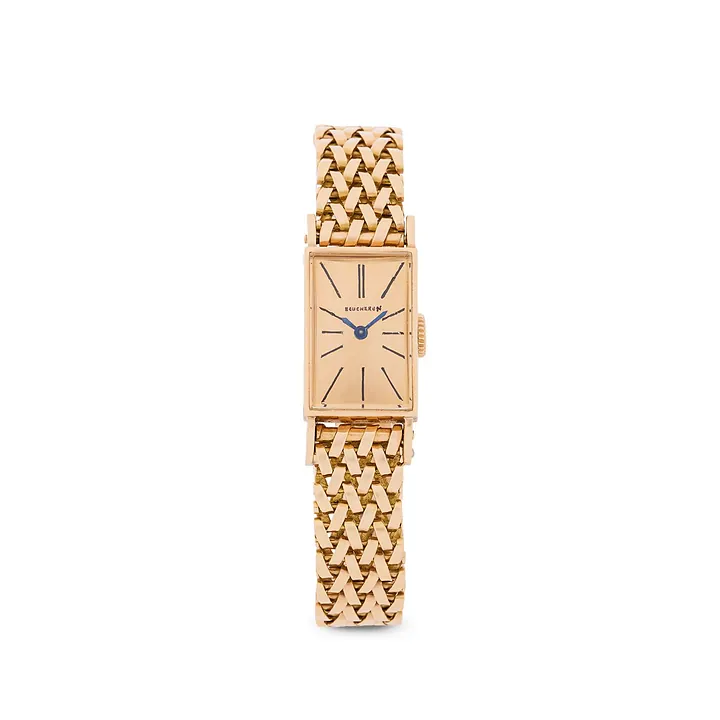
Boucheron wristwatch, ref. 3.914, c. 1940s
Antiquorum auction archive, Geneva
Wristwatches · c. 1963
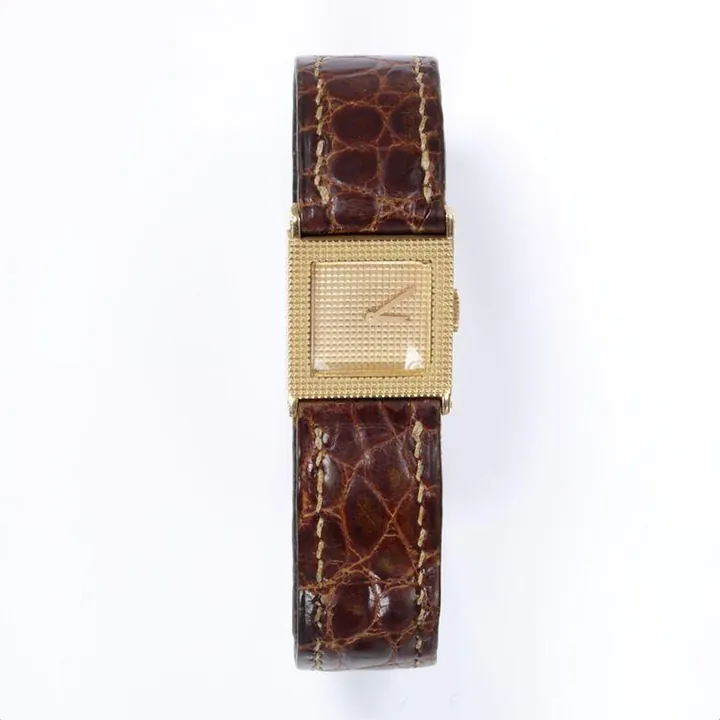
Wristwatch with gold case and leather strap, Boucheron, Paris, about 1963.
Victoria and Albert Museum, London
Pocket Watches · 1893–1911
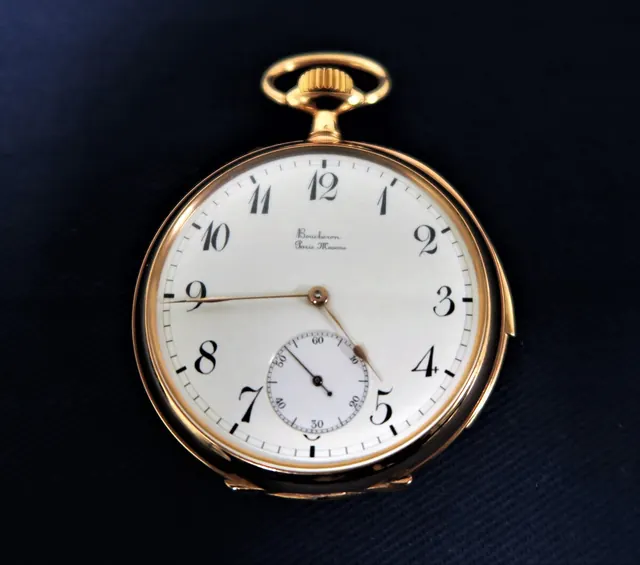
Pocket watch by Boucheron, France, 1893–1911
HKM / Kulttuurihistoriallinen
Wristwatches · c. 1970s
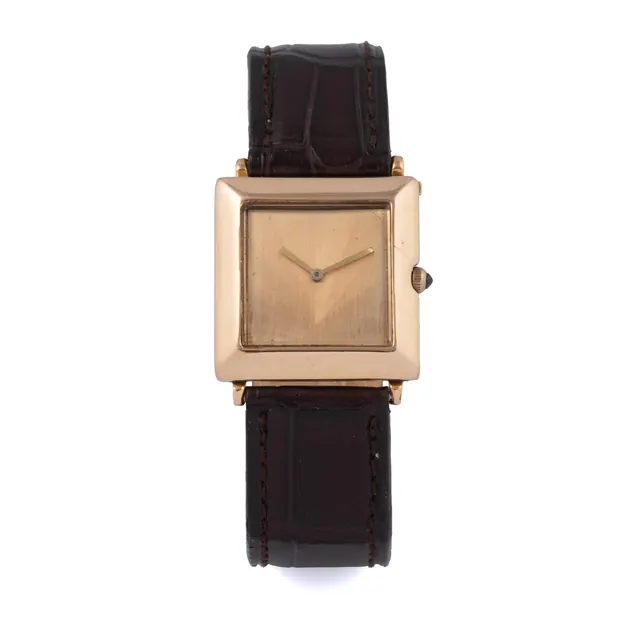
Boucheron wristwatch, France Carree, circa 1970's
Antiquorum auction archive, Geneva
Clocks · 1902–1912
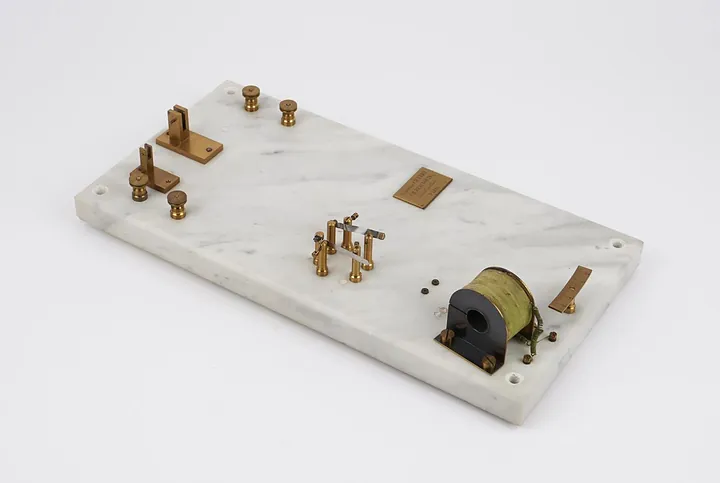
Fery's selfwound clock, with subsidiary pendulum for making contact, by Prof. Charles Fery and C. Beaudouin, Paris, France, 1902–1912.
Science Museum Group, London
Clocks · 1915–1925
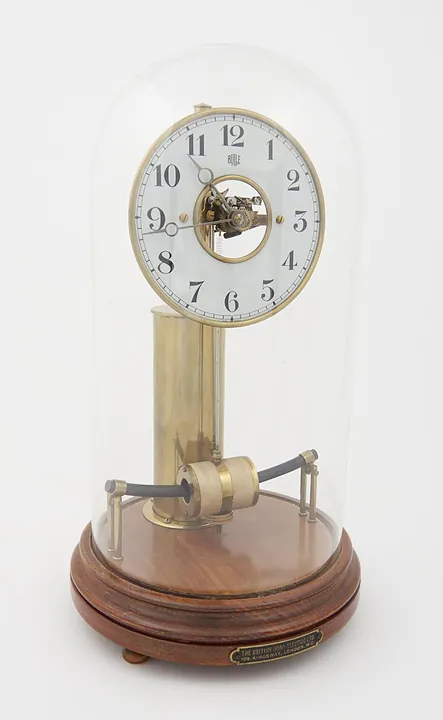
Type A 'Bulle' electric clock, no.6160, with glass shade, made in France but sold by British Horo-Electric Ltd., 109 Kingsway, London, WC, England, 1915–1925.
Science Museum Group, London
Clocks · c. 1921
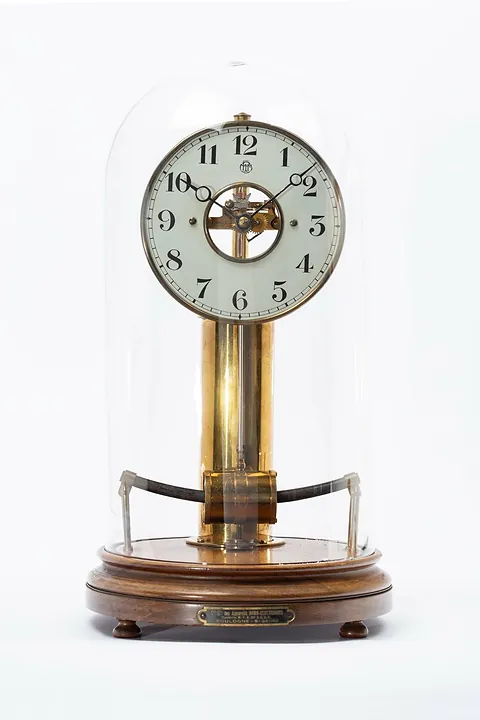
Table clock by Compagnie Générale des Appareils Horo-Electriques, France, c. 1921
German Clock Museum
Clocks · 1930–1939
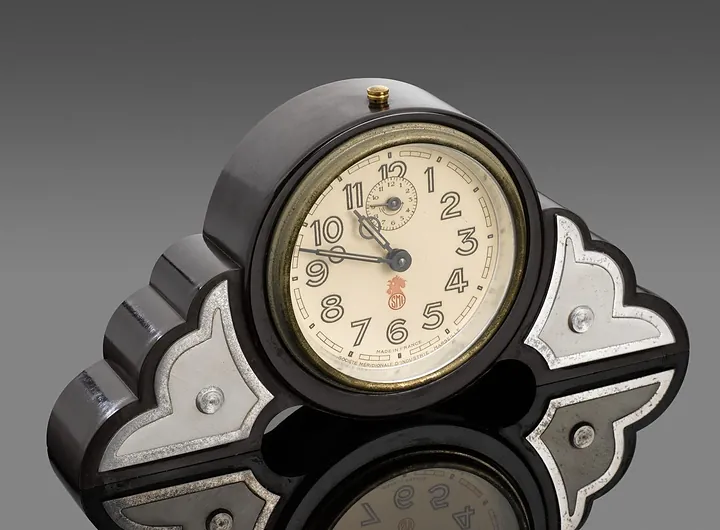
Clock by Societe Meridionale D'Industrie, France, 1930–1939
Science Museum Group, London