
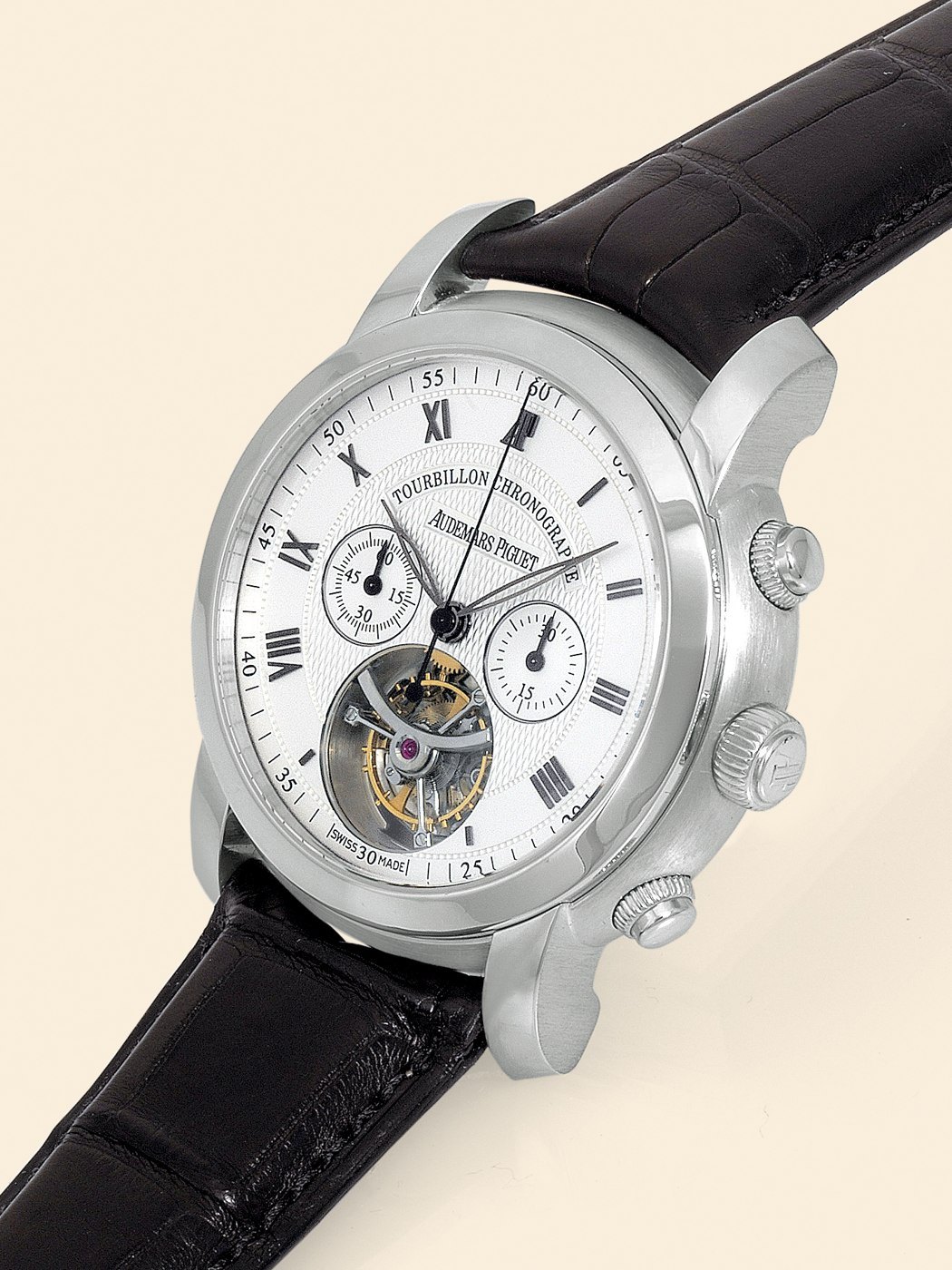
Wristwatches · Tourbillon chronograph wristwatch
Audemars Piguet Jules Audemars Tourbillon Chronograph
- Maker / attribution
- Audemars Piguet (source attribution)
- Date
- c. 2005
- Historical period
- Mechanical Renaissance (1990 – 2010)
- Country of origin
- Switzerland
- Object type
- Tourbillon chronograph wristwatch
- Materials / technique
- 18K white gold
- Holding institution
- Antiquorum
- Accession / object no.
- 286
- Credit line
- Antiquorum
- Catalogue title (original)
- \"Jules Audemars - Tourbillon Chronographe\"\nAudemars Piguet, Genève, \"Jules Audemars - Tourbillon Chronographe\", No. 555920,\ncase No. F 10515, Ref. 26010BC. Made circa 2005.\nVery fine and very r (English)
View the source record ↗ (opens another website in a new tab)Suggest a correction
Record summary
Held and catalogued by Antiquorum (object number 286), this is a tourbillon chronograph wristwatch attributed to Audemars Piguet, made in Switzerland, dated c. 2005. The Atlas places it in the Mechanical Renaissance period (1990 – 2010) of its Wristwatches collection. Materials and techniques recorded by the source: 18K white gold. The record is illustrated with 1 photograph.
Assembled from the source record's structured fields. Dates and attributions are given as the source states them; where a field is missing the Atlas leaves it blank rather than estimating.
Catalogue description
Original object description
Originating in Switzerland around 2005, this Audemars Piguet tourbillon chronograph wristwatch belongs to the Jules Audemars collection. Fabricated from 18K white gold, the three-body case measures 43 mm across and 14 mm deep, showcasing straight lugs, a stepped bezel, and juxtaposed polished and brushed surface treatments. Both the front and the display caseback are fitted with sapphire crystals, and the band secures via an 18K white gold deployant clasp. The engine-turned silver guilloché dial is accented by an outer satin-finished chapter ring bearing applied black Roman numerals, swept by skeletonized white gold feuille hands. Sub-dials are symmetrically arranged, placing a 30-minute chronograph register at the 3 o'clock position and subsidiary running seconds at 9 o'clock. An aperture situated at 6 o'clock displays the one-minute tourbillon carriage, rotating underneath a mirror-polished steel bridge. Powering the timepiece is the hand-wound Caliber 2889, a rhodium-plated, 25-jewel mechanism decorated with fausses côtes. Its regulating organ consists of a three-arm polished steel carriage, a lateral lever escapement, and a monometallic balance adjusted for extreme temperatures as well as five positions, operating with a self-compensating Breguet balance spring. The movement, dial, and case bear complete manufacturer signatures along with registered reference numbers, and the original factory hands remain intact. Evaluated as being in "As new" condition across its movement, case, and dial, this private-collection timepiece is accompanied by its certificate of authenticity and fitted presentation box.
Inscriptions & marks
F 10515
Historical context
Mechanical Renaissance (1990 – 2010)
Mechanical watches return as cultural objects; independent watchmaking flourishes.
Mechanical watches returned as cultural and luxury objects. Complications, tourbillons and new materials proliferated; independent watchmakers such as George Daniels, F.P. Journe and Philippe Dufour revived artisanal watchmaking; collecting vintage watches became a major field.
Read the period in the timelineMore wristwatches from this periodEarlier: Quartz Revolution
Atlas type guide
Chronographs and split-seconds watches
A chronograph is a watch with an additional seconds hand that can be started, stopped and returned to zero independently of the timekeeping. Louis Moinet built an early example in 1816 and Nicolas Rieussec a recording 'chronographe' in 1821; Adolphe Nicole's heart-shaped reset cam (patented 1862) made the modern return-to-zero possible. Split-seconds (rattrapante) chronographs add a second hand that can be stopped for intermediate times; flyback chronographs restart instantly.
Chronographs were essential tools for doctors (pulsometer scales), artillery (telemeter), engineers and sport. In wristwatches, Valjoux, Venus, Lemania and later the automatic chronographs of 1969 (Zenith El Primero, the Chronomatic Calibre 11 group and Seiko 6139) are milestones.
What to look for
- Push-pieces on the case band or a single button in the crown (monopusher).
- Subsidiary registers for minutes and hours; tachymeter, telemeter or pulsometer scales.
- Column wheel versus cam control visible in the movement.
- Calibre markings of specialist makers (Valjoux, Lemania, Venus, Landeron).
Dating clues
- Pocket chronographs with heart cam reset: after 1862.
- Wrist chronographs: from c. 1910; two-button designs from the 1930s.
- Automatic chronographs: from 1969.
General guidance written by the Atlas editors about this kind of object. It is not a statement about this particular piece; for that, rely on the source record above and on physical examination.
Read next:Flyback chronographChronograph
Related records
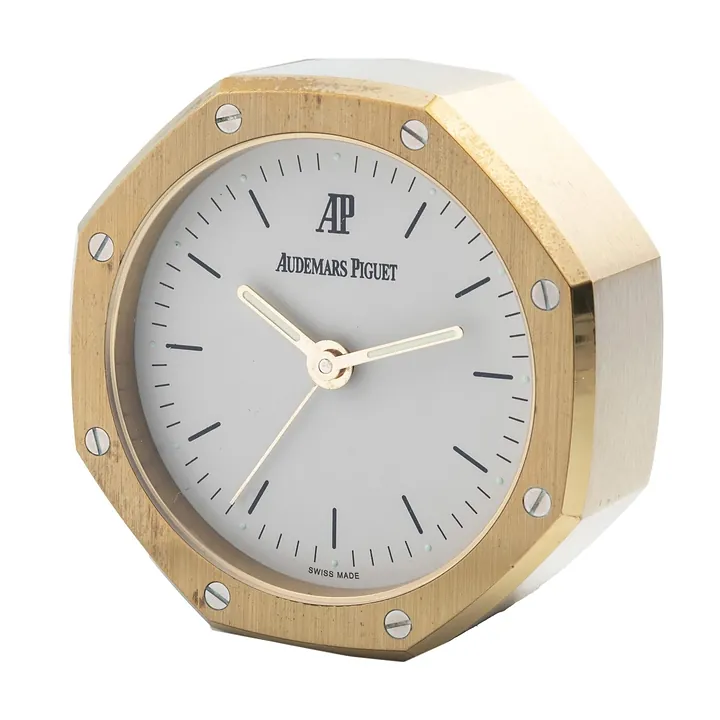
Clocks · c. 1990s
Audemars Piguet Royal Oak, c. 1990s
Antiquorum auction archive, Geneva
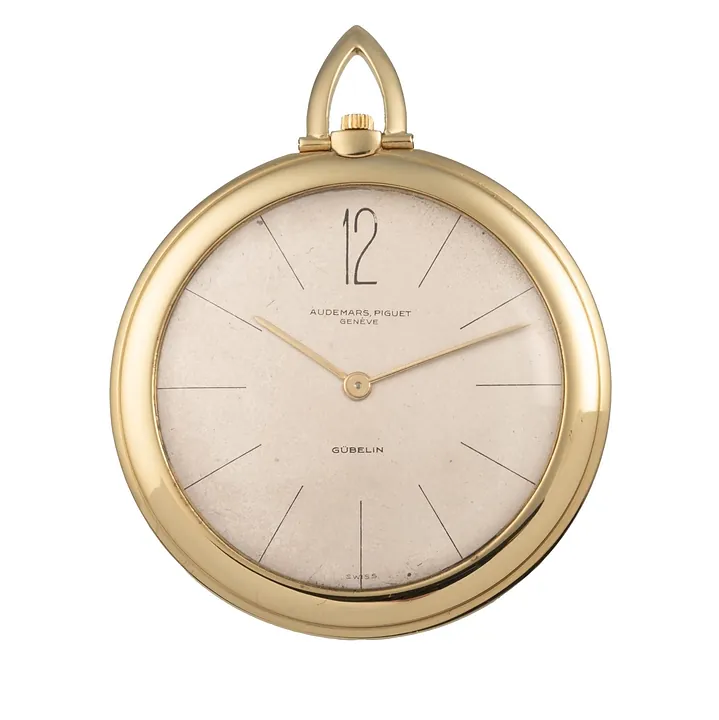
Pocket Watches · c. 1960
Audemars Piguet ''couteau'', c. 1960
Antiquorum auction archive, Geneva
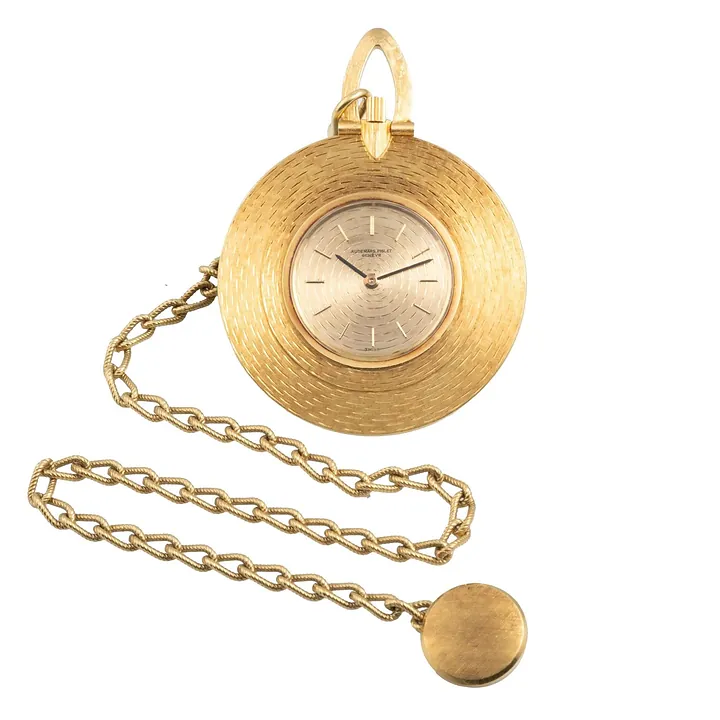
Pocket Watches · originally sold in November 1961 (per the lot record)
Audemars Piguet "extra Plate", ref. 5633 BA, originally sold in November 1961
Antiquorum auction archive, Geneva
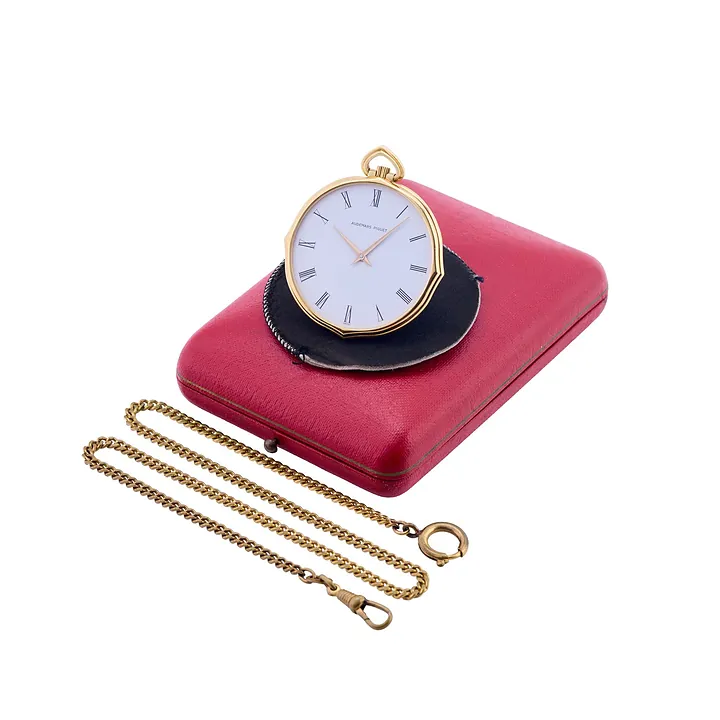
Pocket Watches · c. 1980
Audemars Piguet pocket watch, c. 1980
Antiquorum auction archive, Geneva
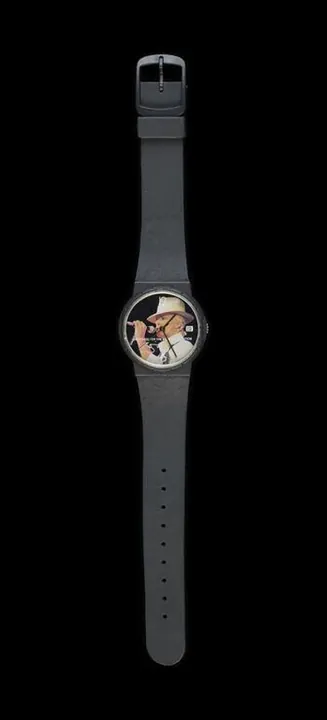
Wristwatches · 1991
Limited edition watch designed by Eta relating to David Bowie's Serious Moonlight live tour, 1991
Victoria and Albert Museum, London

Wristwatches · 2008
Wristwatch by Breitling?, 2008
Museum Rotterdam

Wristwatches · c. 1990s
Audemars Piguet Bamboo, c. 1990s
Antiquorum auction archive, Geneva

Wristwatches · c. 1990
Audemars Piguet Huitieme Perpetual Calendar, ref. 25696PT, c. 1990
Antiquorum auction archive, Geneva